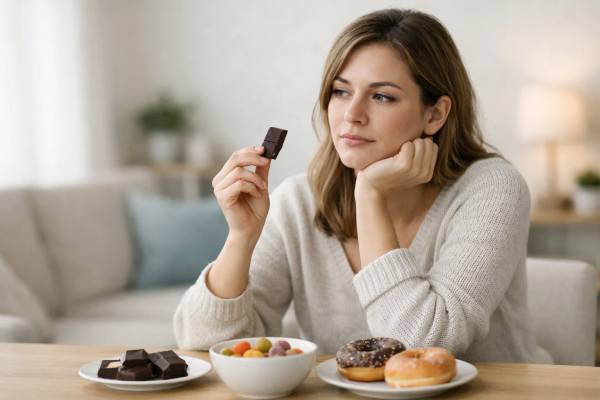
A few days before your period, it can feel as if your appetite changes personality. Foods you normally enjoy may suddenly seem uninteresting, while chocolate, pastries, chips, or cereal start calling your name with unusual urgency. For many people, these sugar cravings before a period are not imagined, weak-willed, or purely emotional. They often reflect a real shift in the luteal phase of the menstrual cycle, when progesterone rises, estrogen changes, mood can feel less steady, and the body may become more vulnerable to appetite swings and blood sugar instability.
That does not mean cravings are inevitable or impossible to manage. The most helpful approach is usually not harsh restriction, guilt, or trying to “be good” all week. It is learning what your body is doing, giving it steadier fuel, and using a few targeted strategies before cravings become overwhelming. This article explains why premenstrual sugar cravings happen, how hormones and blood sugar interact, what is normal, and which practical fixes tend to work best.
Quick Summary
- Sugar cravings before your period are often linked to luteal-phase hormone shifts, not a lack of discipline.
- Stable meals with protein, fiber, and regular eating can reduce the intensity of cravings and evening overeating.
- Strong cravings paired with shakiness, bingeing, or major mood symptoms may signal a bigger issue than routine PMS.
- Start prevention three to five days before cravings usually peak, rather than waiting until you already feel out of control.
Table of Contents
- Why Cravings Rise
- Hormones and Blood Sugar Swings
- What Is Normal and Not
- Meals That Cut the Spiral
- Supplements and Habit Tools
- When to Seek Medical Help
Why Cravings Rise
Sugar cravings before your period usually build in the second half of the cycle, especially in the late luteal phase, which is the stretch between ovulation and the start of bleeding. This is the same window when many people notice bloating, breast tenderness, irritability, lower frustration tolerance, and a stronger pull toward comfort foods. The pattern is not random.
After ovulation, progesterone rises and estrogen shifts. These hormone changes do not simply affect the reproductive system. They also influence appetite, food reward, mood, and the way the brain responds to stress and satisfaction. In everyday terms, food can feel more emotionally compelling, hunger can seem louder, and resisting highly palatable foods may take more effort than it did two weeks earlier.
There may also be a genuine increase in energy needs for some people during this phase. That matters because many people interpret a stronger appetite as a sign that something is wrong, when in fact part of it may be physiologic. The problem is often not the presence of hunger. It is the mismatch between what the body is asking for and what a person is allowing themselves to eat. If you enter the premenstrual week already under-fueled, over-caffeinated, or stuck in a restrict-and-rebound food pattern, cravings tend to hit harder.
Another reason cravings feel intense is that sugar is quick, easy, and soothing. When energy is low, mood is more fragile, or sleep has slipped, the brain naturally looks for efficient reward. Sweet foods provide fast carbohydrate, high palatability, and often a strong emotional payoff. That does not mean your body “needs” candy specifically. It means your brain is prioritizing fast relief.
For some people, the craving is less about dessert and more about concentrated carbohydrate overall: bread, crackers, cereal, pastries, ice cream, or a cycle of snacking that becomes hard to stop at night. This is why premenstrual cravings are often best understood as a combination of hormonal sensitivity, rising appetite, emotional vulnerability, and food environment.
It can help to think of this as a cycle-phase issue rather than a character flaw. If your cravings appear in a predictable window each month, track when they start, how long they last, and what they tend to follow. That pattern recognition can be more useful than trying to “eat perfectly” every day. If you are unsure where you are in your cycle, understanding the luteal phase and what it means can make these changes feel much less mysterious.
The important point is this: premenstrual sugar cravings are often real, cyclical, and biologically influenced. Once you accept that, you can work with the pattern instead of fighting it blindly.
Hormones and Blood Sugar Swings
Hormones do not cause cravings in isolation. They often shape cravings by changing blood sugar handling, hunger cues, and how rewarding food feels. This is why a person can go from “I could take or leave dessert” in one phase of the cycle to “I cannot stop thinking about cookies” in another.
In the luteal phase, some people appear to become slightly less insulin sensitive than they are earlier in the cycle. That does not mean they suddenly have diabetes or a metabolic disorder. It means the body may handle carbohydrate a bit less smoothly, and larger gaps between meals or high-sugar, low-protein snacks may trigger a sharper rise and fall in energy. When that happens, the next craving often feels even more urgent.
This is where the premenstrual spiral can start:
- You eat lightly during the day, or skip meals because you are busy.
- Afternoon fatigue hits harder than usual.
- You grab something sugary because it feels fast and deserved.
- Blood sugar and appetite swing again.
- Evening cravings become intense, and stopping feels unusually difficult.
Many people describe this as “my willpower disappearing at night,” but blood sugar instability is often part of the story. A body that has gone too long without balanced food will keep asking louder. Add PMS mood changes, poor sleep, and stress, and the signal gets stronger still.
There is also likely a serotonin angle. Premenstrual mood shifts and cravings often overlap, and some people crave sweet or starchy foods more when they feel low, anxious, or emotionally raw. That does not mean sugar is treating the underlying issue. It means the brain is reaching for rapid comfort. If emotional symptoms rise in the same week as cravings, the solution usually needs to address both fuel and mood, not just calories.
A few clues suggest blood sugar swings are contributing:
- You get shaky, lightheaded, irritable, or headachy when meals are delayed
- Cravings feel strongest in the late afternoon or evening
- Sweet foods briefly help, then you want more soon after
- You feel better when meals include protein and fiber
- The week before your period is consistently harder than the week after
This is why many practical fixes for sugar cravings are really blood sugar fixes in disguise. They are not glamorous, but they work because they reduce the physiologic urgency behind the craving. A helpful starting point is learning the difference between ordinary craving and symptoms that resemble reactive hypoglycemia after meals, especially if hunger comes with shakiness or near-panic.
The bigger lesson is that hormones change the terrain. Blood sugar management that feels optional in one part of the cycle may become essential in the premenstrual week. If you plan your meals as though your body will behave exactly the same every day of the month, cravings can seem baffling. If you anticipate the luteal phase, they become much easier to manage.
What Is Normal and Not
Some increase in appetite or desire for sweets before your period can be entirely normal. For many people, it shows up as a temporary preference for richer foods, a little more snacking, or a stronger dessert impulse for a few days. That is very different from a situation where cravings feel compulsive, distressing, or disruptive.
A more typical pattern looks like this: symptoms begin after ovulation, peak in the week before bleeding, and ease once the period starts or shortly after. The person still feels in control most of the time, even if they need more structure to manage eating well. They may want chocolate every evening, but they can satisfy the craving without feeling physically or emotionally hijacked.
A less typical pattern deserves a closer look. Warning signs include:
- Cravings that lead to repeated binge episodes
- Strong urges that are not limited to the premenstrual window
- Cravings with severe irritability, depression, panic, or hopelessness
- Symptoms that interfere with work, relationships, or sleep every month
- Very heavy fatigue, dizziness, or tremor when hungry
- Cycle irregularity, acne, excess facial hair, or rapid weight changes alongside cravings
These patterns can point to something broader than ordinary PMS. Sometimes it is a more severe premenstrual disorder. Sometimes it is under-eating, chronic stress, insulin resistance, poor sleep, or a learned restrict-and-overeat cycle. Sometimes more than one factor is active at once.
This is also where shame can get in the way. Many people normalize suffering because they assume “everyone gets cravings before their period.” But frequency alone does not tell the whole story. If the week before your period consistently feels like you become a different person around food, that is useful information, not something to dismiss.
One of the best tools here is prospective tracking. For two or three cycles, note:
- Day cravings begin
- Foods most strongly craved
- Whether cravings come with sadness, anger, anxiety, or sleep changes
- Whether meals were balanced earlier in the day
- Whether the craving ended after a proper meal or kept escalating
Tracking often reveals whether the main driver is hormonal timing, blood sugar instability, mood, or all three. It can also help separate ordinary PMS from a pattern more consistent with PMS compared with PMDD, where emotional symptoms and functional impairment are more severe.
It is also normal to need a different strategy at different times in life. Premenstrual cravings can intensify during high-stress periods, after aggressive dieting, in the years around perimenopause, or when sleep is poor. So “this did not used to happen” does not mean you are imagining it. It means your current physiology and stress load may be interacting differently than before.
Normal does not always mean easy. But if cravings are becoming disruptive, repetitive, or emotionally loaded, they deserve more than vague reassurance.
Meals That Cut the Spiral
The most effective fix for premenstrual sugar cravings is usually not eliminating sugar. It is reducing how desperate your body feels for fast energy. That starts with steadier meals. When people say they want less sugar before their period, what often helps most is not a special supplement but a more protective eating pattern for the four to seven days when cravings usually peak.
The first goal is regularity. Do not wait until you are ravenous. A practical rhythm is three balanced meals, with one planned snack if the gap between meals will be long. In the luteal phase, many people do worse with accidental fasting, skipped lunch, or a “coffee until noon” routine.
Each meal should include three anchors:
- Protein
- Fiber-rich carbohydrate
- Some fat
This combination slows digestion, improves fullness, and softens the sharp rise-and-drop pattern that can intensify cravings later. In practical terms, that might look like:
- Greek yogurt with berries, nuts, and oats
- Eggs with toast and fruit
- Chicken, rice, and vegetables
- Lentils with olive oil and roasted vegetables
- A sandwich with protein, not just bread alone
Protein matters especially. Many people eat the lightest breakfast of the day and then wonder why they are hunting for sugar at 4 p.m. A higher-protein morning meal can make the whole day easier, especially in the week before your period. If breakfast is where your day tends to unravel, this is a good place to start refining your high-protein breakfast routine.
Fiber matters too, but not as an abstract health concept. It helps by slowing glucose absorption and improving meal staying power. Aim to include produce, beans, oats, potatoes, or other minimally processed carbohydrates regularly instead of relying on quick snack foods. A simple way to improve this is to build meals around a few dependable fiber-first habits before the late-day craving window arrives.
A few practical food strategies work especially well premenstrually:
- Eat earlier than your cravings. Start stronger by lunch, not after dinner.
- Pre-plan one satisfying sweet option. This prevents the “I ate everything except what I wanted” loop.
- Pair sweets, do not free-float them. Cookies after a real meal tend to backfire less than cookies on an empty stomach.
- Upgrade snack quality. Apples with peanut butter, yogurt with granola, or dark chocolate with nuts usually hold better than sugar alone.
- Increase dinner substance. A skimpy salad often leads to dessert scavenging later.
It also helps not to moralize food. The goal is not zero sugar. In fact, strict rules often worsen cravings. Giving yourself permission for a satisfying, planned sweet portion can work better than white-knuckling through the evening and eventually overeating whatever is available.
Think of premenstrual eating as preventive care. When the body is fed consistently and well, cravings often become quieter, shorter, and far less dramatic.
Supplements and Habit Tools
When cravings are linked to PMS rather than simple under-fueling, some nonprescription tools may help, but they work best as additions to food structure, not replacements for it. The biggest mistake is expecting a capsule to overcome sleep debt, skipped meals, stress, and hormonal sensitivity all at once.
Among common options, calcium has some of the better support for PMS symptom relief overall, especially when mood and physical symptoms travel together. That does not mean it specifically “turns off” sugar cravings, but for some people, broader symptom improvement makes the premenstrual week easier to manage. A common target is total calcium intake around 1000 to 1200 mg per day from food and supplements combined, not mega-dosing far above that.
Vitamin B6 is another option that gets attention. It may help some PMS-related mood symptoms, which can indirectly reduce comfort eating. But more is not better. High doses taken chronically can cause nerve problems. That is why it is worth understanding the safety limits before trying vitamin B6 for PMS rather than assuming it is harmless because it is sold over the counter.
Magnesium is widely used for cramps, sleep, and tension, and some people feel better with it, but the evidence is less consistent for cravings specifically. It may be useful if you also have constipation, headaches, or poor sleep, but it should not be sold as a guaranteed fix for sugar urges.
A few habit tools are often more powerful than supplements:
- Cycle-based planning: Keep more balanced snacks in the house during the week cravings usually show up.
- Environmental friction: Do not keep your most difficult binge trigger in bulk at home during that window.
- Sleep protection: Even one or two shorter nights can make reward-seeking appetite louder.
- Stress reduction: Cravings that are half hormonal and half emotional rarely improve if the nervous system stays overloaded.
- Planned sweetness: A dessert after dinner may prevent a much bigger episode later.
There is also value in changing the question from “How do I stop wanting sugar?” to “How do I lower the intensity of the urge?” That shift makes management more realistic. Complete craving elimination is not necessary for success. Less intensity, fewer episodes, and less guilt are meaningful improvements.
Be careful with heavily marketed “PMS” or “hormone balance” supplements. Many combine multiple ingredients at unclear doses, making it hard to judge efficacy or side effects. They also create the illusion that every premenstrual symptom has a single nutritional cure, which the evidence does not support.
The best habit tools are not dramatic. They are repetitive, timed, and boring in the best way. They work because they reduce vulnerability before the craving peaks, instead of trying to out-negotiate it at 9 p.m. when you are tired, hungry, and emotionally done for the day.
When to Seek Medical Help
Sugar cravings before your period usually do not mean something is seriously wrong. But there are times when a medical evaluation is the smarter next step, especially if cravings are only one piece of a larger pattern.
Consider getting checked if:
- Symptoms are getting worse month by month
- Cravings come with severe mood shifts, rage, panic, or depression
- You binge regularly or feel out of control around food
- You are shaky, faint, or very unwell when hungry
- Your cycles are irregular, very heavy, or frequently absent
- You have acne, facial hair growth, scalp hair thinning, or signs of insulin resistance
- Fatigue, weight changes, or cold intolerance suggest thyroid issues
- The problem is affecting work, school, relationships, or body image significantly
A clinician may not need extensive testing right away. Often, the first step is a careful symptom history and cycle tracking. But depending on the pattern, they may look at thyroid function, iron status, glucose regulation, or signs of PCOS or another hormonal condition. In some cases, the most useful intervention is not nutritional at all. It may be treatment for PMS or PMDD, better management of sleep and anxiety, or support for disordered eating patterns.
It is also worth seeking help if your current strategy is built on extremes. Repeatedly “starting over” every month with very low-carb eating, long fasts, or rigid food rules can make cravings more severe and recovery harder. If your relationship with food feels increasingly adversarial, that deserves attention on its own.
For people with severe premenstrual symptoms, more structured treatment can help. That may include selective serotonin reuptake inhibitors, certain contraceptive options, or targeted counseling strategies. Medical care is not an overreaction just because the symptom shows up around your period. Cyclical symptoms can still be highly disruptive.
Specialist care becomes more relevant when symptoms overlap with broader endocrine issues, especially when periods are irregular, metabolic symptoms are present, or basic treatment attempts are not working. In that setting, it may help to know when an endocrinology evaluation makes sense rather than assuming everything is routine PMS.
The key message is reassuring but important: premenstrual sugar cravings are common, but suffering through them is not a requirement. If simple strategies do not help, or if the picture feels bigger than cravings alone, there are better next steps than self-blame.
References
- Management of Premenstrual Disorders: ACOG Clinical Practice Guideline No. 7 2023 (Guideline)
- The Effect of the Menstrual Cycle on Energy Intake: A Systematic Review and Meta-analysis 2025 (Systematic Review)
- Relationships between Premenstrual Syndrome (PMS) and Diet Composition, Dietary Patterns and Eating Behaviors 2024 (Review)
- Effect of nutritional interventions on the psychological symptoms of premenstrual syndrome in women of reproductive age: a systematic review of randomized controlled trials 2024 (Systematic Review)
Disclaimer
This article is for educational purposes only and is not a substitute for personal medical advice, diagnosis, or treatment. Sugar cravings before your period can be part of normal cyclical hormone changes, but severe mood symptoms, binge eating, faintness, irregular periods, or signs of an endocrine disorder deserve professional evaluation. If you have diabetes, an eating disorder, PCOS, thyroid disease, or are pregnant, use individualized guidance rather than self-treating based on general advice.
If this article helped you, consider sharing it on Facebook, X, or another platform so someone else struggling with premenstrual cravings can find clear, practical support.