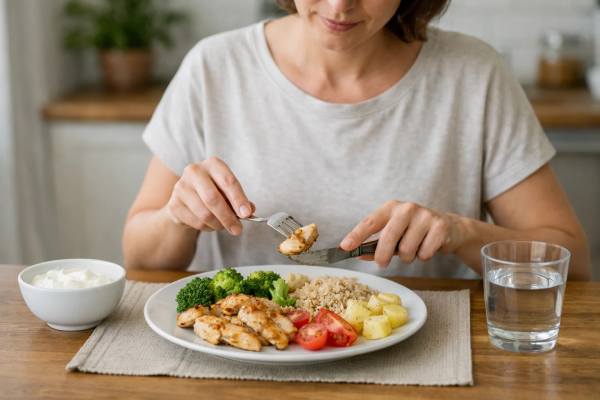
A meal does not affect blood sugar only because of what you eat. It can also change because of the order in which you eat it. That idea sounds almost too simple, yet it is one of the more practical nutrition strategies for softening post-meal glucose spikes without counting every gram or following a rigid diet. When protein and fiber-rich foods come before starches or sweets, digestion often slows, fullness tends to last longer, and the rise in glucose may be gentler.
That does not make meal order a magic trick. It will not cancel out oversized portions, ultra-processed meals, or a pattern of poor sleep and inactivity. Still, for many people with prediabetes, insulin resistance, gestational diabetes, or frequent energy crashes after meals, this small shift can be surprisingly useful. The key is understanding how it works, when it helps most, and how to use it in a way that feels realistic rather than fussy.
Quick Summary
- Eating protein and fiber-rich foods before starches can reduce post-meal glucose swings and may improve fullness.
- The strategy is most useful for carb-heavy meals, not as a substitute for overall diet quality or portion awareness.
- Evidence is strongest for short-term post-meal glucose control, especially in people with insulin resistance, prediabetes, and type 2 diabetes.
- A practical version is vegetables and protein first, then rice, bread, pasta, potatoes, or dessert.
- People using insulin or glucose-lowering medication may need to monitor responses more closely when changing meal patterns.
Table of Contents
- Why meal order matters
- What the research actually shows
- Who benefits most from this trick
- How to do it in real meals
- Best foods to put first
- Limits, safety, and common mistakes
Why meal order matters
When people hear “protein before carbs,” the useful version is usually broader than the phrase itself. The pattern that appears most helpful is often vegetables first, protein second, and starches or sugary foods last. That sequence can change the speed of digestion and absorption enough to blunt the sharpest part of the post-meal rise in glucose.
Several mechanisms likely explain why this happens. Protein and fiber slow gastric emptying, meaning food leaves the stomach more gradually. That can delay how quickly glucose from rice, bread, pasta, potatoes, juice, or dessert reaches the bloodstream. Protein may also stimulate hormones involved in satiety and insulin response, which can help the body handle carbohydrate more smoothly. Meanwhile, vegetables add bulk and fiber, which creates a physical and metabolic buffer before the most glucose-raising part of the meal arrives.
This is why the strategy often works best with meals that are clearly mixed but separated enough to sequence. Think of grilled chicken, salad, and rice. Or salmon, broccoli, and potatoes. Or lentils, roasted vegetables, and flatbread. It is harder to apply with meals that are fully blended, like pizza, casseroles, burritos, or sweet bakery foods. In those cases, the trick is not useless, but the effect is usually smaller because the foods are already combined.
Another reason the method can help is behavioral rather than biochemical. Starting with protein and vegetables often slows the pace of the meal. People tend to feel fuller sooner, which can reduce mindless overeating and make carb portions more reasonable without forcing strict deprivation. For many readers, that is part of the real value. The approach is simple enough to repeat, and repeatable strategies tend to outperform “perfect” plans that collapse after three days.
This is especially relevant for people who notice post-meal blood sugar spikes, afternoon sleepiness, or sudden cravings after carb-heavy meals. They may not need a fully different diet as much as a smarter way to structure the meal already on the plate.
Still, meal order is not a biochemical loophole. A giant bowl of refined carbs, sugary coffee, and a small side of protein will not behave like a balanced meal just because the protein was eaten first. Total carbohydrate load, food quality, fiber content, sleep, stress, activity, and medication use still matter. The sequence helps by changing the curve, not by erasing the meal’s metabolic reality.
The most useful way to think about protein before carbs is as a “glucose speed control” technique. It can make a meal metabolically gentler, but it works best when the meal itself is already reasonably built.
What the research actually shows
The research on meal order is promising, but it is important to describe it honestly. The strongest evidence supports a short-term improvement in postprandial, or after-meal, glucose control. In plain language, people often see a lower and smoother rise in blood sugar when carbohydrates are eaten after vegetables and protein instead of before them.
That pattern has appeared in small crossover trials involving healthy adults, people with prediabetes, and people with type 2 diabetes. It has also been studied in pregnancy-related glucose problems. A recent body of research suggests the effect is not limited to one exact cuisine or one narrow meal template. The basic principle seems fairly portable: start with the foods least likely to spike glucose, then finish with the starchier part of the meal.
The evidence is especially interesting because it reflects real meals rather than isolated sugar drinks. In many studies, participants ate meals that looked familiar: rice with chicken and salad, mixed Western meals, or everyday plates built from vegetables, protein, and starch. That makes the strategy easier to translate into ordinary life than more technical approaches that depend on laboratory-style meal tests.
What the evidence does not yet prove is just as important. Most studies are short. Many are small. Not every trial shows the same size of effect. And meal sequencing seems more reliable for post-meal glucose than for major long-term outcomes such as large A1C changes, weight loss, or diabetes prevention on its own. In other words, it is a useful tool, but not a complete metabolic treatment.
A good way to frame the findings is this:
- The most consistent benefit is lower post-meal glucose excursions.
- The effect often looks stronger when carbohydrate-rich foods are clearly saved for later in the meal.
- Protein plus vegetables first usually works better than simply eating “a little protein somewhere.”
- The strategy is most convincing as an add-on to a good meal pattern, not a replacement for one.
Newer research also suggests that a strict waiting period is not always necessary. Some early studies separated meal components by about 10 minutes, which made the sequence easy to measure in research settings. More recent work suggests benefit can still appear even without a long pause, which is good news for people who want something practical rather than performative.
For readers who like data, tracking with a continuous glucose monitor can make the effect easier to see. Some people discover a clear difference between eating bread first and eating it last. Others find the response is modest and depends more on sleep, stress, walking after meals, or total carb load. That individual variation is normal.
So, the research supports the method, but with reasonable limits. Protein before carbs is evidence-informed, low-cost, and practical. It is not a cure, not a shield against poor meal quality, and not equally powerful for every person. Its real strength is that it offers a small, sustainable behavior change with a plausible metabolic payoff.
Who benefits most from this trick
This strategy is not only for people with diabetes. It may be useful for anyone who feels noticeably worse after carb-heavy meals, but some groups are more likely to benefit than others.
People with prediabetes or type 2 diabetes are among the clearest candidates. Their glucose response after meals is often higher and longer-lasting, so even a modest reduction in the spike can be meaningful. The same applies to people with insulin resistance, especially those who feel hungry again soon after eating or who rely on carb-dominant meals that leave them tired, shaky, or mentally foggy. For these readers, the technique can fit well alongside other basics used to improve insulin resistance.
It may also help people with gestational diabetes, though pregnancy is not the time for self-experimentation without medical guidance. Meal sequence is simple, but glucose targets in pregnancy are stricter, and changes should be discussed with the clinician or dietitian managing the pregnancy.
Another group that may benefit is people who feel they “eat healthy” yet still struggle with energy dips after meals. A lunch of fruit, crackers, and a low-protein salad can look light and virtuous while still producing an unhelpful glucose curve. Reordering the same foods, or increasing protein before the most starchy part, may make that meal feel more stable.
People using a CGM often notice the effect more clearly because they can watch the shape of the glucose curve rather than guessing from symptoms. On the other hand, those without glucose issues may see only a small difference. If someone already eats balanced meals with enough fiber, protein, and moderate carbohydrate portions, the added benefit of sequencing may be real but subtle.
Some people should use extra care. That includes those taking insulin or medications that can lower glucose, such as sulfonylureas, because any meaningful shift in post-meal glucose can interact with dose timing or expectations. It also includes people with chronic kidney disease who have been told to limit protein, since “more protein” is not automatically better or safer. The strategy can often still be used, but the protein choice and amount should match medical advice.
It is also worth noting who may not need to obsess about this. People with a history of disordered eating, high food anxiety, or rigid meal rules can turn a helpful idea into another layer of stress. If sequencing meals starts to feel compulsive, the cost may outweigh the benefit.
In practice, the biggest winners are usually people whose meals are carb-heavy, whose glucose handling is already somewhat impaired, and who want a simple change they can use consistently. For them, protein before carbs can be a meaningful nudge toward steadier energy and better glucose control without turning every meal into a math problem.
How to do it in real meals
The most practical version of this method is not complicated: eat vegetables and protein first, then eat the starchier part of the meal. That is the heart of it. You do not need a stopwatch, a supplement stack, or a color-coded chart.
A simple framework works for most meals:
- Start with non-starchy vegetables if they are part of the meal.
- Eat the main protein next, or alongside the vegetables.
- Save the rice, bread, pasta, potatoes, tortillas, fries, cereal, or dessert for last.
For many adults, meals feel most stable when they contain a meaningful protein serving rather than a symbolic one. That often means roughly 20 to 30 grams of protein at a main meal, though individual needs vary by size, age, activity, kidney health, and appetite. The sequence usually works better when the meal also includes fiber and is not dominated by refined starch.
Here is what that can look like in daily life:
- At breakfast: eggs or Greek yogurt first, toast or granola later.
- At lunch: chicken and salad first, sandwich bread or chips later.
- At dinner: fish and vegetables first, rice or pasta last.
- When eating out: begin with salad, edamame, beans, eggs, tofu, seafood, or meat before moving to the starch-heavy parts of the plate.
It can also help to use the strategy selectively rather than trying to do it perfectly at every meal. The biggest payoff often comes with meals that are heavy in refined or rapidly digested carbohydrate. Think sushi rice bowls, pasta dinners, burger-and-fries meals, bakery breakfasts, or takeout that is mostly rice or noodles. A dinner built around beans, vegetables, and a moderate portion of whole grains may need less “management” than a large plate of white rice and sweet sauce.
Many people find it easier to practice this first thing in the day. A high-protein breakfast approach often reduces late-morning cravings and sets up better glucose control for the rest of the day. Breakfast is also one of the easiest meals to re-sequence because it often contains clearly separate foods.
This is where realism matters. Some meals cannot be neatly separated. If you are eating pizza, a burrito, or a one-pot pasta dish, do the best version available: start with a side salad, protein appetizer, or vegetables before the main dish. Even a small shift may help. You do not need a perfect “protein course” for the idea to be useful.
Consistency matters more than ritual. A calm, repeatable pattern will help more than a technically perfect sequence you only manage twice a month. Think of meal order as an easy lever: pull it when it fits, especially with carb-heavy meals, and let it support the bigger picture of balanced eating.
Best foods to put first
Not all “protein before carbs” choices work equally well. The best first foods tend to do two jobs at once: they provide protein and they make the meal slower, fuller, and less likely to turn into a starch-only event. In many cases, the strongest opening move is not protein alone but a combination of fiber-rich vegetables and protein.
Good first choices include:
- Eggs
- Greek yogurt or skyr
- Cottage cheese
- Tofu, tempeh, or edamame
- Fish or seafood
- Chicken or turkey
- Lean beef in moderate portions
- Lentils, beans, or chickpeas
- Salad or cooked non-starchy vegetables
- Soups built around vegetables and protein
These foods are often better starters than processed protein bars, sugary yogurt, or heavily breaded meats. The goal is not simply to check a protein box. The goal is to begin the meal with foods that are less glucose-raising and more satiating than the starch-heavy part waiting later on.
It also helps to think about the carbohydrate you are saving for later. The biggest benefit tends to show up when the “carb last” portion is the kind of food that can otherwise spike glucose quickly: white rice, white bread, pasta, noodles, potatoes, chips, sweet drinks, or dessert. If the carb source is higher in fiber and eaten in a modest portion, meal order still matters, but less dramatically.
A useful pattern is to combine this trick with a fiber-first strategy. That might mean starting with salad and salmon before eating rice, or eating beans and roasted vegetables before tortillas, or finishing a pasta meal with fewer noodles because you began with vegetables and chicken. The combination of fiber, protein, and slower pacing is often what makes the method feel effective in real life.
A few meal examples make the idea concrete:
- Rice bowl: cucumber salad and chicken first, rice last.
- Pasta dinner: side salad and meatballs first, pasta second.
- Burger meal: burger patty and side salad first, bun and fries after.
- Breakfast plate: eggs and berries first, toast or pancakes after.
- Mediterranean lunch: hummus, chopped vegetables, and grilled fish first, pita later.
There is also a quality question. High-fat protein foods can slow digestion, but they may not be the best everyday choice if the meal becomes very calorie-dense or hard to digest. A sequence built around lean protein, legumes, dairy, or minimally processed plant proteins is often easier to repeat and fits better into long-term cardiometabolic health.
The simplest benchmark is this: when you look at the plate, the foods you eat first should be the ones most likely to steady you rather than spike you. That usually means vegetables and protein first, starchy carbs last, and dessert last of all if it is part of the meal.
Limits, safety, and common mistakes
Protein before carbs works best when it is treated as a useful tool, not a loophole. The most common mistake is assuming meal order can “cancel” a meal that is oversized, low in fiber, or built mostly from refined carbs. It cannot. Saving fries or dessert for later may soften the glucose rise, but it does not turn a low-quality meal into a high-quality one.
Another mistake is forgetting the vegetable part. Much of the best research involves vegetables plus protein before carbohydrate, not steak alone and then a mountain of starch. Fiber matters. Volume matters. Slower eating matters. A few bites of chicken before a sweet coffee drink is not the same intervention as a meal that starts with salad and a solid protein serving.
A third mistake is overdoing protein in the name of glucose control. More is not always better. People with chronic kidney disease, certain metabolic conditions, or medically prescribed protein limits should not use this strategy as an excuse to push protein much higher without guidance. The method is about order, not protein excess.
There are also situations where symptoms matter more than theory. Someone who gets shaky, sweaty, anxious, or suddenly ravenous after eating may have a pattern consistent with reactive hypoglycemia after meals, medication effects, or another issue worth evaluating. Meal order can help some people, but it is not a substitute for proper assessment if symptoms are frequent or intense.
Medication is another safety point. People taking insulin or insulin-stimulating drugs may see a different post-meal response when they change meal structure. That does not mean they should avoid the strategy, only that they should monitor more carefully and discuss recurring lows or unexpected readings with their clinician.
A few realistic guardrails help:
- Use the method to improve a meal, not justify a bigger one.
- Keep carbohydrate portions sensible even when eating them last.
- Choose protein foods that fit your overall health needs.
- Pair the strategy with sleep, movement, and general meal quality.
- Watch what happens over several meals, not just one.
It is also worth keeping expectations modest. You may notice a large benefit with white rice and almost none with a balanced bean-and-quinoa bowl. You may find breakfast responds strongly while dinner barely changes. You may discover that a 10-minute walk after meals helps as much as meal order. None of that means the strategy failed. It means glucose control is shaped by multiple levers.
The best use of protein before carbs is thoughtful rather than obsessive. It can meaningfully improve the metabolic feel of a meal, especially in people prone to higher post-meal glucose. But it works best as part of a broader pattern: better meal composition, enough fiber, reasonable portions, regular movement, and medical care when needed.
References
- Ordered Eating and Its Effects on Various Postprandial Health Markers: A Systematic Review 2023 (Systematic Review)
- The Effect of Adding Protein to a Carbohydrate Meal on Postprandial Glucose and Insulin Responses: A Systematic Review and Meta-Analysis of Acute Controlled Feeding Trials 2024 (Systematic Review and Meta-Analysis)
- Carbohydrates-Last Food Order Improves Time in Range and Reduces Glycemic Variability 2025
- Postprandial Glucose and Insulin Response to Meal Sequence Among Healthy UAE Adults: A Randomized Controlled Crossover Trial 2024 (RCT)
- The impact of food order on postprandial glycemic excursions in prediabetes 2019 (RCT)
Disclaimer
This article is for educational purposes only and is not medical advice. Meal order can affect post-meal glucose, but the response varies by health status, medication use, pregnancy, kidney function, meal composition, and individual metabolism. If you have diabetes, recurrent low blood sugar symptoms, gestational diabetes, chronic kidney disease, or use glucose-lowering medication, discuss meaningful dietary changes with your clinician or dietitian.
If this article helped you, please share it on Facebook, X, or your preferred platform so others can find practical, evidence-based guidance on steadier blood sugar.