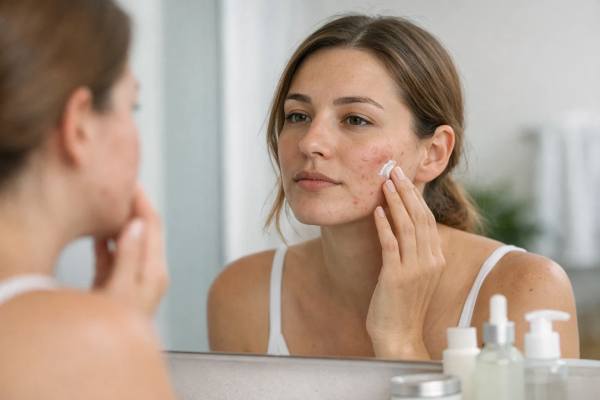
PCOS acne can be especially frustrating because it often behaves differently from the short-lived breakouts many people expect. Instead of a few surface pimples that fade with a new cleanser, the acne tied to polycystic ovary syndrome often runs deeper, lingers longer, and returns in the same hormone-sensitive areas again and again. It can flare around the jawline, chin, neck, chest, or back, and it may show up alongside irregular periods, unwanted hair growth, scalp thinning, or stubborn oiliness.
That pattern matters because PCOS acne is not only a skin issue. It is often a sign that androgens, insulin signaling, or ovulation patterns are affecting the skin from the inside out. The most effective plan usually combines smart skincare with a broader look at hormones, cycle history, and metabolic health. Once you understand why the acne keeps recurring, treatment becomes less random. Instead of cycling through products and hoping one finally works, you can build a more targeted, sustainable approach.
Key Insights
- PCOS acne often improves more when treatment addresses both the skin and the hormonal drivers behind it.
- A steady routine with a retinoid, benzoyl peroxide, or other targeted topical treatment often works better than frequent product switching.
- Hormonal treatments such as combined oral contraceptives or spironolactone can be especially useful when breakouts cluster around the lower face and come with other androgen-related symptoms.
- Deep cysts, scarring, pregnancy planning, or severe mood or bleeding side effects from treatment should prompt medical review rather than self-experimenting.
- Give a well-chosen regimen about 8 to 12 weeks before judging it, unless irritation, allergy, or worsening nodules make earlier changes necessary.
Table of Contents
- Why PCOS Acne Behaves Differently
- What PCOS Acne Usually Looks Like
- When Acne Points to Hormone Testing
- Skincare That Actually Supports Treatment
- Medication Options That Target the Cause
- Insulin Resistance and Lifestyle Support
- When to Seek Specialist Care
Why PCOS Acne Behaves Differently
PCOS acne tends to be more persistent because the skin is responding to a repeated internal signal, not just clogged pores on the surface. In many people with PCOS, androgen activity is higher than the skin can comfortably tolerate. That can happen because testosterone is elevated, because free testosterone is higher when sex hormone-binding globulin is low, or because the skin itself is especially sensitive to androgen signaling. The result is more sebum, more clogged follicles, and more inflammation.
This is why PCOS acne often feels “stuck.” You may improve a little with spot treatments or facials, then flare again once the routine becomes less aggressive or the next hormonal wave arrives. The problem is not poor hygiene. It is that the oil glands are receiving repeated instructions to stay active. Androgens increase sebum production, and insulin resistance can intensify the picture by pushing ovarian androgen production higher and lowering sex hormone-binding globulin. That combination helps explain why the acne of PCOS can feel deeper, oilier, and more recurrent than ordinary adolescent breakouts.
The inflammatory side matters too. Once the follicle is blocked and the skin environment becomes oil-rich, bacteria already present on the skin can contribute to redness, tenderness, and swollen lesions. That is why PCOS acne often includes both comedones and inflamed papules, pustules, or painful nodules. Some people get constant small bumps. Others get fewer lesions but more cystic breakouts that linger and scar.
Another reason PCOS acne behaves differently is timing. Many people notice that their breakouts do not follow a simple monthly pattern because ovulation itself may be irregular. The acne may flare before a delayed period, during long stretches without a period, or after changes in weight, stress, sleep, or diet that worsen insulin resistance. If your skin seems tied to a larger pattern of cycle disruption, unwanted hair growth, or weight changes, it may fit into a broader picture of female hormone symptoms rather than an isolated skin problem.
This hormonal foundation does not mean topical care is useless. It means topical care works best when paired with a more realistic expectation. Skincare can reduce clogging, calm inflammation, and protect against scarring. But if the underlying hormonal push stays strong, the skin often needs more than cleansing and exfoliation. That is why so many people with PCOS acne do best with a layered plan: daily skin treatment, attention to metabolic health, and medication when the breakouts are clearly hormone-driven.
Once you understand that PCOS acne is a skin expression of a larger endocrine pattern, the next step becomes clearer. Instead of asking, “What product am I missing?” the better question is, “What is my acne pattern telling me about hormones, insulin, and how my skin is responding?”
What PCOS Acne Usually Looks Like
PCOS acne does not look exactly the same in every person, but there are some recurring clues. It often shows up on the lower half of the face, especially the jawline, chin, and around the mouth. The neck may also be involved. In some people, the chest, shoulders, and upper back flare as well. The lesions tend to be more inflamed, more tender, and slower to resolve than the smaller, more scattered breakouts typical of mild nonhormonal acne.
A common pattern is deep, sore bumps that seem to sit under the skin for days or weeks. These may never fully come to a head. They can flatten, leave dark marks, and then return in the same area with the next flare. That repeating cycle is one reason PCOS acne can leave post-inflammatory hyperpigmentation or scarring more quickly than people expect. Even when there are only a few lesions at a time, the emotional burden can be significant because the breakouts often feel constant and hard to control.
It also frequently overlaps with other androgen-related signs. These might include:
- irregular or infrequent periods
- oily skin that returns soon after washing
- increased facial or body hair growth
- scalp hair thinning
- weight gain around the midsection
- darkened skin folds, especially around the neck or underarms
Not everyone with PCOS acne has all of these. Some people mainly notice skin changes and only later realize their cycles were never truly regular. Others have diagnosed PCOS but little facial hair and mostly struggle with breakouts and oily skin. That range is part of why the condition gets missed. Acne alone does not prove PCOS, but acne with menstrual irregularity or other androgen-related features should make the possibility more visible.
Age can add confusion. People often assume hormonal acne belongs only to teenagers, yet PCOS-related acne commonly continues into the 20s, 30s, and beyond. Adult persistence is one clue. Another is recurrence after standard treatments that worked only briefly. If the acne improves on antibiotics but rebounds soon after stopping, or improves somewhat on topical treatment but never fully settles, a hormonal driver may be keeping the cycle alive.
It is also worth separating PCOS acne from a few look-alikes. Rosacea can cause facial redness and bumps, but it behaves differently and often affects the central face more than the jawline. Folliculitis can mimic acne on the chest or back. Perioral dermatitis can look like acne around the mouth but needs a different treatment approach. This matters because the wrong routine can worsen irritation and delay improvement.
The most useful takeaway is that PCOS acne is often less about the total number of spots and more about their pattern. Lower-face distribution, recurring nodules, oiliness, long-lasting marks, and associated hormonal symptoms are the details that make the picture more recognizable. Those details guide what to test, how to build the routine, and whether topical treatment alone is likely to be enough.
When Acne Points to Hormone Testing
Not everyone with acne needs hormone testing. Many people have acne without any endocrine disorder, and broad hormone panels can create confusion when they are ordered without a clear reason. But acne deserves a more hormonal workup when it follows a pattern that suggests androgen excess, ovulatory dysfunction, or another endocrine condition contributing to the breakouts.
Testing becomes more relevant when acne appears alongside:
- irregular, infrequent, or absent periods
- worsening facial or body hair growth
- scalp thinning at the crown or temples
- sudden increase in oily skin
- unexplained weight gain or signs of insulin resistance
- infertility or difficulty predicting ovulation
- acne that is severe, cystic, treatment-resistant, or unusually persistent into adulthood
The goal of testing is not to prove that hormones matter. Hormones often matter even when levels fall within a standard range. The goal is to identify patterns that change management. In suspected PCOS, clinicians may assess total and free testosterone, sex hormone-binding globulin, DHEAS, menstrual history, and sometimes pelvic ultrasound, while also ruling out other causes of androgen excess or irregular cycles. Depending on the presentation, thyroid function, prolactin, and other targeted labs may be added.
Timing can matter, especially for people who still menstruate at least somewhat predictably. Hormonal contraception can also affect interpretation by changing androgen levels and ovarian activity. That is why a basic understanding of how hormone testing is usually approached can save frustration. The right test at the wrong time, or after starting medication that changes the results, may answer less than expected.
It is also important to rule out conditions that can mimic PCOS or coexist with it. Marked elevation in androgens, very rapid onset of hair growth or hair loss, deepening of the voice, nipple discharge, or severe cycle disruption can call for a broader endocrine workup. Acne that seems “hormonal” but appears without irregular cycles or androgen signs may still be hormonally influenced without meeting criteria for PCOS.
A practical way to prepare for an appointment is to bring a short symptom summary. Include:
- how long the acne has been present
- where it appears and whether it scars
- menstrual cycle length and regularity
- any facial hair, scalp thinning, or weight change
- current skin products and past medications
- whether you are trying to conceive or avoid pregnancy
This kind of summary often helps more than showing up with a long supplement list and no symptom timeline. Hormone testing is most useful when it answers a specific clinical question. Is this likely PCOS? Is there significant androgen excess? Is another endocrine problem contributing? Once those questions are clearer, skincare and medication choices usually become much more focused.
Skincare That Actually Supports Treatment
Good skincare for PCOS acne should make prescription or active treatment easier to tolerate, not overwhelm the skin with ten competing products. Many people with persistent acne end up trapped in a cycle of over-cleansing, harsh exfoliation, and frequent switching. That approach can damage the skin barrier, increase irritation, and make it harder to stay consistent long enough for effective treatments to work.
A basic routine usually does more than a complicated one. For most people, the core steps are:
- a gentle cleanser once or twice daily
- a treatment product chosen for the type of acne
- a non-comedogenic moisturizer
- daily sunscreen, especially if using retinoids, acids, or pigment-fading ingredients
The treatment step is where routines differ. Retinoids are often a strong backbone because they help normalize cell turnover and prevent clogged pores. Benzoyl peroxide helps reduce inflammatory lesions and is especially useful when combined with antibiotics to lower the risk of bacterial resistance. Azelaic acid can be helpful when acne overlaps with post-inflammatory dark marks, sensitivity, or redness. Salicylic acid may suit some oily, comedonal patterns, but more is not always better.
The best routine is the one you can sustain for 8 to 12 weeks without constantly resetting. A few practical rules help:
- Introduce one major active at a time.
- Use retinoids gradually if dryness or peeling is likely.
- Moisturize even if the skin feels oily.
- Avoid scrubs, rough cleansing brushes, and aggressive picking.
- Do not layer every acne product you own onto the same night.
Picking deserves special mention because deep hormonal lesions are tempting to squeeze and often feel as though they need to be “released.” In reality, cystic lesions usually sit too deep for safe extraction at home. Picking raises the risk of infection, prolonged redness, and scarring.
Cosmetics also matter, though usually less than people fear. Makeup does not automatically cause acne, but heavy occlusive products, fragranced leave-ons, and irritating formulas can complicate already inflamed skin. A careful look at how cosmetic ingredients and fragrance choices affect exposure and irritation can be useful if your routine is crowded or your skin seems reactive, but the bigger issue is usually product burden rather than one “bad” ingredient.
One more point is often overlooked: skincare cannot fully suppress a strong hormonal signal. That is not failure. It simply means the routine needs to support a broader plan. In mild PCOS acne, topical care may be enough. In moderate or persistent cases, the same skincare steps remain important, but they work best as the outer layer of a treatment plan that also addresses internal drivers. Skin routines matter. They just work best when they are realistic, consistent, and built to cooperate with the rest of the treatment strategy.
Medication Options That Target the Cause
Medication decisions for PCOS acne usually depend on three things: how severe the acne is, whether there are other signs of androgen excess, and whether pregnancy is possible or desired. The treatment goal is not only to shrink current breakouts. It is to reduce the hormonal and inflammatory conditions that keep them recurring.
Topical medications are often the starting point. Retinoids help prevent clogged pores and improve texture over time. Benzoyl peroxide reduces inflammatory lesions and works well in combination regimens. Topical antibiotics may be used in selected cases, but they should not be used alone for long periods because resistance becomes a concern. Clascoterone, a topical antiandrogen, is another option in some settings, especially when hormone-sensitive acne is suspected but a person is not ready for oral hormonal therapy.
When acne is clearly hormone-linked, combined oral contraceptives are a common next step. They can help by suppressing ovarian androgen production and raising sex hormone-binding globulin, which lowers free testosterone. This tends to work best when acne is paired with irregular periods, lower-face flares, or other androgen-related symptoms. A balanced overview of how birth control changes hormones and side effects can help frame expectations, because not every pill affects acne the same way and not every person tolerates them equally well.
Spironolactone is another key option, especially for adult women with persistent hormonal acne. It helps block androgen effects at the skin and is often useful when acne is deep, jawline-predominant, or resistant to standard topical treatment. Improvement usually takes time, often several months rather than several weeks. Because it can affect potassium balance, blood pressure, menstrual bleeding, and pregnancy safety, it needs clinician guidance rather than casual self-use.
Metformin can also fit the picture, though it is not primarily an acne medication. Its main role is metabolic. In people with PCOS who have insulin resistance, higher insulin levels, or broader metabolic concerns, it may indirectly help acne by improving insulin signaling and reducing some androgen drive. Its effect on the skin is usually less direct than that of spironolactone or combined oral contraceptives, but it can be meaningful in the right person.
For severe, scarring, or emotionally devastating acne, isotretinoin may be the right choice. It can be highly effective, but in PCOS it is important to understand that even excellent clearance does not always remove the hormonal tendency to relapse later. In other words, isotretinoin can transform severe acne, yet a hormone strategy may still matter afterward if the endocrine driver remains active.
Oral antibiotics still have a place in inflammatory acne, but they should be time-limited and combined with appropriate topical treatment. If someone keeps returning to repeated antibiotic courses without a plan for hormonal management, the acne often returns as soon as the antibiotic stops. In PCOS acne, the most durable medication plans usually target both the follicle and the endocrine pattern behind it.
Insulin Resistance and Lifestyle Support
Lifestyle advice for PCOS acne often gets oversimplified into “eat better and exercise more,” which is not especially helpful. The real point is that insulin resistance can amplify androgen activity and worsen acne in some people with PCOS. That does not mean every breakout is caused by sugar, or that flawless eating will clear hormonal acne on its own. It means metabolic health can influence how loud the hormonal signal becomes.
Insulin can stimulate ovarian androgen production and reduce sex hormone-binding globulin, leaving more free androgen available to act on the skin. This is one reason some people notice that acne improves when cycle regularity, sleep, energy balance, and insulin handling improve. It is also why acne may flare during periods of weight gain, sleep disruption, chronic stress, or highly erratic eating patterns.
The most useful lifestyle strategies are usually the least dramatic:
- regular meals instead of long chaotic gaps followed by overeating
- enough protein and fiber to support satiety and steadier glucose patterns
- resistance training and walking for insulin sensitivity
- consistent sleep
- realistic weight management when weight loss is medically appropriate
- avoiding the cycle of severe restriction followed by rebound eating
These steps help because they support the endocrine environment that acne is reacting to. A review of how insulin resistance shows up and improves can be useful when acne is part of a larger picture that includes fatigue, cravings, irregular cycles, or central weight gain.
Diet discussions need nuance. Some people do notice that high-glycemic eating patterns, frequent liquid calories, or large processed-carb meals seem to worsen breakouts. Others see no clear difference. There is no single acne diet that works for everyone with PCOS. The better question is whether your overall eating pattern supports stable energy, glucose control, and consistency. Extreme elimination plans often create stress without delivering lasting skin improvement.
Stress management matters for similar reasons. Stress does not directly “cause PCOS,” but it can worsen sleep, glucose control, inflammation, and the urge to pick or over-treat the skin. When breakouts are chronic, stress also becomes part of the skin cycle itself. The emotional burden of acne can worsen the behaviors that keep the skin irritated.
Lifestyle support should therefore be seen as treatment support, not treatment replacement. If acne is moderate or severe, lifestyle changes alone may not be enough. But when they are aligned with appropriate skincare and medication, they can make hormonal acne easier to control and sometimes reduce how much medication is needed over time.
A good rule is to look for stability, not purity. Stable meals, stable movement, stable sleep, and stable expectations are more useful than chasing a perfect routine. The skin often responds best when the body is no longer being asked to adapt to constant swings in insulin, stress, and self-experimentation.
When to Seek Specialist Care
PCOS acne can often be managed in primary care, but some patterns deserve earlier input from dermatology, gynecology, or endocrinology. The biggest clues are severity, scarring, treatment resistance, and signs that the acne is part of a broader hormonal picture that has not yet been properly evaluated.
Consider specialist care when:
- acne is deep, cystic, painful, or leaving scars
- breakouts continue despite a steady routine and appropriate first-line treatment
- there are irregular periods, infertility concerns, or clear androgen symptoms
- acne is causing major emotional distress or affecting daily life
- pregnancy is possible, planned, or currently occurring
- there is sudden or marked facial hair growth, scalp thinning, or voice change
- isotretinoin, spironolactone, or more complex hormone treatment is being considered
Dermatology input can be especially useful when the skin barrier is damaged, the diagnosis is uncertain, or scarring is accelerating. Endocrine or gynecologic evaluation becomes more important when cycle patterns, metabolic issues, or androgen excess are central to the picture. Sometimes one clinician can handle both parts well. Sometimes the best care is shared.
It is also reasonable to seek help sooner if acne is making you cycle through treatments in a way that is hurting the skin. A common pattern is trying several acids, retinoids, supplements, elimination diets, and antibiotic courses without any structured review of what is driving the acne or why each treatment was stopped. That usually leads to more irritation and more discouragement, not faster progress.
Specialist review is particularly important when symptoms do not fit ordinary PCOS. Very rapid onset of severe acne, major androgen symptoms, absent periods, nipple discharge, or symptoms suggesting another endocrine disorder call for a closer look. In those situations, the question is not only how to clear the skin. It is whether another diagnosis is being missed. This is where knowing when endocrine follow-up is warranted can be helpful.
One more reason to escalate care is long-term planning. Some treatments that work well for acne are not appropriate during pregnancy or while trying to conceive. Others may help the skin but worsen bleeding, mood, or blood pressure in a way that changes the risk-benefit balance. Good specialist care puts those tradeoffs on the table early.
PCOS acne is treatable, but it rarely responds best to guesswork. If the acne is scarring, resistant, or clearly linked to menstrual and androgen symptoms, a specialist can often shorten the path to a more coherent plan. The best outcome is not just clearer skin. It is a treatment strategy that fits your hormones, your skin, and the stage of life you are actually in.
References
- Recommendations From the 2023 International Evidence-based Guideline for the Assessment and Management of Polycystic Ovary Syndrome 2023 (Guideline)
- Guidelines of care for the management of acne vulgaris 2024 (Guideline)
- Adult Female Acne: Managing the Hormones 2024 (Review)
- Effectiveness of spironolactone for women with acne vulgaris (SAFA) in England and Wales: pragmatic, multicentre, phase 3, double blind, randomised controlled trial 2023 (RCT)
- Polycystic Ovary Syndrome-Associated Acne: The Interplay of Hyperandrogenism, Insulin Resistance, and Therapeutic Strategies 2025 (Review)
Disclaimer
This article is for educational purposes only and is not a substitute for personal medical advice, diagnosis, or treatment. PCOS acne can overlap with other causes of adult acne, androgen excess, menstrual irregularity, and endocrine conditions, and the right treatment depends on your symptoms, medical history, pregnancy plans, and medication risks. Seek medical care promptly for rapidly worsening acne, scarring, severe menstrual changes, signs of significant androgen excess, or medication side effects that affect bleeding, mood, blood pressure, or pregnancy safety.
If this article helped, please consider sharing it on Facebook, X, or another platform where it may help someone understand why persistent acne sometimes needs a hormone-focused plan, not just stronger skincare.