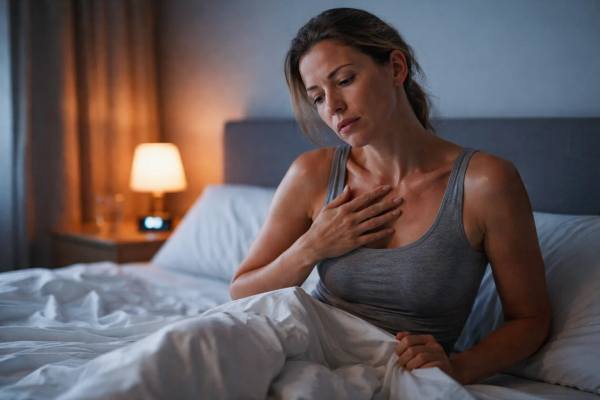
Waking in the middle of the night damp, overheated, and suddenly wide awake can feel disproportionate to the hour. Night sweats are often dismissed as a warm room or heavy duvet, yet they can also be a clue to shifting hormones, disrupted sleep biology, medication effects, or an underlying medical issue that deserves attention. In midlife, they are especially common because the same hormonal changes that drive hot flashes can unsettle body temperature and fragment sleep at the same time.
Still, not every sweaty night means menopause, and not every hormonal night sweat should simply be endured. The pattern matters. So do the details around it: your age, menstrual changes, medications, snoring, alcohol use, fever, weight changes, and whether you feel flushed, shaky, anxious, or unwell. Understanding those clues can make the problem much less mysterious and help you choose the right next step, whether that is better cooling, sleep-focused treatment, hormone therapy, or a medical checkup.
Quick Overview
- Night sweats are often linked to hormone changes in perimenopause and menopause, but they can also be caused by medication, thyroid problems, low blood sugar, anxiety, infection, or sleep apnea.
- Sleep often worsens for two reasons at once: the sweating episode wakes you up, and the stress of repeated waking can lead to insomnia.
- Cooling strategies and trigger reduction can help, but they do not replace medical evaluation when symptoms are intense, new, or unexplained.
- Track symptoms for 2 weeks, including timing, menstrual changes, alcohol, new medicines, snoring, fever, and whether the sweat is mild or soaking.
- Get checked promptly if night sweats come with weight loss, persistent fever, swollen glands, chest symptoms, severe palpitations, or repeated low blood sugar.
Table of Contents
- What night sweats actually mean
- How hormones trigger night sweats
- Why sleep gets hit twice
- Other causes worth considering
- What can actually help
- When to get checked
What night sweats actually mean
People use the term “night sweats” loosely, but there is a practical difference between feeling a bit warm at night and having a true sweating episode. A mildly stuffy bedroom, a memory-foam mattress, thick sleepwear, or a duvet that is too warm can make anyone uncomfortable. True night sweats tend to feel more abrupt and harder to explain away. You may wake suddenly, feel a wave of heat or flushing, notice sweat on your chest, neck, or back, and sometimes need to change clothing or move covers off quickly.
The pattern matters because it helps sort simple overheating from a physiologic event. Hormone-related night sweats often come in surges. They can arrive with a racing heart, a sense of internal heat, and then a chill after the episode passes. Some people do not notice much sweating until they wake, but the result is the same: broken sleep, frustration, and dread about going to bed again the next night.
It is also helpful to notice whether the sweating is generalized or selective. If your whole body is soaked and the bedding is wet, that carries a different weight than mild perspiration around the hairline. Likewise, ask whether it is happening every night, around your period, after alcohol, after a stressful day, or only in certain phases of life such as postpartum recovery or the menopause transition.
A short symptom log can be more useful than memory alone. Note:
- how often the episodes happen
- whether they wake you from sleep
- whether they coincide with hot flashes during the day
- room temperature and bedding
- alcohol, caffeine, spicy food, or exercise close to bedtime
- menstrual changes, if relevant
- new medicines or dose changes
- snoring, gasping, fever, or weight change
This tracking is not about becoming overly vigilant. It is about turning a vague complaint into a pattern. That pattern often points toward the cause more quickly than a single dramatic night ever could.
One other point matters: night sweats are a symptom, not a diagnosis. They can reflect something benign and temporary, but they can also be the visible part of a larger hormone or sleep problem. Seeing them clearly is the first step to deciding whether the best response is cooler bedding, better symptom treatment, or a deeper medical workup.
How hormones trigger night sweats
Hormones influence body temperature much more than most people realize. In perimenopause and menopause, falling and fluctuating estrogen can make the brain’s temperature-control system unusually sensitive. A very small internal temperature change that once went unnoticed may suddenly trigger a flush of heat, sweating, and a strong urge to throw off the covers. When that happens during sleep, it is experienced as a night sweat.
This is why night sweats are grouped with hot flashes under the term vasomotor symptoms. They are related events, just happening in different settings. Some people have classic daytime flushing first and then begin waking drenched at night. Others mainly notice the nighttime version. That can make the hormonal link less obvious, especially if menstrual cycles are still coming and menopause feels “too early” to be part of the story.
Perimenopause is often the phase when the picture is most confusing. Estrogen does not simply fall in a straight line. It swings. Ovulation becomes less reliable. Progesterone may drop earlier because fewer cycles are fully ovulatory. That combination can disturb sleep, mood, and body temperature at once. Many people begin by blaming stress, poor sleep habits, or a bad mattress before recognizing that the bigger pattern also includes irregular periods, new headaches, breast tenderness, palpitations, or mood shifts. Seeing those changes together can make the hormonal explanation much clearer, especially in the context of early perimenopause signs and hormone changes.
Hormones outside menopause can play a role too. Postpartum hormone shifts can trigger sweating, and some endocrine conditions can alter heat tolerance or sweating patterns. Thyroid hormone excess, for example, can raise metabolic drive and make a person feel overly warm, restless, and sweaty. Hormone treatment itself can also matter. Starting, stopping, or changing certain medications that affect estrogen or other hormone pathways may change how often night sweats occur.
The key point is that hormonal night sweats are not “all in your head,” but they are also not just about the ovaries. They reflect communication between the brain, the reproductive hormone system, sleep regulation, and the body’s heat-response pathways. That is why they can feel so intense even when a thermometer would not show much change.
This also explains why treatment is not one-size-fits-all. Some people mainly need better vasomotor symptom control. Others need help with the insomnia that developed around it. And some need a fuller evaluation because the sweating pattern does not fit a typical menopausal story.
Why sleep gets hit twice
Night sweats and poor sleep often become a self-reinforcing cycle. The first hit is direct: a heat surge wakes you, leaves you damp and uncomfortable, and interrupts deeper stages of sleep. The second hit is more subtle but just as important. Once the brain starts expecting another episode, sleep can become lighter, more fragile, and harder to recover after each waking.
This is why people often say, “Even when the sweating is better, I still sleep badly.” After enough disrupted nights, the body can slip into a pattern of conditioned insomnia. You wake, check the clock, worry about how tired you will be tomorrow, and become more alert just when you need to wind back down. Over time, the bedroom itself can start to feel associated with discomfort and vigilance rather than rest.
Hormonal changes can worsen that cycle in several ways. Vasomotor symptoms wake you from sleep, but mood changes, anxiety, joint aches, and changes in circadian rhythm can keep the nervous system more activated than usual. Progesterone changes may also affect how calm or sleepy you feel. For some, night sweats are the gateway symptom that exposes a broader sleep problem. For others, an underlying sleep disorder is already present and the sweating makes it impossible to ignore.
This overlap matters because treatment has to match the full picture. Cooling the room may help the sweating episode, but it will not necessarily fix the pattern of 3 a.m. awakenings and anxious rumination. That is where sleep-focused strategies, and sometimes formal insomnia treatment, become important. A broader look at hormones and sleep disruption can be useful when night sweats seem to be only part of the problem.
Some clues suggest that more than menopause is going on. Loud snoring, choking awake, dry mouth, morning headaches, or severe daytime sleepiness point toward sleep apnea. Creeping discomfort in the legs at night may suggest restless legs syndrome. If you wake sweaty and shaky, especially when using glucose-lowering medication, low blood sugar may be part of the picture.
A practical rule helps here: if the sweating starts the awakenings, treat the vasomotor symptoms. If the sweating improved but sleep stayed poor, treat the sleep disorder too. Those are not competing explanations. They often coexist.
The goal is not just fewer sweaty nights. It is restored sleep continuity, because that is what drives energy, mood, concentration, and recovery the next day. Night sweats are exhausting partly because they disturb sleep architecture, not simply because they make you hot.
Other causes worth considering
Hormones are a common reason for night sweats, but they are not the only one. A good evaluation keeps menopause in mind without letting it explain everything automatically. In real life, several categories come up again and again.
One is medication. Antidepressants, steroids, some pain medicines, hormone-blocking treatments, and drugs that affect blood sugar can all contribute. Sometimes the timing is a clue: the sweating begins after a new medicine starts or after a dose increase. Alcohol can also act like a trigger, either by causing flushing, fragmenting sleep, or worsening reflux and snoring.
Another category is endocrine and metabolic causes. An overactive thyroid can bring heat intolerance, palpitations, tremor, weight loss, and anxiety-like symptoms, so the sweating is often just one part of a larger picture. If that possibility is on your radar, it helps to know the broader pattern of hyperthyroid symptoms. Low blood sugar, especially in people with diabetes or those using glucose-lowering medication, can also cause sweating overnight, sometimes with vivid dreams, shakiness, or morning headache.
Infections can do it too. Fever, cough, recent travel, dental infection, sinus symptoms, or urinary symptoms make infection more likely. Night sweats can also occur with inflammatory or autoimmune illnesses, though those are usually accompanied by other symptoms such as joint pain, rash, fatigue, or unexplained fever.
Sleep disorders deserve special attention because they are so often missed. Obstructive sleep apnea can present with night sweating, repeated awakenings, and poor-quality sleep even when the person does not realize they are snoring. Bed partners often notice the pattern first. Hyperhidrosis, a condition involving excessive sweating, can also show up at night and may not be hormone-driven at all.
Then there are the causes that worry people most: cancers such as lymphoma or leukemia. These are far less common than menopause, medication effects, anxiety, or sleep disorders, but they should not be ignored when the story fits. Drenching sweats that are persistent and occur with unexplained weight loss, fever, swollen lymph nodes, or marked fatigue need prompt evaluation.
A helpful mental framework is this: common things are common, but red flags still matter. Menopause may be the leading explanation in midlife, yet it is not the only one. The job is not to panic over every sweaty night. It is to notice when the pattern includes clues that point somewhere else.
What can actually help
Night sweats improve most reliably when the treatment matches the cause. That sounds obvious, but it is where many people lose time. They try every cooling trick first, even when the pattern clearly points to menopausal vasomotor symptoms, sleep apnea, or medication side effects. Practical measures still matter, but they work best as part of a targeted plan.
Start with the basics
The bedroom setup is worth fixing because it is low-risk and often brings partial relief. Helpful adjustments include:
- a cooler room
- breathable sleepwear and sheets
- layers you can remove quickly
- lighter bedding rather than one heavy duvet
- less alcohol close to bedtime
- attention to spicy food, hot drinks, and late-evening overheating if those are personal triggers
These measures do not treat the underlying hormone signal, but they can reduce the intensity of each episode and make it easier to fall back asleep.
Address the hormone piece
If night sweats are part of perimenopause or menopause, treating vasomotor symptoms directly may help the most. Menopausal hormone therapy is generally the most effective option for people who are good candidates and do not have contraindications. That is especially relevant when night sweats come with hot flashes, poor sleep, and other estrogen-related symptoms. For a broader look at treatment choices, hot flash treatment options can help frame the discussion.
Not everyone can or wants to use hormone therapy. In those cases, nonhormonal prescription options may be considered, and cognitive behavioral therapy tailored to menopause symptoms or insomnia can also be useful. The important nuance is that CBT does not “cool” the body the way hormone therapy can, but it can reduce symptom distress, improve coping, and help repair sleep.
Do not overlook sleep treatment
When the problem has evolved into chronic insomnia, sleep-specific treatment matters. That may include CBT for insomnia, regular wake times, limiting clock-watching, and breaking the cycle of dread around nighttime awakenings. If snoring, witnessed apneas, or severe daytime sleepiness are present, a sleep study may be more important than another supplement.
Know what usually does not help enough
Many people spend months on supplements, sprays, cooling pillows, or internet trends that offer only mild or inconsistent benefit. Some find them comforting, but they should not delay evaluation when symptoms are severe, persistent, or unexplained.
A good treatment plan usually improves both the sweating and the sleep around it. If one gets better and the other does not, the plan may need another layer rather than more of the same.
When to get checked
Night sweats deserve medical attention when they are new, frequent, intense, unexplained, or paired with other symptoms that change the level of concern. Menopause can absolutely be the reason, but repeated drenching sweats are still worth discussing if you are not sure of the cause or if the pattern no longer feels typical.
Arrange a medical review sooner if you have any of the following:
- unexplained weight loss
- persistent fever or chills
- swollen lymph nodes
- chronic cough or shortness of breath
- chest pain or marked palpitations
- new tremor, heat intolerance, or unexplained diarrhea
- recurrent low blood sugar symptoms
- heavy snoring, gasping, or profound daytime sleepiness
- symptoms severe enough to disrupt work, mood, or daily function
The evaluation is usually more straightforward than people expect. A clinician may ask about age, periods, pregnancy risk, travel, infections, alcohol, medications, anxiety, reflux, diabetes, and whether the sweat is mild or soaking. They may check temperature, blood pressure, pulse, weight, thyroid signs, lymph nodes, and chest findings. Depending on the clues, tests might include blood counts, thyroid testing, glucose testing, inflammatory markers, infection testing, or referral for sleep evaluation.
This is also where context matters. A 49-year-old with irregular periods, hot flashes, and classic nighttime heat surges will be approached differently from a younger person with fever, cough, and weight loss. The symptom is the same, but the probability story is different.
Sometimes the most useful next step is a specialist conversation rather than a long series of isolated tests. That is especially true if the picture includes clear hormone symptoms, treatment contraindications, complex medical history, or uncertainty about whether the issue is menopause, thyroid disease, sleep disorder, or something else. In those cases, knowing when specialist hormone care makes sense can help.
A good rule is simple: do not ignore recurring drenching night sweats, but do not assume the worst either. Get them checked when the pattern is persistent, disruptive, or accompanied by red flags. Most causes are treatable, and even when the answer is “this is menopause,” better symptom control can make a real difference to sleep and quality of life.
References
- The 2022 hormone therapy position statement of The North American Menopause Society 2022 (Position Statement)
- The 2023 nonhormone therapy position statement of The North American Menopause Society 2023 (Position Statement)
- Sleep disturbance associated with the menopause 2024 (Review)
- Menopause: identification and management 2025 (Guideline)
- Night sweats 2023 (Official guidance)
Disclaimer
This article is for educational purposes only and is not a substitute for personal medical advice, diagnosis, or treatment. Night sweats can be caused by menopause, sleep disorders, medication effects, infection, thyroid disease, low blood sugar, and other medical conditions. If your symptoms are severe, persistent, unexplained, or accompanied by fever, weight loss, swollen glands, chest symptoms, or repeated low blood sugar, seek medical care promptly.
If you found this article useful, please share it on Facebook, X, or another platform you use so more people can find clear, practical guidance on night sweats and hormone-related sleep disruption.