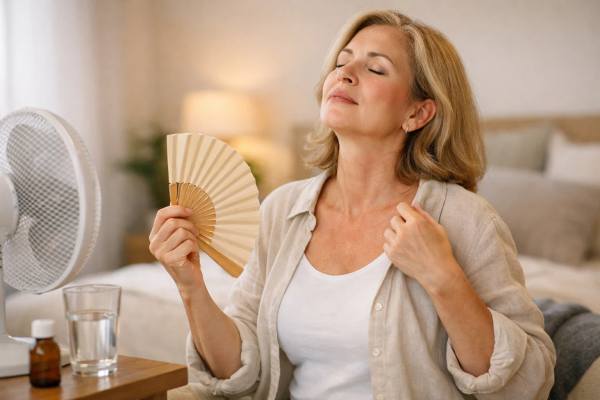
A hot flash can feel surprisingly dramatic for something so common. One moment you are fine, and the next you are flushed, sweaty, overheated, and suddenly wide awake in a meeting or at 2 a.m. Many people assume hot flashes are simply an unavoidable part of menopause and that all you can do is wait them out. That is only partly true. Hot flashes are common during the menopause transition, but they vary widely in intensity, duration, and response to treatment. They also do not all have the same triggers, and not every heat surge is caused by menopause.
What helps most is understanding the pattern. Some people mainly need better symptom tracking and practical lifestyle changes. Others benefit from prescription treatment, especially when sleep, work, mood, or quality of life are suffering. And some need a closer medical look because the symptoms do not fit the usual menopause picture. This guide explains why hot flashes happen, what tends to trigger them, which treatments work best, and how to choose a plan that is both realistic and evidence-based.
Brief Summary
- Hot flashes are most often linked to estrogen changes around perimenopause and menopause, but common triggers can make them feel much worse.
- Hormone therapy remains the most effective treatment for bothersome hot flashes when it is appropriate and safe.
- Nonhormonal prescription options can help when hormone therapy is not wanted or not a good fit.
- Cooling tricks and trigger avoidance can improve comfort, but they usually work best as part of a broader plan rather than as stand-alone treatment.
- Track timing, severity, sleep disruption, and likely triggers for 2 weeks before your visit if symptoms are frequent or hard to predict.
Table of Contents
- Why hot flashes happen
- Common triggers and patterns
- When hot flashes are not just menopause
- Treatments that help most
- Lifestyle tips that actually help
- How to choose your next step
Why hot flashes happen
Hot flashes are part of a broader group of symptoms called vasomotor symptoms. They usually feel like a sudden wave of heat in the face, chest, or upper body, often followed by sweating, flushing, and then a chilly or drained feeling after the episode passes. At night, the same physiology often shows up as night sweats, sleep interruption, and that frustrating pattern of waking up overheated and wide awake.
The main driver is not simply “low estrogen” in a general sense. It is the way changing estrogen levels affect the brain’s temperature regulation system. During perimenopause and menopause, the thermoregulatory zone becomes narrower. That means smaller shifts in body temperature are more likely to trigger heat-dumping responses such as vasodilation and sweating. In everyday language, the body starts acting as if it is overheating sooner than it used to, even when the actual temperature change is small.
This is why hot flashes can feel sudden and disproportionate. A warm room, stress surge, glass of wine, or heavy blanket may be tolerated well one month and then feel unbearable the next. The nervous system is not imagining the sensation. It is reacting more quickly to temperature and signaling changes than it once did.
Timing varies widely. Some people start getting hot flashes in late perimenopause while periods are still coming, just less predictably. Others first notice them after the final menstrual period. For many, symptoms last longer than expected. They are not always a short transition phase of a few months. In some people they persist for years, though intensity often changes over time.
Severity also varies. One person may have a few mild episodes a week. Another may have ten or more a day, sleep disruption several nights a week, and enough fatigue or embarrassment to affect work, exercise, or social life. Frequency matters, but bother matters too. A smaller number of intense or nighttime symptoms can be more disruptive than frequent mild daytime episodes.
Hot flashes are most strongly associated with perimenopause and menopause, but the surrounding context changes how they are experienced. Surgical menopause, cancer treatment, smoking, higher body weight, poor sleep, and chronic stress can all make symptoms feel more intense or harder to recover from. So can the simple fact that many people are managing these symptoms while also working, caregiving, and trying to function on less sleep.
If you are still figuring out whether the broader pattern sounds like hormone transition at all, this guide to early signs of perimenopause and what helps can help put hot flashes into a bigger, more useful context.
Common triggers and patterns
Hot flashes often feel random until you start looking for patterns. The important word is “trigger,” not “cause.” Menopause-related hormone change creates the underlying susceptibility, but triggers often determine when an episode becomes noticeable. That is why the same person can have a quiet week and then a week where symptoms seem to flare from everything.
Heat is the most obvious trigger. Warm rooms, heavy bedding, hot baths, saunas, tight clothing, and even a packed commute can tip the body into a hot flash when the thermoregulatory system is already sensitive. Alcohol is another common amplifier. Some people notice little difference, while others can predict a rough night from one glass of wine. Spicy food and hot drinks can do the same. These do not trigger hot flashes in everyone, but when they matter, they often matter consistently.
Stress is a major pattern-maker. It does not cause menopause, but it can intensify how the body experiences vasomotor symptoms. A stressful day increases sympathetic nervous system activation, disrupts sleep, and lowers the threshold for feeling overheated or overstimulated. This is one reason many people report a cluster of hot flashes during periods of poor sleep, deadline pressure, or emotional strain.
Caffeine can also be part of the picture, especially in people who are already sleeping lightly or feeling more jittery in midlife. For some, coffee is not a problem. For others, it adds enough internal heat, palpitations, or sleep disruption that hot flashes feel more frequent or more dramatic. A trigger journal is often more useful than rules here because individual sensitivity is real.
A few other patterns are worth watching:
- Episodes that are mainly nighttime and linked to bedroom temperature
- Flares after alcohol, even when daytime symptoms are mild
- Hot flashes that cluster around poor sleep or heavy stress
- Symptoms that worsen after smoking or nicotine use
- Increased frequency with heavier meals or a very warm environment
- A stronger pattern after sudden hormone shifts, such as surgery or medication change
It is also worth being careful with the popular idea that avoiding all triggers will solve the problem. Trigger reduction can improve comfort and reduce the chance of a flare, but it does not usually eliminate hot flashes by itself when symptoms are moderate or severe. Some people become so focused on avoiding heat, food, caffeine, travel, and social plans that life shrinks while symptoms remain bothersome. A better goal is to identify the triggers that truly matter for you, not to create a long list of restrictions based on internet folklore.
Night symptoms deserve special attention because they often cause the greatest downstream harm. Even when daytime hot flashes are manageable, repeated sleep interruption can worsen mood, concentration, patience, appetite, and next-day trigger sensitivity. That is why a hot flash problem can quietly become a sleep problem. If nighttime symptoms are the main issue, this guide on night sweats and when to get checked may help you sort out whether your pattern still fits the usual menopause picture.
When hot flashes are not just menopause
Most hot flashes in midlife are related to perimenopause or menopause, but not every episode of flushing or overheating should be dismissed as “just hormones.” The clues are usually in the age, the timing, the associated symptoms, and how well the story fits a normal menopause transition.
A more typical menopause pattern includes irregular periods or a clear menopause history, episodes of internal heat and sweating, nighttime symptoms, and no major red flags beyond sleep disruption and quality-of-life burden. A less typical picture deserves a closer look. Examples include hot flashes that begin very early, symptoms that are intense but occur in someone with fully regular cycles and no other menopausal features, or episodes that come with unusual weight loss, fever, persistent diarrhea, severe palpitations, or a neck swelling.
Thyroid disease is one of the most common look-alikes. Hyperthyroidism can cause heat intolerance, sweating, palpitations, tremor, anxiety, and sleep disruption. In someone already in perimenopause, this can be mistaken for worsening hot flashes unless the broader symptom pattern is noticed. Medication effects can do something similar. Some antidepressants, opioids, endocrine therapies used in breast cancer, steroids, and changes in hormone therapy can all alter temperature regulation or sweating.
Other situations that make evaluation more worthwhile include:
- Hot flashes before age 40
- New symptoms after cancer treatment or ovary removal
- Marked palpitations, tremor, or unexplained weight loss
- Fever, swollen lymph nodes, or drenching sweats that feel ill rather than hormonal
- Flushing tied to alcohol, certain medications, or unusual gastrointestinal symptoms
- Severe symptoms with no clear menopause context
- Persistent uncertainty about whether the problem is really hormonal
This does not mean uncommon endocrine tumors or rare disorders should be the first thought. They are rare. The point is simply that menopause is common enough to become an easy default explanation, and sometimes that default needs to be challenged. A careful history usually narrows the field quickly.
It is also worth remembering that hot flashes are not limited to women in spontaneous menopause. They can follow surgical menopause, chemotherapy, ovarian suppression, or other abrupt hormone shifts. They can also occur in men, particularly when testosterone falls sharply or antiandrogen treatments are used, though that is a different clinical context.
If the line between menopause and another hormone issue feels blurry, it helps to review the overlap between hot flashes, cycle changes, and thyroid symptoms. This overview of thyroid problems in perimenopause and what to test is especially useful when heat intolerance and palpitations are making the picture harder to read.
Treatments that help most
When hot flashes are frequent, disruptive, or exhausting, treatment should be matched to both symptom burden and medical context. The most effective treatment for bothersome vasomotor symptoms remains menopausal hormone therapy. For many healthy, symptomatic women who are younger than 60 or within 10 years of menopause onset and who do not have contraindications, the benefit-risk balance is often favorable. That does not mean hormone therapy is right for everyone, but it does mean it deserves a fair discussion rather than reflex fear or reflex prescribing.
Systemic estrogen is the main treatment driver. If a person still has a uterus, a progestogen is generally needed alongside estrogen to protect the endometrium. If the uterus is absent, estrogen alone may be used. Route and formulation matter. Some people do well with transdermal options, which may be preferable in certain risk situations, while others use oral therapy successfully. The best plan is individualized, not one-size-fits-all.
For people who do not want hormone therapy or should avoid it, nonhormonal prescription treatments can help. Options with useful evidence include:
- Certain SSRIs and SNRIs
- Gabapentin, especially when nighttime symptoms are prominent
- Oxybutynin in selected cases
- Fezolinetant, a nonhormonal neurokinin-targeted treatment
These options vary in side effects and fit. An antidepressant may help both vasomotor symptoms and mood in the right person. Gabapentin may be more helpful when sleep disruption is a major complaint. Fezolinetant offers a nonhormonal route for moderate to severe hot flashes, but medication choice still depends on liver history, medication interactions, and overall risk profile.
What about supplements and alternative remedies? This is where many people lose time. The evidence for herbal blends, cooling pills, “menopause detoxes,” and many supplement combinations is weaker than marketing suggests. Some people report benefit, but that is not the same as predictable evidence-based effect. Even “natural” products can cause side effects or interact with medications.
Behavioral treatments deserve more respect than they often get. Cognitive behavioral therapy does not erase the physiology of hot flashes, but it can reduce distress, improve coping, and make nighttime symptoms less disruptive. Clinical hypnosis also has supportive evidence in selected settings. These approaches are most useful when hot flashes are affecting sleep, mood, confidence, or daily function rather than existing only as a brief physical annoyance.
The best treatment is the one that matches the problem in front of you. Mild daytime symptoms may not need medication. Severe night sweats plus daytime flushing may justify a stronger prescription approach. Cancer history, clotting risk, sleep problems, blood pressure, and symptom goals all matter.
If you want a broader overview of who is and is not a good fit for prescription estrogen-based therapy, this guide to HRT benefits, risks, and candidacy is a useful next step before a treatment conversation.
Lifestyle tips that actually help
Lifestyle support works best when it is practical, targeted, and honest about its limits. Many articles imply that fans, peppermint tea, yoga, and perfect hydration will solve hot flashes outright. For some people, those strategies improve comfort. For many, they are supportive tools rather than true treatment. The difference matters because unrealistic expectations lead to frustration.
The most useful lifestyle step is often a short symptom diary. Track timing, severity, sleep disruption, room temperature, alcohol, caffeine, spicy food, stress, exercise, and cycle timing if periods are still happening. Within 10 to 14 days, most people can identify whether their symptoms are mainly random or clearly linked to a few repeat offenders. That makes the next step much smarter.
Cooling strategies are still worth using, just with the right expectation. Layered clothing, a bedside fan, breathable bedding, moisture-wicking sleepwear, a cooler bedroom, and easy access to cold water can reduce the misery of an episode and may shorten recovery. These are comfort tools, not cures, but comfort matters when symptoms are repetitive.
Weight loss may help some people, especially if symptoms worsened alongside weight gain. This is not because body size “causes” menopause symptoms in a simplistic way. It is because higher body weight can affect heat dissipation and symptom intensity in some individuals. Even modest improvement in fitness and body composition may help, especially when it also improves sleep and energy.
Exercise is valuable, but not because it reliably eliminates hot flashes. The evidence for exercise as a direct hot flash treatment is weaker than many people expect. Its benefits are more indirect and still important: better sleep, lower stress reactivity, improved mood, better metabolic health, and more resilience during a difficult transition. That makes it part of a good plan, not a stand-alone fix.
Behavioral approaches deserve a place here too. Cognitive behavioral therapy and structured coping approaches can reduce how intrusive symptoms feel and improve nighttime recovery. Clinical hypnosis also has stronger evidence than many popular “natural” interventions. By contrast, trigger avoidance alone, aggressive food rules, and endless supplement stacking often add effort without proportional benefit.
A few lifestyle tips are especially useful in real life:
- Keep the bedroom cool and darker at night
- Limit alcohol if it clearly worsens symptoms
- Experiment with caffeine timing rather than assuming it is harmless
- Use layers instead of heavy, heat-trapping clothing
- Build sleep protection into the plan, not as an afterthought
- Focus on what clearly helps you, not on a long list of internet rules
Because poor sleep makes everything worse, hot flash management is often partly sleep management. If broken sleep has become the biggest problem, this article on why insomnia can be endocrine-related can help you think beyond “I just need better sleep hygiene.”
How to choose your next step
The best next step depends less on the existence of hot flashes and more on what they are costing you. A few mild daytime episodes each week call for a different response than hourly surges, nightly sleep disruption, or symptoms so strong they affect meetings, travel, exercise, and intimacy. Severity, frequency, sleep impact, and medical history all matter.
A useful way to frame the decision is with three questions. First, how bothersome are the symptoms really? Second, does the pattern fit ordinary perimenopause or menopause, or are there clues that something else should be ruled out? Third, what treatments are safe and acceptable in your specific situation?
For many people, a primary care clinician or gynecologist can start the conversation well. Come prepared with a brief symptom log rather than trying to recall everything from memory. Note daytime frequency, nighttime wake-ups, likely triggers, cycle changes, medication use, breast cancer history, clot history, migraine pattern, blood pressure, and whether vaginal dryness, mood change, or sleep problems are also present. Those details often determine whether a symptom-only approach makes sense or whether treatment should be broadened.
It can also help to clarify your real goal. Some people want fewer episodes. Others mainly want uninterrupted sleep. Some want to avoid hormone therapy. Others want the most effective option available if it is safe. A plan tends to work better when the target is clear.
A few situations justify a lower threshold for medical follow-up:
- Hot flashes are waking you repeatedly and impairing daytime function
- Symptoms began very early or do not fit the expected menopause picture
- You have breast cancer history, clotting history, liver disease, or unexplained bleeding
- Symptoms appeared after surgery, cancer treatment, or abrupt hormone change
- Palpitations, weight loss, fever, or severe anxiety are making the diagnosis uncertain
- Multiple treatment attempts have failed or side effects are becoming a problem
It is also reasonable to escalate sooner if the symptoms are having a major emotional effect. Hot flashes are often minimized because they are common, but common does not mean trivial. Chronic sleep disruption, embarrassment, irritability, and mental fatigue can affect relationships, work performance, and sense of self.
If your symptoms are severe, medically complicated, or not responding to the first round of care, this guide on when to see an endocrinologist can help you decide when specialist input is likely to add real value.
References
- The 2022 Hormone Therapy Position Statement of The North American Menopause Society 2022 (Guideline)
- The 2023 nonhormone therapy position statement of The North American Menopause Society 2023 (Guideline)
- Vasomotor Symptoms During Menopause: A Practical Guide on Current Treatments and Future Perspectives 2023 (Review)
- Nonhormonal Treatment of Menopausal Vasomotor Symptoms 2025 (Review)
Disclaimer
This article is for educational purposes only and is not medical advice, diagnosis, or treatment. Hot flashes are commonly related to perimenopause and menopause, but they can also be influenced by medications, thyroid disease, cancer treatment, or other medical conditions. Treatment decisions, especially around hormone therapy and prescription nonhormonal options, should be made with a qualified clinician who can review your symptoms, medical history, risks, and preferences. Seek prompt medical care if hot flashes are accompanied by chest pain, fainting, unexplained weight loss, fever, severe palpitations, or other symptoms that do not fit a typical menopause pattern.
If this article helped you feel less stuck with hot flashes, please share it on Facebook, X, or another platform where it may help someone else find practical, evidence-based relief.