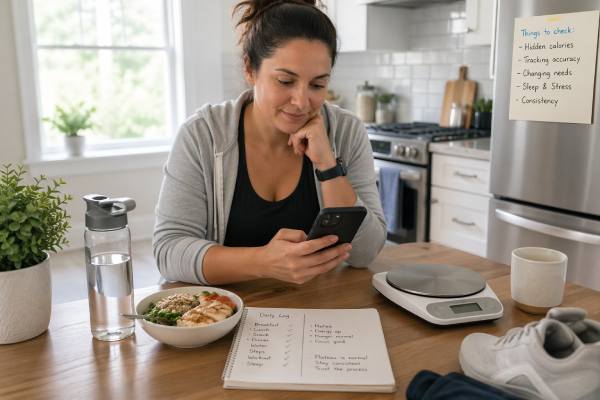
Weight regain after stopping GLP-1 medications is common, but it is not automatic and it is not a sign that you failed. For many people, these medications lowered appetite, reduced food noise, and made a calorie deficit easier to sustain. When the medication stops, some of those benefits fade, and the body’s usual hunger and weight-regulation pressures can return quickly.
That does not mean you are powerless. The best way to limit regain is to treat the transition off medication like a real maintenance phase, not like an afterthought. This article explains why regain happens, what tends to happen in the weeks and months after stopping, which habits matter most, how to respond early if the scale starts climbing, and when it makes sense to talk with your clinician about next steps.
Table of Contents
- Why regain happens after stopping GLP-1 medications
- What to expect after the last dose
- Build a transition plan before you stop
- Use food structure before hunger surges
- Protect muscle and daily calorie burn
- Track early and act on small regain
- What to do if regain has already started
- When to call your clinician again
Why regain happens after stopping GLP-1 medications
Weight regain after stopping GLP-1 medications usually happens for biological reasons first and behavioral reasons second. That distinction matters because it helps explain why regain can feel so discouraging. People often think, “I should know how to do this by now.” But if the medication was helping control appetite, slow gastric emptying, reduce cravings, and make smaller portions feel satisfying, stopping it can change the whole experience of eating.
For many people, three things happen at once.
First, hunger gets louder. Meals that felt satisfying on medication may stop feeling sufficient. Second, food thoughts come back more often. The person who barely thought about snacks for months may suddenly find evenings harder again. Third, the body is still adapted to a lower body weight. After weight loss, calorie needs are often lower than they were before, but appetite does not always stay low enough to match that new reality.
That is why regain after stopping medication is not just about willpower. It is often the return of an old biological uphill climb.
There is also a practical issue. Some people lost weight on medication without fully building the daily routines that support long-term maintenance. That is not a moral problem. It is simply what happens when the medication did a lot of the heavy lifting. Once it is gone, the gaps become easier to see:
- protein intake may be too low
- meal timing may be inconsistent
- portions may rise quickly
- exercise may not be enough to preserve lean mass
- daily activity may be lower than it should be
- the home food environment may still work against maintenance
This is one reason many people benefit from learning more about weight loss maintenance after medication rather than assuming the medication phase and the maintenance phase are the same challenge.
It also helps to remember that not everyone regains all the lost weight. Some people maintain a meaningful portion of it. But most people do better when they assume the transition off medication needs just as much planning as the decision to start it. The earlier you accept that, the better your odds of limiting the rebound.
What to expect after the last dose
The first thing to expect after stopping GLP-1 medication is not always dramatic regain. Sometimes the first change is subtler: more hunger between meals, more interest in highly rewarding foods, or less of that “naturally satisfied” feeling that made smaller portions easier.
Some people notice changes within days. Others feel them more over several weeks. A lot depends on which medication they were taking, how long they were on it, how much weight they lost, why they stopped, and what habits were already in place.
Common early changes include:
- fullness wearing off faster after meals
- more desire to snack, especially at night
- less tolerance for long gaps between meals
- increased interest in sweets, takeout, or larger portions
- scale weight drifting upward after a few weeks of looser eating
Not every early increase on the scale is fat gain. A short-term bump can also reflect more food volume, more carbohydrates, more sodium, or changes in digestion. But if appetite rises and structure falls at the same time, real regain can follow sooner than many people expect.
This is why stopping the medication should not be treated as a neutral event. It is a shift in the whole system that was supporting your weight loss. The more weight you lost, the more important it is to be realistic about that shift. Many people also need a plan for long-term hunger management after weight loss, because appetite often becomes the main challenge once the medication effect fades.
There is one more point that helps psychologically: the goal is not to prove that you can feel exactly the same off medication as you did on it. That comparison is not fair. The goal is to adapt. Some hunger increase is predictable. Some increase in effort is predictable. What matters is whether you respond early enough to keep those changes from turning into a steady upward trend.
That is why the weeks right after the last dose are so important. They are the moment to tighten structure, not wait for the scale to force you into it.
Build a transition plan before you stop
The best time to prepare for stopping GLP-1 medication is before the final dose, not after the regain begins. Even a simple written plan can reduce the chaos that often follows discontinuation.
Start by being clear about why you are stopping. The right plan is different depending on the reason. A person stopping because of cost or insurance loss may need a different medical conversation than someone stopping because of side effects, pregnancy planning, surgery, or personal preference.
| Question | Why it matters | What to decide before the last dose |
|---|---|---|
| Why am I stopping? | The reason affects what kind of follow-up plan makes sense | Identify whether this is temporary, permanent, or still undecided |
| What is my target maintenance range? | You need a number range, not a vague hope | Pick a body-weight range and a regain trigger |
| What eating structure will replace the medication effect? | Appetite often rises faster than habits adapt | Decide meal timing, protein targets, and snack rules |
| How will I monitor myself? | Early regain is easier to reverse | Choose weigh-in frequency and weekly review habits |
| What is my backup plan if the scale rises? | Delay turns small regain into larger regain | Know when to tighten structure or contact your clinician |
Two ideas help here. The first is defining your guardrails. If you do not know what counts as “off track,” you are more likely to wait too long. The second is making the plan specific enough to act on. A good framework often resembles post-diet maintenance guardrails, where you decide in advance what you will do if your weight rises by a certain amount for a certain length of time.
It is also smart to plan your food targets, even if you do not want to track forever. For some people, this means reviewing their maintenance macros. For others, it simply means deciding how much protein, how many meals, and what type of snacks will keep them full.
A transition plan is not pessimistic. It is practical. It accepts that stopping medication changes the environment and makes sure you are not caught improvising when appetite and the scale start moving in the wrong direction.
Use food structure before hunger surges
When people stop GLP-1 medication, they often focus on calories first. In practice, meal structure is usually the more urgent issue. If hunger rises and your meals are random, the odds of regain go up fast.
The most helpful nutrition goal is not “eat perfectly.” It is “make overeating less likely.” That usually means meals that are more predictable, more filling, and harder to accidentally under-protein.
A practical food structure after stopping medication often includes:
- protein at every meal
- at least one or two high-volume foods per meal, such as vegetables, fruit, potatoes, beans, or broth-based foods
- consistent meal timing instead of long gaps followed by overeating
- deliberate snacks instead of grazing
- fewer liquid calories and “reward eating” habits
- more repeat meals on busy days
This is one reason many people do well with a simple pattern such as high-protein, high-fiber meals. That kind of structure helps because it replaces some of the satiety support the medication used to provide.
It is also worth being realistic about your danger zones. Many people do not overeat equally across the whole day. They do it at predictable times:
- late afternoon when lunch was too small
- after dinner when the urge to snack returns
- weekends when the routine gets loose
- restaurant meals where portions jump quietly
- stressful evenings when the medication is no longer dulling the urge to keep eating
If that sounds familiar, focus less on being “good all day” and more on making those windows safer. The right plan may be a larger protein-based lunch, a planned afternoon snack, fewer hyper-palatable foods at home, or more satisfying dinners. Some people also benefit from specific satiety strategies for weight maintenance because the problem is not knowledge, but managing fullness once medication support is gone.
The big mistake is waiting until hunger becomes intense before adding structure. It is much easier to prevent a surge than to control one. When appetite starts rising, meals should get more organized, not more casual.
Protect muscle and daily calorie burn
Food is the most obvious part of limiting regain, but activity matters too. After weight loss, the goal is not just “burn calories.” The goal is to protect lean mass, preserve daily movement, and avoid the silent drop in total activity that often follows treatment changes.
Strength training is especially important. If you lost a meaningful amount of weight, preserving muscle can help with function, body composition, and long-term maintenance. It also provides structure. People who strength train regularly often do a better job maintaining other habits because training gives the week a backbone.
That does not mean you need a complex program. Two to four consistent sessions per week can be enough for many people. The bigger issue is consistency. If you need a framework, start with the basics of strength training for weight maintenance rather than chasing an advanced routine you will not keep.
Walking and everyday movement matter just as much. A common post-weight-loss problem is that formal workouts continue, but non-exercise activity drifts down. You sit more, pace less, do fewer errands on foot, and generally move less without noticing. That drop can quietly erase a lot of your maintenance buffer.
A few ways to guard against that:
- set a minimum daily step floor
- take short walks after meals
- use work breaks to move instead of scroll
- keep weekend activity from collapsing
- do not treat exercise as permission to be still the rest of the day
This is where step goals for weight maintenance can be useful. The right target is not the highest number you can hit once. It is the lowest number you can reliably protect, even on imperfect days.
Try not to frame movement as punishment for being off medication. That mindset rarely lasts. It works better to treat movement as part of your replacement system. The medication may be leaving the picture, but the support it provided needs to be replaced by something, and daily movement is one of the simplest pieces to keep under your control.
Track early and act on small regain
The people who limit regain best are rarely the people who never drift. They are usually the people who notice drift faster and respond sooner.
That is why some form of tracking matters after stopping GLP-1 medication. You do not need a complicated dashboard, but you do need enough information to catch a problem early.
A strong low-friction system usually includes:
- regular weigh-ins
- one weekly average instead of reacting to isolated numbers
- occasional waist checks
- one short weekly review of food, movement, and appetite
- a written action trigger
A good action trigger might look like this:
- If weight rises a small amount above my usual range for more than 1 to 2 weeks, I tighten meal structure.
- If it keeps rising for another 2 weeks, I review calories, portions, steps, and snack frequency more formally.
- If it still rises despite consistency, I contact my clinician.
That kind of plan reduces the delay between regain and correction. Without a trigger, people often avoid the scale because they are afraid of what they will see. Unfortunately, avoidance makes regain more expensive to fix.
If you are unsure how often to weigh, a good starting point is to compare the pros and cons of daily versus weekly weigh-ins at maintenance. Some people do better with daily data and a calm weekly average. Others prefer one or two weigh-ins per week if daily numbers become emotionally noisy. The best choice is the one that keeps you honest without making you obsessive.
Tracking after medication is not a sign that the treatment “did not work.” It is part of the maintenance job. The medication helped you lose weight. Tracking helps you keep more of that loss once the medication effect is no longer doing the monitoring for you.
What to do if regain has already started
If the scale has already started climbing after stopping GLP-1 medication, do not make the common mistake of either ignoring it or launching an extreme reset. Both usually backfire.
Instead, respond like you would to an early maintenance slip: tighten structure, increase visibility, and reduce the places where calories are quietly rising. A small regain is much easier to reverse than a large one.
Start with a short reset window, usually 10 to 14 days. During that window:
- return to regular weigh-ins
- plan meals before the day starts
- repeat a few reliable breakfasts and lunches
- cut back on restaurant meals and alcohol
- increase protein and fiber
- set a daily movement floor
- remove or portion high-risk snack foods
- get back to sleep and routine as much as possible
This is not about punishing yourself for stopping medication. It is about re-establishing control while the regain is still small enough to manage with modest changes.
A lot of people also need to review how the regain began. Was it increased hunger, more social eating, worse sleep, lower activity, or the belief that they were “done”? The answer matters because it tells you where the real fix belongs.
If you need a mindset for this phase, think in terms of a course correction, not a failure. That is the idea behind getting back on track after a maintenance slip. The goal is to stop the climb quickly, not to erase every pound immediately.
One more caution: if you feel yourself sliding into binge-restrict behavior, pause the urge to cut harder. People coming off GLP-1 medication are already dealing with more appetite pressure. Very aggressive dieting often makes the rebound worse. Controlled structure is usually more effective than white-knuckle restriction.
When to call your clinician again
Some people can stop GLP-1 medication and maintain much of their loss with behavior and monitoring alone. Others need more support. It makes sense to contact your clinician sooner rather than later if regain is developing despite a real effort to manage it.
Good reasons to reach out include:
- weight is rising steadily for several weeks
- hunger feels much stronger than expected
- binge eating or loss-of-control eating is showing up
- side effects, pregnancy planning, or another medical issue forced you to stop before you felt ready
- cost or coverage ended the medication unexpectedly
- you are unsure whether you should restart, reduce, switch, or use an alternative treatment plan
- you are feeling physically or emotionally worse during the transition
This is also where it helps to remember that “stopping the GLP-1” is not the only possible outcome. Depending on the situation, the next step could be:
- restarting treatment
- switching medications
- using a different long-term obesity management strategy
- addressing side effects or dosing issues
- deciding that the medication should never have been stopped without more support in place
You do not need to figure all of that out alone. And if the scale is climbing along with fatigue, swelling, mood changes, or other symptoms, it is worth reviewing when to see a doctor about weight gain rather than assuming the medication change explains everything.
The larger point is simple: obesity and weight regain are long-term issues, not one-time events. GLP-1 medications can be extremely effective, but stopping them often requires a new maintenance system. If that system is not holding, asking for help early is often the smartest way to protect the progress you already made.
References
- Weight regain and cardiometabolic effects after withdrawal of semaglutide: The STEP 1 trial extension 2022 (Randomized Controlled Trial)
- Continued Treatment With Tirzepatide for Maintenance of Weight Reduction in Adults With Obesity: The SURMOUNT-4 Randomized Clinical Trial 2023 (Randomized Clinical Trial)
- Discontinuing glucagon-like peptide-1 receptor agonists and body habitus: A systematic review and meta-analysis 2025 (Systematic Review and Meta-Analysis)
- Weight Regain After Liraglutide, Semaglutide or Tirzepatide Interruption: A Narrative Review of Randomized Studies 2025 (Review)
- Nutritional and lifestyle supportive care recommendations for management of obesity with GLP-1 – based therapies: An expert consensus statement using a modified Delphi approach 2025 (Expert Consensus Statement)
Disclaimer
This article is for general educational purposes only and is not a substitute for medical advice, diagnosis, or treatment. Decisions about stopping, restarting, or switching GLP-1 medication should be made with a qualified healthcare professional, especially if regain is rapid, side effects are significant, or pregnancy or other medical issues are involved.
If you found this article helpful, please share it on Facebook, X, or any platform where it may help someone else protect their progress after stopping GLP-1 medication.