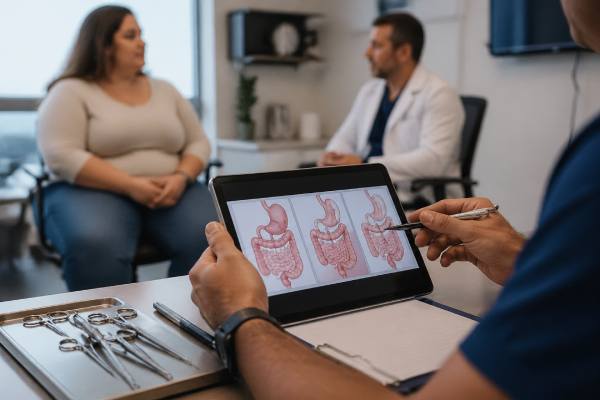
SADI-S is one of the more powerful bariatric surgery options for weight loss and metabolic improvement, but it is not simply a “better sleeve” or an easier bypass. It sits between procedures in a way that can be attractive for the right patient: more weight-loss potential than sleeve gastrectomy, a different anatomy than Roux-en-Y gastric bypass, and a heavier long-term nutrition burden than either simple restriction alone.
That tradeoff is why the choice matters. For some people, SADI-S offers stronger results and better durability, especially in severe obesity or after a sleeve has stopped working well. For others, the need for lifelong supplements, lab monitoring, and closer follow-up makes sleeve or bypass a better fit. The most useful comparison is not which surgery sounds most aggressive. It is which one best matches your medical needs, reflux risk, eating pattern, and ability to maintain long-term care.
Table of Contents
- What SADI-S is and how it works
- How SADI-S compares with sleeve and bypass
- Who may be a good candidate for SADI-S
- Expected weight loss and metabolic results
- Risks, side effects, and nutritional tradeoffs
- Recovery, diet, and lifelong follow-up
- When SADI-S is used after a sleeve
- How to think about the choice long term
What SADI-S is and how it works
SADI-S stands for single-anastomosis duodeno-ileal bypass with sleeve gastrectomy. You may also see related naming such as SADS or one-anastomosis duodenal switch. In simple terms, it combines two surgical ideas:
- a sleeve gastrectomy, which makes the stomach smaller
- an intestinal bypass, which reroutes food so it skips part of the small intestine
That combination matters because sleeve gastrectomy mainly works through restriction and hormonal changes, while SADI-S adds a stronger malabsorptive and metabolic component. The result is usually more powerful weight loss and stronger effects on type 2 diabetes than sleeve alone.
An easy way to picture it is this: sleeve changes the size and shape of the stomach, while SADI-S changes both the stomach and the route food takes through the gut.
SADI-S is often described as a simplified version of the traditional duodenal switch. It uses one intestinal connection instead of two, which can make the anatomy somewhat simpler than classic duodenal switch surgery while still preserving the pylorus, the stomach valve that controls emptying into the small intestine. That preserved pylorus is one reason SADI-S behaves differently from gastric bypass and may cause less classic dumping than Roux-en-Y gastric bypass in some patients.
Even so, it is not a “light” operation. Because food bypasses a substantial segment of small intestine, the surgery can increase the risk of under-absorbing protein, fat-soluble vitamins, iron, calcium, and other nutrients. That is why SADI-S is best thought of as a high-potency bariatric operation with a high-responsibility follow-up plan.
In modern practice, surgeons may vary the common channel length and some technical details. Those choices affect the balance between weight-loss power and nutritional risk. In general, the shorter the effective absorptive pathway, the more aggressively the operation may work and the more carefully nutrition must be monitored afterward.
This is where people often misunderstand SADI-S. They focus on short-term weight loss and ignore the second half of the deal: this is a procedure that demands lifelong attention. It works partly because it changes absorption. That same feature is also what makes it less forgiving if follow-up falls apart.
How SADI-S compares with sleeve and bypass
The most practical comparison is not “Which surgery is best?” but “Which tradeoff profile fits this patient?”
Sleeve gastrectomy, Roux-en-Y gastric bypass, and SADI-S all reduce food intake and improve obesity-related disease, but they do it with different strengths and weaknesses. If you are comparing SADI-S with other bariatric surgery options, the key differences are usually weight-loss potency, reflux effects, and long-term nutrition burden.
| Feature | Sleeve gastrectomy | Roux-en-Y gastric bypass | SADI-S |
|---|---|---|---|
| Main mechanism | Restriction and hormonal change | Restriction plus rerouting and mild to moderate malabsorption | Restriction plus stronger intestinal bypass and metabolic effect |
| Anatomy | Smaller stomach, no intestinal bypass | Small pouch and intestinal rerouting | Sleeve plus duodeno-ileal bypass with one intestinal connection |
| Weight-loss strength | Strong, but usually the least powerful of the three | Strong and durable | Often the strongest for total weight loss, especially in severe obesity |
| Reflux pattern | Can worsen or trigger reflux | Often best option when reflux is a major issue | Less ideal than bypass when reflux is already a major concern |
| Nutritional risk | Lowest of the three | Higher than sleeve | Usually highest of the three |
| Best fit | People wanting a simpler operation with less malabsorption | People needing a balance of weight loss, durability, and reflux control | People needing maximum metabolic potency and willing to commit to stricter follow-up |
Compared with sleeve gastrectomy
SADI-S is generally more powerful. That is its main appeal. It tends to produce greater weight loss and stronger metabolic improvement, particularly in people with very high BMI or diabetes. But that extra power comes with a real cost: more complicated anatomy, more supplementation, more lab surveillance, and more risk of diarrhea, malabsorption, and deficiency.
Compared with Roux-en-Y gastric bypass
This is the more nuanced comparison. Roux-en-Y gastric bypass remains one of the most established bariatric operations, with strong long-term data and a particularly useful role in people with significant GERD. SADI-S may produce greater weight loss in some settings and may be attractive in severe obesity, but bypass often remains the more conservative long-term choice when reflux or anatomy-related side effects are central.
SADI-S is also different from the classic duodenal switch. It is often presented as a simplified relative rather than an identical procedure. That matters because people sometimes confuse the names and assume the risks and outcomes are interchangeable. They are not.
One of the clearest real-world distinctions is this: sleeve is usually the easiest to live with nutritionally, bypass is often the most balanced all-around choice, and SADI-S is the most demanding but potentially the most potent.
Who may be a good candidate for SADI-S
SADI-S is usually considered for people who need a stronger bariatric option than sleeve alone is likely to provide. In practice, that often includes patients with very high BMI, significant metabolic disease, or prior sleeve gastrectomy with inadequate long-term results.
Someone may be a good candidate if several of these are true:
- they have severe obesity and want the strongest surgical weight-loss effect
- they have type 2 diabetes or major metabolic disease where a more powerful operation may help
- they previously had a sleeve and now have inadequate loss or weight regain
- they understand that surgery is only the start, not the finish
- they are willing to take lifelong vitamins and minerals
- they can commit to regular lab checks and follow-up appointments
Just as important is who may not be the best fit.
SADI-S may be less attractive when a patient has:
- significant or poorly controlled reflux
- a history of poor supplement adherence
- difficulty attending regular follow-up
- existing protein malnutrition or notable nutritional deficits
- certain bowel or absorption disorders
- a desire for the least complex operation possible
This is where decision-making gets more personal than many comparison charts suggest. The “best” surgery on paper may be the wrong surgery in real life if it depends on a level of lifelong compliance you do not think you can maintain.
That is especially relevant for younger patients, people with unstable access to care, and anyone whose past pattern shows trouble with long-term medication or supplement adherence. SADI-S can be an excellent operation, but it is not very forgiving of neglect. A sleeve or bypass may produce slightly less weight loss while still being the smarter long-term choice if the follow-up plan is more realistic.
Center experience also matters. SADI-S is not as universally routine as sleeve gastrectomy or Roux-en-Y gastric bypass. Patients should feel comfortable asking how often the surgeon performs it, what their leak and reoperation rates look like, how their nutrition monitoring works, and what happens if problems appear years later.
Another often-overlooked issue is future planning. People considering pregnancy after bariatric surgery, major travel, or frequent changes in medical coverage should think carefully about how easy it will be to maintain labs and supplements over time. For some, that does not rule out SADI-S. It simply means the logistics matter just as much as the surgery itself.
Expected weight loss and metabolic results
SADI-S has a reputation for a reason. It is one of the more effective bariatric procedures for substantial weight loss, and it often performs especially well in people with severe obesity.
In broad terms, the pattern usually looks like this:
- the fastest weight loss happens in the first 12 to 18 months
- weight loss then slows
- long-term success depends heavily on follow-up, nutrition, movement, and eating behavior
Compared with sleeve gastrectomy, SADI-S generally produces more total weight loss and stronger metabolic effects. Compared with Roux-en-Y gastric bypass, it may also produce greater weight loss in some patients, though the comparison is more mixed and depends on the study, patient profile, and follow-up length.
A practical way to think about it is this:
- Sleeve is often enough for people who want a simpler operation and still expect strong results.
- Bypass offers a powerful middle ground with especially good reflux control.
- SADI-S is often chosen when the goal is more aggressive and durable weight loss, especially at higher BMI.
SADI-S is also notable for its effect on type 2 diabetes and related metabolic conditions. Many surgeons consider it a particularly strong metabolic procedure. That does not mean remission is guaranteed, but it does mean SADI-S is often part of the conversation when diabetes control is a central reason for surgery rather than a secondary benefit.
Still, surgery does not eliminate the possibility of plateaus or regain. Even after a high-potency procedure, weight loss can slow earlier than expected, or some weight can come back over time. The people who do best long term are usually not the people who had the “strongest” surgery. They are the people who matched the right surgery to the right support system and followed through.
That is why long-term durability matters more than honeymoon-phase weight loss. A procedure that causes excellent early loss but also causes ongoing diarrhea, vitamin issues, or poor quality of life may not feel like a success to the patient living with it.
It is also why the conversation should include what happens after the nadir. A patient who loses a lot of weight but later develops lax habits, low protein intake, minimal exercise, or inconsistent follow-up can still struggle with weight regain after bariatric surgery. Surgery changes the starting advantage. It does not erase biology, food environment, or behavior.
The strongest mindset is to view SADI-S as a powerful long-term tool, not a guarantee. It may improve the odds substantially, but it still needs to be paired with a durable routine.
Risks, side effects, and nutritional tradeoffs
Every bariatric procedure has risks. With SADI-S, the main question is not whether there are tradeoffs, but whether the tradeoffs are acceptable for the expected benefit.
Short-term surgical risks can include:
- bleeding
- leak
- infection
- blood clots
- narrowing or blockage
- dehydration
- readmission or reoperation
Those risks are not unique to SADI-S, but the procedure is more complex than sleeve alone, so the technical stakes are higher.
The bigger long-term issue is nutrition. Because SADI-S bypasses more intestine than sleeve and often more functionally than standard bypass, it raises the risk of problems such as:
- protein deficiency or low albumin
- iron deficiency and anemia
- vitamin B12 deficiency
- folate deficiency
- calcium and vitamin D deficiency
- fat-soluble vitamin deficiencies, especially vitamins A, D, E, and K
This is the central tradeoff of SADI-S. The same anatomy that can drive strong weight loss can also make nutritional neglect much more expensive. That is why long-term use of bariatric vitamins is not optional, and why meeting your protein needs after surgery matters just as much as the scale.
Patients may also notice:
- looser or more frequent stools
- gas
- foul-smelling stools
- intolerance of very high-fat meals
- periods of fatigue if nutrition slips
Not everyone experiences these problems to the same degree, and surgical technique matters. But this is not usually the easiest operation from a digestive comfort standpoint.
Another important nuance is reflux. Sleeve gastrectomy can worsen reflux. Roux-en-Y gastric bypass is often favored when reflux is already significant. SADI-S may still be used in selected cases, but it is usually not the first operation people think of when reflux is the main problem to solve. That distinction becomes even more important in revisional surgery after a sleeve.
A useful rule of thumb is simple: if the main concern is maximizing weight loss, SADI-S becomes more attractive. If the main concern is controlling reflux with a more established long-term track record, bypass often looks better.
The biggest mistake is treating complication risk as only a 30-day question. For SADI-S, the real burden is often the 10-year question: Will you still be doing the labs, taking the supplements, attending follow-up, and correcting deficiencies before they become serious?
Recovery, diet, and lifelong follow-up
Recovery from SADI-S is not only about healing from surgery. It is also about learning a more demanding long-term care routine than many people expect.
In the early period, patients are usually focused on:
- hydration
- pain control
- walking
- protein intake
- preventing nausea, constipation, and dehydration
Hospital stay and time away from work vary, but many people still need a meaningful recovery window rather than expecting to “bounce back” in a few days. How fast you feel functional is not the same as how fast your body adapts nutritionally.
Diet progression usually follows staged advancement from liquids to pureed or soft foods and then to more regular textured meals. That process should follow the surgeon and dietitian’s plan rather than internet averages. A structured guide to diet stages after bariatric surgery can help patients understand why the pacing matters.
Long-term follow-up usually includes:
- routine lab monitoring
- regular review of vitamin and mineral supplementation
- protein targets
- hydration review
- symptom checks for diarrhea, reflux, food intolerance, or fatigue
- weight-trend monitoring without panic over short-term fluctuations
That last point matters more than it seems. After the fastest phase of surgical loss ends, many patients misread normal slowing as failure. The stronger long-term approach is to watch trends, nutrition markers, and overall function rather than obsessing over whether every week looks dramatic.
A realistic follow-up schedule is one of the most important parts of success. It is far easier to correct a mild deficiency early than to reverse serious protein malnutrition, severe anemia, or fat-soluble vitamin depletion later.
Patients should also think ahead about situations that complicate follow-up:
- moving between states or countries
- changing insurance
- starting pregnancy planning
- taking new medications
- extended work travel
- limited access to bariatric nutrition specialists
Those logistics are not minor details. They are part of whether SADI-S is truly a good fit. A full recovery timeline is helpful, but the bigger issue is that recovery does not end when surgical soreness ends. With SADI-S, recovery blends into lifelong management.
This is also where many long-term outcomes are won or lost. Patients who keep protein high, fluids steady, supplements consistent, and appointments routine usually look very different over time from patients who disappear after year one.
When SADI-S is used after a sleeve
One of the most important roles for SADI-S is as a revisional operation after sleeve gastrectomy.
This often comes up when someone had a sleeve, did well for a while, and then later developed one or more of these problems:
- inadequate overall weight loss
- significant weight regain
- persistent diabetes or other metabolic disease
- a sense that the sleeve “stopped working”
In that setting, SADI-S can be attractive because it builds on the existing sleeve and adds a stronger metabolic and malabsorptive component. For someone whose main issue is not enough weight-loss power, that logic can make sense.
But revisional choice should not be automatic. The reason the sleeve failed matters.
If the main problem after sleeve is reflux, SADI-S may not be the first revisional option many teams prefer. Roux-en-Y gastric bypass is often favored when reflux or esophageal symptoms are central, because bypass usually addresses that problem more directly. If the main problem is weight regain or insufficient loss without major reflux, SADI-S may move higher on the list.
That distinction is one of the most useful real-world decision points:
- failed sleeve because of reflux: bypass often makes more sense
- failed sleeve because of inadequate weight effect: SADI-S may be especially appealing
This is where the broader topic of revisional bariatric surgery becomes important. A revision should solve the actual reason the first operation is no longer serving the patient. It should not just be a more aggressive procedure chosen out of frustration.
Patients should also ask about medication handling after revision. Altered anatomy can change tolerance and sometimes affect how medications are taken or absorbed, which is why medication absorption after bariatric surgery deserves attention during long-term follow-up.
Another useful insight is that revision surgery is often framed emotionally, as if the first operation “failed.” In practice, it is usually better to treat it like any other chronic-disease management decision. Obesity biology changes over time, bodies adapt, and different tools may be needed at different stages. The goal is not to prove the first surgery was perfect. The goal is to choose the next step that best fits the current problem.
How to think about the choice long term
The clearest way to compare these operations is to ask what you need the surgery to do five years from now, not just six months from now.
SADI-S tends to make the most sense when a patient wants the strongest weight-loss and metabolic effect and is comfortable accepting a stricter long-term nutrition burden. It is especially worth discussing in severe obesity and in selected patients after a sleeve has provided too little durable benefit.
Sleeve gastrectomy often makes more sense when a patient wants a simpler operation with less malabsorption and can accept somewhat less weight-loss power. Roux-en-Y gastric bypass often fits the middle ground well, especially when reflux matters and the patient wants a more established long-term procedure with a strong balance of efficacy and practicality.
A useful self-check is this:
- Do I need maximum potency, or do I need the best balance?
- Is reflux a major problem?
- Am I realistically prepared for lifelong supplements and lab work?
- Am I choosing based on long-term fit, or just fear of slower loss?
That last question matters. People stuck in a cycle of plateaus, regain, and frustration often assume the stronger tool is always the smarter one. Sometimes it is. Sometimes the better move is the surgery you are most likely to maintain well for the next decade.
This is also why good counseling before surgery matters so much. The right decision is rarely about one number on the scale. It is about anatomy, diabetes, reflux, nutrition risk, follow-up reliability, lifestyle, and future plans. For example, people planning pregnancy should make sure they understand timing and nutritional monitoring after surgery, especially with more malabsorptive procedures, which makes pregnancy after bariatric surgery part of the long-term conversation.
The bottom line is straightforward: SADI-S is a serious, effective bariatric operation that may outperform sleeve and sometimes bypass for weight loss, but it asks more from the patient in return. For the right person, that is a worthwhile trade. For the wrong person, it can create problems that outweigh the extra power.
References
- 2022 American Society for Metabolic and Bariatric Surgery (ASMBS) and International Federation for the Surgery of Obesity and Metabolic Disorders (IFSO): Indications for Metabolic and Bariatric Surgery 2022 (Guideline)
- Single Anastomosis Duodeno-Ileostomy with Sleeve Gastrectomy/Single Anastomosis Duodenal Switch (SADI-S/SADS) IFSO Position Statement—Update 2023 2024 (Position Statement)
- Efficacy and safety of single-anastomosis duodeno-ileal bypass with sleeve gastrectomy versus Roux-en-Y gastric bypass in France (SADISLEEVE): results of a randomised, open-label, superiority trial at 2 years of follow-up 2025 (RCT)
- Long-term effect of sleeve gastrectomy vs Roux-en-Y gastric bypass in people living with severe obesity: a phase III multicentre randomised controlled trial (SleeveBypass) 2024 (RCT)
- British Obesity and Metabolic Surgery Society Guidelines on perioperative and postoperative biochemical monitoring and micronutrient replacement for patients undergoing bariatric surgery—2020 update 2020 (Guideline)
Disclaimer
This article is for general educational purposes only and is not a substitute for medical advice, diagnosis, or treatment. Decisions about bariatric surgery should be made with a qualified bariatric surgeon and care team who can assess your anatomy, medical history, nutritional risk, and long-term follow-up needs.
If you found this article helpful, please share it on Facebook, X, or any platform you prefer.