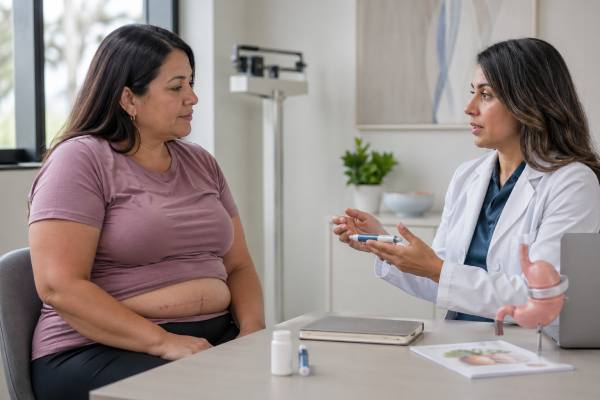
Weight regain after bariatric surgery can feel confusing and discouraging, especially when surgery worked well at first. In many cases, though, it does not mean the operation “failed.” Obesity is a chronic disease, and weight can rise again because of changes in hunger, eating patterns, life stress, physical activity, anatomy, and long-term biology.
GLP-1 medications can help some people after sleeve gastrectomy, gastric bypass, or other bariatric procedures, but they are not the right answer for everyone. The best approach depends on why weight regain is happening, how much weight has returned, whether nutrition is stable, and whether there may be an anatomical issue that needs a different fix.
Table of Contents
- Why weight regain can happen after surgery
- Can GLP-1 medications help after bariatric surgery
- Who may be a good candidate
- What results are realistic
- Safety issues after sleeve or bypass
- Medication, endoscopy, or revision surgery
- How to improve results and protect nutrition
Why weight regain can happen after surgery
Weight regain after bariatric surgery is common enough that it should be viewed as a clinical problem to assess, not as a personal failure. Surgery changes stomach size, gut hormones, and eating capacity, but it does not freeze appetite or metabolism forever. Over time, hunger can return, meal size can gradually increase, old eating patterns can reappear, and activity levels can drop.
There is also no single definition of “weight regain,” which is one reason discussions can feel messy. Some clinicians focus on pounds regained from the lowest post-op weight. Others focus on the percentage of weight regained, loss of obesity-related disease control, or a clear upward trend over several months. That matters because the right time to act is often earlier than people expect. Waiting until a large amount of weight has returned can make treatment harder.
Common drivers include:
- a gradual increase in portion size
- grazing or frequent snacking
- liquid calories, alcohol, and calorie-dense “soft” foods
- reduced protein intake and weaker fullness signals
- less physical activity than before
- stress, depression, poor sleep, or major life changes
- medications that promote weight gain
- loss of structured follow-up with the bariatric team
- anatomical changes, such as pouch or outlet enlargement in some patients
Another important point is that different surgeries behave differently over time. A sleeve gastrectomy mainly restricts stomach volume and affects gut hormones, while gastric bypass changes both anatomy and hormone signaling more substantially. Even so, neither procedure makes someone immune to long-term weight recurrence.
That is why a broad evaluation matters. A person may think they “just need stronger willpower,” when the real issue is persistent hunger, low protein intake, loss of satiety, severe reflux, new medication-related weight gain, or an anatomical problem that medication alone will not fix. If you want a wider overview of the causes of post-surgery regain, it helps to think of weight regain as multifactorial rather than as a single mistake.
The practical takeaway is simple: bariatric surgery is powerful, but it is one tool in long-term obesity treatment. Some people will need nutrition support, some will need behavior work, some will need endoscopic or surgical revision, and some will do well with anti-obesity medication added after surgery.
Can GLP-1 medications help after bariatric surgery
Yes, GLP-1 medications can help after bariatric surgery in the right patient. They are increasingly used as an adjunct when weight loss is insufficient, weight regain begins after the post-op low point, or hunger and food preoccupation return in a way that diet changes alone are not controlling.
These medications work mainly by improving satiety, reducing appetite, lowering food noise, and slowing gastric emptying. After bariatric surgery, that can be useful because many people describe the same pattern: they still cannot eat huge meals, but they are able to eat more often, snack more easily, tolerate higher-calorie foods, or feel hungry much sooner than they used to. A GLP-1 medication may help restore some of the control that felt stronger earlier after surgery.
A common misconception is that GLP-1 drugs should not work after bariatric surgery because surgery already boosts GLP-1 signaling. In reality, drug-level stimulation can still provide additional benefit. That is one reason the combination can make sense. Surgery changes the system; the medication may strengthen it further when biology begins to drift.
What the evidence suggests so far is encouraging, but it is still not as strong as the evidence for GLP-1 use in the general obesity population. Much of the post-bariatric research has been observational, although newer systematic reviews and meta-analyses support meaningful additional weight loss in many patients. The largest body of published post-surgery experience is with liraglutide and semaglutide. Tirzepatide is highly promising based on its broader obesity results, but the direct post-bariatric evidence base is still developing.
A better way to frame the question is not “Do GLP-1 drugs work after bariatric surgery?” but “What problem are they solving?” They are most useful when the main issue is persistent biological drive to eat, reduced fullness, rising calorie intake, or recurrent obesity after an initially successful surgery. They are less useful when the true problem is severe reflux, vomiting, poor tolerance of solid food, untreated depression, problematic alcohol use, a major anatomical issue, or major nutritional instability.
Another useful perspective is that medication after surgery is not a sign that surgery was the wrong choice. It often reflects the reality that chronic weight management needs layers of treatment over time. For some people, surgery is the foundation and medication becomes the support that helps protect that foundation.
Who may be a good candidate
A good candidate is usually someone who had meaningful benefit from bariatric surgery, later started to regain weight or stopped losing early, and still has enough excess weight or metabolic risk that further treatment would matter. In practice, this often includes patients whose hunger has clearly returned, whose obesity-related conditions are worsening again, or whose current eating pattern suggests they need more biological appetite control than lifestyle changes alone are providing.
Good candidates often have some of these features:
- they are well past the immediate post-op period
- they have regained a noticeable amount from nadir weight
- they still meet general obesity-treatment criteria based on BMI and risk factors
- they report stronger hunger, more cravings, or more frequent grazing
- they want a less invasive option before considering another procedure
- their bariatric clinician believes anatomy is not the main driver, or that medication is reasonable while anatomy is being evaluated
A clinician will usually review several areas before prescribing:
- surgery type and date
- weight trend from pre-op to nadir to current weight
- current meal structure, protein intake, and snacking pattern
- vomiting, reflux, abdominal pain, dumping, or other GI symptoms
- medication list, including drugs that may promote weight gain
- diabetes status and blood sugar treatment
- hydration, vitamin use, and lab markers of nutritional status
- whether there could be an anatomical reason for regain
Who is not a straightforward candidate? Someone with ongoing vomiting, poor fluid intake, recurrent dehydration, severe malnutrition, rapidly progressive abdominal symptoms, or a strong suspicion of a surgical complication should usually be evaluated before appetite-suppressing medication is escalated. The same is true for patients whose regain appears to be driven by an anatomical problem that may respond better to an endoscopic or surgical solution.
Timing matters too. Many specialists prefer not to wait until regain becomes dramatic. In some cases, treatment is discussed when a plateau clearly turns upward rather than after months or years of progressive regain. That earlier action can be more effective and emotionally easier than trying to reverse a larger rebound later.
A final point: the best candidates are usually willing to pair medication with follow-up, not use it as a stand-alone fix. GLP-1 therapy works best when it sits inside a broader plan that includes structured eating, nutrition monitoring, movement, and regular review of progress.
What results are realistic
Realistic expectations matter. GLP-1 medications can help after bariatric surgery, but they do not usually recreate the dramatic early post-op phase. The goal is more often to stop the upward trend, regain control of appetite, and produce meaningful additional loss from the current weight. For many patients, that can still be clinically important.
Published post-bariatric results suggest that some people lose a meaningful share of regained weight over 6 to 12 months, and some lose around 5% to 15% of current body weight, depending on the drug, the dose, the surgery type, baseline hunger, adherence, and individual biology. Some patients do better than that, some do less, and some decide side effects are not worth continued use.
A realistic timeline often looks like this:
- Month 1 to 2: start low, titrate slowly, and focus on tolerability
- Month 2 to 4: appetite, portions, cravings, and snacking often improve before large scale changes show up
- Month 3 to 6: the trend becomes clearer, and clinicians decide whether the response is strong enough to continue or adjust
- Month 6 to 12: some patients continue to lose steadily, while others reach a slower phase or plateau
One of the most useful signs of success is not just pounds lost. It is whether the medication restores control. Patients often say that they are less driven to snack, can stop eating earlier, and find it easier to follow the eating structure that used to work after surgery. That matters because long-term control is what protects the surgical result.
At the same time, expectations should stay grounded. GLP-1 therapy is not likely to fix a dilated pouch, severe reflux after sleeve, or a surgically correctable problem. It also may not fully overcome a highly fragmented eating pattern built around calorie-dense liquids, frequent nibbling, or alcohol. If progress slows later, the issue may resemble a GLP-1 weight-loss plateau rather than a medication failure.
Long-term planning is also important. Many people regain weight when effective obesity medication is stopped. That means the best question is often not “How fast will this work?” but “What is the maintenance plan if it does work?” For some patients, the answer is continued long-term therapy. For others, it may be a period of treatment followed by close monitoring, nutrition support, and fast action if weight starts climbing again.
The most helpful expectation is this: GLP-1 medication after bariatric surgery is usually about improving the long game, not chasing a quick rescue.
Safety issues after sleeve or bypass
Safety deserves extra attention in post-bariatric patients because the same side effects that are annoying in someone without surgery can become more disruptive after a sleeve or bypass. The main issues are not usually exotic. They are often very practical: nausea, vomiting, constipation, poor fluid intake, reduced protein intake, worsening reflux, and trouble keeping up with vitamins and meals.
Common side effects that matter more after surgery
GLP-1 medications commonly cause:
- nausea
- early fullness
- constipation
- diarrhea
- abdominal discomfort
- occasional vomiting
After bariatric surgery, these can matter more because the margin for poor intake is smaller. A patient who already struggles to drink enough fluid or meet protein goals may feel worse when appetite falls further. That does not mean GLP-1 treatment is unsafe by default. It means dosing often needs to be slower, and monitoring needs to be better.
If nausea becomes a problem, practical tactics matter: smaller meals, slower eating, lower-fat meals, less grazing, better hydration, and dose timing adjustments. A focused guide to nausea management strategies can be useful if symptoms start interfering with intake. Constipation is also common, and after bariatric surgery it often improves only when fluids, fiber tolerance, and bowel routine are actively addressed. This is where dedicated constipation relief on GLP-1 therapy can make the difference between staying on treatment and stopping it.
Special post-bariatric concerns
There are a few reasons post-op patients need closer review than the average obesity-medicine patient.
First, vomiting matters more. Repeated vomiting after bariatric surgery can contribute to dehydration and may raise concern for nutrient problems, especially if intake is poor for more than a short period.
Second, reflux matters. Someone with significant reflux after sleeve gastrectomy may find that a medication that slows gastric emptying makes them feel worse rather than better.
Third, injectable GLP-1 medications are often convenient in this population because they avoid some of the absorption variability that can affect certain oral medicines after bariatric procedures, especially bypass operations. That does not make them automatically superior in every situation, but it is a practical advantage.
Fourth, diabetes treatment may need adjustment. GLP-1 medications do not usually cause low blood sugar on their own, but if a patient also uses insulin or a sulfonylurea, the prescribing clinician may need to change other medication doses.
When to call the clinician sooner
Red flags include persistent vomiting, inability to keep fluids down, worsening abdominal pain, faintness, rapidly worsening reflux, or a clear drop in nutritional intake. In those situations, the next step may be a dose reduction, a pause, lab checks, or investigation for a non-medication problem.
The safest way to use a GLP-1 after bariatric surgery is not to push harder through symptoms. It is to titrate patiently, protect hydration and nutrition, and stay in close contact with the team.
Medication, endoscopy, or revision surgery
One of the biggest mistakes in post-bariatric care is treating every regain problem as if it has the same solution. Some people mainly need better appetite control and a structured eating reset. Others have an anatomical problem that medication will not meaningfully fix. Others need both.
That is why good care usually starts with a layered question: is this mainly behavioral, biological, anatomical, or mixed? Once that is clearer, the treatment choice becomes more rational.
| Situation | Likely next step | Why |
|---|---|---|
| Hunger is back, portions are creeping up, and there is no clear surgical problem | GLP-1 medication plus nutrition follow-up | Medication may restore satiety and make the eating plan easier to follow |
| Weight regain is tied to grazing, alcohol, liquid calories, or poor routine | Behavioral and nutrition treatment, sometimes with medication | The medication can help, but habits still need direct repair |
| There is suspected pouch or outlet enlargement after bypass, or another structural issue | Imaging or endoscopy, then targeted procedural treatment | An anatomical problem may respond better to an endoscopic fix than to appetite suppression alone |
| Regain is substantial and anatomy or severe symptoms suggest the original procedure is no longer adequate | Revisional bariatric surgery evaluation | A second operation may offer the best chance of durable correction in selected patients |
This is where shared decision-making matters. Someone with moderate regain, strong hunger, and no alarming symptoms may be a very good medication candidate. Someone with severe reflux after a sleeve or obvious anatomical recurrence may be better served by evaluation for endoscopic revision options or, in selected cases, revisional surgery for regain.
Cost, insurance, side-effect tolerance, diabetes status, and previous response to obesity medications also shape the decision. So does patient preference. Some patients strongly prefer to try medication before any additional procedure. Others want the most definitive structural option if anatomy is a major contributor.
The key insight is that GLP-1 medication is often best viewed as one tool in a treatment ladder, not as the entire ladder. It may be the right first move, the right bridge while anatomy is being evaluated, or part of a longer combined plan.
How to improve results and protect nutrition
The patients who do best with GLP-1 therapy after bariatric surgery usually do not rely on the injection alone. They use the medication to make a structured plan easier to follow. That distinction matters because post-op weight regain rarely comes from one cause.
A practical plan usually includes these basics:
- keep meal timing reasonably consistent rather than “forgetting to eat” all day and overeating later
- prioritize protein first at meals
- protect fluid intake even when appetite is low
- avoid drinking calories and frequent high-calorie snacking
- continue bariatric vitamins and routine lab follow-up
- use strength training or other resistance exercise to help protect lean mass
- review weight trends, symptoms, and intake regularly instead of waiting for a major rebound
Protein deserves special emphasis. When GLP-1 therapy reduces appetite, some patients unintentionally undereat protein because it feels easier to tolerate crackers, yogurt, or small snack foods than more substantial meals. That may worsen fatigue, satiety, and body composition over time. A refresher on protein needs after bariatric surgery can be helpful, especially if appetite is low.
Follow-up also matters more than many people expect. Clinicians often look at several outcomes at once:
- weight trend
- hunger and cravings
- meal pattern quality
- hydration and bowel habits
- reflux or nausea
- lab markers and vitamin status
- whether the patient feels more in control around food
If the medication works well, the next question becomes maintenance. Many people do better when they assume from the start that obesity treatment may need to be long term. Stopping a helpful medication without a clear plan can set the stage for rebound. It is worth understanding the risk of regain after stopping GLP-1 medications before deciding treatment is only temporary.
The most useful mindset is steady, not dramatic. Good treatment after bariatric surgery often looks like trend repair: less hunger, more structure, better nutrition, smaller regain, and gradual loss that can actually be maintained. That may feel less exciting than the earliest months after surgery, but it is often exactly what protects results in the long run.
References
- Approach to the Patient: Management of the Post-Bariatric Surgery Patient With Weight Regain 2021 (Clinical Review)
- Pharmacologic management of weight regain following bariatric surgery 2023 (Review)
- Glucagon-Like Peptide-1 Receptor Agonists in Post-bariatric Surgery Patients: A Systematic Review and Meta-analysis 2024 (Systematic Review and Meta-analysis)
- Glucagon-Like Peptide-1 Receptor Agonists for the Treatment of Suboptimal Initial Clinical Response and Weight Gain Recurrence After Bariatric Surgery: a Systematic Review and Meta-analysis 2025 (Systematic Review and Meta-analysis)
- Efficacy of 12 months therapy with glucagon-like peptide-1 receptor agonists liraglutide and semaglutide on weight regain after bariatric surgery: a real-world retrospective observational study 2025 (Observational Study)
Disclaimer
This article is for general educational purposes only and is not a substitute for medical advice, diagnosis, or treatment. GLP-1 medications after bariatric surgery should be considered with a qualified clinician who can review your surgery type, symptoms, nutritional status, medications, and whether weight regain may have an anatomical cause.
If this article was useful, consider sharing it on Facebook, X, or your preferred platform so others dealing with post-surgery weight regain can find it.