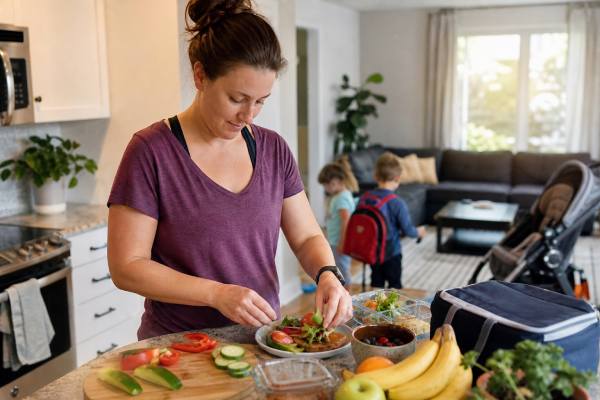
Losing weight as a parent is rarely just about knowing what to eat or which workout to do. The harder part is fitting those choices into school runs, work, childcare, appointments, irregular sleep, emotional load, and a house where other people’s snacks may be everywhere.
A good plan for busy parents needs to be simple enough to survive real life. That usually means repeatable meals, short movement blocks, fewer decisions, flexible tracking, and a clear backup plan for the days that do not go smoothly. The goal is not to become a perfect meal-prep person or train like an athlete. The goal is to build a routine that makes healthier choices easier most of the time.
Table of Contents
- Why Parenting Changes Weight Loss
- Set a Realistic Starting Point
- Build Repeatable Family-Friendly Meals
- Use Short Movement That Counts
- Handle Sleep, Stress, and Cravings
- Make Your Home Support Better Choices
- Track Progress Without Obsessing
- Know When to Get Extra Support
Why Parenting Changes Weight Loss
Busy parents do not need a more extreme plan; they usually need a plan with fewer points of failure. Time pressure, disrupted sleep, decision fatigue, and constant interruptions can make basic weight-loss habits feel much harder than they look on paper.
The biggest challenge is not motivation. Many parents are highly motivated, but their day is already packed with other people’s needs. A plan that depends on long workouts, separate meals, daily grocery trips, or perfect food tracking is easy to abandon when a child gets sick, bedtime runs late, or dinner becomes whatever is fastest.
Common parent-specific barriers include:
- Irregular meal timing: You may eat late, skip lunch, or graze while making food for everyone else.
- Leftovers and “kid food”: Finishing bites from plates, snacking while packing lunches, or relying on nuggets, pasta, toast, and cereal can add up.
- Sleep loss: Short or broken sleep can increase hunger, cravings, and low-energy food choices.
- Emotional load: Parenting stress can make food feel like the quickest reward, pause, or comfort.
- Limited solo time: Exercise often has to happen in small windows rather than ideal sessions.
This does not mean weight loss is impossible. It means the plan needs to account for the life stage. A useful parent-friendly plan is built around defaults: a few easy breakfasts, a few fast lunches, a handful of dinners that work for the whole family, and movement that can happen even when the day is messy.
The most effective mindset shift is to stop aiming for a “perfect week.” Instead, aim for a repeatable baseline. That might mean eating a protein-rich breakfast most mornings, packing a reliable lunch, walking during a child’s activity, and doing two short strength sessions each week. These actions may look modest, but they are powerful because they can be repeated.
If your schedule feels especially packed, a broader guide on how to start losing weight on a busy schedule can help you simplify the first steps without overhauling your entire life.
Set a Realistic Starting Point
The best starting plan is the one you can follow on your average week, not your most organized week. For most busy parents, that means choosing two or three high-impact habits before trying to change everything.
A realistic first goal might be to lose weight slowly while improving energy, hunger control, and consistency. Aiming for roughly 0.5% to 1% of body weight per week is often more practical than chasing rapid results. Faster loss may happen at times, especially early on, but aggressive restriction can backfire when your schedule is demanding and sleep is limited.
Start by identifying your main bottleneck. Most parents have one or two patterns that matter more than the rest:
- Dinner is unplanned, so takeout happens often.
- Lunch is skipped, then evening snacking becomes intense.
- Snacks are eaten standing up while managing the kids.
- Weekends undo weekday structure.
- Exercise is treated as all-or-nothing.
- Sleep is so short that hunger and cravings feel hard to manage.
Pick the bottleneck that shows up most often. Then create a small rule that reduces friction. For example, “I will keep two emergency lunches at work,” “I will plate my own dinner before serving seconds,” or “I will walk for 10 minutes after school drop-off three days this week.”
A simple starting framework can look like this:
| Priority | Practical target | Busy-parent example |
|---|---|---|
| Food structure | Anchor meals with protein and fiber | Greek yogurt and fruit, eggs with toast, tuna wrap, chicken bowl, lentil soup |
| Calorie awareness | Create a modest deficit without feeling deprived | Use smaller portions of calorie-dense extras while keeping filling foods high |
| Movement | Accumulate short bouts across the week | Walk during practice, take stairs, do 10-minute home circuits |
| Recovery | Protect the sleep you can control | Set a parent bedtime alarm, reduce late-night scrolling, prep tomorrow earlier |
| Review | Check trends, not daily perfection | Look at weight, waist, energy, hunger, and consistency once weekly |
A useful weight-loss plan should also respect your season of parenting. Parents of infants, toddlers, school-age children, and teens face different constraints. If you have a newborn, a demanding job, a child with special needs, or very little support, your plan may need to be gentler and more focused on stability than speed.
For parents who feel overwhelmed at the beginning, a basic beginner weight loss plan can be a better starting point than a strict diet challenge.
Build Repeatable Family-Friendly Meals
Food gets easier when you stop trying to reinvent every meal. Busy parents often do best with repeatable meals that are fast, filling, flexible, and acceptable to the rest of the household.
A good weight-loss meal does not need to be special diet food. It usually needs three things: a protein source, a high-fiber plant food, and a portion of starch or fat that matches your appetite and goals. This structure helps you stay full while keeping calories easier to manage.
Think in meal templates rather than recipes:
- Breakfast template: Protein + fruit or whole grain
Examples: Greek yogurt with berries, eggs with toast and fruit, cottage cheese with pineapple, protein smoothie with oats. - Lunch template: Protein + vegetables + easy carbohydrate
Examples: turkey wrap with salad, chicken rice bowl, tuna and crackers with vegetables, bean soup with fruit. - Dinner template: Family protein + vegetable + shared side
Examples: tacos with lean meat or beans, pasta with added chicken and salad, stir-fry with rice, sheet-pan chicken and potatoes. - Snack template: Protein or fiber first
Examples: apple with peanut butter, yogurt, boiled eggs, cheese stick and fruit, hummus and vegetables.
The key is not to make every meal low-calorie. It is to make your usual meals more satisfying per calorie. Protein supports fullness and helps protect lean tissue during weight loss. Fiber adds volume, slows digestion, and makes meals feel more substantial. Vegetables, fruit, beans, lentils, oats, potatoes, whole grains, lean meats, fish, eggs, tofu, yogurt, and cottage cheese can all fit.
For especially busy nights, keep a list of “minimum-effort dinners.” These are not glamorous, but they prevent the spiral from tired to starving to takeout. Examples include rotisserie chicken with bagged salad, scrambled eggs with toast and fruit, frozen vegetables with microwave rice and pre-cooked protein, or bean chili from pantry staples. A list of 15-minute meals for weight loss can help you build this backup menu before the week gets chaotic.
Parents often need to feed children who have different preferences. Instead of cooking separate meals, try a “shared base, flexible add-ons” approach:
- Taco bowls: everyone chooses toppings.
- Pasta night: add extra protein and vegetables to your plate.
- Breakfast-for-dinner: eggs, toast, fruit, yogurt, and vegetables.
- Sheet-pan meals: one protein, one starch, one vegetable.
- Snack plates: turkey, cheese, fruit, vegetables, hummus, crackers.
This approach keeps the family meal intact while giving you control over portions. You can also plate your food before putting serving dishes on the table, especially if second helpings are automatic.
Grocery shopping matters because busy parents eat what is available. A practical high-protein grocery list can make weekday meals easier by keeping quick anchors on hand, such as eggs, Greek yogurt, canned tuna, chicken, tofu, cottage cheese, beans, lentils, and frozen edamame.
Avoid making the home feel like a diet zone. Children benefit from seeing balanced meals, not fear-based food rules. You can keep fun foods in the house while making them less automatic: put them out of sight, buy single portions when useful, and pair treats with a real meal instead of using them as a substitute for food or rest.
Use Short Movement That Counts
Exercise does not have to happen in long gym sessions to support weight loss. For parents, short, repeated movement can be more realistic and more consistent than waiting for a perfect hour.
Movement helps in several ways. It burns some energy, supports heart and metabolic health, helps preserve muscle, reduces stress, and can improve sleep quality. But the amount of weight loss from exercise alone is often modest unless it is paired with food changes. This is why the best parent plan combines doable movement with a realistic eating structure.
Start with what you can repeat:
- 10 minutes of walking after school drop-off
- A stroller walk or playground loop
- A short bodyweight routine during a child’s nap
- Squats, wall push-ups, and lunges while dinner cooks
- Walking during sports practice or lessons
- A family walk after dinner
- Two 20-minute strength sessions each week
Short bouts count because they reduce the “no time” barrier. The aim is to make movement part of the day rather than another task that competes with parenting. A guide to step habits for busy days can be useful if walking is your most accessible starting point.
Strength training is especially helpful during weight loss because it supports muscle retention and function. You do not need a full gym setup. A parent-friendly session can include five basic patterns: squat, hinge, push, pull, and carry. For example:
- Chair squats
- Hip hinges or glute bridges
- Incline push-ups
- Resistance band rows
- Farmer carries with bags or dumbbells
Do two or three rounds, leaving a little energy in reserve. Progress can come from adding reps, slowing the movement, using a stronger band, or holding heavier objects.
Cardio can be just as flexible. Brisk walking, cycling, swimming, dancing, hiking, pushing a stroller uphill, or climbing stairs all count. If the idea of formal workouts feels impossible, exercise snacking is a practical way to use short bursts of movement across the day.
The main mistake is compensating for workouts by eating much more afterward or moving less for the rest of the day. Parents may also overestimate calories burned during exercise. Treat movement as a health and consistency tool first, not as permission to ignore food structure.
Handle Sleep, Stress, and Cravings
Sleep and stress do not replace nutrition, but they strongly affect how easy nutrition feels. When sleep is short and stress is high, hunger, cravings, evening snacking, and low-energy choices often become harder to manage.
Parents cannot always control sleep perfectly. Babies wake, children get sick, and schedules shift. The goal is not to pretend you can always get ideal sleep. The goal is to protect the parts you can control and avoid turning every tired night into a food spiral.
Helpful sleep strategies include:
- Set a realistic bedtime alarm for yourself, not just the kids.
- Do tomorrow’s lunch packing or school prep earlier in the evening when possible.
- Keep caffeine earlier in the day if it affects sleep.
- Reduce late-night scrolling, especially if it delays bedtime.
- Create a simple “kitchen closed” cue after dinner, such as tea, brushing teeth, or packing leftovers.
- Use naps strategically if you are in a newborn or sleep-disrupted season.
For adults, many sleep recommendations center around a regular sleep schedule and enough total sleep for health and daytime function. If you want a deeper look at the connection between sleep and appetite, a guide on sleep for weight loss can help you decide what to prioritize.
Stress eating is also common for parents because food may be the fastest available comfort. The fix is not to shame yourself. It is to add a pause and a better option before the eating becomes automatic.
Try a two-minute check before stress snacking:
- Am I physically hungry, emotionally overloaded, or both?
- Would a real snack help, or do I need a break?
- What is the smallest useful reset I can do first?
A useful reset could be stepping outside, breathing slowly, drinking water, texting a supportive friend, taking a five-minute walk, or eating a planned protein-and-fiber snack. If you are still hungry afterward, eat. The goal is not to deny hunger; it is to separate hunger from exhaustion, frustration, and the need for a pause.
Evening cravings often improve when earlier meals are more consistent. Skipping breakfast and nibbling through lunch can make nighttime eating feel almost inevitable. For many parents, the most effective anti-craving strategy is a real lunch with protein and fiber, not more willpower at 9 p.m.
If stress eating is a frequent pattern, tools for managing stress-related cravings may be more useful than another stricter meal plan.
Make Your Home Support Better Choices
Your environment should make the better choice easier, not require constant discipline. Busy parents benefit from setting up the kitchen, calendar, and routines so that healthy defaults are visible and convenient.
Start with the “front row” rule: put the foods you want to eat more often in the easiest places to see and grab. This might mean washed fruit on the counter, Greek yogurt at eye level, cut vegetables in clear containers, cooked protein in the fridge, or frozen meals that actually fit your goals.
Then reduce automatic grazing. You do not need to ban children’s snacks, but you can make them less mindless:
- Store snack foods in one cabinet instead of several places.
- Avoid eating directly from family-size bags.
- Put your own snack on a plate or in a bowl.
- Keep high-protein options as convenient as crackers or sweets.
- Create a rule that leftovers from children’s plates go in the bin or fridge, not into your mouth by default.
Meal prep does not have to mean cooking 21 meals on Sunday. Many parents do better with “ingredient prep”:
- Cook one protein.
- Wash or chop one vegetable.
- Prepare one easy carbohydrate.
- Stock two emergency meals.
- Portion a few snacks.
- Decide on three dinners before the week starts.
This gives you flexibility without locking you into meals you may not want later. A food environment reset can help if your kitchen currently makes snacking easier than eating balanced meals.
The calendar is part of the environment too. Look at the week before it begins and mark the hard nights. Those are the nights that need the easiest dinners, not the most ambitious recipes. If Tuesday has work deadlines, football practice, and homework stress, Tuesday dinner should be almost automatic.
It also helps to create family routines that support you without making your weight the center of attention. You might say, “We are adding more easy dinners,” “We are going for a short walk after dinner,” or “We are keeping fruit and yogurt ready for snacks.” This frames the changes as household health habits rather than a parent’s diet.
For children, avoid comments that label foods as “good” or “bad,” criticize bodies, or connect worth to weight. Parents can model balanced choices, regular meals, movement, sleep, and self-respect without turning the home into a weight-focused environment.
Track Progress Without Obsessing
Tracking should help you make decisions, not make you feel judged. For busy parents, the best tracking method is the simplest one that reveals whether the plan is working.
You can track calories, portions, protein, steps, workouts, waist measurement, body weight trends, or habit checkboxes. You do not need to track all of them. Choose the method that gives useful feedback without taking over your day.
Options include:
- Daily or several-times-weekly weigh-ins: Useful for trend data, but not ideal if the number affects your mood strongly.
- Weekly weigh-ins: Simpler, though more affected by water retention and timing.
- Waist measurement: Helpful when the scale is noisy.
- Habit tracking: Good for consistency, especially early on.
- Photo or clothing fit checks: Useful when strength training or water fluctuations hide progress.
- Protein and fiber targets: A lighter approach than full calorie counting.
Weight naturally fluctuates because of sodium, carbohydrate intake, menstrual cycle changes, digestion, soreness, sleep, stress, and hydration. A single weigh-in does not tell the full story. Look at trends over two to four weeks before making major changes.
A weekly check-in can be brief:
- Did my average weight or waist trend change?
- How consistent were meals, movement, and sleep?
- Where did the plan break down?
- What is one adjustment for next week?
- Do I need more food structure, more movement, or more recovery?
This style of review keeps you out of all-or-nothing thinking. A hard week is not failure; it is data. Maybe dinner needs to be easier, lunch needs to be packed, or bedtime needs a firmer boundary. A practical weekly check-in routine can make this process more structured without becoming obsessive.
If progress stalls, do not immediately cut calories aggressively. First check the basics: portions of oils, sauces, drinks, snacks, bites while cooking, takeout frequency, weekend eating, and step count. Also check whether your plan is too restrictive. Under-eating during the day can lead to rebound eating at night.
The best long-term pattern is consistent enough to work, flexible enough to repeat, and calm enough that you can return to it after a difficult day.
Know When to Get Extra Support
Some situations call for professional guidance rather than more self-discipline. Medical conditions, medications, pregnancy, postpartum recovery, breastfeeding, eating disorder history, and unexplained weight changes all deserve a more careful approach.
Talk with a qualified healthcare professional before starting a weight-loss plan if you are pregnant, trying to conceive, breastfeeding, recently postpartum, managing diabetes, taking medications that affect appetite or blood sugar, recovering from surgery, or living with a history of disordered eating. Also seek guidance if you have symptoms such as unexplained rapid weight gain, swelling, severe fatigue, fainting, chest pain, shortness of breath, irregular periods with other symptoms, or signs of thyroid, hormonal, or metabolic problems.
Parents who are breastfeeding need enough energy, fluids, and nutrients to support milk supply and recovery. Weight loss may still be possible for some, but aggressive dieting is not appropriate. If this applies to you, guidance on whether you can lose weight while breastfeeding can help frame the conversation with your clinician.
Medical support may include screening for blood pressure, cholesterol, blood sugar, thyroid function, sleep apnea, depression, medication-related weight gain, or other factors that can affect weight and energy. For some adults, structured programs, registered dietitian support, behavioral therapy, weight-management medications, or bariatric procedures may be appropriate. These options are not shortcuts; they are legitimate tools when matched to the right person and monitored properly.
It is also worth getting help if weight loss efforts are damaging your relationship with food or your family life. Warning signs include hiding food, frequent binge episodes, feeling unable to eat socially, intense guilt after normal meals, or becoming preoccupied with your children’s body size or eating in a way that creates tension.
If you are unsure whether medical input is needed, a guide on when to talk to a doctor before weight loss can help you decide what to ask.
For many busy parents, the winning plan is not dramatic. It is a steady system: simple meals, planned backups, short movement, better sleep boundaries, a supportive home setup, and weekly course corrections. That kind of plan may look ordinary, but it is exactly what makes it sustainable.
References
- Overweight and obesity management 2025 (Guideline)
- Obesity Management in Adults: A Review 2023 (Review)
- Aerobic Exercise and Weight Loss in Adults: A Systematic Review and Dose-Response Meta-Analysis 2024 (Systematic Review and Meta-Analysis)
- Meal Timing and Anthropometric and Metabolic Outcomes: A Systematic Review and Meta-Analysis 2024 (Systematic Review and Meta-Analysis)
- Sleep Deprivation: Effects on Weight Loss and Weight Loss Maintenance 2022 (Review)
- Behavioral Approaches to Obesity Management 2026 (Review)
Disclaimer
This article is for general educational purposes only and is not a substitute for medical advice, diagnosis, or treatment. Busy parents who are pregnant, breastfeeding, recently postpartum, managing a medical condition, taking weight-affecting medication, or experiencing unexplained weight changes should speak with a qualified healthcare professional before making major diet, exercise, or weight-loss changes.
If you found this article helpful, consider sharing it on Facebook, X, or your preferred platform so other busy parents can use the same practical strategies.