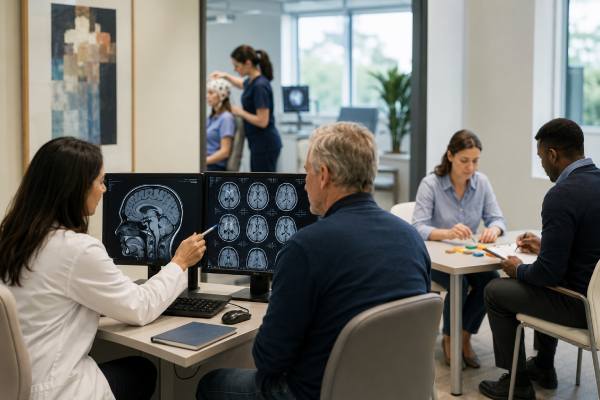
Tests for brain, cognitive, and mental health concerns can feel confusing because they range from quick questionnaires to advanced scans, blood work, sleep studies, and hours-long neuropsychological evaluations. Some are used to screen for possible problems. Others help confirm, rule out, or better understand a diagnosis.
The most useful way to think about these tests is not as isolated “answers,” but as pieces of a clinical picture. A score, scan, lab value, or checklist result matters most when it is interpreted alongside symptoms, medical history, medication use, sleep, mood, daily function, family observations, and a clinician’s exam.
Table of Contents
- What Tests and Diagnostics Can Show
- Main Types of Tests
- How Clinicians Choose Tests
- What Happens During Evaluation
- How Results Are Interpreted
- When Advanced Testing Is Needed
- Red Flags and Urgent Care
- How to Prepare and Follow Up
What Tests and Diagnostics Can Show
Brain, cognitive, and mental health tests are designed to answer specific clinical questions, not to label a person from one result alone. A good evaluation asks what is changing, how much it affects daily life, what conditions could explain it, and what next step would be most helpful.
A brief depression questionnaire, for example, can identify symptoms that deserve follow-up, but it does not replace a clinical interview. A brain MRI can show stroke, tumor, bleeding, inflammation, atrophy, or structural changes, but it cannot diagnose most psychiatric conditions by itself. A memory screen can show whether someone is having measurable difficulty, but it may not explain whether the cause is Alzheimer’s disease, sleep apnea, depression, medication effects, thyroid disease, or another condition.
This is why the distinction between screening and diagnosis matters. Screening looks for signs that a problem may be present; diagnosis combines test results with history, examination, clinical judgment, and sometimes follow-up testing. For a deeper comparison, screening versus diagnosis in mental health is a useful concept to understand before interpreting any score.
Tests can help clinicians:
- Detect symptoms that may otherwise be missed
- Measure severity or functional impact
- Compare current ability with expected performance for age, education, or baseline
- Rule out medical causes of mood, memory, concentration, or behavior changes
- Track change over time
- Guide treatment, accommodations, referrals, or safety planning
They can also be wrong or incomplete. False positives can suggest a problem that is not truly present. False negatives can miss a condition, especially if symptoms fluctuate or the tool is not well matched to the person’s language, culture, education, disability, or situation. Anyone using online questionnaires, workplace screens, school reports, or brief clinic tools should understand that mental health test results can be misleading when they are treated as final answers.
The best diagnostic process is usually stepwise. It starts with the least invasive, most relevant information, then moves toward more specialized testing only when the results would change care.
Main Types of Tests
The main categories include clinical interviews, rating scales, cognitive tests, medical exams, lab work, brain imaging, sleep testing, neurological tests, and specialist evaluations. Each type answers a different question, and many evaluations use more than one.
| Test category | What it helps answer | Common examples | Main limitation |
|---|---|---|---|
| Clinical interview | What symptoms are present, when they started, and how they affect life | Psychiatric evaluation, neurological history, collateral family interview | Depends on accurate reporting and clinician skill |
| Rating scales | Whether symptoms meet a threshold for further evaluation | PHQ-9, GAD-7, MDQ, ASRS, PCL-5 | Screening tools do not confirm diagnosis alone |
| Cognitive screening | Whether memory, attention, language, or thinking may be impaired | MoCA, MMSE, Mini-Cog, SLUMS | May miss subtle problems or be affected by education and language |
| Neuropsychological testing | Detailed strengths and weaknesses across cognitive domains | Memory, executive function, attention, language, processing speed tests | Requires time, trained interpretation, and appropriate norms |
| Lab tests | Whether medical factors may be contributing | Thyroid, B12, CBC, metabolic panel, A1C, iron studies | Normal labs do not rule out mental health or neurological conditions |
| Brain imaging | Whether structural or disease-related changes are present | MRI, CT, PET, amyloid PET | Many symptoms do not have a visible scan finding |
| Neurological tests | Whether electrical, nerve, seizure, or movement-related problems exist | EEG, video EEG, EMG, nerve conduction studies | Usually ordered for specific neurological questions |
| Sleep testing | Whether sleep disorders are affecting mood, cognition, or daytime function | Polysomnography, home sleep apnea test, MSLT | Does not explain all fatigue or concentration problems |
Brain tests often focus on structure, activity, electrical patterns, or disease markers. MRI is commonly used when clinicians need detailed structural information. CT is faster and often used for urgent concerns such as trauma, bleeding, or sudden neurological changes. EEG can help assess seizures or unusual episodes. PET scans may be used in selected dementia or neurological workups. A broader comparison of common brain tests such as MRI, CT, EEG, PET, sleep studies, and lab work can help clarify why one test may be ordered instead of another.
Cognitive tests focus on thinking skills. They may assess memory, attention, processing speed, language, visual-spatial ability, reasoning, and executive function. Some are brief screens used in primary care or neurology. Others are part of a full neuropsychological evaluation. A focused explanation of what cognitive testing measures can be helpful when a person has memory loss, brain fog, concussion symptoms, learning concerns, or functional decline.
Mental health tests often use structured questionnaires and interviews to assess symptoms such as depression, anxiety, trauma, mania, obsessive thoughts, substance use, eating disorder symptoms, psychosis, or suicide risk. These tools work best when they open a conversation rather than replace one.
How Clinicians Choose Tests
Clinicians choose tests based on the symptom pattern, age, timeline, risk factors, exam findings, and what result would change the plan. The right test for sudden confusion is different from the right test for lifelong attention problems or slowly progressive memory loss.
The first question is usually timing. Sudden symptoms raise different concerns than symptoms that have developed gradually over months or years. A person with abrupt weakness, severe headache, seizure, head injury, or sudden confusion may need urgent neurological evaluation. Someone with a long pattern of distractibility, disorganization, and time blindness may need ADHD assessment, sleep review, anxiety evaluation, and sometimes learning or executive function testing.
The second question is whether symptoms are mainly cognitive, emotional, behavioral, neurological, sleep-related, medical, or mixed. Many real cases are mixed. Depression can slow thinking and memory. Anxiety can impair concentration. Sleep apnea can mimic ADHD or depression. Low B12, thyroid disease, anemia, blood sugar problems, medication side effects, alcohol use, or other medical issues can contribute to brain fog and mood changes. That is why clinicians often need to rule out medical causes of depression, anxiety, and brain fog before assuming symptoms are purely psychiatric.
Age also affects test choice. Children may need developmental history, school records, parent and teacher rating scales, autism testing, ADHD testing, or psychoeducational testing. Adults may need workplace-function history, mood and sleep assessment, substance use screening, medical labs, or evaluation for adult ADHD, trauma, or cognitive change. Older adults with memory concerns may need cognitive screening, medication review, lab work, functional assessment, family input, brain imaging, and sometimes dementia biomarker testing.
Clinicians also consider whether the concern is episodic or continuous. Episodes of staring, confusion, unusual sensations, or loss of awareness may lead to EEG or video EEG. Fluctuating alertness in an older adult may suggest delirium, medication effects, infection, dehydration, or metabolic problems. Progressive memory loss may require a structured cognitive workup. Symptom-by-symptom guidance, such as testing by memory loss, brain fog, anxiety, mood swings, and related symptoms, can be useful because the starting point depends heavily on the main complaint.
A good clinician avoids both extremes: ordering every possible test without a clear reason, or dismissing symptoms because a brief screen is normal. The best testing strategy is targeted, proportionate, and revisited if symptoms change.
What Happens During Evaluation
A thorough evaluation usually begins with history, symptom details, functional impact, and safety questions before any specialized test is ordered. The goal is to understand the person, not just collect scores.
A clinician may ask when symptoms began, whether they were sudden or gradual, what makes them better or worse, and how they affect work, school, relationships, self-care, driving, finances, or medication management. They may review medical conditions, past psychiatric history, sleep habits, alcohol and drug use, medications, supplements, head injuries, seizures, family history, trauma exposure, and recent stressors.
For mental health concerns, the evaluation may include questions about mood, anxiety, panic symptoms, intrusive thoughts, compulsions, trauma reminders, eating patterns, substance use, mania or hypomania, hallucinations, delusions, self-harm, and suicidal thoughts. This can feel personal, but these questions help clinicians identify risk and choose safe care. People who want to know what to expect can review how a mental health evaluation is usually structured.
For cognitive concerns, clinicians often ask for examples rather than general labels. “I’m forgetful” can mean misplacing objects, repeating questions, losing words, missing appointments, getting lost, making financial errors, or struggling to follow conversations. Each pattern points in a different direction. Family members or close contacts may notice changes the person does not, especially in dementia, delirium, substance use, mood disorders, or psychosis.
A physical or neurological exam may include blood pressure, heart rate, vision or hearing considerations, reflexes, strength, coordination, gait, speech, eye movements, sensory testing, and mental status observations. These findings can influence whether imaging, lab work, EEG, sleep testing, or specialist referral is needed.
Neuropsychological testing is more detailed. It may include an interview, record review, standardized tasks, questionnaires, performance validity measures, and feedback. The test battery is chosen for the referral question, such as dementia, concussion, ADHD, autism, learning disability, epilepsy, brain injury, or return-to-work planning. A full explanation of when neuropsychological testing is needed can help set expectations for the process.
The length of evaluation varies widely. A primary care screen may take a few minutes. A psychiatric evaluation may take 45 to 90 minutes. A neuropsychological evaluation may take several hours across one or more appointments. Imaging, lab work, EEG, and sleep studies may be scheduled separately.
How Results Are Interpreted
Results are interpreted by looking for patterns, not by treating one number as the whole answer. A score may show severity, probability, or performance compared with norms, but diagnosis depends on context.
Mental health scales often use cutoffs. A PHQ-9 score can suggest mild, moderate, or severe depressive symptoms. A GAD-7 score can estimate anxiety severity. A positive bipolar screen may indicate that more questions about manic or hypomanic episodes are needed. A PTSD screen may show trauma-related symptoms that warrant a fuller assessment. These scores are useful because they standardize symptom reporting, but they can be influenced by temporary stress, medical illness, sleep loss, substance use, misunderstanding the questions, or reluctance to answer honestly.
Cognitive test scores are often compared with expected performance for age and sometimes education or language background. A low score does not automatically mean dementia. Poor sleep, pain, depression, anxiety, medications, sensory impairment, low literacy, test anxiety, and cultural or language mismatch can all affect performance. On the other hand, a normal brief screen does not always rule out subtle cognitive change, especially in highly educated people or those with strong compensatory strategies.
Brain imaging results also require careful interpretation. A scan may reveal findings that clearly matter, such as stroke, bleeding, tumor, hydrocephalus, significant atrophy, or inflammation. It may also show incidental findings that are unrelated to symptoms. Some people with serious psychiatric symptoms have normal scans. Some people with abnormal scans have few symptoms. Imaging is most helpful when the clinical question is specific.
Lab results can be straightforward or ambiguous. A very low B12 level, severe anemia, uncontrolled thyroid disease, abnormal electrolytes, or significant liver or kidney problems may help explain cognitive or mood symptoms. Borderline results may require repeat testing or clinical judgment. Normal lab work is reassuring, but it does not rule out depression, anxiety, ADHD, dementia, autism, concussion, trauma-related symptoms, or sleep disorders.
Reports should ideally answer three practical questions: What was found? What does it likely mean? What should happen next? A useful report explains the level of concern, possible diagnoses, recommended treatment or referrals, safety steps, accommodations, and whether repeat testing is needed. For mental health scales, understanding common mental health test scores can help people ask better follow-up questions rather than overreacting to a single number.
When results are abnormal, unclear, or surprising, the next step may be repeat testing, a specialist opinion, more detailed assessment, medication review, treatment trial, or watchful follow-up. The right response depends on the finding and the person’s symptoms.
When Advanced Testing Is Needed
Advanced testing is most useful when basic evaluation does not explain symptoms, when the stakes are high, or when results would change treatment, safety, or planning. More testing is not automatically better; the question is whether it adds meaningful information.
Advanced brain imaging may be considered when symptoms suggest a structural, vascular, inflammatory, degenerative, seizure-related, or complex neurological cause. MRI can be useful for progressive cognitive decline, unexplained neurological signs, new seizures, certain headaches, traumatic brain injury concerns, or suspected demyelinating disease. CT may be used in urgent settings or when MRI is not appropriate. PET scans and disease-specific imaging are usually reserved for selected cases, such as complex dementia evaluations.
Biomarker testing is evolving quickly, especially for Alzheimer’s disease. Cerebrospinal fluid tests, amyloid PET, tau PET, and newer blood-based biomarkers may help identify Alzheimer’s-related pathology in specific clinical settings. These tests are not general memory checkups for everyone. They are most meaningful when a person has objective cognitive impairment, the clinician has already completed a careful evaluation, and the result would affect diagnosis, treatment eligibility, counseling, or planning.
Genetic testing is another area that requires caution. Some genetic tests can identify high-risk variants or inherited disease patterns, but many results indicate risk rather than certainty. Genetic counseling is often important before and after testing, especially when results could affect relatives, insurance concerns, reproductive decisions, or long-term planning.
Neuropsychological testing may be ordered when brief cognitive screening is inconclusive, when a detailed profile is needed, or when diagnosis has practical consequences. It can help distinguish patterns seen in ADHD, learning disabilities, autism, traumatic brain injury, dementia, depression-related cognitive problems, epilepsy, or other neurological conditions. It can also guide school supports, workplace accommodations, rehabilitation, disability documentation, and capacity-related decisions.
The type of professional matters. Primary care clinicians often start the workup and coordinate lab testing or initial screening. Psychiatrists diagnose and treat mental health disorders, especially when medication or complex risk is involved. Psychologists provide therapy and psychological assessment. Neuropsychologists specialize in detailed brain-behavior testing. Neurologists evaluate disorders of the brain, nerves, movement, seizures, headaches, and cognitive decline. The differences among a psychiatrist, psychologist, and neuropsychologist can help clarify where to start.
Advanced testing should be paired with a plan for explaining results. A sophisticated test can create confusion or anxiety if no one explains what it can and cannot mean.
Red Flags and Urgent Care
Some symptoms should be evaluated urgently because they may signal a medical, neurological, or psychiatric emergency. Testing should not be delayed when safety or sudden neurological change is involved.
Seek urgent or emergency care for symptoms such as:
- Suicidal thoughts with intent, plan, access to lethal means, or inability to stay safe
- Thoughts of harming someone else
- New hallucinations, paranoia, mania, or severe agitation with unsafe behavior
- Sudden confusion, severe disorientation, or rapidly fluctuating alertness
- New weakness, facial drooping, trouble speaking, vision loss, or severe dizziness
- A first seizure, repeated seizures, or loss of consciousness
- Severe sudden headache, especially if it is the worst headache of life
- Head injury with worsening headache, vomiting, confusion, seizure, or unusual behavior
- Fever, stiff neck, confusion, or severe lethargy
- Sudden memory loss or major personality change
- Severe intoxication, withdrawal symptoms, or overdose concern
In these situations, the first priority is safety and medical stabilization. Emergency clinicians may use vital signs, neurological examination, blood tests, toxicology testing, CT or MRI, EEG, infection workup, psychiatric assessment, or observation depending on the situation.
It is also important to take suicide screening seriously. A suicide risk screen is not a moral judgment and does not automatically mean hospitalization. It is a safety tool that helps clinicians understand current thoughts, intent, past attempts, protective factors, access to means, substance use, agitation, psychosis, and support. The follow-up can range from a safety plan and outpatient care to crisis evaluation or inpatient treatment, depending on risk.
Delirium is another urgent concern, especially in older adults. Sudden confusion can come from infection, dehydration, medication effects, low oxygen, metabolic problems, alcohol withdrawal, pain, or other medical issues. It is often mistaken for dementia or psychiatric illness, but it usually requires prompt medical evaluation.
When symptoms are frightening but not clearly life-threatening, it can still be hard to decide where to go. A practical overview of when to go to the ER for mental health or neurological symptoms can help people act quickly when warning signs appear.
How to Prepare and Follow Up
Preparation improves the accuracy and usefulness of testing. The best preparation is to bring clear examples, relevant records, medication information, and realistic questions.
Before an appointment, write down the main concern in plain language. Include when it started, whether it is getting better or worse, and how it affects daily life. Specific examples are more useful than general labels. “I forgot two bill payments and got lost driving to a familiar store” is more informative than “my memory is bad.” “I reread the same paragraph five times and miss deadlines” gives more context than “I cannot focus.”
Bring or prepare:
- A current medication and supplement list, including doses
- Major medical diagnoses and surgeries
- Sleep schedule and sleep quality details
- Alcohol, cannabis, or drug use patterns if relevant
- Prior testing, imaging, lab work, school evaluations, or hospital records
- A list of symptoms and when they occur
- Family observations, if cognitive or behavioral change is a concern
- Glasses, hearing aids, mobility aids, or communication supports
- Questions about what the test can and cannot answer
For cognitive or neuropsychological testing, try to sleep as well as possible beforehand, eat normally unless told otherwise, and avoid alcohol or non-prescribed sedating substances. Take prescribed medications unless the testing clinician gives different instructions. Do not try to “practice” cognitive tests online; it can make results harder to interpret.
For mental health evaluation, honest answers matter more than perfect wording. Symptoms such as intrusive thoughts, panic, trauma memories, compulsions, substance use, self-harm, or hallucinations can feel difficult to discuss, but clinicians need accurate information to assess safety and recommend the right care.
After testing, ask for a clear explanation of the findings. Good follow-up questions include:
- What did the results show?
- What diagnoses are being considered?
- What conditions were ruled out or still need evaluation?
- How urgent is the next step?
- What treatment, referral, or lifestyle change is recommended?
- Should testing be repeated, and if so, when?
- What changes should prompt urgent care?
- Who will coordinate the plan?
If a report is long or technical, ask for a plain-language summary. If results conflict with lived experience, say so. Sometimes a test misses symptoms that happen only in real-world settings, under stress, at school, at work, or when sleep is poor. Follow-up is part of the diagnostic process, not a failure of it.
For longer evaluations, preparation can make the day less stressful. People scheduled for detailed cognitive assessment may benefit from reviewing how to prepare for neuropsychological testing so they know what to bring and what not to worry about.
References
- Screening for Anxiety Disorders in Adults: US Preventive Services Task Force Recommendation Statement 2023 (Guideline)
- Screening for Depression and Suicide Risk in Adults: US Preventive Services Task Force Recommendation Statement 2023 (Guideline)
- Screening for Depression, Anxiety, and Suicide Risk in Adults: A Systematic Evidence Review for the U.S. Preventive Services Task Force 2023 (Systematic Evidence Review)
- Neuropsychological Assessment 2023 (Review)
- Alzheimer’s Association Clinical Practice Guideline on the use of blood-based biomarkers in the diagnostic workup of suspected Alzheimer’s disease within specialized care settings 2025 (Guideline)
- Revised criteria for diagnosis and staging of Alzheimer’s disease: Alzheimer’s Association Workgroup 2024 (Guideline)
Disclaimer
This article is for general educational purposes only and is not a substitute for professional medical advice, diagnosis, or treatment. Brain, cognitive, and mental health symptoms should be evaluated by a qualified clinician, especially when symptoms are sudden, worsening, unsafe, or affecting daily function.
Please share this article on Facebook, X, or any platform where it may help someone better understand testing and diagnostic options.