Vitamin E often gets mentioned alongside vitamin C, zinc, and vitamin D, but its role in immune support is more specific than most supplement marketing suggests. It is a fat-soluble antioxidant that helps protect cell membranes from oxidative damage and supports normal immune cell function, especially in the setting of aging, illness, or poor dietary intake. That makes it important, but not magical. Vitamin E is not a shortcut to stronger immunity, and high-dose supplements are not automatically better than food.
What makes this nutrient worth a closer look is the balance it requires. Too little can contribute to immune dysfunction, nerve problems, or red blood cell fragility, especially in people with fat malabsorption. Too much, particularly from supplements, can increase bleeding risk and create medication problems. The practical goal is to understand what vitamin E actually does, where to get it from food, how much most adults need, and when supplementation makes sense.
Key Insights
- Vitamin E helps protect immune cells and cell membranes from oxidative stress, but it is not a proven all-purpose immune booster.
- Deficiency is uncommon in healthy adults but becomes more likely with fat malabsorption, very restrictive diets, or certain chronic conditions.
- Nuts, seeds, plant oils, avocado, and some leafy greens are the most reliable food sources of vitamin E.
- High-dose vitamin E supplements can raise bleeding risk, especially with anticoagulants, antiplatelet drugs, and some other treatments.
- A food-first plan that regularly includes vitamin E-rich foods is the safest starting point for most people.
Table of Contents
- What vitamin E does for immunity
- Who might be low in vitamin E
- Best food sources that actually help
- How much vitamin E you need
- When supplements make sense
- Safety risks and drug interactions
What vitamin E does for immunity
Vitamin E supports immune health in a quieter way than many people expect. It does not act like a stimulant for the immune system, and it does not directly prevent colds in the same straightforward way a vaccine prevents infection. Its main job is protective. As a fat-soluble antioxidant, vitamin E helps shield cell membranes from oxidative damage. That matters because immune cells are constantly active, constantly signaling, and often exposed to oxidative stress during inflammation and infection.
This membrane-protective role is especially relevant for T cells and other immune cells that need to communicate, divide, and respond efficiently. When vitamin E status is adequate, cells are better able to maintain normal structure and function. When status is poor, those cells may become less effective, especially in settings where oxidative stress is already high. That is one reason vitamin E is often discussed in immune aging. Older adults tend to have more oxidative stress, more chronic inflammation, and slower or less coordinated immune responses. In that context, vitamin E has been studied as one of several nutrients that may help support normal immune function, though the real-world results are mixed.
This is also where vitamin E gets oversold. It is reasonable to say that vitamin E is important for immune function. It is not reasonable to say that large vitamin E doses reliably “boost” immunity in healthy adults. The evidence does not support that kind of simple claim. In some studies, vitamin E improved selected markers of cell-mediated immunity, especially in older adults. In others, it did not clearly reduce respiratory infections or produce broad clinical benefits. That puts it in the category of “important nutrient” rather than “immune shortcut.”
A useful way to think about vitamin E is that it helps the immune system work under normal conditions. It supports resilience, not superhero status. That idea fits better with immune resilience than with exaggerated wellness language. It also fits with the broader lesson that a functioning immune system depends on many nutrients, not one hero nutrient in isolation. If overall diet quality is poor, sleep is short, stress is high, and inflammation is persistent, vitamin E alone cannot correct the whole picture.
Vitamin E may also have relevance beyond immune cells themselves because oxidative stress affects tissues that the immune system depends on. A body under constant oxidative strain is working harder to maintain normal barriers, repair, and signaling. That helps explain why vitamin E belongs in the conversation about what weakens immune function. It is not just about deficiency disease. It is about whether the body has the tools it needs to protect itself during daily wear, inflammation, and infection.
In short, vitamin E matters because healthy immunity is not only about attacking pathogens. It is also about protecting the cells that make defense possible.
Who might be low in vitamin E
Vitamin E deficiency is not common in well-nourished adults, but it does happen, and when it does, the cause is often more complicated than simply “not eating enough nuts.” Because vitamin E is fat-soluble, the biggest risk factor is impaired fat absorption. If the body cannot absorb dietary fat properly, it will struggle to absorb vitamin E as well.
That makes deficiency more likely in people with conditions such as cystic fibrosis, chronic pancreatitis, cholestatic liver disease, Crohn’s disease, celiac disease, short bowel syndrome, or other disorders that interfere with digestion and absorption. People who have had bariatric surgery can also be at higher risk, particularly if intake is low and follow-up nutrition care is inconsistent. In those settings, vitamin E deficiency is less about food knowledge and more about physiology.
There are also rarer genetic conditions that impair vitamin E transport and can lead to severe deficiency even when intake is not obviously low. These cases are uncommon, but they matter because they remind us that normal eating does not guarantee normal vitamin status in every body.
Dietary risk still matters, though. A person following a very low-fat or extremely restrictive diet can gradually reduce vitamin E intake. This is especially true if meals are built around refined starches, very little plant fat, and minimal dietary variety. Since vitamin E shows up most strongly in nuts, seeds, oils, and some vegetables, people who avoid many of those foods can drift lower over time. That risk becomes more meaningful when low intake overlaps with poor overall nutrition, illness, or advanced age.
Symptoms of deficiency can be subtle at first. Severe deficiency is classically linked to peripheral neuropathy, muscle weakness, impaired reflexes, balance problems, vision changes, and hemolytic issues. Immune effects may be less dramatic day to day, but inadequate vitamin E can still contribute to poorer immune performance. In practice, deficiency is rarely diagnosed from vague fatigue alone. It usually becomes more relevant when there is a fitting clinical picture plus a condition known to interfere with absorption.
This is one reason people with frequent illness should not assume the answer is vitamin E. The immune system can be stressed by many things, including low vitamin D, zinc imbalance, chronic inflammation, poor sleep, high alcohol intake, or actual immune disorders. If infections are unusually frequent or severe, it helps to think beyond a single nutrient and consider broader patterns like when recurrent infections deserve evaluation or how a true immune deficiency differs from lifestyle-related vulnerability.
The bottom line is that vitamin E deficiency is uncommon in the average healthy adult but more plausible in people with fat malabsorption, digestive disease, certain surgeries, or highly limited diets. Those are the groups where testing, careful food review, and sometimes supplementation become more meaningful.
Best food sources that actually help
The most practical way to improve vitamin E status is through food. Unlike high-dose supplements, vitamin E-rich foods tend to deliver the nutrient in useful amounts alongside fats, fiber, and other compounds that support overall health. They also fit naturally into eating patterns that help immune health more broadly.
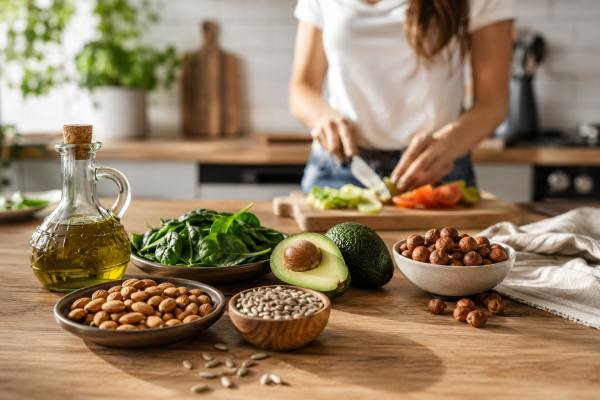
The richest everyday sources are nuts, seeds, and plant oils. Almonds are one of the best-known options, and sunflower seeds are another strong choice. Sunflower oil, safflower oil, wheat germ oil, and some other vegetable oils can contribute meaningful amounts, though they are used differently in real-life diets. Hazelnuts, peanuts, and peanut butter also help. Avocado is a useful source, especially for people who prefer whole-food fats over oils.
Vegetables matter too, though they are usually not as concentrated as nuts and seeds. Spinach, Swiss chard, beet greens, broccoli, and asparagus can all contribute. Their vitamin E content is not enough to carry an entire day on their own in most cases, but they become more valuable when they show up regularly. Fortified cereals can also provide vitamin E, though they are a more processed route and not always the best overall nutrition choice.
A simple food-first pattern works better than hunting for one “superfood.” Useful combinations include:
- Oatmeal topped with almonds and sunflower seeds
- A lunch salad with olive oil, avocado, and pumpkin or sunflower seeds
- Yogurt with chopped nuts
- Whole-grain toast with peanut butter
- Roasted vegetables served with a handful of nuts on the side
- A smoothie that includes nut butter or avocado
Because vitamin E is fat-soluble, foods that naturally contain fat tend to make practical sense. They help deliver the nutrient in a form that is easy to absorb and easy to repeat. This is another reason ultra-low-fat eating styles can work against nutrient adequacy. A diet that includes reasonable amounts of plant fats often supports more than one immune-related nutrient at once.
This food pattern also overlaps with broader approaches that tend to support immune health over time. A Mediterranean-style eating pattern often includes olive oil, nuts, seeds, vegetables, and legumes, all of which improve the odds of covering vitamin E without overthinking it. Similarly, a focus on practical immune-supportive foods usually ends up supporting vitamin E along with other nutrients.
One useful nuance is that more is not always better from oils alone. It is easy to assume that simply adding more seed oil will solve the problem, but diet quality matters as a whole. Nuts, seeds, avocado, and mixed meals are often the more satisfying and sustainable foundation.
For most adults, the goal is not to chase an exact milligram count every day. It is to build a weekly pattern that includes vitamin E foods often enough that intake stays steady and deficiency remains unlikely.
How much vitamin E you need
Vitamin E recommendations are usually given as milligrams of alpha-tocopherol. For most adults, the recommended intake is 15 mg per day. Needs increase modestly during lactation, while pregnancy still generally stays in a range that is achievable through food and standard prenatal planning rather than high-dose add-ons. For children and teens, the target is lower and rises gradually with age.
These numbers matter because vitamin E is one of those nutrients that sounds harmless enough to invite casual oversupplementation. A person sees “antioxidant,” assumes more must be protective, and ends up taking several hundred international units a day without a clear reason. But recommended intake and supplement dosing are not the same thing. Meeting needs is the goal, not blowing past them.
It also helps to know that vitamin E labels can be confusing. Some products list milligrams, some list international units, and some use different forms such as natural or synthetic alpha-tocopherol. That makes casual comparison harder than it should be. For most readers, the simpler lesson is this: a balanced diet can often get you near the target, and many multivitamins already include vitamin E. Before adding a separate supplement, it is worth checking what you are already taking.
Daily targets are also different from upper levels. The safety conversation becomes more important as intake rises from supplements rather than food. Food sources rarely create toxicity concerns in the way concentrated pills can. That is because food intake is naturally self-limiting and comes in a mixed matrix, while supplements can deliver large amounts every day for months or years.
Another detail that often gets overlooked is that vitamin E does not work alone. It functions within a broader nutrient environment that includes selenium, vitamin C, fatty acids, and overall energy balance. Someone trying to “optimize” vitamin E while ignoring sleep, protein, and diet variety is probably focusing on the wrong lever. A nutrient target matters, but it matters most inside a broader pattern of adequate nutrition.
For older adults, the conversation sometimes shifts toward whether slightly higher intake helps immune aging. Some studies have suggested benefits for specific immune markers at supplemental doses above the standard requirement, but those findings have not translated into a universal recommendation for routine higher-dose use. That is an important distinction. A nutrient can be interesting in research without becoming a sensible default for the whole population.
If your goal is practical immune support, think in tiers:
- Meet the standard daily target through food when possible.
- Review your multivitamin before adding a separate vitamin E product.
- Treat high-dose supplementation as a specific decision, not a casual wellness habit.
That approach is more grounded than assuming every antioxidant should be pushed to the upper edge of the supplement aisle.
When supplements make sense
Vitamin E supplements can be useful, but the right cases are narrower than marketing suggests. They make the most sense when deficiency is documented, strongly suspected because of a known medical condition, or likely due to long-term fat malabsorption. In those settings, food alone may not be enough, and supplementation becomes part of treating a real problem rather than trying to create “extra immunity.”
This is especially relevant for people with chronic digestive or pancreatic disorders, cholestatic liver disease, cystic fibrosis, or surgical changes that reduce absorption. In those cases, clinicians may use specific forms and doses based on labs, symptoms, and the underlying cause. That is a medical nutrition decision, not a general wellness trend.
Supplements may also be discussed in older adults with low dietary intake, but even there the decision should be individualized. Some older adults benefit more from improving diet quality or using a moderate multivitamin than from taking a dedicated high-dose vitamin E pill. If a supplement is used, it should have a reason behind it.
For the average healthy adult, routine vitamin E supplementation for “immune support” is much harder to justify. The real-world evidence is mixed. Some studies in older adults found improvement in selected immune markers and possibly fewer colds in certain settings, while others did not show broad protection against respiratory infections. That means vitamin E is not in the same category as a proven preventive measure. It is better understood as a nutrient that needs to be sufficient, not maximized.
A practical supplement checklist can help:
- Ask whether there is a true risk of deficiency.
- Check whether diet or a multivitamin already covers the need.
- Review medications, especially anything that affects bleeding.
- Avoid combining multiple supplements that each contain vitamin E.
- Reassess the plan instead of taking it indefinitely out of habit.
This broader supplement review matters because vitamin E is often hidden in multivitamins, “immune” blends, fish oil formulas, and skin or hair products. People sometimes end up taking far more than they realize. That is one reason articles on too many supplements and immune health are so useful: the risk often comes from stacking, not just from one bottle.
If you do use a supplement, quality matters. Clear labeling, reasonable dosing, and reputable manufacturing are more important than dramatic claims about superior immunity. A guide to choosing third-party tested supplements can help reduce the odds of unnecessary surprises.
The best question is not “Can vitamin E help?” It is “Am I the kind of person who is likely to benefit from extra vitamin E beyond food?” For many adults, the honest answer is no. For some higher-risk groups, the answer is yes, but only with context.
Safety risks and drug interactions
Vitamin E has a healthy reputation, but that reputation can create a false sense of safety. The biggest practical concern is not getting vitamin E from almonds or avocado. It is taking high-dose supplements for long periods without noticing that the dose has crossed from nutritional to pharmacologic territory.
The main safety issue is bleeding risk. Vitamin E can inhibit platelet aggregation and may interfere with vitamin K-dependent clotting pathways. That becomes especially important when combined with anticoagulants or antiplatelet drugs such as warfarin, apixaban, rivaroxaban, clopidogrel, or regular aspirin use. The exact dose at which risk becomes clinically important varies, but the concern grows as supplemental doses climb, particularly above what a basic multivitamin would provide.
This means vitamin E is not a casual add-on for anyone already managing clotting risk. If you bruise easily, have a history of bleeding, or are preparing for surgery, a high-dose vitamin E supplement deserves review. The same is true if you take multiple supplements with overlapping antioxidant content.
There are also potential concerns in cancer care. High-dose antioxidants can sometimes interfere with treatments that depend on oxidative mechanisms, such as some chemotherapy or radiation approaches. That does not mean food sources are forbidden. It means concentrated antioxidant supplementation should be reviewed by the oncology team rather than self-prescribed.
Another complication is that supplement labels can hide total exposure. A person may take a multivitamin, an omega-three capsule stabilized with vitamin E, and a separate “immune” supplement, then add a skin formula on top. None of those looks extreme alone, but together they may push intake much higher than intended. This is where looking at the full supplement list matters more than focusing on a single bottle.
Unlike food, supplements can also pull attention away from the basics. It is easy to reach for vitamin E when the bigger issues are low sleep, poor diet quality, chronic stress, or high alcohol intake. Those factors often do more to shape immune resilience than any one antioxidant. A helpful correction is to focus first on evidence-based immune habits and use supplements only where they fill a real gap.
There is also a practical difference between deficiency correction and open-ended use. If someone is taking vitamin E because of documented low status or malabsorption, monitoring and follow-up make sense. If someone is taking 400 IU daily because they heard it “supports immunity,” that is a different and weaker use case with more downside.
The safest summary is simple:
- Food sources are generally low risk.
- Standard multivitamin-level doses are usually modest.
- High-dose vitamin E deserves caution.
- Medication review matters.
- More is not better just because the nutrient is essential.
That is the right frame for vitamin E: necessary, useful, sometimes supplemental, but not something to dose casually just because immune support sounds appealing.
References
- Vitamin E – Health Professional Fact Sheet 2021 (Fact Sheet)
- Dietary Supplements for Immune Function and Infectious Diseases – Health Professional Fact Sheet 2025 (Fact Sheet)
- Vitamin E deficiency in childhood: a narrative review 2023 (Review)
- [Vitamins and Immune System Health] 2023 (Review)
- Scientific opinion on the tolerable upper intake level for vitamin E 2024 (Scientific Opinion)
Disclaimer
This article is for educational purposes only and is not medical advice. Vitamin E deficiency, neuropathy, anemia, bleeding risk, and recurrent infections can have several causes and may need proper medical evaluation. High-dose vitamin E supplements can interact with medications, especially blood thinners and some cancer treatments. If you have a bleeding disorder, liver disease, malabsorption, upcoming surgery, or questions about supplement dosing, speak with a qualified healthcare professional before starting vitamin E.
If this article helped you, please share it on Facebook, X, or any platform you prefer.