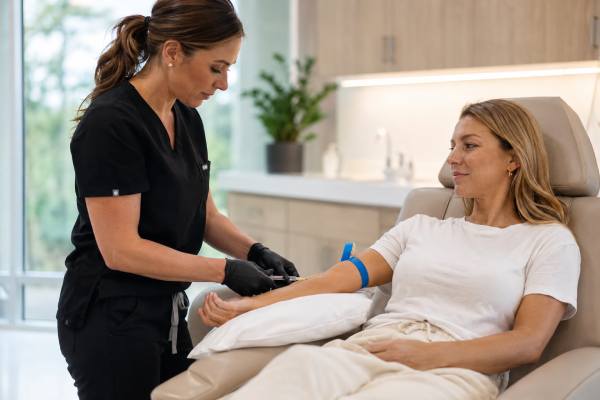
NAD+ shots sit at the intersection of real cell biology and very aggressive wellness marketing. The molecule itself is not fringe. Nicotinamide adenine dinucleotide, or NAD+, is a core coenzyme involved in energy metabolism, DNA repair, and cell signaling. What is far less settled is whether giving NAD+ by injection meaningfully improves energy, recovery, focus, aging-related function, or immune health in otherwise typical patients. That gap between biology and proof is where most of the confusion begins. Some clinics market NAD+ shots or infusions as a shortcut for fatigue, burnout, inflammation, or “cellular repair,” while regulators and recent reviews point out that safety, product quality, dosing, and real-world efficacy remain uneven and often poorly standardized. This article explains what NAD+ shots actually are, why they are being promoted so heavily, what the human evidence does and does not show, and which safety questions matter before you spend money or put a needle anywhere near the idea.
Key Insights
- NAD+ is a real cellular coenzyme, but that does not automatically mean NAD+ shots deliver meaningful clinical benefits in healthy people.
- Most of the stronger human evidence in this space involves oral NAD+ precursors such as nicotinamide riboside and nicotinamide mononucleotide, not injected NAD+ itself.
- Claims about anti-aging, energy, immune support, and recovery are much broader than the current injection data can justify.
- Safety depends on more than the molecule alone; compounded injectable products add questions about sterility, endotoxins, sourcing, and quality control.
- A practical rule is to ask what exact route, product source, and evidence-backed goal a clinic is offering before paying for any shot or infusion.
Table of Contents
- What These Injections Are
- Why Clinics Promote Them
- What the Evidence Actually Shows
- Do They Help Immunity
- Side Effects and Safety Basics
- Questions to Ask Before Paying
What These Injections Are
NAD+ shots are marketed as a way to raise levels of nicotinamide adenine dinucleotide, a coenzyme found in every cell. NAD+ helps shuttle electrons in energy metabolism, supports enzymes involved in DNA repair, and participates in signaling pathways tied to stress response, inflammation, and mitochondrial function. That biology is real and well established. The harder question is whether putting NAD+ into the body through a shot or infusion predictably improves how people feel or function outside of narrowly defined medical settings.
In everyday wellness language, “NAD+ shots” is often used loosely. Some clinics mean a quick intramuscular or subcutaneous injection. Others mean a slow intravenous infusion, sometimes lasting well over an hour. That distinction matters because route changes the experience, the supervision required, the cost, and the safety profile. Published human data are much heavier on oral NAD+ precursors, especially nicotinamide riboside and nicotinamide mononucleotide, than on injected or infused NAD+ itself. Recent reviews found that oral precursors reliably raise NAD-related biomarkers in humans, while clinically meaningful outcomes remain mixed, and eligible wellness trials of IV or IM NAD+ itself are essentially absent.
That is why it helps to separate three categories that clinics often blur together:
- Direct NAD+ injection or infusion
This is the product most people mean when they say NAD+ shots. - Oral NAD+ precursors
These include compounds such as nicotinamide riboside and nicotinamide mononucleotide, which the body can use in NAD-related pathways and which have substantially more human trial data than injected NAD+ itself. - Wellness cocktails built around NAD language
Some offerings package NAD with broader “cellular repair” or “recovery” branding in ways that resemble the marketing style seen with IV vitamin drips and wellness infusions rather than clearly defined medical treatments.
This distinction matters because people often assume the most invasive option must also be the most potent. That is not necessarily true. In fact, one of the more important conclusions from recent reviews is that the biological interest around NAD+ has outpaced the clinical evidence for parenteral use. In plain terms, the science around the molecule is much stronger than the science around the shot.
So the fairest opening definition is this: NAD+ shots are commercial injectable or infused formulations intended to raise NAD-related availability, usually for wellness or performance claims, but they are being used in a space where route-specific clinical evidence remains limited and inconsistent. That does not make every offering fraudulent. It does mean the burden of proof is higher than the marketing usually suggests.
Why Clinics Promote Them
NAD+ shots are promoted because they fit an unusually attractive story. The pitch is simple: NAD+ declines with age, NAD+ is tied to cellular energy and repair, so restoring it should help people feel younger, sharper, and more resilient. From a marketing standpoint, that story is elegant. It sounds biochemical without sounding like a prescription drug. It also appeals to several overlapping groups at once: people with fatigue, people chasing longevity, people recovering from stress, and people who want a medical-looking intervention without a traditional diagnosis.
Clinics usually cluster their claims around a predictable set of outcomes:
- more energy
- better focus or mental clarity
- faster recovery from stress or heavy workloads
- anti-aging or “cellular repair”
- improved exercise recovery
- reduced inflammation
- stronger immunity or resilience
The problem is not that these goals are unreasonable. The problem is that the clinical evidence behind injected NAD+ does not yet match the breadth of the promises. Recent systematic reviews describe strong biological interest and consistent biomarker effects with some oral precursors, but they also emphasize that functional outcomes are heterogeneous, often null, or based on small studies. For IV or IM NAD+ itself, the evidence is thinner still.
This is a familiar pattern in wellness medicine. A molecule with real mechanistic importance becomes a platform for broad claims that move faster than the human trial data. That is one reason the public conversation around NAD+ shots overlaps with broader questions about what “boosting” the immune system really means. It also resembles the larger market for wellness shots and convenience products, where the language of cellular support, detox, recovery, and immunity often exceeds the quality of the evidence.
Another reason clinics promote NAD+ shots so heavily is that the treatment itself is highly marketable. It is visual, procedural, and premium-priced. A capsule can feel ordinary. A drip chair, syringe, or supervised injection feels medical and immediate. That presentation can make a service seem more evidence-based than it really is. Yet route alone is not proof. A needle is not a clinical endpoint.
This does not mean every person who reports benefit is mistaken. Some people may feel better after a course of NAD+ injections or infusions. But self-reported improvement in a wellness setting can reflect many things: expectancy, hydration, rest during the visit, concurrent lifestyle changes, rate of administration, or simply the nonspecific lift that comes from paying close attention to fatigue. That is why controlled data matter.
So clinics promote NAD+ shots because the biological story is compelling, the patient demand is real, and the intervention is easy to package as advanced care. But the more persuasive the sales language becomes, the more important it is to ask whether the evidence is keeping up. Right now, it mostly is not.
What the Evidence Actually Shows
The best current evidence says two things at once. First, NAD-related pathways are biologically important and worth studying. Second, the clinical effectiveness of NAD+ shots for general wellness goals remains unproven. Those two statements are compatible, and keeping them together is the only way to stay honest.
Human evidence in this area is strongest for oral NAD+ precursors, not for injected NAD+ itself. Recent reviews of NAD+-boosting compounds in humans concluded that oral supplementation can increase NAD-related metabolites and appears generally tolerable, but study designs, doses, durations, and outcomes vary widely, making it hard to translate biomarker changes into firm clinical benefits. More recent PRISMA-guided reviews reached a similar conclusion: oral nicotinamide riboside and nicotinamide mononucleotide reliably changed NAD-related biomarkers, but healthspan-related outcomes were mixed, often endpoint-specific, and sometimes null. Most importantly for this article, recent reviews found no eligible outcomes trials of intravenous or intramuscular NAD+ itself for anti-aging or wellness indications.
That matters because much of the consumer conversation centers on shots and infusions rather than capsules. If a clinic claims that injected NAD+ is clearly superior for energy, aging, or immune support, the evidence base does not currently justify that level of certainty. Recent systematic reviews covering NAD and NADH across different human conditions found only a small pool of trials with mixed populations and outcomes. Some studies suggested favorable signals in narrow settings, but the overall literature remained small, heterogeneous, and far from definitive.
The most directly relevant recent human data on parenteral NAD come from a retrospective study comparing commercial NAD+ IV with nicotinamide riboside IV over four consecutive days. It was not a large randomized trial, and it was conducted in a commercial setting, so it should not be overinterpreted. Still, it is useful because it reflects how these products are being used in the real world. NAD+ IV was associated with more moderate to severe infusion symptoms, including gastrointestinal distress, chest pressure, and increased heart rate, and required much longer infusion times than nicotinamide riboside IV. Short-term safety labs did not show major clinically significant changes, but the study was small and short-term, which means it cannot establish broad safety or effectiveness.
This leaves buyers in an awkward but important position. There is enough evidence to say the field is scientifically active. There is not enough evidence to say NAD+ shots reliably improve fatigue, cognition, recovery, aging, or immune function in ordinary clinical practice. That is the gap people should keep in mind when comparing NAD+ to better-established basics such as sleep, exercise, and evidence-based supplementation. If you are looking broadly at the market, this is exactly why a grounded overview of immune support supplements is often more useful than focusing on the newest injectable trend.
So what does the evidence actually show? Biological plausibility, small and mixed human data, modest short-term tolerability information, and no strong proof that wellness shots outperform simpler, lower-risk alternatives for the outcomes most often advertised.
Do They Help Immunity
This is where the marketing language often gets most slippery. NAD+ does matter to immune biology. It is involved in the metabolism of immune cells, inflammatory signaling, stress responses, and enzymes that influence repair and gene regulation. Reviews of NAD metabolism in immune cells describe meaningful roles in macrophages, T cells, and inflammatory pathways, which is part of why researchers remain interested in the molecule. But mechanistic relevance is not the same thing as proven clinical benefit from a shot.
In practical terms, the evidence does not currently show that NAD+ shots prevent respiratory infections, measurably strengthen everyday immune defenses, or improve immune resilience in a way that has been demonstrated in large human trials. The more up-to-date wellness reviews in this field found no eligible outcomes trials evaluating IV or IM NAD+ itself for anti-aging or wellness endpoints, and the existing human evidence for NAD-related supplementation is mostly about biomarker changes and selected metabolic or functional outcomes, not infection prevention or broad immune performance. That makes any clinic promise of “immune boosting” much more speculative than the sales copy usually implies.
The better way to frame the issue is this: NAD+ is relevant to immunometabolism, but that does not create a shortcut to better immunity. Immune health is shaped by sleep, nutrition, vaccination, chronic disease control, exposure risk, stress, and basic airway health far more clearly than it is by any injectable NAD protocol. This is the same reason many grand claims collapse when tested against the broader evidence behind immune detoxes and mega-dose myths. It is also why people are often better served by first looking at which vitamins and minerals actually matter before spending money on a premium intervention with thin route-specific data.
There is another subtle issue here. Because NAD+ participates in inflammatory and immune signaling, more is not automatically better. Some of the recent infusion literature notes concern that very high extracellular NAD+ may have pro-inflammatory or discomfort-related effects during administration. That does not mean NAD+ is bad for the immune system. It means the biology is not simple enough to justify slogans.
So if someone asks whether NAD+ shots are an immune therapy, the grounded answer is no. They are an experimental wellness intervention built around a biologically important molecule with interesting immune relevance, but without convincing human evidence for routine immune outcomes. That may sound less exciting than the sales pitch, but it is closer to the truth.
Side Effects and Safety Basics
The safety conversation around NAD+ shots has two layers. The first is the molecule and route themselves. The second is product quality, especially when injections or infusions are compounded in the wellness market. Both matter, and the second is often underappreciated.
On the route side, reported infusion-related symptoms are not trivial. In recent real-world comparative work, participants receiving NAD+ IV commonly reported moderate to severe gastrointestinal symptoms, chest pressure, throat discomfort, increased heart rate, and much longer infusion times because the rate often had to be slowed to improve tolerability. Symptoms resolved when the infusion ended, but that still matters. A treatment that regularly needs to be slowed because people feel sick during it is not a side note. It is part of the treatment’s actual profile.
The bigger safety concern, however, is quality control in injectable products. The FDA has warned that some compounders were using food-grade NAD+ to make sterile intravenous products, which is inappropriate because food-grade ingredients may carry microbial or endotoxin contamination risks. The agency said it had received adverse event reports after NAD+ injectable use, including severe chills, shaking, vomiting, and fatigue, with some cases requiring medical treatment, and noted that these reactions were consistent with excessive endotoxins.
That concern later became more concrete in an FDA warning letter to a facility that had compounded NAD+ products. FDA stated that the products were not eligible for the regulatory exemptions the facility relied on and also described deficiencies that put sterility and product quality at risk. The letter referenced complaints of patients who developed low blood pressure, uncontrollable shaking, shivers, and body aches shortly after receiving a product containing NAD+.
This is why safety basics for NAD+ shots should include more than “ask about nausea.” They should include:
- what exact product is being used
- whether it is compounded and by whom
- whether the clinic can document sourcing and sterile handling
- what monitoring happens during administration
- how adverse events are handled
- whether the clinic explains why this route is being chosen over noninvasive options
It is also smart to think beyond the shot itself. People interested in NAD+ therapy are often already using other supplements or injectable wellness products. That raises the chance of stacking interventions without a clear rationale, which is exactly where supplement and medication interactions become more important. It is also where the broader problem of too many supplements and red flags can quietly develop.
So the safety basics are not complicated, but they are serious: discomfort during administration, uncertain long-term outcomes, and a nontrivial quality-control problem in the compounded injectable market. For an elective wellness treatment, that should meaningfully shape how cautious you are.
Questions to Ask Before Paying
If you are still curious about NAD+ shots after looking at the evidence, the next step is not blind enthusiasm or blanket dismissal. It is better questions. A premium wellness treatment deserves a premium standard of skepticism, especially when the evidence is thinner than the marketing.
Start with the most basic question: What specific goal is this supposed to help? “Cellular health” is not a clinical endpoint. Ask whether the clinic is targeting fatigue, cognitive complaints, exercise recovery, aging concerns, or something else. Then ask what data support that goal for the exact route being offered. If the answer shifts quickly from injections to oral NAD precursors, or from human trials to animal theory, that tells you something important.
Next ask: Why this route? If oral precursors have more human data and injections have thinner evidence, the clinic should be able to explain why an injected or infused product is worth the extra cost and procedural risk in your case. “It absorbs better” is not enough by itself when clinically meaningful superiority has not been clearly shown.
Then ask about product quality:
- Is this a compounded product?
- Who prepared it?
- What sterile standards are being followed?
- What adverse events have you seen?
- What monitoring do you do during and after administration?
These questions are not overkill. They are directly relevant in a market where regulators have already flagged NAD+ injectable safety issues and compounding concerns.
You should also ask the more uncomfortable question: What lower-risk alternatives have already been tried? Many people shopping for NAD+ shots are really shopping for relief from fatigue, poor recovery, bad sleep, chronic stress, under-fueling, or vague burnout. In those cases, the highest-value intervention may not be injectable at all. Often the better starting point is to assess basics such as sleep, nutrition, training load, stress, iron status, or medication side effects. That is not glamorous, but it is often more evidence-based than a longevity drip. For many people, attention to sleep and immune resilience or to the broader habits in what actually weakens your system over time will have more practical value than a shot with uncertain long-term benefit.
Finally, ask how success will be measured. If there is no baseline, no endpoint, and no plan beyond “see how you feel,” you are not really buying a treatment protocol. You are buying an experience.
That does not make NAD+ shots worthless. It means they belong in the category of plausible but incompletely proven interventions where caution should be proportional to the cost, invasiveness, and certainty of the claims. Right now, for most wellness uses, the certainty remains modest.
References
- FDA reminds compounders to use ingredients suitable for sterile compounding 2024 (Guidance)
- GenoGenix LLC – 718739 – 01/20/2026 2026 (Warning Letter)
- Evaluation of safety and effectiveness of NAD in different clinical conditions: a systematic review 2024 (Systematic Review)
- NAD⁺ supplementation for anti-aging and wellness: A PRISMA-guided systematic review of preclinical and clinical evidence 2026 (Systematic Review)
- Intravenous infusion of nicotinamide adenine dinucleotide (NAD+) versus nicotinamide riboside (NR): a retrospective tolerability pilot study in a real-world setting 2026 (Pilot Study)
Disclaimer
This article is for educational purposes only and is not medical advice. NAD+ shots are marketed for wellness goals, but the evidence base for injected or infused NAD+ remains limited, and safety can depend heavily on route, product quality, and your personal health context. If you have liver disease, kidney disease, cardiovascular symptoms, pregnancy, active cancer concerns, a history of infusion reactions, or are taking multiple medications or supplements, discuss any injectable NAD plan with a qualified clinician before proceeding.
If you found this article useful, consider sharing it on Facebook, X, or another platform you use.