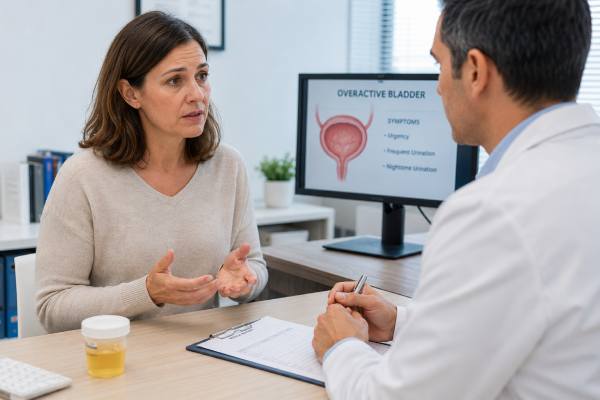
Urgent urination is the sudden need to pee that feels hard to delay. It can happen once after too much coffee, during a urinary tract infection, or repeatedly because the bladder is sending “go now” signals even when it is not full. The key question is not only “Why do I feel this?” but “What should I do next?”
The answer comes from the pattern. Urgency with burning and cloudy urine points toward a UTI. Urgency that comes and goes for months, often with leaks on the way to the bathroom, fits overactive bladder. Urgency with blood, fever, flank pain, trouble starting, pelvic pain, or pregnancy needs faster medical attention because the cause can be more serious.
This guide helps you compare the most common causes, spot warning signs, decide when testing matters, and understand the practical steps that reduce urgency safely.
Table of Contents
- What Urgent Urination Means
- Quick Comparison: OAB, UTI, and Other Causes
- When Urgency Looks Like Overactive Bladder
- When Urgency Looks Like a UTI
- Other Reasons You Suddenly Need to Pee
- When Urgent Urination Needs Medical Care
- What Testing Can Show
- What Helps Reduce Urgency
What Urgent Urination Means
Urgency is different from ordinary fullness. With normal bladder filling, the urge builds gradually and you can usually wait. With urgency, the signal feels sudden, intense, and difficult to ignore. Some people describe it as a bladder spasm, a wave of pressure, or a “drop everything” feeling.
Urgency often overlaps with urinary frequency, which means peeing more often than usual. A person with frequency might visit the bathroom every hour, but still feel in control. A person with urgency feels a strong warning signal even if only a small amount of urine comes out.
A few details help separate harmless triggers from conditions that need treatment:
- Timing: Did it start today, after sex, after a new medication, or has it been building for months?
- Pain: Burning, bladder pain, pelvic pain, or flank pain changes the likely cause.
- Urine changes: Blood, cloudiness, strong odor, or very dark urine matters.
- Leaks: Leaking before reaching the toilet points toward urge incontinence or severe irritation.
- Night symptoms: Waking often to pee can come from bladder problems, fluid timing, sleep apnea, swelling in the legs, diabetes, or medications.
- Emptying problems: Weak stream, straining, dribbling, or feeling unable to fully empty suggests retention or obstruction.
One useful first step is to notice whether the urgency is mainly a bladder-control pattern or an illness pattern. A bladder-control pattern often repeats without fever or burning. An illness pattern starts more abruptly and comes with pain, burning, unusual urine, or feeling unwell.
Quick Comparison: OAB, UTI, and Other Causes
Urgent urination has several common causes, and symptoms overlap. The table below shows the patterns that usually separate them.
| Possible cause | Typical pattern | Clues that point toward it | What usually helps next |
|---|---|---|---|
| Overactive bladder | Recurring urgency for weeks or months | Urgency with frequency, nighttime urination, or leaks; usually no burning or fever | Bladder diary, bladder training, trigger changes, pelvic floor therapy, medication when needed |
| UTI | Sudden onset over hours to a few days | Burning, bladder pressure, cloudy urine, strong odor, pain after peeing, sometimes blood | Urinalysis, sometimes culture, and the right antibiotic when infection is likely |
| Kidney infection | UTI symptoms plus illness | Fever, chills, flank pain, nausea, vomiting, feeling very sick | Prompt medical care; antibiotics chosen for a more serious infection |
| Bladder irritants | Worse after certain drinks or foods | Coffee, alcohol, citrus, spicy foods, carbonation, artificial sweeteners | Short elimination trial, then careful reintroduction |
| Pelvic floor dysfunction | Urgency with pelvic tightness or pain | Pain after peeing, pain with sex, constipation, difficulty relaxing to urinate | Pelvic floor physical therapy; avoid excessive Kegels unless advised |
| Urinary retention or obstruction | Urgency but poor emptying | Weak stream, straining, starting and stopping, full feeling after peeing | Medical evaluation; urgent care if unable to urinate |
| STI or genital infection | Burning or irritation with sexual exposure risk | Discharge, genital sores, pelvic pain, testicular pain, symptoms after a new partner | STI testing; UTI antibiotics alone may not treat it |
The most common mistake is assuming every sudden urge is a UTI. UTIs are common, but so are bladder irritation, overactive bladder, pelvic floor problems, and vaginal or urethral irritation. The second mistake is ignoring infection signs because symptoms seem “just bladder related.” Fever, flank pain, pregnancy, blood in urine, or worsening pain changes the risk level.
For a broader symptom breakdown, frequent urination causes are useful to compare with urgency because the two often appear together but do not mean the same thing.
When Urgency Looks Like Overactive Bladder
Overactive bladder, often shortened to OAB, means the bladder creates urgency signals too often or too strongly. The bladder muscle can contract before the bladder is truly full, or the nerves that control bladder sensation can become overly sensitive. The result is a sudden need to pee that interrupts work, sleep, errands, exercise, or travel.
OAB is a symptom syndrome, not a single disease. That matters because treatment focuses on patterns and triggers as much as medication. A person can have OAB with no infection, no kidney problem, and a normal urinalysis.
Common OAB clues include urgency that lasts more than a few weeks, peeing often during the day, waking at night to urinate, and leaking on the way to the bathroom. Burning is not a typical OAB feature. Neither are fever, chills, or flank pain.
Many people with OAB plan their day around bathrooms. They choose aisle seats, avoid long drives, stop drinking water too early, or skip social plans. Those habits make sense in the moment, but extreme fluid restriction often makes urine more concentrated, which can irritate the bladder further.
OAB urgency often follows a trigger pattern
A trigger pattern means urgency worsens after certain drinks, situations, or habits. Common triggers include caffeine, alcohol, carbonated drinks, citrus, spicy foods, artificial sweeteners, constipation, and anxiety. Cold weather and rushing home can also trigger “key-in-the-door” urgency, where the bladder suddenly demands attention right when a bathroom becomes available.
A bladder diary is one of the most practical tools for sorting this out. Track fluid intake, bathroom times, leakage, urgency level, and triggers for three days. The goal is not to obsess over every sip. It is to see patterns you cannot spot from memory, such as urgency after the second coffee, long gaps followed by emergencies, or frequent tiny voids that train the bladder to signal too early.
OAB can overlap with leaks
Urgency with leaking is called urge incontinence. The leak can be a few drops or a full bladder emptying before reaching the toilet. This differs from stress incontinence, where leaking happens with coughing, laughing, sneezing, jumping, or lifting. Some people have both, called mixed incontinence.
If the main problem is sudden urge with leaks, urge incontinence treatment options usually start with bladder training and pelvic floor strategies before moving to medication or procedures. If leaks happen mainly with pressure on the belly, stress incontinence needs a different plan.
When Urgency Looks Like a UTI
A lower urinary tract infection, often called a bladder infection or cystitis, typically starts more suddenly than OAB. The classic pattern is urgency plus burning, frequent small urinations, bladder pressure, and discomfort near the lower belly. Urine can look cloudy, smell stronger than usual, or contain visible blood.
Pain is the biggest separator. OAB creates urgency, but a UTI often adds burning during urination or pain at the end of peeing. Some people feel a constant irritated sensation even right after emptying the bladder.
In many adult women with classic symptoms and no vaginal discharge, a clinician can often diagnose an uncomplicated UTI based on symptoms and a urine test. A urine culture becomes more important when symptoms are recurrent, unusual, severe, resistant to treatment, or return soon after antibiotics.
A UTI is more complicated in pregnancy, men, people with catheters, people with known urinary tract abnormalities, people with kidney disease, and people with immune suppression. In those situations, testing and follow-up matter more because the risk of spread, resistant bacteria, or another underlying problem is higher.
Burning does not always mean UTI
Burning can come from urethral irritation, vaginal dryness, yeast infection, bacterial vaginosis, soap or spermicide irritation, STI-related urethritis, or pelvic floor tension. If there is vaginal discharge, odor, itching, genital sores, pelvic pain, testicular pain, or symptoms after a new sexual partner, UTI treatment alone can miss the real issue.
This is why persistent burning deserves a broader look. A clear comparison of burning when you pee can help readers recognize when the symptom points beyond the bladder.
UTI symptoms that are more serious
A bladder infection is uncomfortable, but kidney involvement is more serious. Seek prompt medical care if urgency or burning comes with fever, chills, side or back pain near the ribs, nausea, vomiting, or feeling very ill. These symptoms suggest the infection could have moved toward the kidneys.
Visible blood in urine should also be taken seriously, especially if it happens without a clear UTI explanation, continues after treatment, or appears in someone with smoking history or older age. Blood can happen with infection or stones, but it also needs evaluation when it is unexplained.
Other Reasons You Suddenly Need to Pee
Urgent urination is not limited to OAB and UTIs. Several common conditions irritate the bladder, increase urine production, or make the bladder feel full when emptying is incomplete.
Bladder irritants and fluid habits
Caffeine is one of the most common urgency triggers because it increases bladder activity and urine production. Coffee, strong tea, energy drinks, and some pre-workout drinks are frequent offenders. Alcohol can also worsen urgency because it increases urine output and reduces control.
Acidic, spicy, fizzy, and artificially sweetened drinks affect some bladders more than others. The practical move is not to cut everything forever. Remove the likely triggers for one to two weeks, then reintroduce one at a time. If urgency clearly returns after a specific drink, reduce the amount or switch to a gentler option.
For readers who notice food and drink patterns, common bladder irritants give a useful starting list without turning the diet into a guessing game.
Constipation and pelvic floor tension
A full rectum sits close to the bladder and can press on it. Constipation also affects pelvic floor coordination, making the bladder feel more reactive. People often miss this connection because they think of bowel and bladder symptoms as separate problems.
Pelvic floor tension can mimic urgency too. Tight pelvic floor muscles can create urethral burning, bladder pressure, pain after peeing, and the feeling that the bladder is never calm. In this case, doing more Kegels can make symptoms worse if the muscles already have trouble relaxing. Pelvic floor physical therapy focuses on coordination, relaxation, and strength only where needed.
Medication and supplement triggers
Some medicines increase urine production. Diuretics, often called water pills, are designed to do this. Taking them late in the day can worsen evening urgency and nighttime urination. Some blood pressure medicines, lithium, and certain diabetes treatments also affect urination.
Other medicines make emptying harder, which can create urgency from a bladder that stays partly full. Decongestants, some antihistamines, certain antidepressants, muscle relaxers, and bladder medications can contribute to retention in susceptible people. Men with an enlarged prostate are especially vulnerable.
If urgency starts soon after a new medication, do not stop a prescribed drug on your own. Contact the prescriber and ask whether timing, dose, or an alternative should be considered.
Prostate, retention, and incomplete emptying
Urgency with a weak stream is a different pattern from urgency with easy emptying. A person with incomplete emptying might pee often because the bladder never fully drains. Symptoms include hesitancy, straining, dribbling, starting and stopping, or feeling full right after urinating.
In men, an enlarged prostate is a common cause. In any adult, retention can come from medications, nerve problems, constipation, pelvic surgery, or urinary tract blockage. Sudden inability to urinate is urgent because the bladder can become painfully overfilled and kidney pressure can rise.
Readers with weak stream or incomplete emptying should look beyond OAB alone. urinary retention warning signs are especially important when urgency comes with poor flow.
Diabetes, pregnancy, stones, and bladder pain conditions
High blood sugar can cause frequent urination because the body pulls extra sugar into the urine, bringing water with it. This usually produces larger urine volumes, more thirst, and sometimes fatigue or weight changes. It feels different from peeing tiny amounts every 20 minutes.
Pregnancy increases urinary frequency through hormonal changes, pressure on the bladder, and higher UTI risk. Burning, fever, back pain, or contractions during pregnancy need prompt medical advice.
Kidney stones can cause urgency when a stone sits low near the bladder. The giveaway is often severe one-sided pain that comes in waves, sometimes with nausea, vomiting, or blood in urine.
Interstitial cystitis, also called bladder pain syndrome, causes bladder pressure or pain with urinary frequency and urgency, usually without infection. Pain often worsens as the bladder fills and improves somewhat after urination. Symptoms can flare after certain foods, stress, sex, or long sitting.
When Urgent Urination Needs Medical Care
Some urgency can be watched briefly, especially after a clear trigger such as too much caffeine. Other patterns need medical care because waiting risks a worse infection, missed diagnosis, or bladder retention.
Seek same-day medical advice for urgency with:
- Fever, chills, nausea, vomiting, or feeling very ill
- Flank pain or back pain near the ribs
- Pregnancy
- Visible blood in urine
- New confusion, weakness, or dehydration in an older adult
- A catheter, recent urinary procedure, or known urinary tract abnormality
- Diabetes, immune suppression, or kidney disease
- Severe pelvic pain or testicular pain
- Symptoms in a man, especially with fever or pelvic pain
- Symptoms that return soon after antibiotics
- Burning or urgency after a new sexual partner, especially with discharge or sores
Go urgently if you cannot urinate, have severe pain with a full bladder, or have signs of sepsis such as extreme weakness, fast breathing, fainting, or confusion.
A practical rule: urgency alone can often wait for a scheduled appointment, but urgency plus illness, blood, pregnancy, kidney-area pain, or inability to pee should not wait.
If you are unsure where to go, a focused urgent care checklist for urinary symptoms can help separate routine testing from same-day evaluation.
What Testing Can Show
Testing is useful when symptoms are new, painful, recurrent, severe, or unclear. It prevents two common problems: treating non-infections with antibiotics and missing infections that need targeted care.
A urinalysis checks for signs such as white blood cells, nitrites, blood, protein, glucose, ketones, and urine concentration. White blood cells suggest inflammation. Nitrites suggest certain bacteria, but a negative nitrite test does not rule out infection. Blood can appear with infection, stones, exercise, kidney disease, or bladder conditions. Glucose can point toward high blood sugar.
A urine culture grows bacteria from the sample and identifies which antibiotics are likely to work. Culture results usually take longer than a basic urinalysis, but they are valuable when symptoms recur, treatment fails, infection is complicated, or antibiotic resistance is a concern.
A post-void residual test measures how much urine stays in the bladder after peeing. This is often done with ultrasound. A high residual points toward retention or incomplete emptying, which changes treatment. Giving bladder-relaxing medicine to someone who already empties poorly can worsen retention.
Some people need imaging, cystoscopy, STI testing, pelvic exam, prostate evaluation, or blood tests. These are not routine for every case of urgency. They become useful when there is blood in urine, recurrent infections, pain, weak stream, suspected stones, cancer risk factors, or symptoms that do not match a simple infection.
For readers trying to understand lab terms, urinalysis results can make the difference between “my test is abnormal” and knowing what each abnormality actually suggests.
What Helps Reduce Urgency
The best next step depends on the cause. UTI urgency improves when the infection is treated. OAB urgency improves with bladder retraining, trigger management, pelvic floor strategies, and sometimes medication or procedures. Retention-related urgency improves only when emptying is addressed.
Start with a three-day pattern check
For urgency without red flags, track three days of symptoms before making major changes. Write down wake time, drinks, bathroom trips, urgency level, leaks, bowel movements, exercise, sex, and bedtime. Include amounts when practical, such as “large coffee,” “500 ml water,” or “two glasses wine.”
Look for simple patterns:
- Urgency after caffeine or alcohol
- Frequent tiny voids after “just in case” bathroom trips
- Long gaps without water followed by bladder irritation
- Worse urgency during constipation
- Nighttime urination after late fluids or evening diuretics
- Leaks mainly while rushing, unlocking the door, or hearing running water
This short tracking period gives you a clearer plan than guessing.
Use bladder training carefully
Bladder training means gradually teaching the bladder to tolerate more normal intervals. It is not holding urine until pain. Start with your current comfortable interval. If you usually pee every hour, aim for 1 hour and 10 minutes for several days. When that feels manageable, increase by another 10 to 15 minutes.
During an urgency wave, stop moving, sit or stand still, relax your belly and jaw, breathe slowly, and do a few quick pelvic floor contractions if you know how to do them correctly. Then walk calmly to the bathroom once the wave settles. Rushing often makes urgency worse.
A structured bladder training plan is especially helpful for OAB and urge leaks because it turns a vague goal into timed steps.
Adjust fluids without dehydrating yourself
Cutting fluids too much often backfires. Concentrated urine can sting and trigger urgency. A better approach is steady hydration earlier in the day and less fluid close to bedtime if nighttime urination is the issue.
Try these practical changes:
- Drink most fluids earlier and through the afternoon.
- Reduce large drinks within two to three hours of bed if nocturia is a problem.
- Limit coffee to one smaller serving or switch to half-caf during a trial.
- Avoid stacking triggers, such as coffee plus citrus plus carbonated drinks.
- Treat constipation because bowel pressure can keep urgency active.
Water is not a cure for every bladder symptom. Drinking extreme amounts can create frequency, urgency, and electrolyte problems. Aim for pale yellow urine most of the day unless a clinician has given you a different fluid target.
Know when home steps are not enough
Do not try to “train away” urgency that comes with burning, fever, blood, flank pain, pregnancy, or inability to pee. Those patterns need testing or medical care. Do not keep taking leftover antibiotics, because the wrong antibiotic can hide symptoms without clearing the infection and can make culture results harder to interpret.
For long-term OAB, medical treatment is more than one option. Clinicians can discuss bladder training, pelvic floor therapy, medicines that calm bladder muscle or bladder nerves, vaginal estrogen for postmenopausal urinary symptoms when appropriate, bladder Botox, nerve stimulation, and treatment of contributing issues such as constipation, sleep apnea, or medication timing.
Urgent urination is frustrating, but the pattern usually gives strong clues. Sudden burning points toward infection or irritation. Repeated urgency without infection points toward OAB or bladder sensitivity. Urgency with poor stream points toward emptying trouble. Urgency with fever, flank pain, blood, pregnancy, or inability to urinate needs faster care.
References
- The AUA/SUFU Guideline on the Diagnosis and Treatment of Idiopathic Overactive Bladder 2024 (Guideline)
- Acute Uncomplicated UTIs in Adults: Rapid Evidence Review 2024 (Review)
- Updates to Microhematuria: AUA/SUFU Guideline (2025) 2025 (Guideline)
- Bladder training for treating overactive bladder in adults 2023 (Systematic Review)
- Pelvic floor muscle training with feedback or biofeedback for urinary incontinence in women 2025 (Systematic Review)
- IDSA 2025 Guideline Update on Complicated Urinary Tract Infections 2025 (Guideline)
Disclaimer
This article is for education about urgent urination and common symptom patterns. It does not diagnose a UTI, overactive bladder, kidney infection, urinary retention, or any other condition. Seek medical care promptly for fever, flank pain, visible blood in urine, pregnancy, inability to urinate, severe pain, or symptoms that persist or return after treatment.