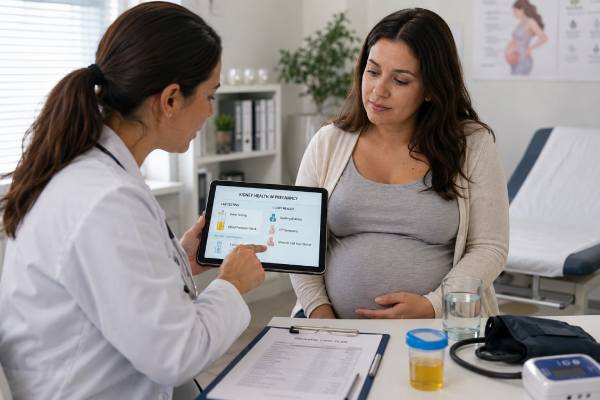
Pregnancy changes how the kidneys work from the first trimester onward. They filter more blood, handle extra fluid, and help control blood pressure while the placenta and baby grow. That extra work is normal, but it also means that kidney-related problems show up differently during pregnancy than they do at other times.
Some changes are expected, such as more frequent urination and mild ankle swelling near the end of the day. Others need prompt attention, especially high blood pressure, protein in the urine, painful urination, fever, flank pain, sudden swelling of the face or hands, severe headache, or a rise in creatinine. The goal is not to worry over every symptom. The goal is to know which signs are routine, which tests matter, and when calling your pregnancy care team is the safest next step.
Table of Contents
- How Pregnancy Changes Kidney Function
- Routine Labs and Urine Tests: What They Show
- Swelling in Pregnancy: Normal Pattern or Kidney Warning Sign?
- UTIs in Pregnancy: Symptoms, Testing, and Treatment
- Blood Pressure, Protein in Urine, and Preeclampsia
- If You Already Have Kidney Disease or Kidney Risk Factors
- When to Call Your Care Team
- After Delivery: Kidney Follow-Up Still Matters
How Pregnancy Changes Kidney Function
The kidneys work harder during pregnancy because blood volume rises and the body needs to clear waste for both the pregnant person and the developing baby. Kidney blood flow increases, and filtration usually rises early in pregnancy. Because of this, some kidney lab results shift in a direction that looks unusual if you compare them with nonpregnant ranges.
The most important example is creatinine. Creatinine is a waste product from muscle activity, and it is one of the main blood tests used to check kidney function. In pregnancy, creatinine usually runs lower than usual because the kidneys filter more efficiently. A creatinine result that looks “normal” on a standard adult lab report can still deserve attention during pregnancy, especially if it is higher than earlier pregnancy results or paired with high blood pressure, protein in urine, or low urine output.
Estimated GFR, often called eGFR, is also tricky. Outside pregnancy, eGFR is a common estimate of kidney filtering capacity. During pregnancy, eGFR formulas are not reliable because the body’s fluid volume and kidney filtration change so much. Pregnancy care teams usually focus on the actual serum creatinine value, trends over time, urine protein measurements, blood pressure, symptoms, and the baby’s growth.
Urine changes are also common. The growing uterus presses on the bladder, so frequent urination often starts early and becomes more noticeable later. The tubes that drain urine from the kidneys to the bladder, called ureters, also relax and widen under hormonal effects. This slows urine flow, which helps explain why urinary tract infections matter more in pregnancy than they do in many nonpregnant adults.
A small increase in protein excretion can happen during pregnancy, but clear proteinuria needs evaluation. Proteinuria means excess protein in the urine. It can come from preeclampsia, chronic kidney disease, a kidney inflammation condition, diabetes-related kidney strain, or a temporary problem such as infection. For a deeper explanation of how urine protein is checked and interpreted, see protein in urine.
Routine Labs and Urine Tests: What They Show
Pregnancy kidney checks are not all the same. A quick dipstick at a prenatal visit is useful as a screen, but it does not answer every question. A blood test, urine culture, and urine protein ratio each look for different problems.
| Test | What it checks | Why it matters in pregnancy |
|---|---|---|
| Serum creatinine | Kidney filtering function | A rise can signal kidney stress, preeclampsia, dehydration, obstruction, infection, or existing kidney disease. |
| BUN | Urea waste in the blood | It is less central than creatinine, but it adds context when dehydration, poor intake, or kidney dysfunction is suspected. |
| Urinalysis | Protein, blood, leukocytes, nitrites, glucose, ketones, pH, and concentration | It screens for infection, protein leakage, blood, dehydration clues, and other findings that need confirmation. |
| Urine culture | Bacteria growing in urine | It confirms asymptomatic bacteriuria or UTI and helps choose an antibiotic that matches the germ. |
| Protein-to-creatinine ratio or albumin-to-creatinine ratio | Amount of protein or albumin in urine | It gives a clearer measurement than a dipstick when preeclampsia or kidney disease is a concern. |
| Platelets and liver enzymes | Blood clotting cells and liver irritation | These are checked when preeclampsia or HELLP syndrome is possible. |
A urinalysis result needs context. Leukocytes can mean white blood cells from infection, but contamination from vaginal discharge also affects the sample. Nitrites point more strongly toward certain bacterial infections, but a negative nitrite result does not rule out a UTI. Blood in urine can appear with infection, stones, irritation, or kidney disease. Protein on a dipstick needs confirmation if it is persistent or paired with high blood pressure. For a line-by-line guide, see urinalysis results.
A urine culture is different from a dipstick. It tells whether bacteria are growing and which bacteria are present. Pregnancy care teams often screen for asymptomatic bacteriuria, which means bacteria in the urine without burning, urgency, fever, or pain. Treating confirmed bacteriuria in pregnancy reduces the chance that bacteria travel upward and cause a kidney infection.
Creatinine trends matter more than one isolated number. A result that rises from a person’s earlier baseline deserves attention even when the lab does not flag it. This is especially true if there is vomiting, dehydration, high blood pressure, swelling, protein in urine, diabetes, lupus, known kidney disease, or reduced urine output. For a plain-language explanation of the main kidney blood tests, see BUN and creatinine.
Swelling in Pregnancy: Normal Pattern or Kidney Warning Sign?
Mild swelling in the feet and ankles is common later in pregnancy. The body holds more fluid, the uterus slows blood return from the legs, and standing for long periods makes fluid settle downward. Normal pregnancy swelling is usually symmetrical, worse at the end of the day, and better after lying on the left side or elevating the legs.
Swelling becomes more concerning when it appears suddenly, affects the face or hands, comes with high blood pressure, or arrives with headache, visual changes, chest pain, shortness of breath, or pain under the right ribs. Those patterns raise concern for preeclampsia or another serious condition, not simple fluid retention.
Kidney-related swelling often has a different feel. Puffy eyelids in the morning, foamy urine, rising blood pressure, and swelling that does not improve overnight point more toward protein loss in the urine or reduced kidney filtering. Swollen ankles alone do not prove kidney disease, but swelling plus abnormal urine or blood pressure should not be ignored. For more detail on kidney-related puffiness, see swollen ankles and puffy eyes.
A one-sided swollen calf is a separate warning sign. Pregnancy increases the risk of blood clots. Swelling, warmth, redness, or pain in one leg needs urgent medical advice, especially if shortness of breath or chest pain occurs.
Practical steps help with routine swelling: drink to thirst, avoid standing still for long stretches, elevate legs when resting, walk regularly, and ask your clinician about compression socks if swelling is uncomfortable. Do not start water pills, herbal “kidney cleanse” products, or drastic salt restriction unless your clinician specifically recommends it. These approaches can create new problems in pregnancy.
UTIs in Pregnancy: Symptoms, Testing, and Treatment
A UTI during pregnancy needs prompt testing because infection travels upward more easily when urine flow slows. A bladder infection causes discomfort; a kidney infection can cause serious illness and trigger contractions, fever, dehydration, and hospital-level care.
Common bladder infection symptoms include burning when peeing, strong urgency, lower belly discomfort, cloudy urine, foul-smelling urine, and sometimes blood in the urine. Frequency alone is less useful because pregnancy itself makes people pee more often. The change that matters is a new pattern: burning, pain, pressure, urgency that feels hard to control, or symptoms that feel different from normal pregnancy bladder pressure.
A kidney infection, called pyelonephritis, is more serious. Warning signs include fever, chills, pain in the back or side near the ribs, nausea, vomiting, feeling very ill, or symptoms of a bladder infection plus fever. This situation needs same-day care. For a comparison of lower and upper urinary infections, see bladder infection vs kidney infection.
Testing usually starts with a urine sample. A dipstick gives fast clues, but a culture confirms the germ and guides treatment. This matters because antibiotic resistance varies by community, and pregnancy limits which medications are appropriate. Do not use leftover antibiotics, borrow someone else’s prescription, or rely on cranberry, baking soda, essential oils, or extra water as treatment for a confirmed infection.
Pregnancy-safe antibiotics are chosen based on gestational age, allergies, culture results, local resistance patterns, and the type of infection. A simple bladder infection is usually treated by mouth. A kidney infection often needs hospital assessment and IV antibiotics at first. Pain-relief products that only numb urinary burning do not kill bacteria and can mask worsening symptoms, so they should only be used with clinician guidance.
What to do when UTI symptoms start
Call your pregnancy care team the same day if you have burning, urgency, bladder pain, blood in urine, or cloudy urine with discomfort. Ask whether you should leave a urine sample before starting antibiotics. If you have fever, chills, flank pain, vomiting, or feel weak and very unwell, seek urgent care instead of waiting for a routine appointment.
After treatment, finish the prescribed antibiotic unless your clinician tells you to stop. If symptoms are not clearly improving within 24 to 48 hours, or if they return soon after treatment, ask about culture results and next steps. Recurrent infections during pregnancy sometimes need repeat cultures or preventive treatment. For a full pregnancy-specific guide, see UTI in pregnancy.
Blood Pressure, Protein in Urine, and Preeclampsia
Preeclampsia is a pregnancy-related condition involving high blood pressure and signs of stress on organs such as the kidneys, liver, brain, blood system, or placenta. It usually develops after 20 weeks, though related problems can also be recognized around delivery or after birth.
Protein in urine is a classic sign, but preeclampsia is not ruled out by a negative protein dipstick. A pregnant person can have preeclampsia with low platelets, rising creatinine, liver enzyme changes, severe headache, vision symptoms, fluid in the lungs, or fetal growth concerns. This is why clinicians combine blood pressure readings, symptoms, urine protein measurement, blood tests, and fetal monitoring rather than relying on one urine result.
Blood pressure numbers matter. A reading of 140/90 mmHg or higher after 20 weeks needs follow-up. A reading around 160 systolic or 110 diastolic is urgent, especially if it is repeated or paired with symptoms. Home blood pressure cuffs are useful for some people, but the cuff size and technique matter. Sit with feet flat, rest for several minutes, keep the cuff at heart level, and write down the exact number and time.
Symptoms that fit preeclampsia include severe headache, flashing lights or blurred vision, sudden swelling of the face or hands, pain in the upper right belly, nausea or vomiting that feels unusual, shortness of breath, chest tightness, confusion, or a sudden sense that something is seriously wrong. These symptoms deserve immediate medical advice, not a wait-and-see approach. For a focused red-flag list, see preeclampsia warning signs.
Why protein testing is repeated or confirmed
A dipstick is affected by urine concentration, hydration, contamination, and timing. Concentrated urine can make protein look worse. Dilute urine can make it look less obvious. If protein appears on a dipstick, clinicians often confirm it with a protein-to-creatinine ratio, albumin-to-creatinine ratio, or another formal measurement. A single abnormal urine screen is a clue, not a full diagnosis.
Protein before 20 weeks is treated differently from protein that begins later. New proteinuria early in pregnancy often points toward kidney disease that existed before pregnancy but had not been found yet. Proteinuria after 20 weeks raises more concern for preeclampsia, especially if blood pressure rises. Someone with existing kidney disease can also have worsening proteinuria during pregnancy, which makes specialist input important.
If You Already Have Kidney Disease or Kidney Risk Factors
Pregnancy with kidney disease is not one situation. A person with one kidney and normal blood pressure is different from someone with stage 3 chronic kidney disease, lupus nephritis, diabetic kidney disease, a kidney transplant, heavy proteinuria, or uncontrolled hypertension. The main risk markers are baseline kidney function, blood pressure, amount of protein in urine, the cause of kidney disease, medication needs, and whether kidney disease is stable before pregnancy.
A higher-risk pregnancy usually needs shared care between obstetrics and kidney specialists. Maternal-fetal medicine, nephrology, and the primary pregnancy clinician each focus on different parts of the picture: blood pressure targets, kidney labs, urine protein trends, medication safety, fetal growth, delivery timing, and postpartum follow-up.
People with known chronic kidney disease usually need a clear monitoring plan. That plan often includes serum creatinine rather than eGFR, urine protein measurement, blood pressure tracking, medication review, and extra fetal growth checks. For background on stages and long-term kidney monitoring, see chronic kidney disease.
Medication review is essential. Some blood pressure and kidney-protective medicines used outside pregnancy, including ACE inhibitors and ARBs, are not used during pregnancy except in very specific specialist situations. They are usually changed before conception or as soon as pregnancy is recognized. NSAID pain relievers also need caution, especially later in pregnancy and in people with kidney disease. Never stop a prescribed blood pressure, lupus, transplant, diabetes, or seizure medication without medical advice; the safer step is a fast medication review.
Kidney stones, recurrent UTIs, diabetes, high blood pressure, autoimmune disease, prior preeclampsia, and a history of kidney injury all deserve attention early in prenatal care. Bring older lab results if you have them. A creatinine from before pregnancy, prior urine protein results, kidney ultrasound reports, and names of past diagnoses help clinicians judge what is new and what is baseline.
When to Call Your Care Team
The safest rule is simple: call the same day for symptoms that suggest infection, high blood pressure, reduced urine output, or kidney pain. Seek urgent care for severe symptoms, fever with flank pain, or signs of preeclampsia.
| Symptom or finding | What it can mean | Action |
|---|---|---|
| Burning, urgency, bladder pain, or blood in urine | Possible bladder infection | Call the same day for urine testing and treatment guidance. |
| Fever, chills, flank pain, vomiting, or feeling very ill | Possible kidney infection | Seek urgent care. |
| Sudden face or hand swelling, severe headache, vision changes, or upper belly pain | Possible preeclampsia | Call immediately or go to labor and delivery triage, based on your care team’s instructions. |
| Blood pressure around 160/110 mmHg or higher | Severe hypertension | Get urgent medical advice now. |
| Very little urine, dark urine with dizziness, or inability to keep fluids down | Dehydration, kidney stress, obstruction, or severe illness | Call urgently, especially if symptoms last more than a few hours. |
| One-sided leg swelling, redness, warmth, or calf pain | Possible blood clot | Seek urgent care. |
| Foamy urine plus swelling or high blood pressure | Possible significant protein in urine | Call for urine protein testing and blood pressure review. |
Do not wait for the next scheduled visit if a symptom is new, intense, or worsening. Pregnancy complications often need quick decisions, and early evaluation gives the team more options. Calling does not mean something terrible is happening; it means the right tests can be done before a problem grows.
When you call, give clear details: gestational age, blood pressure numbers if available, temperature, symptoms, when they started, whether the baby is moving normally if you are far enough along to track movement, current medications, allergies, and any kidney or UTI history. If you have a home urine dipstick result, mention it, but do not treat it as a final answer.
After Delivery: Kidney Follow-Up Still Matters
Delivery does not instantly reset the kidneys, blood pressure, or urine protein. Blood pressure often peaks several days after birth, and preeclampsia can first appear postpartum. Swelling can also shift after delivery as the body mobilizes extra fluid. Some people pee a lot in the first days after birth; others need closer monitoring because of blood pressure, blood loss, infection, preeclampsia, or kidney disease.
Call urgently after delivery for severe headache, vision changes, shortness of breath, chest pain, severe upper belly pain, fainting, very high blood pressure, fever, flank pain, or heavy bleeding. Postpartum symptoms are sometimes brushed off as exhaustion, but preeclampsia, infection, blood clots, and kidney injury still occur after the baby is born.
If you had preeclampsia, gestational hypertension, kidney dysfunction, or protein in urine during pregnancy, ask what follow-up is planned. Many people need blood pressure checks in the first week, a visit within a few weeks, and repeat urine or kidney blood tests later. Persistent protein in urine or abnormal creatinine after pregnancy needs follow-up because it can reveal chronic kidney disease that was hidden before pregnancy.
If you had a UTI or kidney infection during pregnancy, ask whether a repeat culture is needed, especially if symptoms return. If you had recurrent infections, your postpartum plan should also cover contraception, hydration, bladder habits, and when to test rather than treating symptoms blindly.
Pregnancy is also a useful window into future health. Preeclampsia, gestational hypertension, diabetes in pregnancy, and kidney-related lab changes all identify people who need long-term blood pressure and kidney monitoring. That does not mean future illness is guaranteed. It means the warning came early enough to act: keep postpartum visits, establish primary care, track blood pressure if recommended, and ask when kidney labs should be repeated.
References
- Urinary Tract Infections in Pregnant Individuals 2023 (Guideline)
- Approach to investigation and management of proteinuria in pregnancy 2025 (Review)
- The impact of chronic kidney disease Stages 3–5 on pregnancy outcomes 2021 (Cohort Study)
- Summary of the Dutch Practice Guideline on Pregnancy Wish and Pregnancy in CKD 2022 (Guideline)
- Clinical practice guideline on pregnancy and renal disease 2019 (Guideline)
- Hypertension in pregnancy: diagnosis and management 2019 (Guideline)
Disclaimer
This article is for education about kidney-related labs, urinary symptoms, swelling, and warning signs during pregnancy. It cannot diagnose UTI, preeclampsia, kidney disease, or pregnancy complications. Contact your pregnancy care team, labor and delivery triage, nephrologist, or emergency services for personal advice, especially with fever, flank pain, high blood pressure, severe headache, vision changes, shortness of breath, sudden swelling, reduced urine output, or abnormal lab results.