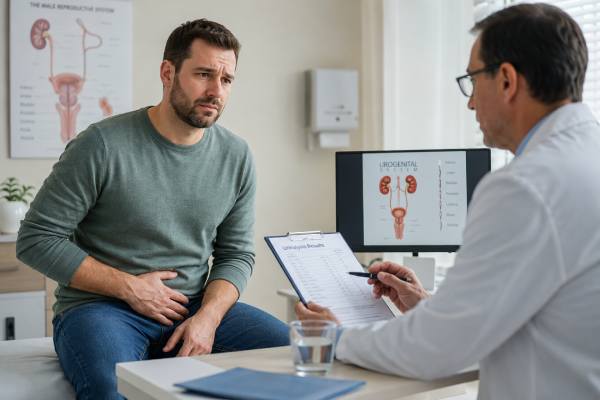
Painful ejaculation is not something to ignore, especially when it happens with burning, urgency, trouble peeing, discharge, pelvic pain, testicle pain, or blood in the urine or semen. The pain might feel sharp, burning, aching, cramping, or pressure-like. It can happen during orgasm, right after ejaculation, or for hours afterward.
The most useful question is not only “Why does it hurt?” It is “What other symptoms are happening with it?” Painful ejaculation by itself has several possible causes. Painful ejaculation with urinary symptoms points more strongly toward a problem in the prostate, urethra, bladder, pelvic floor, epididymis, or nearby reproductive ducts. Some causes need prompt treatment, while others need a careful urology evaluation rather than emergency care.
This guide explains what painful ejaculation with urinary symptoms can mean, which warning signs need urgent care, what a doctor usually checks, and what treatment often looks like once the cause is clearer.
Table of Contents
- What Painful Ejaculation Means
- Urinary Symptoms That Change the Picture
- Common Causes to Ask About
- When to See a Doctor
- What Happens at the Appointment
- Treatment Options by Cause
- What You Can Do Now
What Painful Ejaculation Means
Painful ejaculation means pain, burning, stinging, pressure, or aching linked to orgasm or the release of semen. Doctors also use terms such as dysorgasmia, odynorgasmia, or ejaculatory pain. The pain can be felt in several places because ejaculation involves the prostate, seminal vesicles, pelvic floor muscles, urethra, bladder neck, nerves, and ducts that move semen.
Some men feel pain at the tip of the penis or inside the urethra. Others feel it deep in the pelvis, behind the scrotum, in the testicles, near the rectum, or across the lower abdomen. The location helps, but it does not diagnose the cause on its own. A burning feeling in the urethra after ejaculation, for example, can come from urethritis, prostatitis, concentrated urine, pelvic floor irritation, or bladder pain.
The timing also matters. Pain only at the moment of ejaculation often points toward muscle spasm, prostate irritation, or pressure in the ejaculatory ducts. Pain that continues for hours afterward fits better with pelvic floor tension, chronic pelvic pain syndrome, inflammation, or nerve sensitivity. Pain with every ejaculation for weeks deserves evaluation even if it is mild, because repeated pain often makes the pelvic muscles tighten in anticipation, which then keeps the cycle going.
One painful episode after a long gap without sex, vigorous sex, dehydration, or temporary irritation is less concerning if it disappears and no urinary symptoms appear. Recurrent pain is different. So is pain paired with burning urination, frequency, discharge, weak stream, fever, scrotal swelling, or blood. Those combinations give the doctor a clearer reason to test for infection, inflammation, blockage, or a prostate-related condition.
Painful ejaculation is also easy to underreport. People often mention urinary symptoms but leave out sexual pain unless asked directly. That missing detail matters. It can help separate a routine bladder complaint from prostatitis or chronic pelvic pain, urethritis, epididymitis, or a pelvic floor problem.
Urinary Symptoms That Change the Picture
Urinary symptoms act like clues. They tell the doctor whether the problem looks more like infection, irritation, obstruction, pelvic floor dysfunction, or bladder pain.
Burning when peeing points toward irritation of the urethra or bladder. If burning is strongest at the start of urination, the urethra is often involved. If burning gets worse near the end of urination, the bladder or prostate can be part of the picture. Burning plus painful ejaculation raises the need to test for urinary infection and sexually transmitted infections, especially when there is a new partner, condom break, urethral discharge, or pain after sex.
Urgency and frequency mean the bladder is being triggered more often than usual. This can happen with a UTI, prostatitis, bladder irritation, overactive bladder, or pelvic floor tightness. If you are peeing small amounts every 20 to 60 minutes and ejaculation makes pelvic discomfort worse, the issue might not be a simple infection. A negative urine culture with ongoing symptoms shifts the discussion toward urethral syndrome, bladder pain syndrome, chronic pelvic pain syndrome, or pelvic floor muscle overactivity.
A weak stream, hesitancy, stop-start flow, dribbling, or feeling that the bladder will not empty suggests blockage or poor relaxation during urination. In older men, benign prostate enlargement is a common reason. In younger men, pelvic floor tightness, urethral narrowing, medication side effects, or prostatitis can cause a similar pattern. Persistent flow problems deserve attention because incomplete emptying raises the risk of infection and bladder strain. Symptoms of urinary retention become urgent when you cannot pass urine despite feeling a strong need to go.
Blood changes the priority. Blood in semen often looks alarming but is not always dangerous, especially after vigorous sex, a prostate exam, or a recent urologic procedure. Blood in urine needs more caution. Visible red, tea-colored, or cola-colored urine should be evaluated, and clots or trouble passing urine should be treated urgently. If painful ejaculation appears with visible blood, worsening urinary symptoms, or risk factors such as smoking, older age, kidney stones, or prior urinary tract problems, a doctor should not write it off as “just irritation.” A focused evaluation for blood in urine is the safer path.
Discharge from the penis is another important clue. Clear, white, yellow, or green discharge, especially with burning or itching in the urethra, strongly suggests urethritis until testing proves otherwise. Urethritis is often linked to chlamydia, gonorrhea, Mycoplasma genitalium, or other infections, though noninfectious irritation also occurs. Sex partners need testing and treatment when an STI is found, or the infection can keep returning.
Common Causes to Ask About
Painful ejaculation with urinary symptoms usually comes from one of several overlapping areas. The same person can have more than one factor, such as a prostate infection that triggers pelvic floor tightness, or prostate enlargement that leads to urinary stasis and infection.
Prostatitis and chronic pelvic pain syndrome
The prostate sits below the bladder and surrounds the first part of the urethra. Because semen passes through this area, prostate inflammation or pelvic pain around the prostate often shows up during ejaculation.
Acute bacterial prostatitis usually feels like a real illness. Symptoms often include fever, chills, pelvic or rectal pain, burning urination, frequent urination, painful ejaculation, and sometimes trouble emptying the bladder. This needs prompt medical care because the infection can become serious, and prostate swelling can block urine flow.
Chronic bacterial prostatitis is different. Symptoms often come and go, with repeated urinary infections, pelvic discomfort, burning, and pain with ejaculation. Urine tests might be positive during flares and normal between them. Treatment often takes longer than a standard bladder infection because bacteria can persist in prostate tissue.
Chronic prostatitis/chronic pelvic pain syndrome is even more common than chronic bacterial infection. In this condition, pain lasts or returns for months, but routine cultures often do not show bacteria. The symptoms can include pain after ejaculation, urinary frequency, urgency, burning, perineal aching, testicle discomfort, low back discomfort, constipation flares, and pain with sitting. Pelvic floor muscle tension, nerve sensitivity, stress physiology, past infections, and bladder irritation can all contribute. This is not “imaginary pain.” It is a real pain condition that needs a broader plan than repeated antibiotics.
Urethritis, STI-related irritation, and male UTI
The urethra carries both urine and semen out of the body. When it is inflamed, ejaculation can sting because semen passes through irritated tissue. Urethritis often causes burning, itching inside the penis, discharge, or discomfort at the urethral opening. Symptoms can be mild, and some infections cause little discharge.
Testing matters because symptoms overlap. A man with painful ejaculation, burning urination, and a new sexual exposure needs urine testing for chlamydia and gonorrhea, and sometimes additional testing based on local practice and risk. A routine urine culture alone does not rule out common STIs. The distinction between UTI and STI symptoms is especially important when treatment decisions affect partners.
A true UTI in men also deserves careful evaluation. Men can get bladder infections, but they are less often “simple” than in young healthy women. A male UTI can be linked to prostate infection, incomplete bladder emptying, stones, urinary tract abnormalities, recent catheter use, or an enlarged prostate. Burning, cloudy urine, urgency, pelvic pressure, fever, or flank pain should not be ignored. Men with suspected infection should usually have a urine test and culture rather than guessing based on symptoms alone.
Testicle and epididymis problems
The epididymis is the coiled tube behind each testicle where sperm mature. Epididymitis causes pain, swelling, tenderness, and sometimes fever or urinary symptoms. In younger sexually active men, it is often linked to STIs. In older men, it can be linked to urinary bacteria, prostate enlargement, urinary procedures, or incomplete emptying.
Epididymitis can make ejaculation painful because the reproductive tract is inflamed. The pain is often one-sided and may spread into the groin. The scrotum can look swollen or feel warm. Sudden severe testicle pain is a different situation: testicular torsion must be ruled out quickly because it can threaten the testicle. Do not wait to see whether sudden testicle pain “settles down.”
Enlarged prostate, obstruction, and duct problems
Benign prostate enlargement can cause weak stream, hesitancy, nighttime urination, dribbling, urgency, and incomplete emptying. It can also coexist with painful ejaculation, especially when the prostate or bladder neck is irritated. Prostate enlargement becomes more common with age, but urinary obstruction symptoms are worth discussing at any adult age. A review of BPH urinary symptoms can help you describe the pattern clearly before an appointment.
Less common causes include ejaculatory duct obstruction, seminal vesicle stones, cysts, scarring after procedures, and problems after prostate cancer treatment or pelvic surgery. These causes are more likely when pain comes with low semen volume, blood in semen, infertility concerns, deep pelvic pain, or symptoms that do not fit infection. Imaging or cystoscopy is not needed for everyone, but persistent or unusual symptoms deserve a urologist’s judgment.
Pelvic floor muscle tension
The pelvic floor muscles help control urination, bowel movements, erections, and ejaculation. When these muscles stay tight or spasm, they can cause pain in the penis, testicles, perineum, rectum, lower abdomen, or tailbone area. Ejaculation is a strong pelvic muscle event, so it can trigger pain in an already tense pelvic floor.
Pelvic floor problems often come with urinary urgency, frequency, hesitancy, constipation, pain after sitting, pain after sex, and a feeling of incomplete bladder emptying despite normal tests. Kegels are not always the answer. If the muscles are already overactive, more squeezing can make symptoms worse. Many men with this pattern do better with relaxation-based pelvic floor therapy, breathing work, trigger point treatment, and bladder habit changes.
When to See a Doctor
The right timing depends on the symptoms around the painful ejaculation. Some signs need emergency care. Others need a same-day or next-day appointment. Recurrent symptoms without red flags still deserve a scheduled medical visit, especially if they are affecting sex, sleep, urination, or daily comfort.
| Timing | Symptoms | Why it matters |
|---|---|---|
| Emergency care now | Cannot urinate, severe lower belly pressure, fever with shaking chills, confusion, severe weakness, vomiting, severe flank pain, sudden severe testicle pain, testicle sitting higher than usual, or blood clots in urine | These can signal urinary retention, kidney infection, sepsis risk, stone obstruction, or testicular torsion. |
| Same day or next day | Painful ejaculation with fever, new discharge, scrotal swelling, visible blood in urine, worsening burning, recent urinary procedure, diabetes, kidney disease, immune suppression, or suspected STI exposure | Testing and treatment should not be delayed because complications and transmission are possible. |
| Scheduled visit soon | Painful ejaculation recurring for more than 1–2 weeks, pain after most orgasms, urinary frequency, weak stream, pelvic ache, blood in semen that persists, or symptoms returning after antibiotics | Persistent symptoms need a clear diagnosis instead of repeated guessing or self-treatment. |
A single mild episode can be watched briefly if you feel well, can pee normally, have no discharge, no fever, no testicle swelling, no blood in urine, and the pain does not return. Even then, avoid assuming the problem is harmless if there was a possible STI exposure or a partner has symptoms.
Do not delay care because the symptom feels embarrassing. Doctors who treat urinary and sexual health symptoms ask about this every day. Give direct details: where the pain is, when it starts, how long it lasts, whether urination burns, whether the stream is weaker, whether semen or urine looks different, and whether any sexual exposure changed before symptoms began.
A urologist is often the right specialist when symptoms persist, testing is negative but pain continues, urinary flow is changing, blood appears, pain follows prostate or pelvic surgery, or you have repeated infections. Primary care, urgent care, and sexual health clinics are also appropriate starting points for burning, discharge, suspected STI, or first-time urinary symptoms. For broader guidance on referral timing, a checklist on when to see a urologist can help you decide what kind of appointment to request.
What Happens at the Appointment
A good evaluation starts with a direct history. The doctor needs to know whether the pain is new or recurring, exactly where it is felt, whether it happens with every ejaculation, how long it lasts, and whether it is linked to urination, bowel movements, sitting, cycling, exercise, or certain sexual positions.
Expect questions about urinary symptoms: burning, urgency, frequency, nighttime urination, weak stream, straining, dribbling, leakage, incomplete emptying, blood, cloudy urine, odor, and pelvic pressure. The doctor will also ask about fever, chills, back or flank pain, testicle pain, penile discharge, sores, new partners, condom use, STI history, prostate problems, kidney stones, recent catheter use, recent cystoscopy, pelvic surgery, and medications.
Medication history is more important than many people realize. Some antidepressants, prostate medicines, stimulants, decongestants, antihistamines, and pain medicines can affect ejaculation, bladder emptying, or pelvic muscle tone. Do not stop a prescribed medication on your own, but bring a full list, including supplements and over-the-counter cold or allergy products.
Testing depends on the pattern, but common steps include:
- Urinalysis: checks for white blood cells, blood, nitrites, protein, crystals, and other clues.
- Urine culture: looks for bacteria and helps choose an antibiotic when infection is present.
- STI testing: often uses a first-catch urine sample or swab for chlamydia, gonorrhea, and sometimes other organisms.
- Physical exam: may include abdominal, groin, genital, prostate, and pelvic floor assessment.
- Post-void residual measurement: checks how much urine remains after peeing.
- Blood tests: used when fever, systemic illness, kidney concerns, or prostate-specific questions are present.
- Imaging: ultrasound or CT is considered when stones, obstruction, abscess, scrotal problems, or unusual anatomy is suspected.
- Cystoscopy: a camera test inside the bladder and urethra, used selectively for blood in urine, suspected narrowing, persistent symptoms, or unclear diagnosis.
A prostate exam is not always required, but it is useful in many men with pelvic pain, fever, urinary symptoms, or suspected prostatitis. In acute bacterial prostatitis, doctors are gentle because the prostate can be very tender. In chronic pelvic pain, the exam can identify prostate-area tenderness and pelvic floor muscle tenderness. That distinction matters because pelvic floor myalgia needs a different plan than bacterial infection.
The most common mistake is treating every flare as infection without confirming it. Antibiotics are important when bacterial infection is likely or proven, but repeated courses without evidence can cause side effects and resistance while leaving the real driver untreated. Another common mistake is relying on one negative test to dismiss persistent symptoms. A negative standard urine culture does not rule out urethritis, pelvic floor dysfunction, chronic pelvic pain syndrome, bladder pain syndrome, stones, or prostate-related problems.
Treatment Options by Cause
Treatment works best when it matches the cause. Painful ejaculation is a symptom, not a single disease, so the plan can range from antibiotics to pelvic floor therapy to prostate medication to partner treatment.
For a bacterial UTI, prostatitis, or epididymitis, antibiotics are chosen based on the likely source, local resistance patterns, test results, and severity. Prostate infections often need a longer course than a simple bladder infection because prostate tissue is harder for some antibiotics to penetrate. Severe infection, fever, vomiting, urinary retention, or concern for abscess can require hospital-level care.
For urethritis or an STI, treatment must cover the specific organism when possible. Partners often need evaluation and treatment too. Sex should wait until treatment is completed and symptoms have resolved according to the clinician’s instructions. Otherwise, reinfection is common. If symptoms persist after treatment, the next step is not simply “more of the same.” The doctor may check for reinfection, untreated partners, resistant organisms, Mycoplasma genitalium, trichomoniasis in certain settings, or a noninfectious cause.
For chronic prostatitis/chronic pelvic pain syndrome, treatment is usually multimodal. That means the plan addresses several drivers at once: pain, urinary symptoms, muscle tension, stress-related flares, bowel habits, sexual pain, and activity triggers. Options include anti-inflammatory medicines for short periods, alpha blockers for urinary flow symptoms, pelvic floor physical therapy, warm baths, constipation treatment, bladder irritant reduction, nerve-pain medicines in selected cases, and behavioral strategies that reduce guarding and flare cycles. Antibiotics are not the center of long-term treatment unless bacterial infection is documented or strongly suspected.
For pelvic floor overactivity, the goal is relaxation and coordination, not strengthening. A pelvic floor therapist trained in male pelvic pain may work on breathing, down-training, hip and abdominal tension, trigger points, posture, toileting mechanics, and gradual return to sex without bracing. This approach is especially relevant when pain worsens after sitting, stress, constipation, cycling, heavy lifting, or repeated “checking” of the pelvic area.
For prostate enlargement or bladder outlet obstruction, treatment focuses on improving urine flow and reducing retention. Lifestyle changes include reducing evening fluids if nighttime urination is a major issue, limiting alcohol and bladder irritants, treating constipation, and reviewing medicines that make peeing harder. Doctors may prescribe alpha blockers or other prostate medications. Procedures are considered when symptoms are severe, infections recur, retention develops, kidney function is affected, or medicines do not work.
For stones, strictures, ejaculatory duct problems, or seminal vesicle issues, treatment depends on imaging and specialist evaluation. A urethral stricture can cause spraying, weak stream, straining, and recurrent infections. Ejaculatory duct obstruction can cause painful ejaculation, low semen volume, blood in semen, or fertility problems. These are not diagnosed by symptoms alone; they require targeted testing.
For medication-related painful ejaculation or orgasm pain, the doctor weighs the benefit of the medication against the side effect. Options include dose adjustment, switching medication, changing timing, or treating the urinary or pelvic muscle effects around it. This needs coordination with the prescribing clinician, especially for antidepressants, psychiatric medications, and prostate medicines.
What You Can Do Now
Before the appointment, write down the pattern. A clear symptom record saves time and helps the doctor choose the right tests. Include when the pain began, whether it happens with every ejaculation, pain location, pain intensity from 0 to 10, duration after ejaculation, urinary symptoms, fever, discharge, blood, testicle pain, new sexual exposures, recent procedures, and medicines.
Avoid sex or use condoms until STI testing is completed if there is discharge, burning after a new partner, partner symptoms, or any realistic chance of exposure. Do not take leftover antibiotics. They can partially suppress infection, blur test results, cause side effects, and fail to treat the correct organism. Do not use someone else’s antibiotics for the same reason.
Hydrate normally, but do not force large amounts of water. Concentrated urine can sting, but overdoing fluids can worsen urgency and frequency. Aim for pale yellow urine unless a clinician has told you to restrict fluids. Limit alcohol, heavy caffeine, very spicy foods, and acidic drinks during a flare if they clearly worsen burning or urgency. These changes do not cure infection, but they can reduce bladder and urethral irritation while you are being evaluated.
Warm baths or a warm compress over the pelvic area can ease muscle spasm. Gentle walking often helps more than intense workouts during a flare. Avoid long bike rides, heavy squats, prolonged sitting without breaks, and repeated pelvic floor squeezing if those trigger symptoms. If constipation is present, treat it seriously. Straining and a loaded rectum can worsen pelvic floor tension, urinary urgency, and prostate-area discomfort.
Use pain relievers only as directed on the label or by your doctor. Nonsteroidal anti-inflammatory drugs such as ibuprofen are not safe for everyone, especially people with kidney disease, stomach ulcers, blood thinners, heart failure, or certain blood pressure medicines. Phenazopyridine can reduce urinary burning for short-term symptom relief, but it does not treat the cause and can mask worsening symptoms.
Seek care sooner if symptoms escalate. A mild pelvic ache that becomes fever and chills is no longer a routine appointment issue. A weak stream that turns into inability to urinate is urgent. Testicle discomfort that becomes sudden severe one-sided pain needs emergency evaluation. Painful ejaculation with urinary symptoms is often treatable, but the best outcome comes from matching the response to the warning signs instead of guessing.
References
- Painful Ejaculation: a Contemporary Review 2021 (Review)
- Chronic Prostatitis and Chronic Pelvic Pain Syndrome in Men 2024 (Review)
- Chronic Pelvic Pain 2025 (Guideline)
- Urological Infections 2025 (Guideline)
- Diseases Characterized by Urethritis and Cervicitis 2021 (Guideline)
- Epididymitis 2021 (Guideline)
Disclaimer
This article is for education about painful ejaculation and urinary symptoms. It cannot diagnose infection, prostatitis, an STI, urinary retention, testicular torsion, stones, or prostate disease. Seek urgent medical care for fever, inability to urinate, severe flank pain, sudden testicle pain, visible blood clots, or feeling seriously unwell, and speak with a qualified clinician for personal testing and treatment decisions.