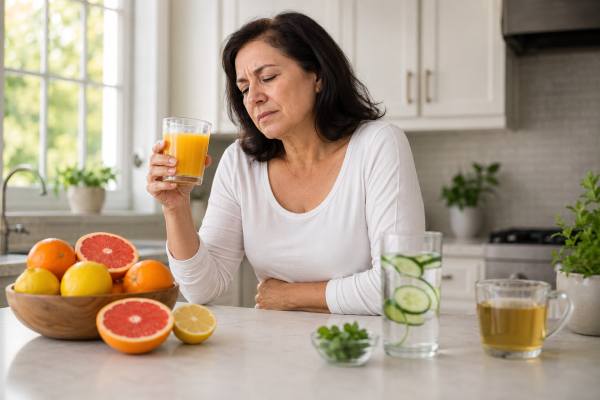
Citrus foods are refreshing, bright, and packed into everyday meals, but they are also a common problem for people with sensitive bladder symptoms. Orange juice at breakfast, lemon in water, grapefruit with medication, lime on tacos, and citrus-flavored sparkling drinks all share one practical issue: their acidity and related compounds often irritate a bladder that is already reactive.
This does not mean citrus is “bad” or that everyone with urinary symptoms must avoid it forever. It means citrus deserves a closer look when burning, bladder pressure, urgency, frequency, pelvic discomfort, or nighttime urination flare after meals. The useful goal is not a long forbidden-food list. The useful goal is to identify your own triggers, reduce unnecessary irritation, and replace high-risk foods with options that keep meals enjoyable.
Table of Contents
- Why Citrus Bothers the Bladder
- Citrus Foods and Drinks Most Likely to Trigger Flares
- Why Acidic Foods Feel Worse During Flares
- Better Swaps for Citrus Flavor
- How to Test Citrus Without Over-Restricting Your Diet
- Meal and Label Strategies That Reduce Irritation
- When Bladder Symptoms Need Medical Attention
Why Citrus Bothers the Bladder
Citrus is one of the most common food groups people notice during bladder flares because it combines sharp acidity, concentrated juice, strong flavor oils, and frequent use in drinks. A small squeeze of lemon on fish is different from a large glass of orange juice, but both belong in the same trigger category when symptoms appear soon after eating or drinking.
Bladder irritation usually feels different from ordinary fullness. People often describe burning after urination, pressure low in the pelvis, sudden urgency, frequent bathroom trips, bladder spasms, or a raw feeling that comes and goes. These symptoms overlap with several conditions, including interstitial cystitis/bladder pain syndrome, overactive bladder, urethral irritation, pelvic floor dysfunction, urinary tract infections, and medication-related urinary symptoms.
Citrus is especially relevant for people with bladder pain syndrome or interstitial cystitis because dietary triggers are a routine part of symptom management. Broader lists of common bladder irritants also include coffee, tea, alcohol, carbonated drinks, spicy foods, artificial sweeteners, chocolate, tomato products, and vinegar. Citrus often stands out because it is easy to drink quickly and reaches the bladder as part of a concentrated fluid load.
The timing matters. Food-related bladder irritation often shows up within a few hours, though some people notice symptoms the next day. A flare that starts after a citrus-heavy breakfast, settles down when citrus is removed, and returns after reintroducing orange juice gives a clearer signal than a single bad day with many possible causes.
Citrus does not injure a healthy bladder in the way a chemical burn damages skin. The better way to think about it is sensitivity. A bladder lining already irritated by IC/BPS, infection recovery, pelvic pain, hormonal changes, or concentrated urine reacts more strongly to substances that would not bother someone else. That is why one person drinks lemonade without issue while another gets urgency and burning from a few sips.
Citrus Foods and Drinks Most Likely to Trigger Flares
The highest-risk citrus choices are usually liquids because they deliver a larger acidic load quickly. Juice also removes the slower pace of eating whole fruit. Drinking 12 ounces of orange juice is easier than eating several oranges, and the bladder often notices that difference.
Common citrus triggers include:
- Orange juice, grapefruit juice, lemonade, limeade, and citrus punch
- Lemon or lime water, especially when sipped all day
- Grapefruit halves, oranges, mandarins, tangerines, lemons, and limes
- Citrus marinades used on chicken, fish, tofu, or vegetables
- Citrus vinaigrettes and bottled salad dressings
- Carbonated citrus drinks, including lemon-lime soda and sparkling water with citric acid
- Cocktails and mocktails built around lemon, lime, orange, or grapefruit
- Candies, gummies, electrolyte drinks, and powdered drink mixes with citric acid
Portion size changes the picture. A teaspoon of lemon zest in a full recipe is not the same as a glass of lemonade. Citrus zest contains fragrant oils and less juice than the fruit’s pulp, so some people tolerate zest better than juice. Others react to both. The only reliable answer comes from a structured test, not from guessing based on acidity alone.
Citrus often appears with other bladder irritants. A margarita combines lime, alcohol, and sometimes carbonation or sweet-and-sour mix. A lemon-lime soda combines acidity, carbonation, sweetener, and sometimes caffeine. A spicy taco meal with lime, hot sauce, tomato salsa, and a carbonated drink stacks several triggers at once. When symptoms flare after that meal, lime might not be the only problem.
| Citrus choice | Why it often bothers sensitive bladders | Lower-irritation direction |
|---|---|---|
| Orange or grapefruit juice | Large acidic serving, fast to drink, often taken on an empty stomach | Try water with cucumber, pear nectar diluted with water, or a non-citrus smoothie |
| Lemon water all day | Repeated low-level exposure that keeps symptoms stirred up | Use plain water, mint water, or chilled herbal tea instead |
| Lime on spicy foods | Often combined with chili, tomato, vinegar, and carbonated drinks | Use herbs, avocado, mild yogurt sauce, or a low-acid salsa alternative |
| Citrus sparkling drinks | Acidity plus carbonation, sometimes with citric acid or sweeteners | Choose still drinks first; test plain sparkling water separately later |
| Citrus dressings | Often combine lemon juice or vinegar with pepper and preservatives | Use olive oil with herbs, mild creamy dressings, or yogurt-based sauces if tolerated |
Why Acidic Foods Feel Worse During Flares
The relationship between acidic foods and bladder symptoms is not as simple as “acid goes in, acid comes out.” Your digestive system breaks down food, your kidneys regulate urine chemistry, and urine pH changes throughout the day. Still, acidic foods remain a real trigger for many people with bladder pain or urgency because several pathways converge.
A sensitive bladder lining reacts faster
The inside of the bladder has a protective surface that keeps urine from irritating deeper tissue. In bladder pain conditions, that protective barrier is often discussed as part of why ordinary urine feels painful. When the lining is reactive, concentrated urine, dietary compounds, and inflammatory signals create more discomfort than usual.
This helps explain why citrus is more noticeable during a flare than during a calm period. On a good week, a small amount of lemon in a recipe might pass unnoticed. During a flare, the same amount feels like it turns up the volume on burning, pressure, or urgency.
Urine concentration matters as much as food choice
Strong, dark urine is more irritating than pale, well-diluted urine. Citrus drinks create a confusing situation: they add fluid, but they also add acid and flavor compounds. Someone who avoids water but drinks orange juice may still feel worse because the fluid source itself is irritating.
The better approach is steady, gentle hydration. Do not force large amounts of water at once. Spread fluids through the day and aim for urine that is pale yellow, not completely clear all day and not dark amber. People with kidney, heart, or sodium problems should follow their clinician’s fluid guidance rather than using generic hydration targets.
The gut and bladder communicate
The bladder does not work in isolation. Pelvic nerves connect bladder sensation with bowel function, pelvic floor muscle tone, and pain signaling. Acidic foods that upset the stomach or bowel also contribute to pelvic discomfort in some people. Constipation, bloating, diarrhea, and pelvic floor tightness then amplify urgency and pressure.
This is one reason a food diary should track more than urine symptoms. Bowel changes, stress, menstrual timing, sexual activity, exercise, new medications, and sleep all change how the bladder feels. Citrus gets blamed accurately in some cases, but it also gets blamed when several triggers arrive together.
Other ingredients often ride along
Citric acid, ascorbic acid, carbonation, caffeine, alcohol, artificial sweeteners, hot peppers, vinegar, and tomato products often appear in the same foods and drinks. A citrus-flavored energy drink, for example, is not only “citrus.” It is usually acidic, carbonated, caffeinated, and sweetened. Someone who reacts to that drink should test each category separately before deciding citrus alone is the culprit.
For people who flare from multiple drink categories, the pattern often points toward a broader sensitive-bladder issue rather than one single ingredient. A practical interstitial cystitis diet plan usually starts by calming the bladder first, then reintroducing foods one at a time.
Better Swaps for Citrus Flavor
The hardest part of avoiding citrus is not losing vitamin C. It is losing brightness. Lemon, lime, orange, and grapefruit make food taste fresh, so bland replacements rarely last. The best swaps replace the role citrus played in the meal: tartness, freshness, sweetness, aroma, or moisture.
Drink swaps
Start with the drinks you consume most often. A daily glass of juice or lemon water has more effect than a rare dessert with orange zest.
Good low-acid drink options include plain water, chilled water with cucumber, mint water, chamomile tea, rooibos tea, marshmallow root tea if approved by your clinician, warm milk or a tolerated milk alternative, and smoothies made with banana, pear, melon, blueberries, or oats. Skip citrus powders and “natural lemon flavor” during the test phase, because they keep the exposure going.
Coffee drinkers who use lemon water as a “healthy” replacement sometimes trade one trigger for another. If coffee also bothers your bladder, compare options in a focused way rather than rotating between irritating drinks. Low-acid drink planning fits well with coffee alternatives for bladder pain when mornings are the hardest time.
Fruit swaps
Lower-acid fruit choices often include pears, bananas, melon, blueberries, apples, peaches, and mango. Tolerance varies, but these usually make better starting points than oranges, grapefruit, pineapple, or cranberry. Choose whole fruit over juice because the serving is smaller, digestion is slower, and the fiber helps make the snack more balanced.
If you miss orange juice at breakfast, try a banana-oat smoothie with milk or a tolerated milk alternative. If you miss grapefruit, try chilled pear slices or melon with a small amount of fresh mint. If you miss citrus in a fruit salad, use blueberries and peeled apple with a spoonful of plain yogurt if dairy suits you.
Flavor swaps for cooking
Citrus brightens rich foods, especially fish, chicken, grain bowls, and salads. You can build that same “fresh finish” with herbs and mild creamy textures.
Useful swaps include:
- Fresh basil, parsley, dill, cilantro, chives, mint, or thyme
- Garlic-infused oil instead of raw garlic if raw garlic irritates your bladder or gut
- Avocado, mild yogurt sauce, or tahini thinned with water instead of lemony dressings
- Roasted red pepper sauce if tolerated, or a mild herb sauce without vinegar
- Olive oil with salt-free herb blends instead of citrus vinaigrette
- Blueberries, pear, or cucumber for freshness in salads instead of orange segments
A simple dinner example: instead of lemon chicken with tomato salad and sparkling water, choose herb-roasted chicken, rice, steamed green beans, cucumber-yogurt sauce, and still water. The meal still has flavor, moisture, and contrast, but it removes several common irritants at once.
| What citrus adds | Instead of this | Try this |
|---|---|---|
| Morning juice | Orange juice or grapefruit juice | Banana-oat smoothie, pear smoothie, or chilled chamomile tea |
| Freshness in water | Lemon water or lime water | Cucumber water, mint water, or plain water over ice |
| Salad brightness | Lemon vinaigrette | Olive oil with herbs, mild yogurt dressing, or avocado dressing |
| Taco topping | Lime juice and hot salsa | Avocado, mild herb yogurt, lettuce, cucumber, or a small amount of mild cheese |
| Dessert flavor | Lemon bars or orange sorbet | Vanilla pudding, baked pear, banana bread, or blueberry-oat crumble |
How to Test Citrus Without Over-Restricting Your Diet
Cutting out every possible bladder irritant at once creates a new problem: you feel deprived, meals become repetitive, and you still do not know which food mattered. A better test is structured, short, and specific.
Use this process when symptoms are stable enough to observe. Do not use a food challenge to explain fever, flank pain, visible blood in urine, pregnancy-related urinary symptoms, or new severe pain.
- Track your baseline for three days. Record bathroom frequency, urgency, burning, bladder pain, nighttime urination, fluid intake, bowel changes, and obvious triggers.
- Remove the highest-risk citrus items for two weeks. Focus on juice, lemonade, grapefruit, lemon water, lime-heavy meals, citrus soda, and citrus-flavored powders.
- Keep the rest of your routine steady. Big changes in caffeine, alcohol, water intake, exercise, or medications make the results harder to read.
- Reintroduce one citrus item at a time. Choose a small measured serving, such as a few ounces of orange juice with food or a small amount of lemon in a recipe.
- Watch symptoms for 24 to 48 hours. Record urgency, burning, frequency, pelvic pressure, and nighttime waking.
- Repeat only if needed. A clear flare after two separate challenges is more useful than testing every citrus food in one week.
A bladder diary makes this process easier because it separates timing from memory. Memory tends to favor the last thing you ate. A diary shows patterns: three bathroom trips after lemonade, nighttime urgency after sparkling lime drinks, or no reaction to a small amount of cooked orange zest.
During the two-week citrus break, do not replace orange juice with cranberry juice, pineapple juice, tomato juice, kombucha, vinegar drinks, or diet soda. Those are also common irritants. The goal is to lower the bladder’s irritant load, not swap one acidic drink for another.
After testing, sort citrus into three groups:
- Clear triggers: symptoms return strongly and predictably after that item.
- Possible triggers: symptoms change, but other factors were present.
- Tolerated items: no meaningful symptom change after a reasonable serving.
This prevents over-restriction. A person might react to grapefruit juice but tolerate a tiny amount of orange zest baked into muffins. Another might tolerate whole mandarin segments but flare from lemonade. The details matter because they keep your diet wider and easier to live with.
Meal and Label Strategies That Reduce Irritation
Bladder-friendly eating is easier when you design meals around what you can eat instead of building every meal around what to avoid. Start with a calm base: a protein, a gentle starch, a tolerated vegetable, and a non-citrus sauce or herb. Then add variety from there.
Breakfast is a common trigger point because citrus juice, coffee, and vitamin C supplements often show up together. A lower-irritation breakfast might be oatmeal with banana and cinnamon, scrambled eggs with toast, yogurt with blueberries if tolerated, or a smoothie made with pear, oats, and milk. If caffeine also worsens urgency, review caffeine and bladder urgency separately rather than blaming the whole meal.
Lunch and dinner triggers often come from sauces. Lemon pepper chicken, vinaigrette salads, tomato soup, salsa, pickles, spicy bowls, and citrus marinades all add acid quickly. A safer pattern is grilled or baked protein with rice, potatoes, pasta, oats, or bread, plus vegetables such as green beans, carrots, zucchini, lettuce, cucumber, squash, or peas if tolerated. Add olive oil, herbs, mild cheese, avocado, or a creamy sauce for flavor.
Restaurant meals need extra attention because citrus hides in marinades, dressings, seafood sauces, cocktails, mocktails, desserts, and “fresh” finishing touches. Ask for sauces and dressings on the side. Choose grilled foods without lemon butter, skip vinaigrettes during a test phase, and request no lemon wedge on water, fish, or salad. This is not being difficult; it is how you get a clean read on symptoms.
Packaged foods are trickier. Citric acid appears in candies, flavored waters, electrolyte powders, canned fruit, hummus, salsa, fizzy tablets, gummies, and shelf-stable drinks. Ascorbic acid, another name for vitamin C, is also added to some foods. Small amounts in packaged foods do not bother everyone, so do not panic over every label. During a strict test phase, though, remove obvious sources so the results are not muddy.
Supplements deserve a separate check. High-dose vitamin C tablets, fizzy immune drinks, and sour chewable vitamins are common flare suspects. If you take vitamin C for a medical reason, ask your clinician before stopping. If you take it casually and notice bladder burning, pause the supplement during your citrus test and choose vitamin C from lower-acid foods you tolerate.
The biggest mistake is stacking triggers and then trying to identify one villain. A dinner of spicy chili, tomato sauce, hot peppers, lime, beer, and chocolate dessert does not test lime. It tests a full irritant pile-up. Keep meals simple during the challenge period so the answer is usable.
When Bladder Symptoms Need Medical Attention
Food triggers are real, but not every urinary symptom is food irritation. Burning, urgency, and frequency also occur with UTIs, sexually transmitted infections, kidney stones, vaginal or urethral irritation, prostatitis, medication effects, diabetes-related urination changes, and bladder or kidney problems. A citrus flare should improve after the trigger is removed. Symptoms that escalate or feel different from your usual pattern deserve attention.
Seek prompt medical care for:
- Fever, chills, flank pain, nausea, or vomiting with urinary symptoms
- Visible blood in urine or new pink, red, or cola-colored urine
- Severe pelvic, back, or side pain
- Burning with pregnancy, immune suppression, kidney disease, or recent urinary procedure
- Inability to urinate or a painful, full bladder
- New discharge, genital sores, testicular pain, or STI exposure risk
- Symptoms that persist beyond 48 to 72 hours after removing a suspected trigger
- Repeated “UTI-like” symptoms with negative cultures
Food changes also should not replace testing when symptoms suggest infection. A urine test or culture gives information diet tracking cannot. If symptoms recur often, a clinician may look for IC/BPS, overactive bladder, pelvic floor dysfunction, recurrent UTI, stones, vaginal estrogen changes after menopause, prostate-related issues, or medication triggers.
People with bladder pain often need more than diet alone. Pelvic floor relaxation, stress flare planning, bowel regularity, bladder training, medication review, and targeted medical treatment all matter. If burning and urgency repeatedly flare after citrus, avoiding citrus is reasonable. If pain continues despite careful diet changes, broaden the evaluation instead of making your food list smaller and smaller.
For severe or unusual symptoms, use a practical urgent urinary symptoms checklist rather than waiting to see whether a diet change works.
References
- Eating, Diet, & Nutrition for Interstitial Cystitis 2024 (Government Health Guidance)
- Diagnosis and Treatment of Interstitial Cystitis/Bladder Pain Syndrome 2022 (Guideline)
- Dietary Influence on Bladder Pain Syndrome: A Systematic Review 2024 (Systematic Review)
- Food Sensitivities in a Diverse Nationwide Cohort of Veterans With Interstitial Cystitis/Bladder Pain Syndrome 2023 (Observational Study)
- Anti-Inflammatory Diet for Women with Interstitial Cystitis/Bladder Pain Syndrome: The AID-IC Pilot Study 2022 (Pilot Study)
- Urologic Chronic Pelvic Pain Syndrome Flares: A Comprehensive, Systematic Review and Meta-Analysis of the Peer-Reviewed Flare Literature 2024 (Systematic Review and Meta-Analysis)
Disclaimer
This article is educational and focuses on diet-related bladder irritation, not personal diagnosis. Burning, urgency, pelvic pain, or blood in urine should be evaluated by a qualified health professional when symptoms are new, severe, recurrent, or different from your usual pattern. People with kidney disease, pregnancy, recurrent UTIs, medication restrictions, or complex medical conditions should get individualized guidance before making major diet or fluid changes.