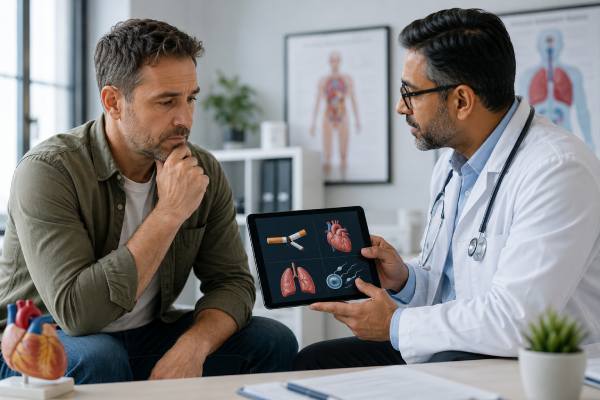
Smoking affects men’s health long before a diagnosis like heart disease or cancer appears. Erections, stamina, sperm quality, blood pressure, and exercise tolerance can all change because cigarette smoke injures blood vessels, reduces oxygen delivery, increases inflammation, and exposes the body to cancer-causing chemicals. Erectile dysfunction can be one of the first signs because the arteries that supply the penis are small and sensitive to blood-flow problems. Fertility can also suffer because sperm take about three months to develop, and smoking can affect count, movement, shape, and DNA quality during that process.
Quitting does not erase every risk overnight, but it starts helping quickly. Circulation, lung function, blood pressure control, and sperm health may improve over time, while cancer and heart risks decline gradually. The best plan is not guilt or willpower alone. It is a mix of clear testing, a quit strategy, support, and follow-up.
Table of Contents
- Why Smoking Damages Men’s Health in Several Ways
- Smoking, Erections, and Blood Flow
- How Smoking Affects Fertility and Sperm Quality
- Heart Disease, Blood Pressure, and Circulation Risks
- Cancer Risk, Warning Signs, and Screening
- Vaping, Cigars, Smokeless Tobacco, and Secondhand Smoke
- What Can Improve After Quitting
- When Men Who Smoke Should Get Checked
Why Smoking Damages Men’s Health in Several Ways
Cigarette smoke is not just nicotine. It contains gases, particles, metals, oxidants, and chemicals that can damage the lining of blood vessels, irritate the lungs, make blood more likely to clot, and expose cells to carcinogens. Nicotine drives dependence, but many of the long-term health problems come from the whole smoke mixture.
A major target is the endothelium, the thin inner lining of blood vessels. Healthy endothelium helps vessels relax and widen when more blood flow is needed. Smoking interferes with that process. It reduces nitric oxide, a key signal that helps blood vessels open. It also increases oxidative stress, which means unstable molecules are damaging cells faster than the body can repair them.
This matters for men because blood-flow problems do not show up in only one place. The same vessel injury that can contribute to heart attack risk can also affect erections, kidney function, leg circulation, and brain blood flow. A man may notice weaker erections or poorer workout stamina before he notices chest pain or abnormal lab results.
Smoking also affects oxygen delivery. Carbon monoxide from smoke attaches to hemoglobin in red blood cells, leaving less room for oxygen. The heart may have to work harder, and muscles may fatigue sooner. Even men who exercise regularly can have higher cardiovascular strain if they smoke.
The damage is dose-related, but there is no “safe” cigarette level. A few cigarettes a day can still affect blood vessels and clotting. Heavy smoking adds more exposure, but light or social smoking is not harmless, especially when combined with high blood pressure, diabetes, high cholesterol, obesity, poor sleep, or heavy alcohol use.
Smoking, Erections, and Blood Flow
An erection depends on blood vessels opening quickly and trapping blood inside the penis. Smoking makes that harder by narrowing blood vessels, damaging the endothelium, increasing inflammation, and reducing nitric oxide signaling. Nicotine can also raise sympathetic nervous system activity, the “fight or flight” response that works against erection quality.
Erectile dysfunction is often treated as a sexual problem, but it can also be a circulation problem. The penile arteries are smaller than the coronary arteries that feed the heart. Because of that, blood-flow trouble may appear as ED before a man develops chest pain or shortness of breath. Men who develop new or worsening ED, especially after age 40, should treat it as a reason to check cardiovascular risk, not as something to hide. A deeper explanation of this connection is covered in ED as a warning sign for heart or blood sugar problems.
Smoking-related ED can look different from performance anxiety. It may show up as weaker morning erections, difficulty keeping an erection even when desire is present, or a gradual decline over months or years. Anxiety can still make the problem worse, but if erections are consistently weaker across different situations, blood flow deserves attention.
Quitting can help some men regain better erectile function, especially when the damage is still partly functional rather than advanced artery disease. Improvement is not guaranteed, and it may take time. Men with diabetes, long-term high blood pressure, high cholesterol, pelvic surgery, low testosterone, or medication side effects may need a broader evaluation. For a full look at causes and treatment paths, see erectile dysfunction causes and treatment options.
ED pills can help many men, but they do not undo smoking-related vessel injury. They also are not safe for everyone. Men who take nitrates for chest pain, have unstable heart symptoms, or have been told to avoid sexual activity for cardiac reasons need medical guidance before using ED medication.
How Smoking Affects Fertility and Sperm Quality
Smoking does not make every man infertile, but it can lower the odds of healthy conception. Sperm production takes roughly three months from early development to mature sperm. During that time, tobacco-related oxidative stress, heat, inflammation, toxins, and hormone changes can affect sperm count, movement, shape, and DNA integrity.
The main semen parameters doctors look at are:
- Sperm concentration: how many sperm are present in each milliliter of semen.
- Total sperm count: the total number of sperm in the sample.
- Motility: how well sperm move.
- Morphology: the percentage of sperm with normal shape.
- Semen volume: the amount of fluid in the sample.
Smoking may affect several of these, especially in men who already have borderline semen quality. A man with strong fertility may still conceive while smoking, while another man with a varicocele, older age, heat exposure, obesity, or a partner with fertility issues may be pushed below the threshold where conception is likely.
Sperm DNA damage is another concern. DNA fragmentation means the genetic material inside sperm is broken or damaged more than expected. Standard semen analysis does not always measure this directly, but oxidative stress from smoking is one reason doctors may discuss it in couples with repeated pregnancy loss, failed fertility treatment, or unexplained infertility.
Quitting is most useful before trying to conceive, not only after months of difficulty. Because sperm development takes time, many fertility specialists look at a three-month window when discussing lifestyle changes. That does not mean nothing happens before three months, but it gives the body time to produce a new group of sperm under better conditions. For a focused look at this timeline, see what improves in sperm quality after quitting smoking.
A semen analysis is the usual first test when a couple has trouble conceiving. It is not a judgment of masculinity; it is a lab test that helps identify what to do next. Men should consider testing after 12 months of trying, or after 6 months if the female partner is 35 or older, cycles are irregular, there is a history of miscarriage, or either partner has known reproductive health problems. The basics are explained in semen analysis results and next steps.
Heart Disease, Blood Pressure, and Circulation Risks
Smoking is one of the most important preventable causes of cardiovascular disease. It injures artery walls, promotes plaque buildup, increases clotting, lowers oxygen delivery, raises heart rate, and can make blood pressure harder to control. The result is a higher risk of heart attack, stroke, peripheral artery disease, aneurysm, and sudden cardiac events.
A common mistake is assuming that smoking risk only applies to men who are overweight or inactive. A lean man who smokes can still have inflamed blood vessels and accelerated plaque formation. Exercise helps, but it does not cancel out smoke exposure.
Peripheral artery disease is one smoking-related circulation problem that men may miss. It can cause calf, thigh, or buttock pain when walking that improves with rest. Some men blame aging, shoes, or poor conditioning. In reality, leg pain with walking can mean narrowed arteries. Cold feet, slow-healing sores, or weak pulses are also reasons to get checked.
Smoking also makes other risk factors more dangerous. High cholesterol is more likely to cause trouble when artery walls are inflamed. Diabetes becomes more damaging when vessels are already under stress. High blood pressure plus smoking increases strain on the heart, kidneys, brain, and eyes. Men with several risk factors should not wait for symptoms. Heart disease prevention is easier before the first event; a broader prevention review is available in heart disease warning signs and risk factors in men.
Blood pressure deserves special attention because many men do not feel it when it is high. Smoking can cause short-term spikes and contribute to long-term vascular stiffness. Home blood pressure readings can reveal patterns that a single clinic reading misses. Men who smoke should know their usual numbers and understand when they are high, as explained in how often men should check blood pressure.
Emergency symptoms should never be watched at home. Chest pressure, pain spreading to the arm or jaw, sudden shortness of breath, fainting, one-sided weakness, face drooping, sudden confusion, or severe sudden headache need urgent care.
Cancer Risk, Warning Signs, and Screening
Lung cancer is the best-known smoking-related cancer, but it is not the only one. Cigarette smoking is linked with cancers of the mouth, throat, voice box, esophagus, lung, bladder, kidney, pancreas, stomach, liver, colon and rectum, cervix, and acute myeloid leukemia. For men, lung and bladder cancer risks are especially important to recognize because symptoms can be subtle at first.
Cancer risk rises with the amount smoked and the number of years exposed. Quitting lowers risk over time, but former smokers may still need screening or symptom-based evaluation. This is not a reason to feel defeated. It means a smoking history should stay on the medical record so the right screening decisions are made.
Pack-years are one way clinicians estimate lung cancer screening eligibility. Multiply packs per day by years smoked. One pack a day for 20 years equals 20 pack-years. Two packs a day for 10 years also equals 20 pack-years. In the United States, annual low-dose CT screening is commonly recommended for many adults ages 50 to 80 with at least a 20 pack-year history who currently smoke or quit within the past 15 years. Eligibility can depend on the guideline, insurance rules, health status, and whether the person would be able and willing to have treatment if cancer were found. Men with a smoking history can learn more in lung cancer screening for men who smoke.
Symptoms that need medical attention include:
- Cough that does not go away or keeps worsening.
- Coughing blood, even a small amount.
- Unexplained weight loss.
- Persistent hoarseness.
- Chest pain with breathing or coughing.
- Repeated pneumonia or bronchitis in the same area.
- Blood in the urine.
- New urinary urgency, burning, or pain without a clear infection.
Blood in the urine is especially easy to dismiss when it comes and goes. It can be caused by stones, infection, prostate problems, or exercise, but in men with a smoking history, bladder cancer must be considered. More detail is covered in bladder cancer symptoms and risk factors in men.
Screening does not replace quitting. A low-dose CT scan can find some lung cancers earlier, but it cannot prevent the blood-vessel damage, COPD risk, sexual health effects, or other cancers linked with smoking.
Vaping, Cigars, Smokeless Tobacco, and Secondhand Smoke
Switching products can reduce certain exposures, but it does not automatically make nicotine use safe. The details matter: whether a man fully switches away from cigarettes, continues dual use, inhales deeply, uses high-nicotine devices, or keeps smoking cigars on weekends.
Vaping does not burn tobacco, so the exposure pattern differs from cigarettes. However, many vape products still deliver nicotine, ultrafine particles, flavoring chemicals, and irritants that can affect the lungs and blood vessels. Long-term data are still developing, especially for fertility and erectile function. Vaping may be discussed as a harm-reduction step for some adults who cannot stop smoking by other means, but dual use often keeps cigarette exposure going. Men who vape because they are worried about smoking should treat it as a bridge to stopping nicotine, not as proof that the risk is gone. A closer look is available in vaping and men’s health risks.
Cigars are not safe just because they are not used every day. Large cigars can contain a lot of tobacco, and cigar smoke still contains nicotine, carbon monoxide, and cancer-causing chemicals. Men who do not inhale may still expose the mouth, throat, and lungs to harmful smoke.
Smokeless tobacco avoids combustion but still exposes users to nicotine and carcinogens. It is linked with oral health problems and cancers of the mouth and throat. It can also maintain nicotine dependence, making it harder to quit completely.
Secondhand smoke matters too. It can affect blood vessels and lung health in partners, children, coworkers, and friends. Smoking outside reduces indoor exposure, but smoke particles can remain on clothing, hair, cars, and surfaces. A smoke-free home and car are basic protections for everyone nearby.
What Can Improve After Quitting
Quitting starts helping the body quickly, but different systems recover on different timelines. Some changes are noticeable within days. Others take months or years. The timeline below is general, not a guarantee for every person.
| Time after quitting | What may start to improve | What to keep in mind |
|---|---|---|
| First day | Heart rate, blood pressure strain, and carbon monoxide exposure begin moving in a better direction. | Cravings can be strong early because nicotine levels drop. |
| First few weeks | Circulation and breathing may improve. Exercise may feel easier. | Cough can temporarily change as the airways clear mucus. |
| Around 3 months | A new sperm development cycle has had time to occur under smoke-free conditions. | Semen changes vary and may need repeat testing to measure. |
| 6 to 12 months | Cough, stamina, blood-flow symptoms, and erectile quality may improve in some men. | Persistent ED, chest symptoms, or breathlessness still need evaluation. |
| Years after quitting | Heart attack, stroke, lung disease, and cancer risks decline compared with continued smoking. | Screening may still be needed based on age and past pack-years. |
A good quit plan is specific. “I should stop someday” is too vague. A stronger plan includes:
- Pick a quit date within the next couple of weeks.
- Remove cigarettes, lighters, ashtrays, and smoking cues from the home, car, and work bag.
- Identify the hardest triggers: morning coffee, driving, stress, alcohol, after meals, or social breaks.
- Choose support before cravings hit.
- Use proven treatment if withdrawal has beaten willpower before.
- Plan what to do after a slip instead of treating one cigarette as failure.
Nicotine replacement therapy can reduce withdrawal by giving nicotine without cigarette smoke. Patches provide steady coverage. Gum, lozenges, inhalers, or sprays can help with breakthrough cravings. Some men do better with prescription medications such as varenicline or bupropion. These are not personality tests; they are tools for a drug dependence that changes brain reward circuits.
Counseling, text programs, quitlines, and follow-up visits improve the odds because they address habits, stress, routines, and relapse patterns. Men with depression, anxiety, heavy alcohol use, chronic pain, or major work stress may need a plan that treats those triggers too. Quitting is harder when smoking is doing emotional work in the background.
Cutting down can be a step, but it should not become the final goal. Smoking fewer cigarettes may reduce exposure, yet many people compensate by inhaling more deeply or smoking each cigarette more intensely. Complete quitting gives the body the clearest chance to recover.
When Men Who Smoke Should Get Checked
A smoking history should change how men think about routine care. It does not mean panic. It means prevention and early evaluation are worth taking seriously.
Men who currently smoke or used to smoke should ask a clinician about:
- Blood pressure measurement and home monitoring if readings are high.
- Cholesterol testing.
- Diabetes screening with fasting glucose or A1C.
- Kidney function testing when blood pressure, diabetes, or vascular disease is present.
- Lung cancer screening eligibility based on age and pack-years.
- COPD evaluation if there is chronic cough, wheezing, or shortness of breath.
- ED evaluation if erections have become weaker or less reliable.
- Semen analysis if trying to conceive is taking longer than expected.
- Bladder or kidney evaluation for blood in the urine.
Some symptoms should be handled quickly. Coughing blood, chest pain, sudden shortness of breath, fainting, stroke-like symptoms, severe leg pain with a cold or pale foot, or an erection lasting more than four hours need urgent care. Blood in the urine, unexplained weight loss, persistent hoarseness, repeated chest infections, or a testicular lump should be checked promptly even if there is no pain.
For sexual and fertility concerns, a men’s health clinician or urologist can connect the dots between smoking, blood flow, hormones, semen quality, medications, and prostate or urinary symptoms. A broader guide to timing is available in when to see a men’s health specialist.
The most useful appointment is honest. Tell the clinician how much you smoke, when you started, whether you vape or use cigars, and what has happened during past quit attempts. Include alcohol, cannabis, testosterone or anabolic steroid use, supplements, and ED medications. These details affect risk, testing, and treatment choices.
Smoking is not a character flaw, and many men need several quit attempts before it sticks. The goal is not to relive every past attempt. It is to use better tools this time, measure the health issues that matter, and reduce risk before a major event forces the conversation.
References
- WHO clinical treatment guideline for tobacco cessation in adults 2024 (Guideline)
- Cigarette smoking and erectile dysfunction: an updated review with a focus on pathophysiology, e-cigarettes, and smoking cessation 2023 (Review)
- Associations between tobacco inhalation and semen parameters in men with primary and secondary infertility: a cross-sectional study 2024 (Original Research)
- Cardiovascular Effects of Smoking and Smoking Cessation: A 2024 Update 2025 (Review)
- Cigarette Smoking: Health Risks and How to Quit (PDQ®) 2025 (Review)
- Screening for Lung Cancer 2024 (Official Health Resource)
Disclaimer
This article is educational and does not replace care from a qualified health professional. Men with chest pain, stroke symptoms, coughing blood, blood in the urine, severe shortness of breath, or sudden major changes in erections or exercise tolerance should seek medical care promptly. Smoking cessation medications, ED treatments, fertility testing, and cancer screening decisions should be discussed with a clinician who knows your health history.