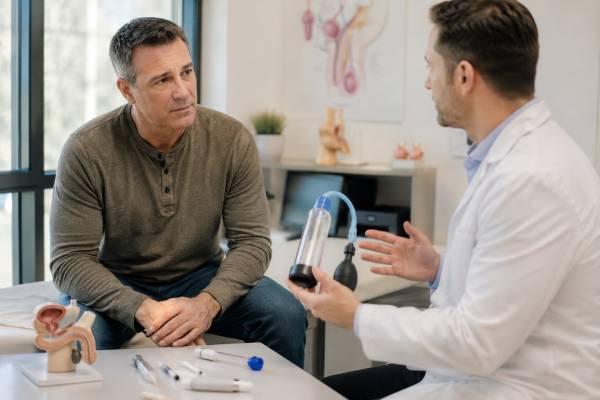
Erection problems are often treated with pills, but tablets are not the only path forward. Some men cannot take ED medication because of nitrate use, blood pressure concerns, side effects, cost, or poor results. Others want a drug-free option, a more reliable on-demand method, or help for anxiety, pelvic floor tension, or relationship stress. The right choice depends on why erections are difficult, how often the problem happens, your health history, and what feels realistic during sex.
Non-pill treatments range from simple devices to highly effective injections, counseling, pelvic floor training, shockwave therapy, and penile implant surgery. Some options work immediately. Others take weeks or require a specialist. This guide explains what each option does, who it fits best, what to watch for, and how to compare choices without getting pulled into expensive treatments that promise more than they can prove.
Table of Contents
- When Non-Pill ED Treatment Makes Sense
- Start With the Cause, Not the Device
- Vacuum Devices and Rings
- Injections and Urethral Medicine
- Therapy, Pelvic Floor, and Behavior Changes
- Shockwave and Regenerative Options
- Penile Implant Surgery
- How to Choose the Right Option
When Non-Pill ED Treatment Makes Sense
Non-pill treatment is worth considering when tablets are unsafe, ineffective, poorly tolerated, or simply not a good fit for your sex life. The goal is not to avoid medication at all costs. The goal is to choose a method that gives reliable erections while also addressing the reason the problem started.
Pills such as sildenafil and tadalafil rely on sexual stimulation and blood vessel response. They help many men, but they do not work equally well for every cause of erectile dysfunction. Men with diabetes-related nerve damage, severe blood vessel disease, major pelvic surgery, prostate cancer treatment, or long-standing ED sometimes need a stronger or more direct treatment.
Non-pill options also matter when medication conflicts with heart drugs. Men who use nitrates for chest pain or certain nitric oxide donor medications should not use PDE5 inhibitor pills because the combination can cause a dangerous drop in blood pressure. If that applies to you, review ED meds and nitrates before considering any oral drug.
A non-tablet approach may fit if:
- Pills cause headaches, flushing, nasal congestion, indigestion, dizziness, or bothersome back pain.
- Pills work sometimes but not reliably enough for confidence.
- You want an option that is not affected by food, alcohol, or timing.
- You need help after prostate surgery, radiation, or pelvic surgery.
- Anxiety, fear of losing the erection, or relationship strain is a major part of the pattern.
- You want a drug-free device before trying injections or surgery.
- You have low desire, low testosterone symptoms, or other health clues that need evaluation first.
It is also common to combine approaches. A vacuum device, therapy, pelvic floor training, lifestyle changes, and medical treatment often work better together than one option used in isolation. The most useful plan is usually practical, not perfect.
Start With the Cause, Not the Device
Before choosing a pump, injection, clinic treatment, or implant, make sure the basics have been checked. ED is a symptom, not a diagnosis by itself. It often reflects blood flow, nerve function, hormone status, medication effects, sleep quality, stress, alcohol use, or relationship patterns.
A proper evaluation usually starts with a medical and sexual history. A clinician will ask when the problem began, whether it was sudden or gradual, whether morning erections still happen, how firm erections get, whether desire has changed, and whether ejaculation or orgasm has also changed. These details help separate blood flow issues from anxiety-driven patterns, hormonal problems, medication effects, or nerve-related causes.
Basic checks often include blood pressure, waist size or body mass index, a genital exam when appropriate, fasting glucose or A1C, cholesterol, and morning total testosterone. Testosterone is not the main cause of ED for every man, but low levels can reduce desire, morning erections, energy, and response to treatment. If symptoms suggest hormone involvement, it is reasonable to review low testosterone symptoms and discuss repeat morning testing.
ED can also be an early warning sign of vascular disease. The penile arteries are small, so reduced blood flow may show up as weaker erections before chest pain or exercise symptoms appear. This is especially important if erection changes are new after age 40, happen along with high blood pressure or high cholesterol, or occur in a man with diabetes, smoking history, or belly fat. For that pattern, ED as a heart and blood sugar warning sign is directly relevant.
Some clues point toward a specific starting point:
| Pattern | Possible direction | Useful next step |
|---|---|---|
| Gradual decline in firmness over months or years | Blood flow, metabolic health, medication effects, aging-related vascular changes | Check blood pressure, lipids, glucose, and cardiovascular risk |
| Sudden ED after a stressful event or one bad sexual experience | Performance anxiety, stress response, fear of recurrence | Consider sex therapy, CBT, and reducing pressure during sex |
| Weak erections after prostate surgery or pelvic radiation | Nerve and blood vessel injury | Ask about penile rehabilitation, vacuum devices, injections, or implants |
| Low desire plus fewer morning erections | Hormone, sleep, mood, medication, or metabolic issue | Check morning testosterone and review sleep, mood, and medications |
| Pain, curvature, plaque, or narrowing | Peyronie’s disease or scar tissue | See a urologist before using traction, injections, or devices aggressively |
Do not skip evaluation because a device is easy to buy. A pump or injection might help the erection, but it will not treat uncontrolled diabetes, high blood pressure, sleep apnea, low testosterone, depression, medication side effects, or heavy alcohol use. The best treatment plan improves sex and protects health.
Vacuum Devices and Rings
A vacuum erection device uses gentle negative pressure to draw blood into the penis. After the erection develops, a constriction ring is placed at the base to help keep blood from draining out too quickly. This is one of the most established non-pill options and is especially useful for men who want a drug-free method.
A medical-grade vacuum device usually includes a cylinder, a pump, lubricant, and rings in different sizes. Manual pumps and battery-powered pumps both exist. The device is placed over the penis with a tight seal against the body, then air is removed from the cylinder. Once the penis becomes firm enough, the ring slides from the cylinder onto the base of the penis.
This method is mechanical, so it does not require the same nerve signaling that a natural erection does. That makes it useful after prostate surgery, in some men with diabetes, and for men who cannot use pills. It is also a common part of penile rehabilitation after prostate cancer treatment, where the goal may include maintaining tissue stretch and sexual function. Men in that situation may also want to understand ED after prostate cancer treatment.
The main advantages are control and safety. You decide when to use it, it avoids systemic medication effects, and it can be used repeatedly when instructions are followed. The main drawback is that it changes the flow of sex. Some men dislike the setup time, the cool or slightly bluish appearance of the penis, reduced ejaculation force, or the feeling of the ring.
Practical tips make a big difference:
- Use enough lubricant to create a comfortable seal.
- Start with the lowest effective suction instead of pumping aggressively.
- Choose a ring that maintains firmness without causing pain.
- Remove the ring within the recommended time, usually no longer than 30 minutes.
- Stop if there is significant pain, skin injury, numbness, or unusual bruising.
- Practice alone before using it with a partner.
A constriction ring by itself can help men who can get an erection but lose it quickly. It works best when the problem is maintaining firmness rather than getting blood into the penis. Rings should not be painfully tight, and they should not be worn for extended periods.
A vacuum device is not ideal for every man. Caution is important for those with bleeding disorders, men taking strong blood thinners, severe penile curvature, reduced penile sensation, or a history of priapism. A urologist can help choose a safe device and ring size if there are complicating medical factors. For a more focused guide, see vacuum erection devices.
Injections and Urethral Medicine
Penile injection therapy is one of the most reliable non-pill treatments for firm erections. It works by placing medicine directly into the erectile tissue, where it relaxes smooth muscle and increases blood flow. Because the medicine acts locally, it can work even when pills fail.
The idea sounds intimidating at first, but the needle is very small, and many men find the process easier than expected after proper teaching. The key is training. A clinician should show the injection site, dose, technique, rotation pattern, and what to do if an erection lasts too long.
Common injection options include alprostadil alone or combination formulas often called bimix or trimix. The exact formula and dose vary by country, clinic, and patient need. Combination injections are often used because lower doses of each ingredient may improve firmness while reducing certain side effects.
What injection therapy is like in practice
The injection is usually placed into the side of the shaft, avoiding visible veins, the top, the underside, and the head of the penis. After injection, pressure is held briefly to reduce bruising. An erection often develops within minutes and does not depend as much on arousal as pills do, although sexual stimulation can still improve the experience.
The biggest benefit is reliability. The biggest safety concern is priapism, which means an erection that lasts too long and can damage tissue if not treated. Men using injections need clear instructions on when to seek urgent care. An erection lasting four hours or longer is an emergency.
Other possible problems include penile ache, bruising, small lumps, scar tissue, dizziness, or anxiety about self-injection. Rotating sides and using the lowest effective dose helps reduce risk. Men with severe curvature, active infection, poor hand coordination, or a history of prolonged erections need extra caution.
Penile injection therapy is especially worth discussing when ED is severe, after pelvic surgery, after prostate cancer treatment, or when pills are unsafe. A focused guide to penile injection therapy can help you understand technique and safety before a urology visit.
Urethral alprostadil
Urethral medicine delivers alprostadil through a tiny pellet placed into the urethral opening with an applicator. It avoids needles, which appeals to some men. It is less invasive than injections, but it may be less reliable and can cause urethral burning, aching, light bleeding, or dizziness.
This option fits men who want a local medication but are not ready for injections. It is less useful when very firm, predictable erections are needed after pills have completely failed. It also requires clear instruction because incorrect placement reduces effectiveness.
Safety rules for local ED medicines
Local treatments are powerful enough to deserve respect. Never increase the dose on your own because the first dose seemed weak. Many clinicians start conservatively to avoid a prolonged erection, then adjust gradually.
Seek urgent care for an erection that lasts four hours, severe pain, faintness, or a penis that becomes cold, very discolored, or injured. Do not use injections more often than prescribed, and do not combine multiple erection treatments unless your clinician specifically approves the plan.
Therapy, Pelvic Floor, and Behavior Changes
Not every erection problem starts in the arteries. Anxiety, depression, stress, conflict, sexual pressure, porn-related arousal patterns, fear of pregnancy or STIs, body image concerns, and past sexual experiences can all interfere with erections. These factors can also pile on top of a medical problem, making a mild physical issue feel much worse.
Therapy for ED is not just “talking about feelings.” Good sex therapy or cognitive behavioral therapy looks at the loop that keeps the problem going. A common loop is: one erection difficulty leads to worry, worry causes body monitoring, body monitoring reduces arousal, reduced arousal weakens the erection, and the next sexual situation begins with even more pressure.
Therapy helps break that loop through education, communication, attention training, gradual sexual exercises, anxiety reduction, and practical changes in how sex is approached. Partner involvement can be helpful when a couple has started avoiding sex, misreading each other, or treating every intimate moment like a test.
Therapy is especially useful when erections are better during masturbation than partnered sex, morning erections are still present, the problem began suddenly, or the main issue is losing firmness once penetration feels expected. For a closer comparison, see ED vs performance anxiety.
Pelvic floor work is another underused option. The pelvic floor muscles help support erections, ejaculation, urinary control, and blood trapping in the penis. Weakness can contribute to poor rigidity, while excessive tension can contribute to pain, numbness, urinary urgency, or difficulty relaxing during sex.
The right exercise depends on the problem. Some men need strengthening. Others need relaxation, breathing, hip mobility, and down-training because the pelvic floor is too tight. Doing hard Kegels all day is not the answer for everyone. Men with pelvic pain, painful ejaculation, hard flaccid symptoms, constipation, or urinary hesitancy should be assessed before starting aggressive strengthening.
Basic lifestyle changes also matter because erections depend heavily on blood vessel function. Improvements in walking, strength training, weight, sleep, alcohol intake, smoking, and blood sugar control may not feel like “ED treatment,” but they can improve response to every other option. A man using injections or a pump still benefits from better vascular health.
The most practical behavior changes are specific:
- Limit heavy alcohol before sex, since it reduces arousal and nerve response.
- Improve sleep if morning erections, energy, and desire have declined.
- Add regular aerobic activity, especially if blood pressure, weight, or glucose are concerns.
- Review medications with a clinician if ED began after starting an antidepressant, blood pressure drug, opioid, finasteride, or hormone-related medication.
- Reduce pressure by taking penetration off the table temporarily while rebuilding arousal and confidence.
- Use sensate focus or structured intimacy exercises if sex has become performance-centered.
For men who suspect muscle control is part of the problem, pelvic floor exercises for ED can be useful, but pain or tension symptoms should steer you toward a pelvic floor physical therapist rather than a generic strengthening plan.
Shockwave and Regenerative Options
Low-intensity shockwave therapy uses acoustic energy applied to the penis with the goal of improving blood vessel function. It is not the same as the high-energy shockwaves used to break kidney stones. In ED clinics, treatments are usually delivered over several sessions.
The best fit appears to be men with mild to moderate vasculogenic ED, meaning erection problems mainly related to blood flow. It is less likely to help severe nerve injury, advanced diabetes-related damage, major scarring, or ED after non-nerve-sparing surgery. It is also not an instant on-demand treatment. Any benefit is usually judged over weeks or months.
The appeal is obvious: no pills, no needles, and the possibility of improving the underlying blood flow rather than creating a one-time erection. The problem is that protocols vary widely. Clinics may differ in device type, energy settings, number of pulses, treatment sites, session count, and pricing. That makes it harder to compare results and easier for marketing to outrun the evidence.
A reasonable way to view shockwave therapy is cautious interest. It may be worth discussing with a urologist if you have mild blood-flow-related ED, understand the cost, and know that results are not guaranteed. It should not be sold as a miracle cure, a permanent fix, or a replacement for checking heart and metabolic risk. A detailed review of shockwave therapy for ED can help you decide whether the evidence matches your situation.
Be careful with “regenerative” ED treatments
Platelet-rich plasma, stem cells, exosomes, and similar regenerative treatments are widely advertised for sexual performance. Some early research is interesting, but routine clinical use is not well established. The biggest issue is not only whether they work. It is also product quality, dosing, technique, patient selection, long-term safety, and honest pricing.
Be cautious with any clinic that promises natural enlargement, guaranteed erection restoration, permanent repair, or package deals that cost thousands before a proper medical evaluation. Also be wary of treatments offered without checking cardiovascular risk, diabetes, medications, hormone symptoms, penile curvature, or prostate cancer treatment history.
Questions to ask before paying for a procedure:
- What diagnosis is this treatment targeting in my case?
- Is my ED mild, moderate, or severe?
- What evidence supports this exact device or product?
- How many sessions are included, and what happens if it fails?
- Are there risks for pain, bruising, scarring, infection, or delayed treatment?
- Is this recommended by major urology guidelines for routine care?
- Are cheaper, better-established options appropriate first?
Regenerative treatments should not distract from proven options such as vacuum devices, injection therapy, counseling, pelvic floor care, risk-factor control, and implants when needed.
Penile Implant Surgery
A penile implant is a surgical treatment for men who want a dependable solution when other therapies fail, are not tolerated, or do not fit their life. It does not increase sexual desire, sensation, orgasm, or ejaculation by itself. Its job is to create enough rigidity for penetrative sex.
There are two main types: inflatable and malleable. Inflatable implants are the most common. A typical three-piece inflatable device includes cylinders inside the penis, a pump in the scrotum, and a fluid reservoir placed in the pelvis or abdomen. Squeezing the pump moves fluid into the cylinders for an erection. Pressing the release valve returns the penis to a softer state.
Malleable implants use bendable rods. They are simpler mechanically and easier for some men with limited hand strength, but the penis remains semi-rigid all the time. Inflatable devices usually look and feel more natural when deflated, but they involve more parts.
Implants are often considered after pills, vacuum devices, and injections have failed or are unacceptable. They are also common after prostate cancer treatment, severe diabetes-related ED, Peyronie’s disease with ED, pelvic injury, or long-standing severe erectile dysfunction. Men who want a permanent, highly reliable option may choose surgery earlier after detailed counseling.
The satisfaction rate can be high when expectations are realistic. The erection is controlled, predictable, and not dependent on timing a pill. But surgery has tradeoffs. Infection, pain, bleeding, mechanical failure, device revision, erosion, and dissatisfaction are possible. The implant also changes the erectile tissue permanently, so it should be viewed as a major decision, not a casual upgrade.
Before surgery, a good consultation should cover:
- Which implant type fits your anatomy, dexterity, goals, and medical history.
- Whether diabetes, smoking, skin infection, urinary infection, or immune problems increase risk.
- What size and firmness to expect.
- Why the implant does not usually make the penis longer.
- How recovery, device activation, and training work.
- What future revision surgery might involve.
- How the procedure affects future treatment choices.
Men often worry about penile length after implant surgery. The implant creates rigidity within the available anatomy; it does not restore length lost from aging, scarring, prostate surgery, Peyronie’s disease, weight gain, or years of poor erections. Preoperative counseling should be direct about this. Some men perceive shortening even when the device is correctly placed.
A urologist who performs a high volume of implant procedures is usually the best person to discuss candidacy. For a fuller explanation of surgical expectations, review penile implant surgery before the appointment.
How to Choose the Right Option
The best ED treatment is the one that matches the cause, safety needs, relationship context, and level of reliability you want. A man with mild anxiety-driven ED needs a different plan than a man with severe diabetes-related ED. A man recovering from prostate surgery needs a different discussion than a man who loses erections only after heavy drinking.
Start by deciding what problem you are trying to solve. Is the issue getting firm, staying firm, feeling desire, timing sex, avoiding side effects, rebuilding confidence, or finding a solution after pills failed? That answer narrows the options quickly.
For a drug-free first step, a vacuum device is usually the most practical. It is noninvasive, reusable, and can work even when pills are unsafe. It takes patience and practice, but it is a strong starting point for men who want to avoid medication.
For maximum non-surgical reliability, injection therapy is often the strongest option. It requires comfort with technique and respect for dosing rules, but it can produce firm erections when other methods do not.
For anxiety, avoidance, or a sudden pattern after a bad experience, therapy deserves early attention. A device may help the erection, but therapy helps remove the pressure loop that keeps the problem alive.
For mild blood-flow-related ED, shockwave therapy may be discussed, but it should be approached with realistic expectations and careful attention to cost. It is not the same category of proven, immediate reliability as injections or implants.
For severe ED that has not responded to other treatments, a penile implant is the most definitive option. It is surgery, so the decision should be careful, but it can be life-changing for men who want predictable function and are done with temporary fixes.
A practical step-by-step approach looks like this:
- Get evaluated for blood pressure, diabetes risk, cholesterol, testosterone symptoms, medication effects, and cardiovascular risk.
- Address urgent or reversible causes, including uncontrolled diabetes, heavy alcohol use, smoking, sleep apnea symptoms, depression, and medication side effects.
- Choose the least invasive option that realistically fits your severity and goals.
- Practice the chosen method before judging it a failure.
- Move up to injections, specialist therapy, or surgery if results are unreliable or the method disrupts sex too much.
Seek medical care promptly if ED starts suddenly with chest pain, shortness of breath, leg pain while walking, new neurologic symptoms, penile pain, severe curvature, loss of penile sensation, or an erection that will not go away. Also see a clinician if erection problems persist for more than a few months, especially if you have diabetes, high blood pressure, high cholesterol, obesity, smoking history, or a family history of early heart disease. A broader guide to erectile dysfunction causes and treatments can help you prepare for that conversation.
Non-pill ED treatment is not one thing. It is a menu of tools. Some create an erection mechanically. Some deliver medicine locally. Some train the mind and body out of a pressure cycle. Some aim at blood flow. One replaces the erectile mechanism surgically. The right plan is the one that is safe, honest about tradeoffs, and strong enough for the real cause of the problem.
References
- Management of Erectile Dysfunction 2025 (Guideline)
- Evolving medical management of erectile dysfunction 2025 (Review)
- Low-intensity shockwave therapy for erectile dysfunction 2025 (Systematic Review)
- The effectiveness of psychological interventions alone, or in combination with phosphodiesterase-5 inhibitors, for the treatment of erectile dysfunction: A systematic review 2021 (Systematic Review)
- Penile Prosthesis Implantation 2024 (Review)
Disclaimer
This article is for education and does not replace care from a qualified clinician. ED can be linked to heart disease, diabetes, medication effects, hormone problems, pelvic surgery, anxiety, or other conditions that need proper evaluation. Do not start injections, combine ED treatments, use constriction rings, or pay for procedures without medical guidance, especially if you have heart disease, take blood thinners, use nitrates, or have penile pain or curvature.