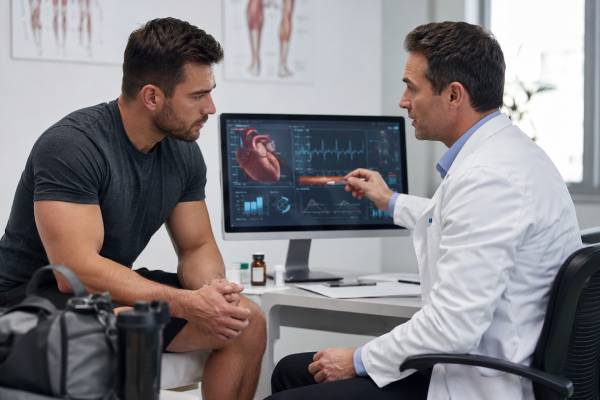
Anabolic steroids are synthetic versions of testosterone or closely related hormones. Some are prescribed for specific medical problems, but the side effects discussed here usually come from non-medical use: high doses, “cycles,” stacked compounds, underground products, or attempts to build muscle faster than training alone allows.
The biggest risk is not one isolated symptom. Steroids affect the hormone system, testicles, heart, liver, blood, skin, mood, and sexual function at the same time. A man might notice acne and testicular shrinkage first, while blood pressure, cholesterol changes, liver strain, or heart enlargement stay silent until a serious problem appears.
This guide explains what steroid side effects look like in real life, which problems need urgent care, what often improves after stopping, and what to check if fertility, libido, mood, or general health has changed.
Table of Contents
- What Anabolic Steroids Do in Men
- Fertility and Testicular Effects
- Heart, Blood Pressure, and Cholesterol Risks
- Liver and Kidney Warning Signs
- Mood, Sleep, and Dependence
- Hormone Crashes, Estrogen, and Sexual Side Effects
- What to Check After Steroid Use
- When to Get Medical Help
What Anabolic Steroids Do in Men
Anabolic-androgenic steroids increase androgen activity in the body. “Anabolic” refers to tissue-building effects, especially muscle growth. “Androgenic” refers to male-sex-hormone effects, such as facial hair, oily skin, libido, and changes in reproductive function.
The problem is dose and context. Medical testosterone treatment aims to bring low testosterone into a normal range. Non-medical steroid use often pushes androgen levels far above normal. Many men also combine injectable testosterone, oral steroids, nandrolone, trenbolone, oxandrolone, stanozolol, boldenone, drostanolone, or other compounds. Some add aromatase inhibitors, hCG, thyroid drugs, stimulants, insulin, growth hormone, or “post-cycle therapy” drugs without medical monitoring.
That mix makes side effects harder to predict. Two men using the same dose do not always get the same problems. Risk changes with dose, duration, genetics, age, baseline health, alcohol use, sleep apnea, blood pressure, cholesterol, and whether the products are contaminated or mislabeled.
The most important pattern is hormonal shutdown. When the brain senses high androgen levels, it reduces luteinizing hormone and follicle-stimulating hormone. These pituitary signals normally tell the testicles to make testosterone and sperm. When the signals drop, the testicles produce less of both. That is why a man using steroids often has high total androgen exposure in the bloodstream but low natural testicular function.
Common early signs include:
- smaller or softer testicles
- reduced semen volume
- acne, oily skin, or back acne
- breast tenderness or nipple swelling
- increased irritability or emotional swings
- higher blood pressure readings
- worse snoring or sleep quality
- libido changes, either unusually high or suddenly low
- erectile problems after stopping
- abnormal cholesterol, especially low HDL cholesterol
Some effects are visible; others show up only on labs or imaging. A man might feel strong in the gym while his HDL cholesterol is severely suppressed, his blood pressure is rising, and his sperm count has dropped close to zero.
Fertility and Testicular Effects
Steroids are one of the most common preventable causes of low sperm count in men who lift, compete, or use performance-enhancing drugs. The mechanism is straightforward: outside androgens tell the brain there is plenty of testosterone, so the brain turns down the signals that drive sperm production.
Sperm production needs high testosterone inside the testicles, not just testosterone in the bloodstream. Injecting or taking steroids raises blood androgen levels but often lowers intratesticular testosterone because LH and FSH fall. Without those signals, sperm count, motility, and semen volume often decline.
A semen analysis during active steroid use might show a low sperm count, poor motility, or azoospermia, which means no sperm are seen in the semen sample. This does not always mean permanent infertility, but it is a serious warning sign if pregnancy is a goal.
Men trying to conceive should treat anabolic steroid use as a major fertility risk. A practical first step is formal male fertility testing, including semen analysis and hormone labs, rather than guessing based on ejaculation volume or libido.
What men often notice
Testicular shrinkage is one of the clearest signs of shutdown. The testes become smaller because they are doing less work. Semen volume often falls, and orgasms might feel different. Libido during a cycle is unpredictable: some men feel more sexual drive, while others develop erectile problems from estrogen imbalance, prolactin changes, blood pressure issues, anxiety, or compound-specific effects.
After stopping, fertility does not return overnight. Sperm development takes about three months from start to finish, and recovery of the hormone signals takes time. Some men recover sperm production within months. Others need a year or longer, especially after prolonged use, very high doses, multiple compounds, or repeated cycles.
Why “post-cycle therapy” is not a guarantee
Post-cycle therapy is often promoted as a way to restart natural hormone production. In reality, recovery varies widely, and unsupervised drug combinations create new risks. Clomiphene, enclomiphene, hCG, and similar medications have legitimate medical uses in selected men, but they are not harmless reset buttons.
A man who wants children should not rely on forum protocols. The safer path is to stop non-medical steroid use, get baseline labs and semen testing, and work with a urologist, reproductive endocrinologist, or men’s health clinician. The article on post-cycle therapy risks explains why hormone recovery should be monitored rather than improvised.
Fertility red flags
Get evaluated sooner if any of these apply:
- no pregnancy after 6–12 months of trying
- known azoospermia or very low sperm count
- testicular shrinkage that persists after stopping
- very low LH and FSH on blood work
- low testosterone symptoms after a cycle
- history of long-term or repeated steroid use
- partner age over 35 or known female-factor fertility issues
Waiting too long matters. If pregnancy is time-sensitive, early testing gives more options.
Heart, Blood Pressure, and Cholesterol Risks
The heart risks from anabolic steroids are easy to underestimate because they often build silently. A man might feel fit, train hard, and look lean while his cardiovascular risk markers are moving in the wrong direction.
Steroids affect the cardiovascular system in several ways. They often lower HDL cholesterol, the “good” cholesterol that helps remove cholesterol from blood vessels. Some compounds raise LDL cholesterol. Blood pressure often increases because of fluid retention, vascular changes, kidney stress, sleep apnea, stimulants, and higher body weight. Steroids also increase red blood cell production, which thickens the blood when hematocrit climbs too high.
Over time, high-dose use is linked with left ventricular hypertrophy, which means thickening of the heart’s main pumping chamber. Thick muscle is not always strong muscle. A thickened heart has to work harder, fills less efficiently, and becomes more prone to rhythm problems.
A man with chest pressure, shortness of breath, fainting, one-sided weakness, sudden severe headache, or pain spreading to the arm, jaw, or back needs emergency care. Do not explain these symptoms away as a hard workout, anxiety, pre-workout stimulants, or “just blood pressure.”
| Change | Why it matters | How it is checked |
|---|---|---|
| Higher blood pressure | Raises strain on the heart, brain, kidneys, and blood vessels | Home readings, office blood pressure, sometimes ambulatory monitoring |
| Low HDL cholesterol | Removes a layer of cardiovascular protection | Fasting or nonfasting lipid panel |
| High LDL cholesterol | Contributes to plaque buildup in arteries | Lipid panel, sometimes ApoB or advanced risk testing |
| High hematocrit | Thickens blood and raises clot-related concern | Complete blood count |
| Heart enlargement or dysfunction | Raises risk of heart failure and rhythm problems | ECG, echocardiogram, cardiology evaluation |
The risk rises when steroids are combined with smoking, cocaine, high-dose stimulants, untreated sleep apnea, heavy alcohol use, obesity, or family history of early heart disease. Men with erectile dysfunction during or after steroid use should also think beyond testosterone. ED sometimes reflects blood vessel problems, and erectile dysfunction as a warning sign deserves attention when it appears suddenly or alongside chest symptoms, poor stamina, or high blood pressure.
Liver and Kidney Warning Signs
Liver risk is especially linked with oral anabolic steroids, particularly 17-alpha-alkylated compounds such as stanozolol, oxandrolone, methandienone, oxymetholone, and similar agents. These drugs are modified to survive first-pass metabolism through the liver, which also increases liver stress.
Liver injury does not always feel like pain. The liver itself does not reliably warn you early. Some men only discover a problem when blood tests show abnormal liver enzymes or bilirubin. Others develop cholestasis, a pattern where bile flow is impaired. This often causes intense itching, dark urine, pale stools, yellowing of the skin or eyes, nausea, fatigue, and loss of appetite.
Severe liver complications are less common than acne or fertility problems, but they are more dangerous. Long-term or heavy use has been linked with peliosis hepatis, hepatic adenomas, and rare liver cancers. A growing or bleeding liver tumor is an emergency.
Kidney strain is also a concern, especially when steroid use is combined with high blood pressure, dehydration, heavy NSAID use, stimulant use, very high-protein dieting without medical context, or intense training while ill. Some men with very high muscle mass have creatinine levels that are hard to interpret, so clinicians often look at the full picture: urine protein, blood pressure, cystatin C in selected cases, and trends over time.
Do not assume a “liver support” supplement protects you. Some supplements add their own liver risks, and underground steroid products sometimes contain compounds that are not listed on the label. A safer approach is to stop the liver-stressing drug, avoid alcohol, avoid unnecessary acetaminophen, and get medical testing.
Seek urgent care for:
- yellow skin or yellow eyes
- dark tea-colored urine with pale stools
- severe itching with fatigue or nausea
- severe right upper abdominal pain
- vomiting blood or black stools
- confusion, extreme drowsiness, or swelling of the abdomen
- very low urine output after intense training or dehydration
Men with fatty liver, heavy alcohol intake, hepatitis risk, or abnormal liver tests need extra caution. For related background, the guide to fatty liver disease in men explains why alcohol, visceral fat, insulin resistance, and liver enzymes matter even without steroid use.
Mood, Sleep, and Dependence
Steroids affect the brain as well as the body. Some men feel more confident, energetic, focused, or sexually driven during use. Others become irritable, suspicious, restless, impulsive, or emotionally flat. The same person might feel powerful during a cycle and depressed after stopping.
Mood effects are not just “anger.” They include anxiety, panic, insomnia, agitation, mood swings, hypomanic symptoms, depressive crashes, and increased conflict in relationships. Men with a history of depression, bipolar disorder, trauma, substance use, body dysmorphia, or severe appearance anxiety are at higher risk of problems.
The withdrawal phase deserves special attention. After stopping steroids, natural testosterone production is often suppressed. During that low-hormone period, men often report fatigue, low libido, erectile dysfunction, poor motivation, low mood, anxiety, sleep disruption, and loss of confidence. These symptoms push some men back into another cycle before recovery has a chance to happen.
Dependence does not always look like daily intoxication. With steroids, dependence often looks like repeated use despite clear harm: fertility problems, relationship damage, high blood pressure, abnormal labs, mood instability, or fear of losing size. A man might tell himself he is “just bridging,” “cruising,” or “not ready to come off,” while his body is never getting a true recovery period.
Sleep is another major issue. Steroids worsen snoring and sleep apnea in some men, especially when body weight rises quickly or water retention increases. Poor sleep then worsens blood pressure, mood, insulin resistance, libido, and training recovery. If a partner notices loud snoring, choking, pauses in breathing, or heavy daytime sleepiness, a sleep study is worth discussing. Untreated sleep apnea also complicates decisions around testosterone treatment and other hormone drugs.
Mental health support is not a sign of weakness here. It is practical risk control. Men with persistent depression, panic, rage episodes, suicidal thoughts, or inability to stop despite harm should involve a clinician who understands both hormones and substance-use patterns. The article on depression signs in men is useful if low mood shows up as anger, isolation, risk-taking, or loss of drive rather than sadness.
Hormone Crashes, Estrogen, and Sexual Side Effects
Anabolic steroids disturb more than testosterone. They also affect estrogen, prolactin, SHBG, LH, FSH, DHT-related effects, and sometimes thyroid and adrenal markers indirectly through other drugs used in the same environment.
Estrogen is often misunderstood. Men need estradiol for libido, erections, bone health, mood, and metabolic function. Too much estrogen activity contributes to breast tenderness, nipple swelling, water retention, and emotional swings in some men. Too little estrogen, often from overusing aromatase inhibitors, leads to joint pain, low libido, erectile problems, dry mood, fatigue, and bone loss over time.
Gynecomastia is one of the most distressing side effects. Early breast tenderness or a rubbery lump under the nipple is more treatable than long-standing glandular tissue. Once tissue becomes established, medication is less reliable, and surgery is sometimes the only definitive fix. Men with nipple discharge, a hard one-sided breast mass, skin dimpling, or bloody discharge need medical evaluation rather than assuming it is steroid-related. The guide to gynecomastia causes and testing explains how doctors separate hormone-related breast growth from other breast changes.
Sexual side effects vary by phase. During active use, libido might rise, fall, or become unstable. Erectile dysfunction might come from high blood pressure, anxiety, estrogen imbalance, prolactin effects, sleep loss, or reduced nitric oxide function. After stopping, low testosterone and low gonadotropins often drive low libido and weaker erections.
Hair and skin effects are also common. Acne on the back, chest, shoulders, and jawline often worsens with oily skin. Male-pattern hair loss speeds up in genetically prone men because androgen-sensitive follicles miniaturize faster. These changes do not always fully reverse after stopping.
A useful hormone workup often includes total testosterone, free testosterone or calculated free testosterone, SHBG, LH, FSH, estradiol by a sensitive method when available, prolactin, CBC, lipids, liver enzymes, kidney markers, and semen analysis if fertility matters. For men confused by testosterone numbers after stopping, LH and FSH testing helps show whether the brain is sending signals to the testicles.
What to Check After Steroid Use
The right tests depend on symptoms, timing, and goals. A man who stopped two weeks ago with low libido needs a different plan than a man with chest pain, jaundice, infertility, or years of continuous use. Still, several checks are commonly useful.
Start with a clear history. Write down compounds used, estimated doses, start and stop dates, injection frequency, oral steroid use, aromatase inhibitors, hCG, SERMs, growth hormone, insulin, thyroid drugs, stimulants, alcohol, recreational drugs, supplements, and current symptoms. Clinicians make better decisions when they know what actually happened.
A basic medical check should include blood pressure, weight change, waist size, symptoms of sleep apnea, testicular exam when appropriate, breast exam when there is nipple or breast swelling, and a review of cardiovascular symptoms.
Common lab and health checks include:
- complete blood count, especially hematocrit and hemoglobin
- comprehensive metabolic panel, including liver enzymes, bilirubin, and kidney markers
- fasting or nonfasting lipid panel
- total testosterone and SHBG, with free testosterone calculated or measured when needed
- LH and FSH to assess testicular signaling
- estradiol, especially with breast symptoms or libido problems
- prolactin when libido, erection, or breast symptoms suggest it
- A1C or fasting glucose when weight, blood pressure, or family history raises concern
- urinalysis and urine protein testing when kidney strain is possible
- semen analysis when future pregnancy matters
- ECG or echocardiogram when symptoms, long-term use, or high blood pressure raise heart concern
Testing too early after stopping might show expected suppression, but that does not make the result useless. It gives a baseline. Repeat testing helps show whether recovery is moving in the right direction.
Avoid one common mistake: treating numbers without treating risk. For example, donating blood to lower hematocrit while continuing high-dose androgens does not fix the reason hematocrit is high. Taking an aromatase inhibitor for nipple tenderness without checking estradiol and testosterone patterns might overshoot estrogen and make sexual function worse. Starting testosterone replacement immediately after steroid withdrawal might relieve symptoms but further suppress fertility.
Men who truly have persistent low testosterone after stopping need careful evaluation. The decision is different for a man who wants children soon, because standard testosterone replacement suppresses sperm production. The article on TRT and fertility explains why fertility-preserving options require a different discussion.
When to Get Medical Help
Medical help is worth getting before there is a crisis. The best time to check blood pressure, cholesterol, fertility, and hormone recovery is when warning signs are still reversible.
See a clinician soon if you have persistent low libido, erectile dysfunction, fatigue, depression, infertility, testicular shrinkage, breast tenderness, abnormal labs, high blood pressure, or trouble stopping. Be direct about steroid use. A nonjudgmental, accurate history prevents wrong diagnoses and unsafe prescriptions.
Get urgent or emergency care for chest pain, shortness of breath at rest, fainting, weakness on one side, sudden severe headache, coughing blood, severe leg swelling, yellow eyes, dark urine with pale stools, severe abdominal pain, suicidal thoughts, psychosis, or extreme agitation. These are not normal “cycle sides.”
The safest recovery plan usually has four parts:
- Stop non-medical steroid exposure and avoid adding more unsupervised drugs.
- Check the systems most likely to be affected: fertility, hormones, blood pressure, cholesterol, blood count, liver, kidney, and mood.
- Treat urgent risks first, especially cardiovascular symptoms, severe depression, jaundice, very high blood pressure, or high hematocrit.
- Use specialist care when goals conflict, such as wanting testosterone symptom relief while also trying to restore sperm production.
A man does not need to be embarrassed to ask for help. Clinicians see steroid-related problems often, especially in men who present with infertility, ED, anxiety, acne, high blood pressure, or abnormal cholesterol. The key is to make decisions based on labs, symptoms, and long-term goals rather than gym advice or online protocols.
References
- Diagnosis and Management of Anabolic Androgenic Steroid Use 2019 (Review)
- Use of Anabolic-Androgenic Steroids and Male Fertility 2023 (Review)
- Physical, psychological and biochemical recovery from anabolic steroid-induced hypogonadism: a scoping review 2023 (Scoping Review)
- Anabolic androgenic steroid-induced liver injury: An update 2022 (Review)
- Cardiovascular Disease in Anabolic Androgenic Steroid Users 2025 (Cohort Study)
- Anabolic-androgenic steroids are linked to depression and anxiety in male bodybuilders: the hidden psychogenic side of anabolic androgenic steroids 2024 (Clinical Study)
Disclaimer
This article is for education about anabolic steroid side effects in men and does not diagnose hormone, fertility, heart, liver, or mental health conditions. Men who have used anabolic steroids should discuss symptoms, fertility goals, and lab monitoring with a qualified healthcare professional. Chest pain, stroke-like symptoms, jaundice, severe depression, suicidal thoughts, or extreme agitation need urgent medical care.