Hemoglobin, often shortened to Hgb or Hb, is the oxygen-carrying protein inside red blood cells. When hemoglobin is low, your blood carries less oxygen than expected, and the result is usually called anemia. A low hemoglobin result is not a complete diagnosis by itself. It is a clue that the body may be losing blood, making too few red blood cells, destroying red blood cells too quickly, or lacking nutrients needed to build healthy blood.
Some people with mildly low hemoglobin feel normal, especially if the change happened slowly. Others feel tired, short of breath, dizzy, weak, cold, or unusually aware of their heartbeat. The same hemoglobin number can mean different things depending on age, sex, pregnancy status, altitude, smoking, medical history, and the rest of the complete blood count. The safest next step is to interpret Hgb with MCV, RDW, ferritin, reticulocytes, kidney function, B12, folate, and signs of bleeding.
- Low hemoglobin usually means anemia, but the cause can range from iron deficiency to chronic inflammation, kidney disease, blood loss, hemolysis, or bone marrow problems.
- Common adult anemia cutoffs are below about 13.0 g/dL in men and below about 12.0 g/dL in nonpregnant women, but lab ranges vary.
- Mild low Hgb may cause no symptoms, while faster or more severe drops can cause fatigue, shortness of breath, dizziness, chest pain, fainting, or a racing heartbeat.
- Iron deficiency is one of the most common causes of low hemoglobin, especially with low MCV, high RDW, low ferritin, or heavy menstrual or gastrointestinal blood loss.
- Urgent care is important for low hemoglobin with chest pain, fainting, severe shortness of breath, black or bloody stool, heavy bleeding, or symptoms after major blood loss.
- Follow-up often includes ferritin and iron studies, reticulocyte count, B12, folate, kidney tests, inflammation markers, and sometimes a blood smear or bleeding evaluation.
Table of Contents
- What Low Hemoglobin Means
- Normal Ranges and Anemia Levels
- Symptoms and Urgent Warning Signs
- Common Causes of Low Hemoglobin
- CBC Patterns That Help Find the Cause
- Follow-Up Tests After Low Hgb
- Treatment and Recovery
- Common Mistakes and Practical Questions
What Low Hemoglobin Means
Low hemoglobin means there is less hemoglobin in the blood than expected for the person being tested. Hemoglobin sits inside red blood cells and binds oxygen in the lungs, then releases that oxygen to tissues. When hemoglobin drops, the body may still function, but it has less oxygen-carrying reserve.
A low Hgb result is usually described as anemia. Anemia can happen because:
- The body loses red blood cells through bleeding.
- The bone marrow does not make enough red blood cells.
- Red blood cells are destroyed faster than they are replaced.
- Red blood cells are made, but they are too small, too fragile, or too low in hemoglobin.
- Chronic illness changes iron handling, kidney hormone signals, or marrow activity.
Hemoglobin is one part of the complete blood count, so it should not be read alone. A person with low Hgb and low MCV may have a very different problem from someone with low Hgb and high MCV. A person with low Hgb and high reticulocytes may be responding to blood loss or hemolysis, while low Hgb and low reticulocytes can point toward underproduction.
Hemoglobin also overlaps with hematocrit, but they are not the same measurement. Hemoglobin measures the oxygen-carrying protein concentration, while hematocrit estimates the percentage of blood volume made up by red blood cells. If both are low, anemia is more likely. If one looks unusual and the other does not match, the sample quality, hydration status, or lab context may need review. The difference is explained in more detail in hemoglobin and hematocrit interpretation.
Low Hgb is often treatable, but the treatment depends on the cause. Taking iron without proof of iron deficiency can miss other problems. Ignoring mild anemia can also delay diagnosis of bleeding, kidney disease, inflammatory disease, B12 deficiency, or less common marrow disorders.
Normal Ranges and Anemia Levels
Hemoglobin is commonly reported in grams per deciliter, written as g/dL. Some countries report grams per liter, written as g/L. To convert g/dL to g/L, multiply by 10. For example, 12.0 g/dL equals 120 g/L.
Reference ranges vary by laboratory and population. Adult ranges are often close to:
| Group | Typical lower cutoff for anemia | Important context |
|---|---|---|
| Adult men | Below about 13.0 g/dL | Some labs use slightly higher or lower cutoffs. |
| Adult nonpregnant women | Below about 12.0 g/dL | Menstrual blood loss and iron deficiency are common causes. |
| Pregnancy | Often below about 11.0 g/dL, with trimester-specific interpretation | Blood volume expands during pregnancy, which can lower measured Hgb. |
| Children | Age-specific | Children need age-based pediatric ranges. |
| Older adults | Usually interpreted with adult cutoffs and clinical context | Low Hgb should not be dismissed as “normal aging.” |
The phrase “low hemoglobin” can mean anything from a borderline result to a medical emergency. Many clinicians think in broad severity categories, but the person’s symptoms and the speed of the drop matter just as much as the number.
A hemoglobin of 11.7 g/dL in a stable, otherwise healthy adult may lead to outpatient testing. A hemoglobin of 7.5 g/dL with shortness of breath, chest pain, fainting, active bleeding, or heart disease is a very different situation. A sudden drop from 14.0 to 10.0 g/dL may be more concerning than a stable 10.8 g/dL that has been present for years and already evaluated.
Normal ranges can also shift with altitude and smoking because the body may make more red blood cells when oxygen exposure is lower or carbon monoxide exposure is higher. Hydration affects concentration, too. Dehydration can make hemoglobin look higher than usual, while large amounts of IV fluid can dilute the blood and make hemoglobin look lower.
The article on hemoglobin normal range gives more detail on reference values, but a low result always needs context from the full CBC and the clinical situation.
Symptoms and Urgent Warning Signs
Low hemoglobin symptoms happen because tissues receive less oxygen or because the heart and lungs work harder to compensate. Mild anemia can be silent. Slow anemia gives the body time to adapt, so symptoms may be subtle even when the number is clearly low.
Common symptoms include:
- Fatigue or reduced stamina
- Weakness
- Shortness of breath with activity
- Dizziness or lightheadedness
- Headache
- Cold hands or feet
- Pale skin, gums, or nail beds
- Fast heartbeat or palpitations
- Trouble exercising at the usual level
- Poor concentration
Iron deficiency can add symptoms that are not specific to anemia, such as restless legs, brittle nails, hair shedding, cravings for ice, or soreness at the corners of the mouth. B12 deficiency may cause numbness, tingling, balance problems, memory changes, or a burning tongue. Hemolysis, which means red blood cells are breaking apart too quickly, may cause yellowing of the skin or eyes, dark urine, or an enlarged spleen.
Some symptoms should be treated as urgent, especially if they are new, severe, or linked with bleeding. Seek urgent medical care for low hemoglobin with:
- Chest pain, pressure, or symptoms that feel like a heart attack
- Fainting or near-fainting
- Severe shortness of breath at rest
- Confusion, severe weakness, or blue lips
- Black, tarry stool or red blood in stool
- Vomiting blood or material that looks like coffee grounds
- Heavy menstrual bleeding with dizziness or weakness
- Major injury, surgery, childbirth, or suspected internal bleeding
- A very fast heartbeat, very low blood pressure, or clammy skin
Symptoms are not reliable enough to determine the cause of anemia. Two people with the same Hgb can feel very different. People with heart or lung disease may feel symptoms earlier because they have less reserve. Athletes may notice reduced performance before they feel ill. Older adults may present with falls, weakness, chest discomfort, or worsening shortness of breath rather than classic fatigue.
Common Causes of Low Hemoglobin
Low hemoglobin has many causes, but most fall into a few practical groups. The pattern on the CBC often points toward the right group, but history matters just as much.
Iron deficiency and blood loss
Iron deficiency is one of the most common causes of low Hgb. The body needs iron to make hemoglobin. When iron stores run low, red blood cells often become smaller and paler, and hemoglobin slowly falls.
Common reasons include heavy menstrual bleeding, pregnancy, recent childbirth, low iron intake, frequent blood donation, gastrointestinal bleeding, ulcers, colon polyps, colon cancer, inflammatory bowel disease, celiac disease, or poor iron absorption after certain stomach or bowel surgeries.
A ferritin blood test helps estimate iron stores. The combination of hemoglobin and ferritin is often more useful than hemoglobin alone, especially when deciding whether anemia is likely from iron deficiency. The relationship is covered in hemoglobin and ferritin interpretation.
Vitamin B12 or folate deficiency
Vitamin B12 and folate help the bone marrow make normal red blood cells. Deficiency can lead to larger-than-usual red blood cells, called macrocytosis, and a low Hgb. B12 deficiency can also affect nerves, so numbness, tingling, balance changes, or memory symptoms deserve attention.
B12 deficiency can result from low intake, pernicious anemia, stomach surgery, small intestine disease, some medications, or poor absorption. Folate deficiency may occur with low intake, alcohol use disorder, pregnancy, certain medications, or malabsorption.
Chronic inflammation and chronic disease
Inflammation can trap iron in storage and reduce the marrow’s ability to use it. This is often called anemia of inflammation or anemia of chronic disease. It may appear with autoimmune disease, chronic infection, cancer, inflammatory bowel disease, chronic kidney disease, and other long-term conditions.
In this pattern, serum iron may be low, but ferritin may be normal or high because ferritin rises with inflammation. That is why ferritin alone can be misleading in some people.
Kidney disease
Healthy kidneys make erythropoietin, a hormone that tells the bone marrow to make red blood cells. Chronic kidney disease can lower erythropoietin production and cause anemia, often with normal-sized red blood cells. Kidney-related anemia becomes more common as kidney function declines, but it can overlap with iron deficiency, inflammation, and other causes.
Hemolysis
Hemolysis means red blood cells are destroyed too quickly. The marrow may try to compensate by releasing more reticulocytes, which are young red blood cells. Causes include autoimmune hemolytic anemia, inherited red cell disorders, sickle cell disease, G6PD deficiency, certain infections, medication reactions, mechanical heart valves, and rare clotting-related conditions.
Tests such as reticulocyte count, bilirubin, LDH, haptoglobin, and a blood smear can help identify this pattern. A low haptoglobin with other hemolysis signs may support red blood cell destruction, as discussed in haptoglobin testing.
Bone marrow and blood disorders
The bone marrow makes red blood cells, white blood cells, and platelets. If low hemoglobin appears with low white cells or low platelets, the concern becomes broader. Possible causes include marrow suppression from medications, infections, alcohol, nutrient deficiency, aplastic anemia, myelodysplastic syndromes, leukemia, lymphoma involvement, or other marrow disorders.
This does not mean every low Hgb result is cancer. It means the full CBC pattern matters. Low Hgb with other low cell lines deserves timely follow-up.
CBC Patterns That Help Find the Cause
The CBC gives clues that help separate common anemia patterns. Hemoglobin tells you anemia is present; the other markers help explain why.
The most useful CBC clues include MCV, RDW, RBC count, hematocrit, reticulocyte count, platelet count, white blood cell count, and sometimes comments from the blood smear.
| Pattern | What it often suggests | Common follow-up |
|---|---|---|
| Low Hgb + low MCV | Iron deficiency, thalassemia trait, chronic inflammation, lead exposure, or less common causes | Ferritin, iron panel, RDW, RBC count, smear, history of bleeding |
| Low Hgb + high MCV | B12 deficiency, folate deficiency, alcohol use, liver disease, hypothyroidism, medications, marrow disorders | B12, folate, MMA, thyroid and liver tests, medication review |
| Low Hgb + normal MCV | Early iron deficiency, kidney disease, inflammation, acute blood loss, hemolysis, marrow underproduction | Reticulocytes, kidney function, ferritin, inflammatory markers, hemolysis labs |
| Low Hgb + high RDW | Mixed red cell sizes, often from iron deficiency, B12 or folate deficiency, recent bleeding, or recovery | Iron, B12, folate, reticulocyte count, repeat CBC when needed |
| Low Hgb + high reticulocytes | Marrow response to blood loss or hemolysis | Bleeding evaluation, bilirubin, LDH, haptoglobin, smear |
| Low Hgb + low reticulocytes | Underproduction from nutrient deficiency, kidney disease, inflammation, marrow suppression, or chronic illness | Nutrient tests, kidney tests, medication review, inflammatory and marrow evaluation when needed |
MCV means mean corpuscular volume, or the average size of red blood cells. Low MCV is called microcytosis. High MCV is called macrocytosis. RDW means red cell distribution width, a measure of variation in red blood cell size. These two markers work well together, which is why MCV and RDW are often central to anemia interpretation.
A classic iron deficiency pattern is low hemoglobin, low MCV, and high RDW. Early iron deficiency can show high RDW before hemoglobin falls much. The pattern of low MCV and high RDW is not the only possible iron deficiency pattern, but it is one of the most recognizable.
A high MCV pattern often raises concern for B12 or folate deficiency, especially when anemia is present. Alcohol use, liver disease, hypothyroidism, and some medications can also raise MCV. A macrocytic anemia pattern is discussed further in high MCV with low B12 or folate.
The reticulocyte count shows whether the marrow is trying to respond. If hemoglobin is low and reticulocytes are high, the body may be replacing blood cells after bleeding or destruction. If hemoglobin is low and reticulocytes are low or inappropriately normal, the marrow is not keeping up. The relationship between reticulocyte count and hemoglobin is especially useful during anemia recovery.
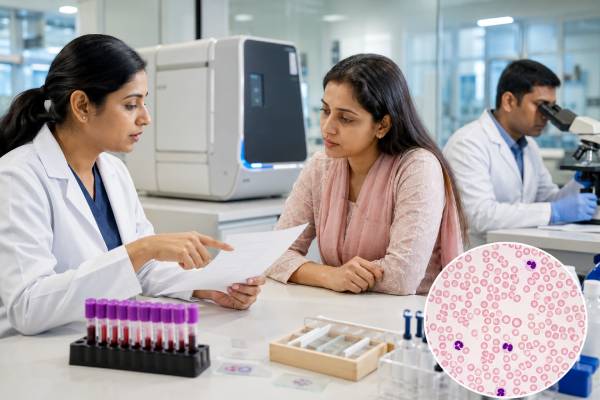
A blood smear can add visual evidence. It may show small pale red cells, large oval red cells, fragmented cells, sickle cells, target cells, spherocytes, or immature cells. These findings can narrow the cause and sometimes change the urgency of follow-up. More detail is available in peripheral blood smear interpretation.
Follow-Up Tests After Low Hgb
Follow-up testing depends on how low the hemoglobin is, whether symptoms are present, and what the CBC pattern suggests. Mild stable anemia can often be evaluated step by step. Severe anemia, rapid drops, active bleeding, or concerning symptoms need faster care.
Common follow-up tests include:
- Repeat CBC: Confirms the result and checks whether hemoglobin is stable, rising, or falling.
- Ferritin: Estimates iron stores. Low ferritin strongly supports iron deficiency.
- Iron panel: Usually includes serum iron, transferrin or TIBC, and transferrin saturation.
- Reticulocyte count: Shows whether the marrow is responding.
- Vitamin B12 and folate: Checks for nutrient causes of macrocytic anemia.
- Methylmalonic acid: Helps clarify possible B12 deficiency when B12 is borderline.
- Creatinine and eGFR: Checks kidney function.
- CRP or ESR: Looks for inflammation when anemia of inflammation is possible.
- Bilirubin, LDH, and haptoglobin: Helps assess hemolysis.
- TSH: Checks for hypothyroidism when macrocytosis or fatigue is present.
- Liver tests: Useful when MCV is high or liver disease is possible.
- Stool blood testing or endoscopy referral: Considered when gastrointestinal bleeding is suspected.
- Blood smear: Adds cell-shape information not fully captured by automated CBC numbers.
Iron testing deserves careful interpretation. Serum iron can change during the day and with recent iron intake. Ferritin can rise during inflammation, liver disease, infection, and some chronic conditions. Transferrin saturation can help show how much circulating iron is available. An iron panel is often more informative than serum iron alone.
The history often guides the most useful tests. A clinician may ask about menstrual bleeding, pregnancy, diet, blood donation, recent surgery, black stool, abdominal pain, acid-reducing medicines, anti-inflammatory pain medicines, anticoagulants, family history of anemia, alcohol intake, kidney disease, autoimmune disease, and previous CBC results.
Trends are powerful. A hemoglobin of 11.2 g/dL that has been stable for several years and fully evaluated is different from a new drop from 14.0 to 11.2 g/dL over two months. When possible, compare current results with older labs.
Treatment and Recovery
Treatment should match the cause of the low hemoglobin. Anemia is a result, not the root problem. Correcting the number without finding the reason can lead to incomplete care.
For iron deficiency anemia, treatment often includes iron replacement and a search for the source of iron loss. Oral iron may be used when tolerated and when absorption is expected to be adequate. Some people need IV iron, especially if oral iron fails, side effects are severe, absorption is poor, ongoing losses are high, or faster repletion is needed under medical supervision.
Hemoglobin often begins to rise within a few weeks of effective iron therapy, but iron stores take longer to rebuild. Many people need iron for several months after hemoglobin normalizes, depending on the clinician’s plan and the cause of deficiency. Stopping too early can allow anemia to return.
For B12 deficiency, treatment may involve oral B12 or injections, depending on severity, symptoms, absorption, and the cause. Neurologic symptoms need prompt attention because delayed treatment can lead to lasting nerve problems. Folate deficiency is treated with folic acid, but B12 status should be considered because folate can improve anemia while allowing B12-related nerve injury to progress.
For kidney-related anemia, treatment may include iron optimization and, in selected cases, erythropoiesis-stimulating medicines. These decisions depend on kidney function, hemoglobin level, iron status, symptoms, and cardiovascular risk.
For anemia of inflammation, the underlying inflammatory condition needs attention. Iron may or may not help, depending on whether true iron deficiency is also present. This is one reason ferritin, transferrin saturation, and inflammation markers are often interpreted together.
For hemolysis, treatment depends on the trigger. Autoimmune hemolysis, inherited conditions, medication reactions, infections, and mechanical red cell damage are handled differently. Some forms require urgent specialist care.
For blood loss, stopping the bleeding source is essential. Iron can refill stores, but it will not solve ongoing gastrointestinal bleeding, uncontrolled heavy menstrual bleeding, or repeated blood loss.
Blood transfusion may be considered for severe anemia, active bleeding, symptoms, or higher-risk medical situations. The decision is not based on hemoglobin alone. Symptoms, heart disease, bleeding speed, blood pressure, oxygen levels, and overall risk matter.
Recovery should be monitored. A rising hemoglobin suggests the treatment is working, but it does not prove the cause was fully addressed. A poor response may mean the diagnosis is incomplete, the dose is not adequate, absorption is poor, blood loss continues, inflammation blocks iron use, or another condition is present.
Common Mistakes and Practical Questions
Mistake: assuming low Hgb always means low iron
Iron deficiency is common, but not every low hemoglobin result is iron deficiency. B12 deficiency, folate deficiency, kidney disease, inflammation, hemolysis, thalassemia, chronic bleeding, and marrow disorders can also lower Hgb. Iron is helpful when iron deficiency is present; it is not a universal anemia treatment.
Mistake: treating the lab number without asking why it fell
A low hemoglobin result should lead to the cause. In a menstruating person with heavy bleeding and low ferritin, the cause may be clear. In an adult man or postmenopausal woman with iron deficiency anemia, gastrointestinal blood loss often needs consideration. In someone with kidney disease, inflammation, or multiple abnormal blood cell lines, a different path may be needed.
Mistake: ignoring mild anemia
Mild anemia can still matter. It may be the earliest sign of iron deficiency, B12 deficiency, chronic disease, occult bleeding, kidney problems, or medication effects. Mild does not always mean harmless, especially if it is new or worsening.
Mistake: relying only on serum iron
Serum iron can fluctuate and may not reflect iron stores. Ferritin, transferrin saturation, TIBC or transferrin, CBC indices, and inflammation context usually give a clearer picture.
Can dehydration cause low hemoglobin?
Dehydration usually concentrates the blood and may make hemoglobin look higher, not lower. Overhydration or IV fluids can dilute the blood and make hemoglobin appear lower. True low Hgb still needs interpretation with the clinical situation.
Can low hemoglobin cause hair loss?
Low hemoglobin itself may contribute to fatigue and poor exercise tolerance, but hair shedding is more often linked with iron deficiency, thyroid disease, illness, stress, postpartum changes, medications, or nutrition issues. Low ferritin can occur before hemoglobin becomes low.
Can low Hgb be normal for someone?
Some people have long-standing lower values due to inherited traits or stable medical conditions, but a low value should not be assumed normal without evaluation. Previous results help. A stable lifelong pattern is different from a new decline.
How fast can hemoglobin improve?
With effective treatment and no ongoing blood loss, hemoglobin may rise noticeably within a few weeks. Full correction often takes longer, and rebuilding iron stores can take months. B12 or folate deficiency can show a marrow response sooner, but symptoms may recover at different speeds.
When should a specialist be involved?
A hematologist may be needed when anemia is severe, unexplained, recurrent, associated with abnormal white cells or platelets, linked with suspected hemolysis, inherited blood disorders, abnormal smear findings, or poor response to standard treatment. Gastroenterology, gynecology, nephrology, or other specialties may be more appropriate when the cause points to bleeding, kidney disease, pregnancy-related anemia, or chronic inflammatory disease.
References
- Guideline on haemoglobin cutoffs to define anaemia in individuals and populations 2024 (Guideline)
- Evaluation of Anemia 2024 (Review)
- Recommendations for diagnosis, treatment, and prevention of iron deficiency and iron deficiency anemia 2024 (Review)
- Diagnosis and management of iron deficiency in females 2025 (Review)
- Iron Deficiency Anemia: Evaluation and Management 2025 (Review)
- UK kidney association clinical practice guideline: update of anaemia of chronic kidney disease 2025 (Guideline)
Disclaimer
Low hemoglobin can have many causes, and the right response depends on the full CBC, symptoms, medical history, and follow-up testing. This article is for general education and should not replace medical care, urgent evaluation, or personalized advice from a qualified clinician. Seek prompt care for severe symptoms, active bleeding, chest pain, fainting, or shortness of breath at rest.