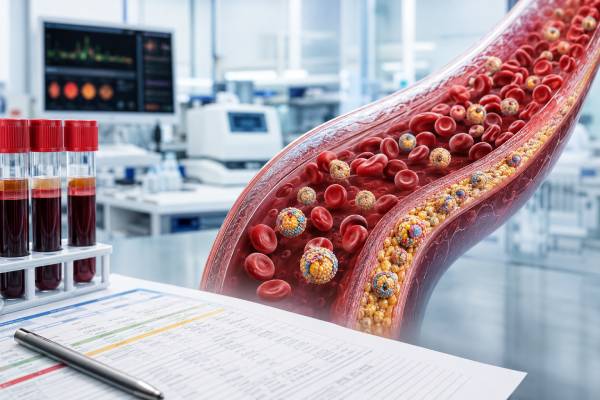
Remnant cholesterol and triglycerides help explain why some people still have cardiovascular risk even when LDL cholesterol looks acceptable. Triglycerides show how much fat is being carried through the bloodstream, while remnant cholesterol estimates the cholesterol inside triglyceride-rich particles left over after the body processes dietary fat and liver-made VLDL particles. These remnants can enter artery walls, promote inflammation, and add to plaque formation. They are especially common with insulin resistance, type 2 diabetes, abdominal weight gain, fatty liver, high alcohol intake, and diets high in refined carbohydrates. A high result should not be read in isolation. It should be interpreted with LDL cholesterol, non-HDL cholesterol, ApoB, HDL cholesterol, glucose markers, blood pressure, smoking status, kidney function, and personal or family history of early heart disease.
- Remnant cholesterol is usually calculated as total cholesterol minus LDL cholesterol minus HDL cholesterol.
- A remnant cholesterol level below about 20 mg/dL is often considered favorable, but there is no universal clinical cutoff.
- Fasting triglycerides below 150 mg/dL are usually considered normal; below 100 mg/dL is often a healthier metabolic pattern.
- Nonfasting triglycerides of 175 mg/dL or higher can signal triglyceride-rich particle excess.
- Triglycerides of 500 mg/dL or higher need prompt medical follow-up because pancreatitis risk begins to rise.
- High remnants often point toward insulin resistance, excess alcohol, hypothyroidism, kidney disease, fatty liver, or medication effects.
Table of Contents
- What Remnant Cholesterol and Triglycerides Measure
- How to Calculate and Read Results
- Why Remnants Add to Heart Risk
- Patterns That Make Results More Concerning
- Common Causes of High Remnants and Triglycerides
- What to Do After High Results
- Follow-Up and Urgent Levels
What Remnant Cholesterol and Triglycerides Measure
Remnant cholesterol is the cholesterol carried inside partially processed triglyceride-rich lipoproteins. These particles include VLDL remnants, IDL particles, and chylomicron remnants after meals. They are called “remnants” because they are left after larger triglyceride-rich particles have had some of their triglyceride content removed by enzymes in the bloodstream.
Triglycerides and remnant cholesterol are closely related, but they are not identical. Triglycerides measure the fat cargo in circulating lipoproteins. Remnant cholesterol estimates the cholesterol cargo inside those same triglyceride-rich particles. The cholesterol content is important because cholesterol can accumulate in artery walls and contribute to atherosclerotic plaque.
A standard lipid panel usually reports total cholesterol, LDL cholesterol, HDL cholesterol, and triglycerides. Remnant cholesterol may not appear as a separate line, but it can often be calculated from those numbers. Some advanced labs may report remnant-like particle cholesterol, IDL cholesterol, VLDL cholesterol, or lipoprotein fractions, but the simple calculated value is often enough to notice a pattern.
Remnant cholesterol is most useful when it explains a mismatch. A person may have LDL cholesterol near target but still have high triglycerides, low HDL cholesterol, high non-HDL cholesterol, high ApoB, or a strong metabolic risk pattern. In that situation, the remaining risk may come partly from cholesterol-rich remnants and other ApoB-containing particles.
The main particles involved are:
- Chylomicron remnants: particles formed after the body digests dietary fat.
- VLDL remnants: particles formed after the liver releases VLDL and some triglyceride is removed.
- IDL particles: intermediate particles between VLDL and LDL.
- Other triglyceride-rich remnants: mixed particles that appear more often after meals and in insulin resistance.
LDL cholesterol remains a central treatment target because LDL particles are a proven cause of atherosclerotic cardiovascular disease. Remnant cholesterol does not replace LDL cholesterol. It adds another layer when triglyceride-rich particles are elevated, especially when standard LDL cholesterol does not fully describe risk.
This is why remnant cholesterol often fits best beside ApoB testing. ApoB counts the number of atherogenic particles, because each LDL, VLDL, IDL, and remnant particle carries one ApoB protein. Remnant cholesterol estimates the cholesterol mass inside a subset of those particles. Together, they can show whether risk is driven mainly by LDL particles, triglyceride-rich remnants, or both.
How to Calculate and Read Results
Calculated remnant cholesterol uses the same units as the lipid panel:
Remnant cholesterol = total cholesterol − LDL cholesterol − HDL cholesterol
For example, if total cholesterol is 190 mg/dL, LDL cholesterol is 95 mg/dL, and HDL cholesterol is 42 mg/dL:
190 − 95 − 42 = 53 mg/dL
That result suggests a high amount of cholesterol is being carried outside LDL and HDL, mostly in triglyceride-rich remnant particles. If triglycerides are also high, the pattern becomes more convincing.
The calculation is simple, but it has limits. It depends on the accuracy of the LDL cholesterol value. If LDL cholesterol is calculated rather than directly measured, remnant cholesterol inherits some of the calculation error. This matters most when triglycerides are high, LDL cholesterol is very low, or the sample was taken soon after a very fatty meal.
A direct remnant cholesterol assay or a remnant-like particle cholesterol test may be used in some specialty settings, but these tests are not as standardized or widely used as the routine lipid panel. For most people, calculated remnant cholesterol is a screening clue, not a stand-alone diagnosis.
| Marker | Common range | Usual interpretation |
|---|---|---|
| Fasting triglycerides below 100 mg/dL | Below 1.13 mmol/L | Often reflects a favorable metabolic pattern, especially with normal glucose, waist size, and HDL cholesterol. |
| Fasting triglycerides below 150 mg/dL | Below 1.70 mmol/L | Usually considered within the standard reference range. |
| Fasting triglycerides 150–199 mg/dL | 1.70–2.25 mmol/L | Borderline high; often linked with insulin resistance, weight gain, alcohol, refined carbohydrates, or medication effects. |
| Triglycerides 200–499 mg/dL | 2.26–5.63 mmol/L | High; cardiovascular risk assessment and secondary-cause review are usually needed. |
| Triglycerides 500 mg/dL or higher | 5.65 mmol/L or higher | Severe elevation; pancreatitis prevention becomes a major concern. |
| Remnant cholesterol below about 20 mg/dL | Below about 0.52 mmol/L | Often considered favorable, although official cutoffs vary. |
| Remnant cholesterol around 30 mg/dL or higher | Around 0.78 mmol/L or higher | Often suggests excess cholesterol in triglyceride-rich particles. |
| Remnant cholesterol around 39 mg/dL or higher | Around 1.0 mmol/L or higher | Used in several research studies as a clearly elevated category. |
Triglycerides can be measured fasting or nonfasting. Nonfasting testing reflects everyday metabolism because most people spend much of the day after meals. A nonfasting triglyceride result below about 175 mg/dL is generally less concerning than a higher result, but interpretation depends on the meal, the timing, and the full risk profile.
Fasting testing is often preferred when triglycerides are very high, when metabolic syndrome is being assessed, when treatment decisions depend on the exact value, or when a previous nonfasting result was abnormal. A repeat fasting lipid panel is usually reasonable if triglycerides are unexpectedly high.
A useful way to read results is to compare several related markers rather than focusing on one number. Remnant cholesterol, triglycerides, non-HDL cholesterol, and ApoB each answer a different question:
- Triglycerides: How much triglyceride-rich fat is circulating?
- Remnant cholesterol: How much cholesterol is likely inside remnant particles?
- Non-HDL cholesterol: How much cholesterol is carried in all non-HDL, potentially atherogenic particles?
- ApoB: How many atherogenic particles are present?
A person with high triglycerides but normal ApoB may have a different risk pattern from someone with high triglycerides, high remnant cholesterol, high non-HDL cholesterol, and high ApoB. The second pattern suggests more atherogenic particle burden and usually deserves closer attention.
Why Remnants Add to Heart Risk
Remnant particles can contribute to heart risk because they carry cholesterol into artery walls. LDL particles are smaller and numerous, but remnant particles may carry more cholesterol per particle. When the body does not clear them efficiently, they stay in circulation longer and have more opportunity to enter the arterial lining.
Once inside the artery wall, remnant particles can help trigger several processes involved in plaque formation. They can promote cholesterol buildup in immune cells, encourage inflammation, worsen endothelial function, and interact with clotting pathways. Over many years, this can add to atherosclerosis, especially when other risks are also present.
This is one reason high triglycerides are no longer viewed as only a “fat in the blood” issue. In many people, high triglycerides are a sign of an overproduction and delayed clearance of triglyceride-rich lipoproteins. The cholesterol inside those particles may be the more direct artery-related concern.
The risk is often described as residual risk. This means risk that remains after LDL cholesterol has improved, usually through diet, weight loss, statins, or other LDL-lowering therapy. A person may see LDL cholesterol fall to an acceptable level while triglycerides, remnant cholesterol, ApoB, blood sugar, blood pressure, or inflammation remain abnormal.
Residual risk is especially common in metabolic syndrome, type 2 diabetes, chronic kidney disease, and established coronary artery disease. In these settings, LDL cholesterol may not tell the whole story. The pattern of high triglycerides, low HDL cholesterol, elevated waist circumference, high fasting glucose, and high blood pressure often points to a broader metabolic problem.
For a broader cholesterol comparison, non-HDL cholesterol and LDL cholesterol can be useful together. Non-HDL cholesterol includes LDL, VLDL, IDL, remnants, and lipoprotein(a). When triglycerides and remnants are high, non-HDL cholesterol may capture risk that LDL cholesterol alone misses.
Remnant risk also overlaps with small dense LDL. High triglycerides often shift LDL particles toward a smaller, denser pattern. This does not mean every person with high triglycerides has dangerous LDL particles, but it does signal a lipid environment commonly seen with insulin resistance. In that setting, LDL cholesterol concentration can look modest while ApoB or LDL particle number is higher than expected.
Another useful pattern is the triglyceride-to-HDL ratio. A high ratio often suggests insulin resistance and triglyceride-rich lipoprotein excess, although it should not be used as a stand-alone diagnosis. The triglyceride/HDL ratio is best used as a clue that glucose, waist size, liver health, activity level, and overall lipid particle burden need closer review.
Patterns That Make Results More Concerning
High remnant cholesterol deserves more attention when it appears with other risk markers. A mildly high remnant value in an otherwise low-risk person does not carry the same meaning as the same value in someone with diabetes, prior heart attack, chronic kidney disease, or a strong family history of early coronary disease.
A concerning pattern often looks like this:
- Triglycerides above 150 mg/dL fasting or 175 mg/dL nonfasting
- Remnant cholesterol around 30 mg/dL or higher
- HDL cholesterol below 40 mg/dL in men or below 50 mg/dL in women
- Non-HDL cholesterol above the person’s risk-based target
- ApoB above the person’s risk-based target
- Fasting glucose, insulin, or HbA1c in the insulin-resistant or diabetic range
- Waist circumference increasing over time
- Blood pressure trending high
This cluster suggests that the liver is making more VLDL, the body is clearing triglyceride-rich particles more slowly, or both. The problem is less about one bad food or one lab result and more about the body’s energy storage and transport system being overloaded.
Remnant cholesterol is also more concerning when LDL cholesterol appears “fine” but non-HDL cholesterol or ApoB remains high. For example, LDL cholesterol of 85 mg/dL may look acceptable in many situations. But if HDL cholesterol is 35 mg/dL, triglycerides are 260 mg/dL, non-HDL cholesterol is 145 mg/dL, and remnant cholesterol is 60 mg/dL, the lipid pattern is not low risk. It suggests a large amount of cholesterol is traveling in particles other than LDL.
The result also matters more in people who already have atherosclerotic cardiovascular disease. After a heart attack, stent, bypass surgery, stroke from atherosclerosis, or peripheral artery disease, lipid interpretation becomes stricter. LDL cholesterol reduction remains central, but persistent triglyceride-rich particle excess may influence medication choices and follow-up intensity.
Younger adults should not ignore high remnants either. A 30-year-old with high triglycerides, abdominal weight gain, elevated blood pressure, and a family history of early heart disease may not have a high 10-year risk score, but lifelong exposure can still matter. Long-term risk often builds quietly before symptoms appear.
Results are less concerning when triglycerides are temporarily high after a large meal, alcohol intake, acute illness, poor sleep, or a short period of uncontrolled eating. In those cases, a repeat fasting test after 2–12 weeks of usual habits may give a clearer picture. A single abnormal result should prompt review, not panic.
Common Causes of High Remnants and Triglycerides
High triglycerides and remnant cholesterol usually come from a mix of genetics, liver metabolism, insulin sensitivity, diet, alcohol, medications, and other medical conditions. The same number can have different causes in different people.
Insulin resistance is one of the most common drivers. When muscle and liver cells respond poorly to insulin, the liver often releases more VLDL particles. At the same time, clearance of triglyceride-rich particles can slow down. This combination raises triglycerides and remnants, often before diabetes is diagnosed.
This is why the result should be read alongside glucose markers. Fasting glucose, HbA1c, fasting insulin, and sometimes a HOMA-IR calculation can help show whether the lipid pattern is part of a broader insulin-resistance picture. A metabolic syndrome blood test panel can also help connect triglycerides with glucose, insulin, HDL cholesterol, blood pressure, and waist-related risk.
Diet can raise triglyceride-rich particles, especially when calorie intake exceeds what the body can use. Common contributors include frequent sugar-sweetened drinks, desserts, white bread, refined grains, large portions of rice or pasta, ultra-processed snacks, and heavy evening eating. Saturated fat tends to raise LDL cholesterol more strongly, while refined carbohydrate and alcohol often raise triglycerides more strongly.
Alcohol deserves separate attention. Even moderate alcohol can raise triglycerides in susceptible people, and heavy intake can cause very high triglycerides. Alcohol also increases pancreatitis risk when triglycerides are already elevated. For someone with triglycerides above 500 mg/dL, stopping alcohol is often one of the first safety steps.
Medical conditions that can raise triglycerides and remnants include:
- Type 2 diabetes or prediabetes
- Hypothyroidism
- Chronic kidney disease or nephrotic syndrome
- Fatty liver disease
- Pregnancy
- Polycystic ovary syndrome
- Autoimmune or inflammatory illness
- Genetic lipid disorders
Medication effects are also common. Drugs that can raise triglycerides in some people include oral estrogen, some beta blockers, thiazide diuretics, corticosteroids, retinoids, some antipsychotics, some HIV medications, bile acid sequestrants, and certain immunosuppressants. Never stop a prescribed medicine without medical guidance, but ask whether alternatives exist if triglycerides rise after a medication change.
Genetics can play a large role. Some people make or clear triglyceride-rich particles differently even with a healthy lifestyle. A family history of very high triglycerides, pancreatitis, early heart disease, or mixed cholesterol abnormalities makes genetic contribution more likely.
What to Do After High Results
A high remnant cholesterol or triglyceride result should lead to a structured review. The first step is to confirm the result and place it in context. Was the test fasting? Was there alcohol in the previous 24–72 hours? Was there a recent illness, steroid course, major diet change, weight gain, or new medication? Were glucose and thyroid markers checked?
For mild to moderate elevations, lifestyle changes can produce meaningful improvement within weeks to months. Weight loss of 5–10% can lower triglycerides substantially in many people with abdominal weight gain. The strongest dietary changes are usually reducing added sugar, limiting refined starches, avoiding or sharply reducing alcohol, increasing fiber-rich foods, and replacing ultra-processed meals with simpler meals built around protein, vegetables, legumes, nuts, olive oil, fish, and whole-food carbohydrates in portions that match activity level.
Exercise helps because active muscle clears triglyceride-rich particles more efficiently. A practical target is at least 150 minutes per week of moderate aerobic activity, plus two sessions of resistance training. Walking after meals can be especially useful for people with high glucose or insulin resistance.
Medication decisions depend on overall risk, not remnant cholesterol alone. Statins remain the foundation for many people at elevated cardiovascular risk because they reduce ApoB-containing particles and cardiovascular events. Ezetimibe, PCSK9 inhibitors, bempedoic acid, and other LDL-lowering therapies may be used when LDL cholesterol or ApoB remains above the target for the person’s risk category.
For triglycerides, the approach changes by level. Mild to moderate elevations usually call for risk-based LDL and ApoB management, lifestyle therapy, and treatment of secondary causes. In selected higher-risk adults already taking statins, prescription icosapent ethyl may be considered when triglycerides remain elevated in the appropriate range. Fibrates or prescription omega-3 fatty acids may be used when triglycerides are very high, especially to reduce pancreatitis risk.
Over-the-counter fish oil should not be treated as the same thing as prescription therapy. Supplements vary in dose, purity, EPA/DHA content, oxidation, and labeling accuracy. Some mixtures can lower triglycerides but may also affect LDL cholesterol differently. People taking blood thinners, preparing for surgery, or managing atrial fibrillation risk should discuss omega-3 use with a clinician.
A practical follow-up plan often includes:
- Repeat a fasting lipid panel if the first result was unexpected or nonfasting and high.
- Calculate remnant cholesterol and non-HDL cholesterol from the same sample.
- Check ApoB if risk appears higher than LDL cholesterol suggests.
- Screen for glucose problems with fasting glucose and HbA1c.
- Review TSH, kidney function, liver enzymes, medications, alcohol, and diet.
- Treat LDL cholesterol and ApoB according to cardiovascular risk.
- Recheck lipids after 4–12 weeks if medication or major lifestyle changes are made.
For triglyceride-specific interpretation, triglyceride reference ranges can help separate favorable, borderline, high, and severe patterns. When triglycerides are clearly elevated, a focused review of high triglyceride causes is often more useful than repeating the same test without changing the plan.
Follow-Up and Urgent Levels
Follow-up depends on how high the result is and what else is happening clinically. A remnant cholesterol value around 30 mg/dL with triglycerides around 180 mg/dL may call for lifestyle changes, insulin-resistance screening, and repeat testing. Triglycerides above 500 mg/dL require faster action because pancreatitis becomes a concern. Triglycerides near or above 1000 mg/dL require urgent medical management, especially if symptoms are present.
Seek urgent medical care for severe upper abdominal pain, pain spreading to the back, persistent vomiting, fever, faintness, or a very ill feeling when triglycerides are known to be very high. These symptoms can occur with pancreatitis, which can become serious quickly.
People with diabetes should take high triglycerides seriously because poor glucose control can drive triglycerides sharply upward. Improving blood sugar can lower triglycerides dramatically in some cases. Very high triglycerides with uncontrolled diabetes, heavy alcohol intake, or recent medication changes should be addressed promptly.
For people with established cardiovascular disease, follow-up should be more intensive. The aim is usually to reduce the total burden of ApoB-containing particles, control blood pressure, improve glucose, stop smoking, and address inflammation and weight-related drivers. Remnant cholesterol can be one useful marker in that process, but it should not distract from proven risk-reduction steps.
A reasonable monitoring rhythm after a treatment change is 4–12 weeks, depending on severity and medication changes. Once results are stable, monitoring may be spaced out. People with severe hypertriglyceridemia, medication changes, diabetes, kidney disease, or recent cardiovascular events may need closer follow-up.
The most useful interpretation is trend-based. A remnant cholesterol value falling from 55 to 28 mg/dL, triglycerides falling from 280 to 135 mg/dL, HDL rising, ApoB improving, and HbA1c dropping all point in the right direction. A single “normal” LDL cholesterol result does not erase risk when the broader metabolic pattern remains abnormal.
References
- 2025 Focused Update of the 2019 ESC/EAS Guidelines for the management of dyslipidaemias 2025 (Guideline)
- ACC Consensus on ASCVD Risk Reduction in Hypertriglyceridemia: Key Points 2021 (Guideline Summary)
- Triglyceride-rich lipoproteins and their remnants: metabolic insights, role in atherosclerotic cardiovascular disease, and emerging therapeutic strategies—a consensus statement from the European Atherosclerosis Society 2021 (Consensus Statement)
- Triglyceride-rich lipoproteins, remnant-cholesterol, and atherosclerotic cardiovascular disease 2023 (Review)
- Elevated blood remnant cholesterol and triglycerides are causally related to the risks of cardiometabolic multimorbidity 2024 (Cohort and Mendelian Randomization Study)
- Remnant cholesterol, plasma triglycerides, and risk of cardiovascular disease events in young adults: a prospective cohort study 2025 (Cohort Study)
Disclaimer
Remnant cholesterol and triglyceride results should be interpreted with your full medical history, medications, fasting status, and other cardiovascular risk markers. Very high triglycerides can increase pancreatitis risk and may need prompt medical treatment. Do not start, stop, or change lipid-lowering medication or supplements without guidance from a qualified healthcare professional.