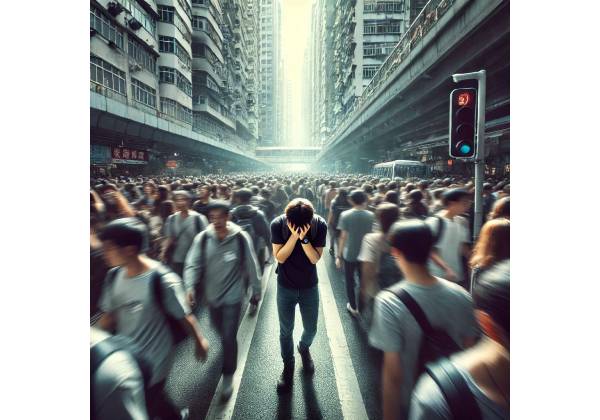
Crowds are a normal part of modern life. They gather at stations, markets, festivals, schools, stadiums, and shopping centers. For someone with enochlophobia, though, a crowd can feel less like a busy scene and more like a trap. The body tightens, the mind begins scanning for danger, and the urge to escape can become overwhelming. This is not ordinary discomfort or simple introversion. It is a persistent fear of crowds that can narrow daily life, disrupt work and travel, and make ordinary errands feel exhausting. The term is often used casually, but the experience itself can be serious and deeply limiting. It may overlap with specific phobia, agoraphobia, or social anxiety, depending on what exactly the person fears in crowded places. Understanding that difference is one of the keys to effective treatment. With the right support, crowd-related fear can become far more manageable.
Table of Contents
- What Enochlophobia Means
- Signs and Symptoms
- Causes and Risk Factors
- Diagnosis and Related Conditions
- Daily Life and Complications
- Treatment Options
- Management and When to Seek Help
What Enochlophobia Means
Enochlophobia is a commonly used term for an intense fear of crowds. It is also sometimes called fear of crowds or crowd phobia. Although the word is widely recognized in public-facing mental health writing, it is not usually treated as a separate stand-alone diagnosis in formal psychiatric manuals. In clinical practice, the experience is often understood through broader diagnostic categories, especially specific phobia, agoraphobia, or sometimes social anxiety disorder, depending on the exact nature of the fear.
That distinction matters because not all crowd fear means the same thing. One person may fear the crowd itself: the density, noise, movement, loss of personal space, or feeling physically boxed in. Another may fear not being able to escape or get help if panic starts, which can fit more closely with agoraphobia. Someone else may mainly fear being watched, judged, embarrassed, or trapped in social scrutiny, which may point toward social anxiety. The same crowded train platform could trigger three very different fear patterns.
Enochlophobia also differs from ordinary dislike of crowded places. Many people prefer quieter spaces, avoid long lines, or become irritated by noise and congestion. That is not the same as a phobic reaction. The problem becomes more clinically important when the fear is persistent, clearly out of proportion to realistic danger, and strong enough to change behavior in significant ways. A person may skip events, avoid public transport, refuse busy shops, decline travel, or leave places abruptly to reduce the rising sense of threat.
A helpful clinical question is: What exactly feels unsafe in the crowd? Some common answers include:
- being trapped
- being unable to get out quickly
- being knocked over or harmed
- panicking in front of other people
- losing control of one’s body or emotions
- being unable to find a familiar person or a safe exit
Enochlophobia can therefore be understood less as one fixed diagnosis and more as a crowd-related fear pattern that deserves careful evaluation. That evaluation is important because treatment depends on what drives the fear. If the problem is escape, the plan may look different from a case in which the problem is social judgment or sensory overload. Once the feared outcome is clear, care becomes more precise and often more effective.
Signs and Symptoms
The symptoms of enochlophobia often begin before a person even enters a crowded place. The fear may build during planning, commuting, or waiting in line. Some people feel a sharp burst of panic as soon as they see a dense crowd. Others experience mounting dread hours in advance. In both cases, the central feature is the same: a crowded setting or the expectation of one triggers a strong anxiety response that feels difficult to control.
Physical symptoms often resemble those of panic and can include:
- a racing heart
- sweating
- trembling
- dizziness
- nausea
- shortness of breath
- chest tightness
- tingling
- feeling hot or faint
These sensations can be frightening on their own. Once they begin, the person may interpret them as proof that something terrible is about to happen. That interpretation can intensify the panic and make escape feel urgent.
Emotional and cognitive symptoms may include:
- a sense of impending danger
- fear of being trapped
- fear of fainting, collapsing, or losing control
- intense irritation when personal space is invaded
- racing thoughts about exits, safety, or worst-case scenarios
- dread before concerts, malls, buses, queues, airports, or public events
Behavioral symptoms are often what others notice first. A person may:
- avoid crowded shops by going out at unusual hours
- refuse public transportation during peak times
- leave events early
- stay close to doors or walls
- insist on going only with a trusted companion
- repeatedly check routes and exits
- cancel plans that involve festivals, sports venues, or busy city areas
Children and teenagers may show the fear differently. They may cling to caregivers, become irritable, refuse outings, cry in busy places, or develop stomachaches before trips to school events or shopping centers. Adults may mask the problem with practical excuses, such as saying a place is too noisy or not worth the trouble, even when the deeper issue is fear.
Over time, symptoms can widen beyond obviously crowded places. Some people begin reacting to the possibility of a crowd rather than the crowd itself. A train station at rush hour, a cinema lobby, a school assembly, or a queue outside a building may all feel threatening because they signal reduced control. When that happens, daily life becomes more tightly organized around avoidance, and the fear pattern becomes harder to ignore.
Causes and Risk Factors
Enochlophobia rarely comes from a single cause. It usually develops through a combination of past experience, temperament, learned fear, bodily sensitivity, and personal meaning attached to crowded places. For some people, the starting point is obvious. They can identify a specific event that changed how they feel in crowds. For others, the fear seems to build slowly over time until busy spaces no longer feel manageable.
Several experiences can contribute to the condition:
- getting lost in a crowd as a child
- being knocked, crushed, shoved, or unable to move freely
- experiencing a panic attack in public
- witnessing violence, chaos, or a frightening emergency in a crowded place
- having a medical episode in public and fearing it will happen again
- repeated exposure to alarming stories about crowd danger
Learning plays a large role. If a person has one deeply distressing experience in a crowd, the brain may begin treating similar environments as danger signals. The fear response can then spread. A packed stadium may first trigger anxiety, then a full bus, then a supermarket line, and eventually any situation where leaving quickly seems difficult.
Temperament matters too. People who are already prone to anxiety, panic, sensory overload, or strong awareness of bodily sensations may be more vulnerable. A fast heartbeat, dizziness, or shortness of breath in a crowd can be misread as evidence of danger rather than as a stress response. That misinterpretation can fuel a powerful cycle in which bodily sensations increase fear, and fear increases bodily sensations.
Loss of control is another major factor. Crowds reduce personal space, limit movement, and create uncertainty. For some people, that is merely unpleasant. For others, it touches a deeper fear of being unable to escape, protect themselves, or remain composed. That is one reason crowd fear can be especially intense in:
- trains and buses
- standing-room concerts
- festivals
- elevators with many people
- stadium entrances
- religious gatherings
- protests or parades
- busy airports and terminals
Risk can also increase when crowd fear overlaps with another condition. Someone with panic disorder may fear crowds because panic feels harder to manage there. Someone with trauma may react strongly to compression, noise, and proximity. Someone with social anxiety may fear crowds because they expect scrutiny or humiliation.
Importantly, real-world caution and phobic fear are not the same. Certain crowd situations can genuinely be unsafe, especially when exits are poor, movement is uncontrolled, or there is a real threat. Enochlophobia becomes more clinically relevant when the fear persists outside those unusual circumstances and begins to dominate settings that are realistically manageable. The key question is not whether crowds can ever be risky. It is whether the person’s fear system now treats many ordinary crowded situations as if they were emergencies.
Diagnosis and Related Conditions
There is no laboratory test for enochlophobia. Diagnosis begins with careful questioning about what triggers the fear, what the person expects will happen, how long the pattern has lasted, and how much it disrupts normal life. The most important part of assessment is not simply confirming that crowds feel stressful. It is identifying why they feel threatening.
That is because crowd-related fear can fall into different diagnostic patterns. A clinician may consider:
- Specific phobia, when the crowd itself is the feared situation and the fear is intense, persistent, and disproportionate.
- Agoraphobia, when the main fear is being unable to escape, obtain help, or manage panic-like symptoms in certain public situations.
- Social anxiety disorder, when the main fear is embarrassment, scrutiny, or humiliation in front of others.
- Trauma-related responses, when crowded settings trigger memories, vigilance, or body-based reactions linked to a past traumatic event.
These distinctions are practical, not merely academic. They shape treatment. Someone who fears being judged in a crowd may need a different therapeutic emphasis than someone who fears being physically trapped. In some people, more than one pattern is present at the same time.
A thorough assessment often includes:
- the exact situations that trigger anxiety
- the feared outcome in those situations
- physical symptoms such as panic, dizziness, or faintness
- avoidance patterns and safety behaviors
- how work, school, travel, and relationships have changed
- any history of trauma, panic attacks, depression, or substance use
- sensory sensitivities that may worsen crowded settings
Standardized interviews and anxiety measures can help clarify severity and track progress over time. They do not replace clinical judgment, but they can make the picture more structured and easier to monitor.
It is also important to rule out practical issues that can mimic or complicate crowd fear. Vestibular problems, cardiac symptoms, migraines, neurodevelopmental differences, and medication effects can all influence how a person feels in busy spaces. The diagnosis should not assume that every episode of dizziness or distress is “just anxiety.”
Many people wait a long time before seeking assessment because they think crowd fear is merely a personality trait. They may describe themselves as antisocial, private, or easily overstimulated, when the deeper issue is a fear pattern that has become limiting. Diagnosis is useful because it turns a vague struggle into something specific and treatable. Once the triggers, thoughts, and avoidance habits are clearly mapped, the person is no longer dealing with an undefined problem. They are dealing with a pattern that can be worked on.
Daily Life and Complications
Enochlophobia can affect far more than large public events. Because crowds appear in ordinary life, the fear can quietly spread into commuting, shopping, school runs, travel, medical appointments, family celebrations, and work routines. A person may begin by avoiding concerts or festivals, then move on to bus stations, malls, supermarkets, queues, elevators, and any place where movement feels restricted. What starts as selective avoidance can gradually turn into a smaller and more controlled life.
The consequences often build slowly. Many people adapt without fully noticing how much they are reorganizing daily life around fear. They take longer routes, skip peak travel times, refuse invitations, or rely heavily on others to accompany them. These strategies can feel sensible in the moment, but they often reinforce the problem by teaching the brain that the crowd was dangerous and escape was necessary.
Common effects on daily life include:
- missed social opportunities
- difficulty commuting or traveling independently
- reduced participation in work or education
- strain on partners, family, or friends who become “safe” companions
- exhaustion from constant planning and exit-checking
- shame about appearing difficult or unreliable
The emotional burden can be substantial. People with severe crowd fear often feel misunderstood because others assume they are shy, unfriendly, or overreacting. In reality, they may be fighting intense physical symptoms and a constant sense of threat. The fear can also lead to broader problems such as low mood, isolation, irritability, and loss of confidence. When someone repeatedly avoids public settings, their world can become narrower in both practical and psychological terms.
Complications may increase when crowd fear overlaps with panic, agoraphobia, or depression. A person may become increasingly dependent on home routines and familiar routes. In more severe cases, they may begin avoiding almost any setting where immediate exit is uncertain. That can make them functionally housebound, even if the original problem seemed limited to dense crowds.
Substance use can sometimes become part of the pattern as well. Some people try to blunt the anxiety with alcohol or sedatives before going out. While this may offer short-term relief, it can make confidence more fragile and complicate treatment.
A key point is that complications do not require total avoidance to be serious. Even partial avoidance can limit career choices, family activities, spontaneity, and overall quality of life. Someone may still attend work and appear high functioning while spending enormous energy managing routes, scanning exits, and avoiding common public experiences. That hidden cost matters. Crowd fear becomes a health issue not only when it stops life completely, but when it steadily shrinks freedom and functioning over time.
Treatment Options
Treatment for enochlophobia usually focuses on reducing fear, loosening avoidance, and helping the person re-enter crowded settings in a safer and more confident way. The core approach often involves cognitive behavioral therapy, especially when paired with graded exposure. This means the person does not simply talk about fear in the abstract. They learn how the fear cycle works and then practice approaching situations they have been avoiding, step by step.
Exposure is usually most effective when it is planned carefully. The idea is not to throw someone into the most overwhelming crowd possible. It is to build tolerance in a structured way. A hierarchy might begin with imagining a crowded setting, then walking near a moderately busy place, standing in a short queue, riding a bus for one stop, entering a busier store, and later managing more difficult settings such as concerts or rush-hour travel. The exact sequence depends on what the person fears most.
Treatment often includes:
- identifying catastrophic thoughts
- learning how avoidance and safety behaviors maintain fear
- gradual exposure to feared settings
- reducing repeated reassurance-seeking
- building tolerance for physical anxiety symptoms
- planning for setbacks without abandoning progress
In some cases, virtual reality exposure or image-based rehearsal can help bridge the gap when real-life exposure feels too difficult at first. These methods are not necessary for everyone, but they can be useful in structured treatment programs.
Medication is not usually the main treatment for a specific phobia on its own, but it may have a role when crowd fear is tied to broader anxiety conditions such as panic disorder or agoraphobia. In those cases, a clinician may discuss medication as one part of a wider plan. Medication is generally most helpful when it supports therapy rather than replacing it.
Treatment may also need to address related problems. If trauma is part of the picture, therapy may need a trauma-informed approach. If social judgment is the main driver, the work may focus more on social anxiety. If sensory overload is central, environmental planning and pacing may need more emphasis.
A useful clinical principle is that recovery usually depends on new learning, not only reassurance. The person has to experience, repeatedly and in manageable steps, that anxious predictions do not always come true and that distress can rise and fall without disaster. This is why short-term escape can feel helpful but often delays real progress. In treatment, the aim is not to eliminate all discomfort. It is to rebuild trust in one’s ability to function in crowded spaces without treating them as constant emergencies.
Management and When to Seek Help
Daily management works best when it supports treatment rather than replacing it. Self-help strategies can make progress easier, but severe crowd fear usually improves most when the person has structured guidance. The goal is not to force confidence. It is to create repeated, manageable experiences of coping successfully.
Helpful management strategies often include:
- choosing one exposure goal at a time
- practicing in settings that are challenging but not overwhelming
- planning exits in advance without making them the sole focus
- using calm breathing to stay in the situation rather than flee it
- traveling with a support person only when it helps progress rather than preserving dependence
- reducing “just in case” rituals that keep fear in control
- reviewing what actually happened after each exposure, not only what was feared
A practical example can help. Someone who fears crowded supermarkets might begin by visiting a smaller store at a quieter hour, staying for a short time, and leaving on purpose rather than in panic. Later, they might extend the visit, use a busier checkout, and eventually tolerate a more crowded location. Progress tends to come from repetition and consistency, not dramatic breakthroughs.
It is also helpful to distinguish sensible preparation from fear-driven safety behavior. Carrying water, knowing the route, or choosing comfortable clothing may be practical. Repeatedly canceling, demanding constant reassurance, or refusing any setting without a perfect escape plan usually strengthens the phobia over time.
Professional help is a good idea when crowd fear:
- interferes with work, school, parenting, or travel
- causes repeated avoidance of ordinary public settings
- is linked to panic attacks or near-fainting
- leads to isolation, depression, or dependence on others
- appears to be worsening rather than staying stable
- has roots in trauma or a severe past panic experience
More urgent support may be needed if the person becomes housebound, starts using alcohol or sedatives to cope, or feels hopeless about improvement. If fear is contributing to suicidal thoughts or major functional decline, prompt mental health care is important.
The outlook is often better than people expect. Crowd fear can feel deeply wired, especially when it has shaped life for years, but it is still treatable. Many people improve when the problem is understood clearly and approached systematically. Progress may begin with very small changes: staying in line a little longer, taking one train ride, or entering a crowded space without immediately leaving. Those steps matter. In phobia treatment, they are often the moments that start restoring freedom.
References
- Specific Phobia 2025.
- Agoraphobia 2025.
- Psychosocial interventions for anxiety disorders in adults: evidence mapping and guideline appraisal 2025. (Systematic Review)
- One-session treatment compared with multisession CBT in children aged 7-16 years with specific phobias: the ASPECT non-inferiority RCT 2022. (RCT)
- Clinical Considerations for an Evidence-based Assessment of Anxiety Disorders in Adults 2024. (Review)
Disclaimer
This article is for educational purposes only and is not a substitute for diagnosis, medical advice, or mental health treatment. Fear of crowds can overlap with specific phobia, agoraphobia, social anxiety, trauma-related symptoms, and physical conditions that affect balance, breathing, or stress tolerance. If crowd fear is disrupting your daily life, worsening over time, or causing major avoidance, seek help from a qualified mental health professional or physician.
If this article was useful, please share it on Facebook, X, or another platform that fits your audience.