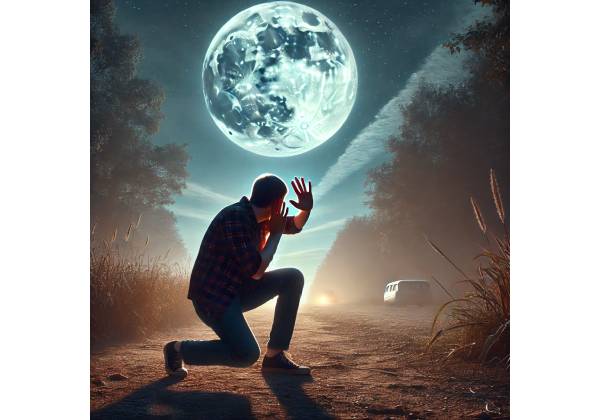
Selenophobia is an intense fear of the moon or moonlight. For some people, the fear sharpens when the moon is bright and fully visible. For others, even a glimpse of moonlight through a window or the thought of going outside at night is enough to trigger distress. Many people feel uneasy in the dark or dislike being outdoors at night. Selenophobia is different because the fear becomes persistent, hard to control, and strong enough to shape behavior in daily life.
Clinically, selenophobia is best understood as a form of specific phobia, even though the feared object is unusual. The problem is not simply superstition, dislike, or preference. It is a pattern of fear, avoidance, and physical anxiety that can disrupt sleep, social life, travel, and ordinary routines after sunset. With careful assessment and structured treatment, many people improve and regain confidence in nighttime settings.
Table of Contents
- What Selenophobia Is
- Signs and Symptoms
- Causes and Risk Factors
- How It Is Diagnosed
- Daily Impact and Complications
- Treatment and Therapy Options
- Management, Safety and Outlook
What Selenophobia Is
Selenophobia means an intense fear of the moon or moonlight. In clinical practice, it is usually understood within the broader category of specific phobia, which involves a strong and persistent fear of a particular object or situation. The fear is not simply an odd preference or a mild discomfort with night skies. It becomes clinically important when it is disproportionate to actual danger, causes marked distress, and leads to repeated avoidance.
The moon itself does not pose a direct threat in ordinary daily life, which is one reason the fear can feel confusing or embarrassing to the person experiencing it. Many people with selenophobia know, logically, that the moon is harmless. That knowledge does not prevent a fear response. The body may still react with panic, tension, nausea, or an urgent need to hide from view. This gap between logic and bodily alarm is common in specific phobias.
The fear may focus on different aspects of the moon. Some people are most distressed by the sight of a full moon. Others react more to moonlight entering a room, walking outside under a bright sky, or the symbolic meanings they attach to the moon. For a few, the fear is tied to folklore, paranormal beliefs, or childhood ideas that never fully faded. For others, the moon is simply the cue that signals exposure, darkness, vulnerability, or loss of control.
Selenophobia may appear in several patterns:
- Fear of seeing the moon directly
- Fear of moonlight in bedrooms or hallways
- Fear that symptoms will worsen during a full moon
- Fear linked to darkness or the open night sky
- Fear mixed with superstitious or catastrophic thoughts
- Fear of being outdoors at night when the moon is visible
It can also overlap with other fears. Someone with selenophobia may also have nyctophobia, which is fear of the dark, or astrophobia, which involves fear of outer space and celestial objects. In some cases, the moon is not the only problem. It is the most visible symbol of nighttime threat. That distinction matters because treatment works best when the real structure of the fear is understood.
A healthy dislike of darkness, isolation, or unfamiliar nighttime settings is not the same as selenophobia. The condition becomes more serious when the fear controls routine decisions. Once a person begins closing blinds every night, refusing evening outings, monitoring lunar phases with dread, or rearranging life around moon visibility, the fear has moved beyond simple discomfort and into a pattern that deserves attention.
Signs and Symptoms
The symptoms of selenophobia can be emotional, physical, cognitive, and behavioral. They often become more obvious at night, especially during a bright full moon, but some people feel anticipatory anxiety hours or days before expected exposure. In severe cases, even talking about the moon or seeing a picture of it can trigger distress.
Emotionally, the fear often feels like dread rather than mild nervousness. A person may feel exposed, watched, unsafe, or overwhelmed by the moon’s presence. The reaction may be accompanied by shame because the person recognizes that others do not share the fear. That shame can lead to secrecy, which often makes the phobia harder to recognize and treat.
Common emotional and mental symptoms include:
- Intense fear when seeing the moon or moonlight
- Persistent worry as a full moon approaches
- Intrusive thoughts about danger, bad luck, or loss of control
- Difficulty concentrating in the evening
- Irritability or agitation after sunset
- A sense of helplessness when blinds are open or curtains are thin
- Embarrassment about needing to hide from the sky
Physical symptoms may resemble a panic reaction. These can include:
- Racing heart
- Sweating
- Trembling
- Shortness of breath
- Tight chest
- Nausea
- Dizziness
- Dry mouth
- Shaking
- Trouble falling asleep
In some people, the body reacts before the mind fully forms the thought. They may notice a sudden wave of alarm, then realize moonlight is visible through a window or across a floor. This fast reaction is common in phobias because the nervous system learns to respond automatically to a feared cue.
Behavioral symptoms often reveal the severity of the condition. A person might:
- Close curtains or blinds long before nightfall
- Refuse to go outside after dark
- Avoid social plans during a full moon
- Check lunar calendars with dread
- Repeatedly scan windows to make sure the moon is not visible
- Sleep only in interior rooms or with heavy coverings over windows
- Ask others to accompany them outside at night
Children may cry, cling, refuse bedtime, or become highly distressed if moonlight enters the room. Adults may show the same fear in quieter ways, such as controlling lighting, declining invitations, or quietly avoiding travel that involves nighttime exposure.
The key difference between a quirky dislike and a phobia is impact. When the fear of the moon changes sleep, relationships, evening routines, or freedom of movement, it becomes a mental health concern rather than a private preference. The symptoms may look unusual, but the underlying pattern is a familiar one: fear, avoidance, temporary relief, and then a stronger fear the next time the trigger appears.
Causes and Risk Factors
Selenophobia does not usually arise from one single cause. Like many specific phobias, it often develops through a mix of temperament, personal history, learned associations, and the meanings a person gives to a feared object. Because the moon is not a common direct danger, the fear often carries emotional symbolism. The moon may represent exposure, darkness, loneliness, folklore, or a loss of safety rather than physical harm alone.
For some people, the fear begins in childhood. A frightening event that happened at night, especially under visible moonlight, may create a lasting association. A child who felt terrified outdoors, got lost at night, witnessed a disturbing argument, or heard repeated warnings about what happens “under a full moon” may begin to connect the moon with danger. The actual event may fade, but the emotional link can remain.
Indirect learning can be just as powerful as direct experience. Children often absorb fear from family members, stories, films, or cultural beliefs. A child who hears frightening tales about full moons, werewolves, supernatural forces, or bad events tied to moon phases may internalize those ideas more deeply than adults realize. Even when the person later stops believing the story, the fear response can stay active.
Risk factors that may increase vulnerability include:
- Family history of anxiety disorders or phobias
- Childhood behavioral inhibition or high sensitivity
- A traumatic event that occurred at night
- Strong fear of darkness or isolation
- Superstitious beliefs reinforced early in life
- Panic symptoms or a tendency toward catastrophic thinking
- Other specific phobias, especially fear of outer space, darkness, or weather
- Sleep anxiety or fear associated with nighttime environments
In some people, the fear is not really about the moon itself. The deeper concern may sound more like this:
- “At night I feel exposed and unsafe.”
- “The full moon makes everything feel strange and threatening.”
- “If I see the moon, I will spiral into panic.”
- “Moonlight means I cannot hide or relax.”
- “I fear what nighttime represents, not just the object in the sky.”
That kind of hidden structure matters. Two people may both say they have selenophobia, but one is reacting to superstition, another to a trauma memory, and another to a broader fear of nighttime vulnerability. Their outward behavior may look similar, while the emotional engine underneath is different.
The full moon can also play a special role. Bright moonlight changes shadows, contrast, and visibility outdoors and indoors. For a person already sensitive to nighttime cues, that brightness can make the environment feel altered and uncanny. The moon becomes a visual signal that intensifies anticipation and hypervigilance.
Over time, avoidance strengthens the fear. Each time a person shuts the blinds, skips an outing, or refuses to look outside, they get a brief sense of relief. That relief teaches the brain that avoidance worked. Unfortunately, it also teaches the brain that the moon was truly dangerous. This is how selenophobia becomes more entrenched unless the cycle is interrupted.
How It Is Diagnosed
There is no laboratory test, imaging scan, or single questionnaire that diagnoses selenophobia. Diagnosis is clinical. A qualified mental health professional usually evaluates the fear as a type of specific phobia while also considering whether the symptoms fit better with trauma, panic disorder, obsessive-compulsive symptoms, or another anxiety problem. The goal is not simply to assign a label. It is to understand the fear well enough to guide treatment.
A thorough assessment usually begins with a detailed interview. The clinician may ask what exactly triggers the fear: the moon itself, moonlight, a full moon, nighttime skies, or the feeling of being outside after dark. They may ask when the fear began, how it affects sleep and daily life, and whether there was any frightening event or strongly held belief associated with the moon.
A good diagnostic evaluation often looks at five areas:
- The precise trigger
- Is the person afraid of the moon, moonlight, the night sky, or all of these?
- Does the fear worsen during a full moon?
- Do pictures or discussion of the moon also trigger symptoms?
- Severity of reaction
- How intense are the physical symptoms?
- Does the person experience panic attacks or near-panic episodes?
- How long does the fear last after exposure?
- Functional impact
- Are evening plans being canceled?
- Is the person sleeping poorly or rearranging the home environment?
- Is work, travel, parenting, or social life affected?
- Time course
- Did the fear begin in childhood or later?
- Was it gradual or tied to a specific event?
- Has it spread to darkness, outdoor settings, or broader nighttime fears?
- Related conditions
- Specific phobia
- Nyctophobia
- Astrophobia
- Panic disorder
- Trauma-related symptoms
- Obsessive-compulsive checking or rituals
Diagnosis usually depends on a few core features: the fear is persistent, excessive relative to actual danger, hard to control, and linked to distress or avoidance that interferes with life. A person who simply prefers not to be outdoors at night would not necessarily meet that threshold. The problem becomes clinical when fear drives rigid behavior and repeated impairment.
Evidence-based assessment can also include structured interviews or validated anxiety measures when useful. These tools do not replace clinical judgment, but they can help clarify symptom severity, differential diagnosis, and treatment progress over time.
A careful diagnosis is especially important with selenophobia because the trigger is unusual. Some people may dismiss the problem as superstition or eccentricity, while others may overfocus on the label and miss the broader issue. In many cases, the most useful diagnosis is not merely “fear of the moon,” but “a specific phobia pattern shaped by nighttime exposure, avoidance, and panic.” That phrasing often leads to more effective care.
Daily Impact and Complications
Selenophobia can seem minor from the outside because the feared object appears only at certain times. In practice, the condition can influence daily life in persistent and exhausting ways. Night comes every day, and moon visibility changes but never fully disappears as a life factor. Because of that, the fear can steadily shape sleep routines, evening habits, travel choices, family life, and social participation.
One common effect is shrinking freedom after sunset. A person may refuse walks, evening events, late errands, outdoor dinners, or travel plans that involve nighttime exposure. They may keep curtains closed every night, avoid rooms with bright moonlight, or insist on heavy coverings over windows. At first these choices may seem manageable. Over time they can build into a larger pattern of restriction.
The condition can affect several areas:
- Sleep, because moonlight or anticipation of moon visibility increases arousal
- Social life, through avoidance of nighttime gatherings
- Family routines, when others must adapt blinds, lighting, or evening plans
- Travel, especially in unfamiliar places where window control feels uncertain
- Mood, as repeated avoidance and disrupted sleep increase irritability and exhaustion
A person may also become hyperaware of lunar phases. Full moon dates can become a source of dread long before the night arrives. The person may watch weather forecasts, check moonrise times, or mentally rehearse how to avoid exposure. This kind of anticipatory anxiety is common in phobias and can be as disruptive as the trigger itself.
Common complications include:
- Ongoing evening anxiety
- Panic attacks
- Sleep-onset insomnia
- Emotional dependence on avoidance routines
- Increased shame and secrecy
- Strain in relationships with people who do not understand the fear
- Spillover into broader fear of darkness, open skies, or nighttime travel
Children may resist bedtime, avoid windows, or demand repeated reassurance that the moon cannot “reach” them. Adults may seem more functional, but they often pay a quiet cost through rigid routines, missed opportunities, and constant tension after dark. In some households, family members unconsciously organize around the fear, altering trips, meals, curtains, or social schedules to keep the anxious person comfortable. That can reduce short-term distress while strengthening the phobia over time.
There is also a reinforcement cycle. Every avoided glance at the sky, every canceled outing, and every tightly shut blind brings relief. But relief from avoidance is temporary. It teaches the brain that hiding was necessary. As a result, the next full moon or moonlit night often feels even more powerful.
Untreated selenophobia can gradually broaden. What begins as fear of the full moon may spread to moonlight, then to nighttime in general, and eventually to wider fears of being outdoors, alone, or exposed after dark. Early treatment matters because it can stop that widening pattern before it becomes central to a person’s life.
Treatment and Therapy Options
Selenophobia is often treatable, even when it has been present for years. The strongest evidence for specific phobias supports cognitive behavioral therapy, especially when it includes exposure-based work. Treatment is not about forcing someone into the most frightening situation without preparation. It is about helping the nervous system relearn that the feared cue can be tolerated without catastrophe.
A treatment plan usually starts with education. Many patients feel relieved when they understand the cycle of fear: trigger, panic, avoidance, short-term relief, then stronger fear next time. Once that pattern is clear, treatment becomes less mysterious and more manageable.
Exposure therapy is typically gradual. The clinician and patient build a hierarchy from less distressing situations to more difficult ones. For selenophobia, this may include:
- Talking about the moon in therapy
- Looking at simple illustrations or low-intensity images
- Viewing photos of different moon phases
- Watching brief videos of nighttime skies
- Sitting near a curtained window at night
- Opening blinds for a few seconds with support
- Standing outside briefly under low moon visibility
- Remaining outdoors longer during brighter moonlight
- Practicing repeated exposure during a full moon if needed
The order and pace depend on the individual. Someone whose fear is tied to trauma may need a slower approach than someone whose fear is mainly anticipatory panic.
Cognitive work often accompanies exposure. This involves identifying catastrophic thoughts and testing them gently. Common beliefs include:
- “If I see the moon, I will lose control.”
- “The full moon changes everything in a dangerous way.”
- “I cannot cope with the feeling it brings.”
- “Moonlight means I am exposed and unsafe.”
The aim is not to dismiss the person’s experience. It is to shift from automatic catastrophe thinking to more realistic appraisal and improved tolerance of discomfort.
Other helpful treatment elements may include:
- Relaxed breathing and grounding exercises
- Sleep-focused strategies if bedtime anxiety is strong
- Trauma-focused therapy when fear began after a night-related event
- Family education so loved ones do not unintentionally reinforce avoidance
- Digital or self-guided exposure tools in selected cases
Medication is not usually the primary treatment for a specific phobia, but it may be considered when selenophobia occurs alongside broader anxiety, panic, depression, or severe insomnia. Medication decisions should always be individualized and guided by a qualified clinician.
Treatment does not require the person to love moonlight or become indifferent to the night sky. The real goal is functional freedom. Success means the person can look outside, move through nighttime settings, attend evening events, and sleep with less dread. For many people, that change is both practical and deeply relieving.
Management, Safety and Outlook
Managing selenophobia well means reducing fear without becoming careless about the person’s real emotional limits. Good management is not about telling someone to “just face it” in one overwhelming step. It is about building tolerance gradually, using consistent routines, and lowering the power of avoidance over time.
Daily self-management often works best when it is simple and specific. Helpful strategies may include:
- Identifying the exact trigger rather than saying “night scares me”
- Practicing calming skills before exposure, not only during panic
- Limiting repeated checking of moonrise times or lunar calendars
- Planning short exposure exercises several times a week
- Keeping sleep routines steady, especially if symptoms worsen before bed
- Tracking progress by what you can stay present with, not by total absence of fear
For some people, a helpful first step is reducing the ritual around hiding. That might mean keeping one curtain slightly open for a few minutes, walking briefly onto a porch at dusk, or sitting near a window without looking away immediately. Small, repeated exposures matter more than one dramatic effort.
Support from family or partners can help when it is calm and practical. More useful support tends to sound like this:
- “Let us focus on the next few minutes.”
- “You do not have to like this to get through it.”
- “Your body is alarmed, but you are safe right now.”
- “We can stay with the feeling and let it pass.”
Less helpful responses include teasing, arguing about whether the fear is logical, or repeatedly taking over all nighttime tasks. Those responses often deepen shame or dependence.
Professional help becomes especially important when selenophobia is causing:
- Frequent panic attacks
- Ongoing insomnia
- Broad avoidance of nighttime life
- Family conflict around routines
- Expanding fears of darkness, weather, or outdoor spaces
- Strong distress tied to trauma, superstition, or obsessive checking
Seek urgent help right away if intense fear is accompanied by suicidal thoughts, self-harm risk, severe inability to function, or symptoms that may reflect a medical emergency rather than anxiety alone.
The outlook is generally favorable. Specific phobias often respond well to targeted treatment, especially when exposure is repeated and supported by good assessment. Improvement does not always mean all fear disappears. A more realistic and meaningful outcome is that the moon no longer governs sleep, behavior, and evening choices. The person may still prefer drawn curtains on some nights, but the fear is no longer in command.
That shift matters. Recovery in selenophobia is less about changing the sky and more about restoring range in daily life. When the person can walk outside at night, tolerate moonlight in the room, and stop organizing life around lunar fear, treatment has achieved something important: it has returned ordinary freedom.
References
- Specific Phobia 2025
- Psychosocial interventions for anxiety disorders in adults: evidence mapping and guideline appraisal 2025 (Guideline Review)
- Internet- and mobile-based interventions for the treatment of specific phobia: A systematic review and preliminary meta-analysis 2021 (Systematic Review and Meta-Analysis)
- Clinical Considerations for an Evidence-based Assessment of Anxiety Disorders in Adults 2024
- Selenophobia: Causes, Symptoms & Treatment 2022
Disclaimer
This article is for educational purposes only and is not a substitute for medical or mental health care. Selenophobia can overlap with other anxiety disorders, trauma-related symptoms, panic attacks, sleep-related fears, and obsessive behaviors that need proper evaluation. Seek help from a licensed clinician if fear of the moon or moonlight is affecting sleep, relationships, work, travel, or daily functioning. Seek urgent help right away for suicidal thoughts, self-harm risk, severe panic that prevents basic functioning, or any emergency that may have a medical cause.
If this article was helpful, please consider sharing it on Facebook, X, or another platform that may help someone else recognize the condition and seek support.