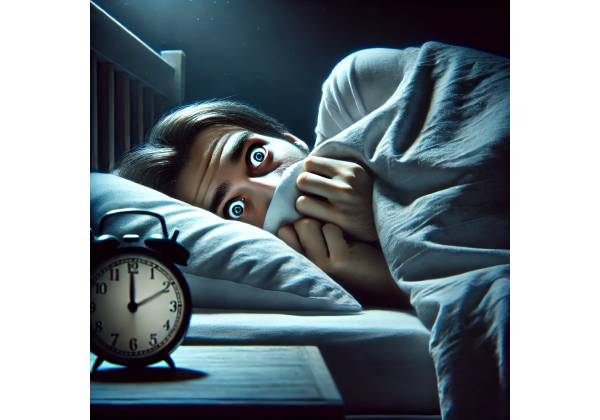
Somniphobia is the intense fear of sleep or of falling asleep. For some people, the fear centers on the moment they begin to drift off. For others, it is tied to what might happen during sleep: nightmares, sleep paralysis, panic, loss of control, breathing problems, or not waking up normally. What starts as a frightening night can gradually become a pattern in which bedtime itself feels threatening.
That matters because the body cannot simply ignore sleep. The more someone fears sleep, the more they try to resist it, delay it, monitor it, or control it. That struggle often creates severe insomnia, daytime exhaustion, and rising anxiety, which then make the fear even stronger. In clinical care, somniphobia is usually understood through specific phobia, anxiety disorders, insomnia, trauma-related symptoms, or sleep disorders rather than as a completely separate formal diagnosis. The core issue is not poor sleep alone. It is fear-driven avoidance of sleep itself.
Table of Contents
- What Somniphobia Means
- Signs and Symptoms
- Causes and Risk Factors
- How It Is Diagnosed
- Daily Impact and Complications
- Treatment Options
- Coping and Self-Management
- When to Seek Help
What Somniphobia Means
Somniphobia is a marked and persistent fear of sleep, bedtime, or the process of falling asleep. It is also sometimes called hypnophobia. The fear may sound unusual at first because sleep is a basic human need, not an obvious threat. Yet for the person experiencing it, bedtime can feel loaded with danger. The problem is not simply “I cannot sleep.” It is more like “I am afraid to sleep,” or “Something bad will happen if I let myself fall asleep.”
That distinction is important. Ordinary insomnia often begins with frustration, stress, racing thoughts, poor sleep habits, or circadian disruption. Somniphobia adds a more direct fear response. The bed, the dark, the act of closing the eyes, or the feeling of drifting off may trigger alarm. Some people fear nightmares. Others fear sleep paralysis, nighttime panic, not being able to breathe, losing awareness, death during sleep, or waking up disoriented. In children, the fear may be tied to monsters, intruders, separation, or bad dreams. In adults, it may be linked to trauma, medical events, or previous frightening sleep experiences.
Clinically, somniphobia may fit under specific phobia when the central problem is intense fear and avoidance of sleep-related situations. In other people, it may be better explained by:
- insomnia disorder
- panic disorder
- post-traumatic stress disorder
- nightmare disorder
- recurrent isolated sleep paralysis
- health anxiety
- generalized anxiety disorder
This is why the label should not be used too loosely. Disliking bedtime, struggling to unwind, or worrying about tomorrow does not automatically mean someone has somniphobia. The problem becomes clinically meaningful when fear is strong, persistent, and disruptive. Common signs include staying up deliberately far beyond natural sleepiness, refusing to sleep alone, keeping lights or screens on all night, repeatedly checking breathing or pulse, or feeling panic when drowsiness starts.
The fear often becomes self-reinforcing. Sleep loss increases physical arousal, emotion dysregulation, and catastrophic thinking. Then the next bedtime feels even harder. What began as a fear of sleep can turn into a cycle of insomnia, exhaustion, and escalating anxiety.
Somniphobia is not a sign of immaturity or weak self-control. It is a fear pattern, often shaped by prior experiences and maintained by avoidance. The good news is that once the pattern is understood clearly, treatment can be directed at the real problem instead of treating every night as a separate crisis.
Signs and Symptoms
The symptoms of somniphobia show up long before sleep begins. For many people, distress rises in the late evening as bedtime gets closer. They may feel calmer during the day and then grow tense, restless, or panicked as the house quiets down. Some people begin to fear specific sensations, such as heavy eyelids, slowed thinking, or the drifting feeling that comes just before sleep.
Emotional symptoms often include dread, fear, helplessness, irritability, and a strong urge to resist sleep. Thoughts may become repetitive and catastrophic. A person might think, “If I fall asleep, I will stop breathing,” “I will have another terrifying dream,” “I will get trapped in sleep paralysis,” or “I may not wake up.” Even when they know these thoughts sound extreme, the fear can still feel overpowering.
Physical symptoms can resemble panic or intense nighttime anxiety. They may include:
- racing heart
- sweating
- trembling
- shallow breathing
- nausea
- chest tightness
- dizziness
- muscle tension
- dry mouth
- a sudden urge to sit up, turn on lights, or leave the room
Behavioral symptoms are often the clearest clue that fear, not just sleeplessness, is driving the problem. Common patterns include:
- deliberately staying awake far past bedtime
- refusing to turn off lights, television, or music
- sleeping only when another person is nearby
- checking doors, windows, breathing, or pulse repeatedly
- avoiding naps because drowsiness feels threatening
- consuming extra caffeine or other stimulants to resist sleep
- seeking repeated reassurance from family or clinicians
- falling asleep only from complete exhaustion
Some people have bursts of panic right as they begin to drift off. Others wake suddenly after a nightmare and become afraid to return to sleep. If sleep paralysis is part of the picture, the fear may be especially strong because the person remembers waking unable to move, often with intense dread or vivid imagery. In children, somniphobia may look like bedtime tantrums, repeated calls for a parent, crying at lights-out, or insistence on sleeping in a caregiver’s room.
Daytime symptoms can be just as significant as nighttime ones. Chronic sleep avoidance often leads to:
- fatigue
- poor concentration
- headaches
- mood swings
- increased anxiety
- reduced school or work performance
- slower reaction time
- reliance on caffeine, naps, or irregular sleep patterns
A key sign is anticipatory anxiety. The person is not only distressed while trying to sleep. They begin fearing bedtime hours in advance. Planning evenings, travel, sleepovers, or hotel stays may become difficult because sleep itself has become the feared event.
When sleep loss and fear start strengthening each other, the problem can escalate quickly. At that stage, the issue is more than a rough week of insomnia. It is a fear-driven cycle that needs direct attention.
Causes and Risk Factors
Somniphobia rarely comes from a single cause. More often, it develops from a mix of frightening experiences, anxiety vulnerability, learned associations, and the brain’s natural alarm response. One person may trace it to a specific event. Another may realize only in hindsight that bedtime gradually became a threat.
A direct frightening sleep-related experience is one of the most common triggers. These experiences may include:
- severe recurring nightmares
- sleep paralysis
- nighttime panic attacks
- a choking or breathing scare during sleep
- parasomnias such as night terrors
- a medical event that happened at night
- waking in confusion or intense fear after sedation or illness
After a vivid experience like this, the brain can start pairing sleep with danger. The bed, darkness, lying still, or closing the eyes becomes a cue for alarm. Even if the original event is unlikely to repeat, the body learns to react as though bedtime itself is unsafe.
Trauma can also play a major role. People who have experienced violence, abuse, medical trauma, or frightening nighttime events may feel especially vulnerable when asleep because sleep requires surrendering vigilance. For them, fear of sleep may be tightly linked to fear of not being able to protect themselves.
Several risk factors can increase the chance that somniphobia develops or persists:
- a personal or family history of anxiety disorders
- panic disorder or panic-like nighttime symptoms
- post-traumatic stress symptoms
- chronic insomnia
- nightmare disorder
- recurrent isolated sleep paralysis
- health anxiety
- perfectionism or high need for control
- childhood separation anxiety
- irregular sleep schedules and sleep deprivation
Sleep deprivation itself can be a major maintaining factor. When someone resists sleep for night after night, the nervous system becomes more reactive. Hyperarousal rises. Small sensations feel more intense. Drowsiness can start to feel strange or threatening. This can create a vicious loop:
- The person fears sleep.
- They delay or avoid sleep.
- Sleep deprivation increases anxiety and bodily arousal.
- Bedtime feels more frightening.
- The person avoids again.
In children, family patterns matter too. If a child has repeated reassurance at bedtime, is allowed to avoid sleep entirely, or grows up hearing fearful explanations about bad dreams or nighttime danger, the fear can become more entrenched. In adults, repeated online searching about sleep dangers, sudden death in sleep, or parasomnias can intensify threat beliefs.
It is also important to remember that not all fear of sleep is irrational. A person with untreated sleep apnea, nocturnal seizures, trauma-related nightmares, or recurrent sleep paralysis may have a real underlying condition that needs attention. What becomes clinically problematic is when the fear grows beyond the actual situation and begins driving rigid avoidance.
Somniphobia is often best understood as a learned fear response attached to sleep. Once that attachment forms, ordinary fatigue no longer signals rest. It signals danger. Treatment works by gradually uncoupling those two things.
How It Is Diagnosed
Diagnosis begins with a careful history. There is no single test that confirms somniphobia, because the key question is not just how much someone sleeps, but why sleep has become frightening. A clinician will usually ask about bedtime thoughts, nighttime symptoms, prior frightening sleep experiences, daily functioning, medical history, and any pattern of avoidance.
Because somniphobia can overlap with several sleep and anxiety conditions, assessment often focuses on differential diagnosis. The goal is to determine whether the fear is best understood as part of specific phobia, insomnia disorder, PTSD, panic disorder, nightmare disorder, sleep paralysis, or another problem.
Questions often explore areas such as:
- What exactly is feared about sleep?
- When did the fear begin?
- Does anxiety start before bed, during sleep onset, or after waking?
- Are there nightmares, night terrors, or episodes of sleep paralysis?
- Is the person afraid of not waking, not breathing, or losing control?
- Are there trauma symptoms or panic attacks?
- How much sleep is actually being obtained?
- How much is daytime functioning affected?
A clinician will also want to understand the avoidance pattern. Someone with somniphobia may not simply “have insomnia.” They may pace, keep lights on, avoid bedtime routines, fall asleep only in certain settings, or need repeated reassurance. These details matter because fear-driven behavior shapes treatment.
Medical and sleep-related causes should also be considered. Depending on symptoms, a clinician may evaluate for conditions such as:
- obstructive sleep apnea
- narcolepsy
- parasomnias
- nocturnal panic
- seizure disorders
- medication or substance effects
- thyroid or other medical contributors to nighttime symptoms
This step is important because a person who has woken gasping, experienced repeated sleep paralysis, or had violent nightmares may have more than a simple phobia. Treating the underlying sleep issue often reduces the fear.
Children may need a family-based assessment. Parents can provide crucial information about bedtime routines, crying, checking behavior, refusal patterns, and whether the child remembers what frightened them. Adults may need to describe long-standing patterns they have hidden for years.
In some cases, sleep diaries are helpful. A diary can show bedtime, sleep onset delay, awakenings, caffeine use, panic symptoms, and how much time is spent trying to avoid sleep. These patterns often reveal that the fear intensifies as bedtime approaches and that the person is relying on behaviors that keep the problem going.
Diagnosis also depends on impairment. A person who occasionally feels uneasy after a nightmare is not the same as someone whose whole evening revolves around preventing sleep. The condition becomes clinically significant when fear is persistent, out of proportion, and disruptive to health, relationships, work, or school.
A good assessment does more than assign a label. It identifies the main fear, the triggers, the maintaining habits, and the conditions that may be feeding the cycle. That makes treatment far more precise.
Daily Impact and Complications
Somniphobia can reshape daily life far beyond the bedroom. Because sleep is not optional, fear of sleep tends to create a running conflict between biology and anxiety. People often try to outlast their own fatigue, manage it with caffeine, or structure life around exhaustion rather than rest. Over time, this can erode concentration, mood, productivity, and physical well-being.
The most immediate complication is insomnia. Someone may stay awake for hours, sleep only in short bursts, or fall asleep unintentionally after prolonged resistance. Poor sleep then affects daytime function in predictable ways. Common consequences include:
- poor concentration
- memory lapses
- slowed thinking
- irritability
- reduced frustration tolerance
- headaches
- low motivation
- daytime anxiety
- increased accident risk while driving or working
The emotional cost can be just as serious. Bedtime becomes a daily source of dread. Instead of winding down, the person enters a state of monitoring and resistance. This can strain relationships, especially if partners or parents become part of elaborate reassurance routines. Family members may feel helpless, frustrated, or pulled into long nighttime rituals.
Children may refuse school sleepovers, camps, or staying with relatives. Adults may avoid travel, overnight flights, shared hotel rooms, or hospital admissions. Work schedules can also suffer. A person who sleeps only near dawn may struggle with morning obligations and appear unreliable when the real problem is fear-driven sleep avoidance.
Somniphobia can also worsen other mental health conditions. Chronic sleep loss is linked with stronger anxiety, lower emotional resilience, depressed mood, and poorer coping. A person who already has PTSD, panic disorder, or health anxiety may find those symptoms becoming more intense as sleep deteriorates.
Over time, several complications can emerge:
- dependence on caffeine or irregular stimulant use
- reliance on alcohol or sedatives without proper guidance
- worsening panic symptoms
- greater fear of nighttime bodily sensations
- social withdrawal
- reduced academic or work performance
- lower confidence from repeated “failed” nights
A particularly difficult pattern develops when the fear spreads. Someone who first feared nightmares may later fear darkness, sleeping alone, hotels, anesthesia, naps, or any setting where drowsiness is possible. The more broadly the fear generalizes, the smaller life becomes.
Physical health can also be affected. Persistent insufficient sleep is associated with poorer immune function, reduced pain tolerance, impaired decision-making, and metabolic strain. Even if somniphobia begins as a psychological problem, the consequences are not only psychological.
The most painful part for many people is the feeling of being trapped. They know they need sleep, but the more they need it, the more frightening it becomes. That is why treatment matters. Without intervention, fear and sleep deprivation can keep fueling each other for months or years. With treatment, the cycle can be broken.
Treatment Options
Treatment works best when it addresses both the fear of sleep and the sleep disruption that fear has created. For many people, the most effective approach combines cognitive behavioral therapy with sleep-focused strategies and, when needed, treatment of any underlying sleep disorder or trauma-related condition.
If somniphobia fits a specific phobia pattern, exposure-based work is often central. That does not mean forcing sleep. It means gradually reducing the fear attached to bedtime, drowsiness, darkness, or the process of drifting off. Treatment may start with talking through feared outcomes, practicing a consistent pre-sleep routine, reducing avoidance behaviors, and remaining in bed without escaping into repetitive checking or delaying.
Common treatment elements may include:
- psychoeducation about the fear and insomnia cycle
- cognitive restructuring of catastrophic beliefs about sleep
- gradual exposure to feared sleep-related cues
- reducing reassurance seeking and safety behaviors
- relaxation or down-regulation skills
- structured sleep scheduling
- treatment of nightmares, sleep paralysis, or trauma when present
For people with prominent insomnia, cognitive behavioral therapy for insomnia, often called CBT-I, is especially important. CBT-I focuses on behaviors and beliefs that maintain chronic insomnia. It can help rebuild sleep confidence, regular sleep timing, and a healthier relationship with the bed and nighttime wakefulness. In somniphobia, this often needs to be adapted carefully, because the patient may not just be frustrated by poor sleep but actively afraid of it.
If nightmares are central, therapy may include nightmare-focused treatment. If recurrent isolated sleep paralysis is driving the fear, education and sleep stabilization can reduce the sense of mystery and threat. If trauma is involved, trauma-focused treatment may be necessary so that sleep no longer feels like exposure to the original danger.
Medication is sometimes used, but it is usually not the main answer. In some cases, a clinician may use medication to help with severe short-term insomnia, panic, nightmares, or underlying anxiety. Still, medication alone rarely resolves the fear structure. It may quiet symptoms without teaching the person that sleep itself is safe again.
Family involvement can be crucial for children and sometimes for adults. Reassurance rituals, repeated room checks, co-sleeping patterns, or late-night negotiations may all unintentionally maintain the problem. Supportive family work helps reduce accommodation without becoming harsh.
Treatment often works gradually. Early progress may look like:
- going to bed closer to a regular time
- spending less time delaying sleep
- reducing panic at lights-out
- needing fewer rituals to feel safe
- sleeping more consistently across the week
The aim is not perfect sleep from the first night. It is rebuilding trust in the sleep process. Once fear begins to loosen, sleep often improves in a more natural and stable way.
Coping and Self-Management
Self-management can help, especially when symptoms are mild or when it is used alongside professional care. The goal is not to “make yourself sleep” by force. It is to reduce the habits that teach the brain bedtime is dangerous and to rebuild a more predictable, calmer relationship with sleep.
A useful first step is to identify the exact fear. “I am afraid of sleep” is often too broad. It helps to ask:
- Am I afraid of nightmares?
- Am I afraid of dying or not waking up?
- Am I afraid of sleep paralysis?
- Am I afraid of losing control or being unaware?
- Am I afraid of panicking in the dark?
Once the fear is clearer, coping becomes more practical. Helpful strategies often include:
- Keep a sleep and fear log.
Track bedtime, when fear rises, what thoughts appear, how much you delay sleep, and what you do to feel safe. Patterns become visible quickly. - Set a stable sleep window.
A predictable wake time and a regular bedtime routine help reduce physiological chaos, even before fear fully improves. - Reduce stimulating avoidance behaviors.
Endless scrolling, bright screens, late caffeine, repeated clock-checking, and constant room checking may feel protective, but they often deepen arousal. - Use a wind-down routine that is simple and repeatable.
The point is not perfection. It is consistency. Quiet light, low-stimulation activities, and a clear transition into bed can help retrain the body. - Practice realistic self-talk.
Statements such as “Fear is present, but sleep is a normal body function,” or “Drowsiness is not danger,” can be more helpful than trying to argue every thought away. - Limit reassurance loops.
Repeatedly checking pulse, breathing, locks, or asking others if you will be okay tends to strengthen the fear over time. - Address the actual trigger when possible.
If nightmares or sleep paralysis are central, learning about those conditions can reduce catastrophic interpretation.
It is also important to avoid turning the bedroom into a battleground. If you spend hours trying to force sleep while panicking, the room can become associated with failure and fear. Gentle structure works better than struggle.
Parents helping a fearful child should aim for calm consistency. That means validating fear without reinforcing endless rituals. Responses such as “I know bedtime feels scary, and we are going to practice this step together,” are often more useful than repeated promises that nothing bad could ever happen.
Self-help has limits. If you are sleeping very little, panicking at bedtime, using alcohol or sedatives to cope, or becoming less functional during the day, professional support is a better next step. Still, even small shifts in routine and fear response can make formal treatment work faster and more effectively.
When to Seek Help
It is time to seek help when fear of sleep is affecting health, functioning, or safety. Many people wait because they think the problem is “just insomnia” or because they feel embarrassed that something as basic as sleep has become frightening. But when bedtime repeatedly triggers fear, avoidance, or panic, support is appropriate.
Consider professional help if:
- you regularly stay awake on purpose because sleep feels dangerous
- fear of sleep has lasted for weeks or longer
- you are having panic symptoms at bedtime or during sleep onset
- nightmares, sleep paralysis, or trauma are feeding the fear
- daytime fatigue is affecting school, work, driving, or caregiving
- you rely on alcohol, unprescribed sedatives, or heavy caffeine to manage nights
- a child’s bedtime fear is intense, persistent, and disrupting family life
- the fear is spreading to naps, travel, sleeping alone, or medical settings
A primary care clinician can be a good starting point, especially if there may be an underlying medical or sleep-related issue. A sleep specialist, psychologist, psychiatrist, or therapist may also be needed depending on whether the main problem is insomnia, trauma, panic, nightmare disorder, or specific phobia.
Urgent medical help is important if nighttime symptoms suggest a possible medical condition, such as repeated choking, pauses in breathing, seizure-like events, or severe reactions to medications or substances. Urgent mental health support is needed if sleep loss is becoming extreme, functioning is collapsing, or thoughts of self-harm are present.
Children should be evaluated early when bedtime fear becomes entrenched. What looks like oppositional behavior may actually be intense nighttime anxiety. Early support can prevent the pattern from hardening into chronic sleep avoidance.
The outlook is often better than people expect. Fear of sleep can feel uniquely cruel because the body needs what the mind is trying to avoid. But it is treatable. People can learn to reduce avoidance, understand the symptoms that scare them, and rebuild trust in sleep as a normal body process rather than a nightly threat.
A realistic goal is not “I never feel nervous at bedtime again.” A more useful goal is “I can approach sleep without panic running the whole process.” That kind of progress often leads to better sleep, better daytime function, and a much wider sense of freedom.
References
- Specific Phobia – StatPearls – NCBI Bookshelf 2024 (Clinical Review)
- Behavioral and psychological treatments for chronic insomnia disorder in adults: an American Academy of Sleep Medicine clinical practice guideline 2021 (Guideline)
- Treatment of chronic insomnia in adults 2024 (Clinical Review)
- Understanding and Treating Nightmares: A Comprehensive Review of Psychosocial Strategies for Adults and Children 2024 (Review)
- Sleep Paralysis – StatPearls – NCBI Bookshelf 2023 (Clinical Review)
Disclaimer
This article is for educational purposes only and is not a diagnosis or a substitute for care from a qualified medical or mental health professional. Somniphobia may overlap with insomnia, trauma-related symptoms, nightmare disorder, sleep paralysis, panic, or medical sleep conditions, so proper evaluation depends on the full pattern of symptoms. Seek prompt medical or mental health care if fear of sleep is causing severe sleep loss, panic, unsafe daytime fatigue, substance use to force sleep, or thoughts of self-harm.
If this article helped, please consider sharing it on Facebook, X, or another platform you prefer.