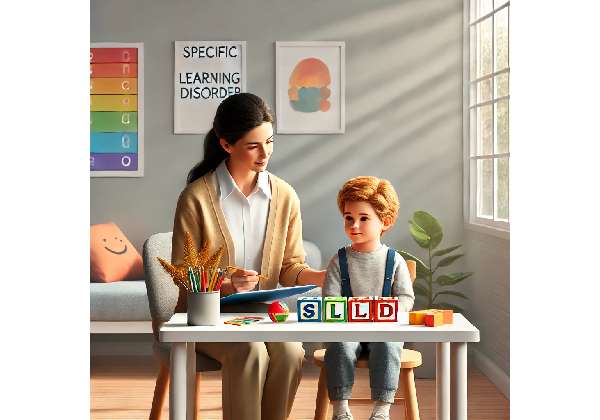
Specific learning disorder is not a problem of effort, motivation, or intelligence. It is a neurodevelopmental condition that affects how a person learns and uses specific academic skills such as reading, writing, spelling, or math. Because the difficulty sits inside skill development itself, treatment looks different from treatment for many other mental health conditions. There is no single pill or short-term fix. Effective care usually combines targeted teaching, practical accommodations, emotional support, and ongoing adjustments as school, work, and life demands change.
For many children, the first big question is whether they are simply “behind” or whether something more specific is getting in the way. For teens and adults, the question is often how to work around longstanding struggles without losing confidence. The good news is that meaningful improvement is common when support is well matched to the person’s actual pattern of strengths and weaknesses. With the right plan, people with specific learning disorder can build skills, perform better in school or at work, and reduce the stress, shame, and exhaustion that often grow around repeated academic difficulty.
Table of Contents
- What treatment usually involves
- Educational interventions for reading, writing, and math
- Support in school, college, and work
- Therapy for emotional and behavioral effects
- Medication and co-occurring conditions
- Family support and daily management
- Long-term outlook, recovery, and when to re-evaluate
What treatment usually involves
Treatment for specific learning disorder is usually best understood as a long-term support plan rather than a one-time intervention. The main goal is not to “erase” the difference overnight. It is to improve core academic skills, reduce the functional impact of the disorder, and help the person learn in ways that fit how their brain processes information.
That usually means several things happening at once:
- Skill-building instruction aimed at the exact area of difficulty, such as decoding words, spelling, written organization, handwriting, math facts, number sense, or problem solving.
- Accommodations that make school or work more accessible while skills are still developing.
- Emotional support for frustration, low self-esteem, anxiety, avoidance, or conflict that may build around repeated failure.
- Reassessment over time so the plan changes as academic demands change.
A common source of confusion is the word “therapy.” In this context, therapy can mean educational or remedial work, occupational therapy for related motor issues, speech-language support for certain language-based weaknesses, or psychotherapy for the emotional effects of struggling. These are not interchangeable, and the best plan depends on the person’s actual profile.
| Part of care | What it targets | Common examples |
|---|---|---|
| Educational intervention | Core reading, writing, or math skills | Structured literacy, writing strategy instruction, number-sense work |
| Accommodations | Access and performance demands | Extra time, audiobooks, speech-to-text, reduced copying load |
| Mental health therapy | Stress, shame, anxiety, avoidance, self-esteem | CBT, supportive therapy, parent guidance |
| Medication | Co-occurring conditions, not the core learning disorder itself | ADHD treatment, anxiety treatment, sleep treatment when indicated |
Good treatment is also individualized. Two people can both have specific learning disorder and need very different support. One child may need intensive reading intervention. Another may read well but struggle with written expression and planning. A third may have a math disorder with major trouble understanding quantity and sequence. This is why generic tutoring is sometimes not enough. The intervention has to match the actual learning problem.
The strongest plans are specific, measurable, and practical. They name the skill being targeted, how often the intervention happens, who provides it, what accommodations are in place, and how progress will be checked. Vague plans often lead to months of effort without clear improvement.
Educational interventions for reading, writing, and math
Educational treatment is the foundation of management. For most people with specific learning disorder, the most effective support is direct, structured, repeated instruction that targets the exact academic skills causing difficulty.
Reading difficulties
When the main difficulty is reading, treatment usually works best when it is explicit and systematic. That means skills are taught in a planned sequence rather than assumed to develop on their own. Effective reading intervention often includes phonological awareness, sound-letter correspondence, decoding, spelling, reading fluency, vocabulary, and comprehension. It is usually more effective when delivered frequently, with close feedback and enough intensity to move a struggling learner forward.
For children whose evaluation points toward dyslexia or another reading-based learning disorder, a full plan often begins with formal learning disability testing so the school and family know whether the main problem is decoding, fluency, comprehension, or a combination of these.
Written expression and spelling difficulties
Writing-related treatment can involve several layers. Some students mainly struggle with spelling and sentence construction. Others know what they want to say but cannot organize it on paper. Some also have slow handwriting or poor fine-motor output. Effective intervention may include:
- explicit spelling instruction
- sentence construction practice
- planning and outlining strategies
- graphic organizers
- paragraph structure and revision routines
- keyboarding support
- speech-to-text tools when output is much weaker than ideas
Writing is often more effortful than people realize. A student may be trying to generate ideas, remember spelling, hold grammar rules in mind, organize information, and manage handwriting at the same time. Breaking the task into steps can significantly reduce overload.
Math difficulties
Math-focused treatment should also be explicit. Students with math disorder often benefit from work on number sense, magnitude, place value, visual models, calculation procedures, and repeated practice with feedback. Manipulatives, number lines, worked examples, and guided verbal explanation can all help. The goal is not only memorizing facts but also building a more stable understanding of how numbers relate to one another.
A well-designed psychoeducational testing process can help identify whether a math problem is mostly about number concepts, retrieval speed, working memory, language demands in word problems, or another pattern that changes the intervention plan.
Across all three areas, earlier intervention is usually easier than waiting for repeated failure to pile up. But improvement is still possible later. Adolescents and adults often benefit when instruction is paired with compensatory tools, clearer routines, and realistic academic expectations.
Support in school, college, and work
Treatment is only partly about direct instruction. The other half is making everyday demands manageable enough for the person to use what they know. That is where accommodations and environmental support matter.
In school, useful accommodations often include:
- extra time on tests and written assignments
- reduced copying from the board
- written and verbal directions together
- audiobooks or text-to-speech
- speech-to-text or typing instead of handwriting
- calculator access when the goal is higher-level math reasoning rather than computation speed
- note-taking support
- shorter task chunks with more frequent check-ins
- alternative ways to demonstrate knowledge
These supports do not “give answers away.” They reduce barriers that are not the true target of the lesson. A child who understands science should not fail only because reading or written output is unusually effortful.
Support should also be matched to the setting. A child who is doing well in class but falling apart during homework may need workload adjustments and home routines more than additional drill. A teen who understands content but cannot finish timed exams may need accommodations more urgently than more tutoring. A college student may need disability services, recording tools, text-to-speech, exam adjustments, and coaching around planning and deadlines. Adults at work may benefit from written follow-up after meetings, templates, proofreading tools, flexible deadlines for heavily written tasks, or software that reduces reading and writing load.
When attention difficulties are also present, school-based evaluations can help clarify which parts of the student’s struggle come from the learning disorder, which come from attention regulation, and which require both instructional and behavioral support.
Support plans work best when they are reviewed regularly. A plan that was enough in third grade may not be enough in middle school, where reading volume jumps. A college plan may also need revision when a student changes majors, takes timed entrance exams, or moves from lectures to writing-heavy seminars.
Therapy for emotional and behavioral effects
Specific learning disorder often affects far more than academic performance. Over time, repeated struggle can reshape how a person thinks about themselves. Some children begin to believe they are “bad at school” in a global way. Some become anxious before reading out loud, writing under time pressure, or being called on in class. Others withdraw, avoid homework, act out, or stop trying because trying has come to feel humiliating.
This is where mental health therapy can be important.
Psychotherapy does not directly teach phonics, spelling, or algebra, but it can reduce the emotional burden that makes learning even harder. Therapy may help with:
- anxiety related to school performance
- shame, embarrassment, or low self-worth
- anger and conflict around homework
- perfectionism and fear of mistakes
- avoidance, procrastination, or school refusal
- depressive symptoms that grow after repeated setbacks
Cognitive behavioral therapy is often useful when the person has developed harsh beliefs such as “I’m stupid,” “I always fail,” or “There is no point in trying.” Supportive therapy can also help children and teens describe what is difficult and learn how to ask for help without feeling weak. Some families benefit from parent-focused work that reduces daily power struggles and helps adults respond more effectively to frustration.
Therapy can be especially important when the learning disorder is identified late. By that point, the person may have years of accumulated discouragement. In adults, this sometimes shows up as exhaustion, avoidance of paperwork, fear of training programs, or embarrassment in workplace settings.
A practical treatment plan often includes simple emotional goals alongside academic ones. Examples include tolerating correction without shutting down, asking for clarification sooner, using a coping strategy during timed work, or separating performance from self-worth. These are not minor goals. They can determine whether a person is able to stay engaged long enough for academic intervention to work.
When there are signs of broader neurodevelopmental overlap, a more detailed review may be useful. In some cases, the same person is dealing with a learning disorder plus attention problems, language issues, autism-related traits, or significant executive function weaknesses. That is one reason why ADHD and learning disability testing differences matter: treatment is stronger when the full picture is named clearly instead of assuming every struggle comes from one diagnosis.
Medication and co-occurring conditions
Medication is often one of the first things families ask about, especially when school is going badly. The key point is simple: there is no medication that directly treats the core academic skill deficits of specific learning disorder. Medicines do not teach decoding, spelling, written organization, or number sense.
That said, medication can still play an important role when another condition is interfering with learning.
The most common example is ADHD. A person with both ADHD and specific learning disorder may struggle not only with reading, writing, or math, but also with attention, impulsivity, working pace, organization, and task completion. In that situation, appropriate ADHD treatment may improve the person’s ability to sit with instruction, follow through, and use strategies consistently. It may help the treatment plan work better. But it does not replace specialized academic intervention.
Medication may also be considered when the person has:
- clinically significant anxiety
- depression
- sleep problems that are worsening daytime learning
- another co-occurring psychiatric condition that affects school functioning
The decision to use medication should be based on a real clinical evaluation, not on the hope that medicine will “fix school” in a broad, nonspecific way. If the main problem is a reading disorder, medication alone is unlikely to produce the improvement families are hoping for.
Families should also be careful with treatments marketed as quick cures. Claims about supplements, brain training packages, vision therapy, or other expensive interventions often run ahead of the evidence. If a program promises a broad cure for reading, writing, and math without showing exactly what skills it teaches and how progress is measured, caution is warranted.
A useful question to ask is: What specific problem is this treatment supposed to solve, and how will we know if it is working? Clear answers usually separate structured care from hopeful marketing.
Family support and daily management
Home support matters because most people with specific learning disorder live with the condition every day, not only during formal intervention sessions. Daily management is less about turning the home into a second classroom and more about reducing friction, protecting confidence, and building routines that make effort sustainable.
Helpful home approaches often include:
- keeping homework time predictable
- breaking larger tasks into short, visible steps
- using checklists, calendars, and visual schedules
- reading instructions aloud when that reduces unnecessary struggle
- praising effort, persistence, and strategy use rather than only correct answers
- allowing assistive technology when it supports independence
- communicating regularly with school without making every evening about performance
Parents often need support too. It is hard to watch a child work much harder than peers for less visible progress. This can create tension, guilt, and constant correction at home. In many families, the most important shift is moving from “Why won’t you do it?” to “What part of this task is getting stuck?” That change turns discipline battles into problem-solving.
It is also important to protect areas of competence outside academics. Children and teens with learning disorders need experiences that remind them they are capable. Sports, art, building, music, relationships, humor, technical interests, and practical skills can all help rebuild confidence. These are not distractions from treatment. They support resilience.
For adults, daily management may include workplace tools, personal organization systems, proofreading support, recorded reminders, or choosing formats that reduce unnecessary reading and writing load. Adults often do better when they stop measuring themselves against tasks that were never easy for them and start building systems that fit how they work best.
Family members should watch their language. Labels like “lazy,” “careless,” “not trying,” or “smart but unmotivated” can do lasting harm. Most people with specific learning disorder have already spent years trying harder than others realize.
Long-term outlook, recovery, and when to re-evaluate
Recovery in specific learning disorder usually does not mean the condition disappears completely. A better definition is that the person becomes more skilled, more efficient, and less limited by the disorder in daily life. For some, that means reading more accurately and with less effort. For others, it means writing with good assistive support, succeeding in school with accommodations, or thriving in work that fits their strengths.
Many people continue to have some degree of difficulty into adolescence and adulthood. That is not a sign that treatment failed. It reflects the fact that specific learning disorder is a developmental difference, not a short illness. What matters most is function: Can the person learn, communicate, complete important tasks, and pursue goals without constant collapse, shame, or unnecessary barriers?
Signs that a treatment plan is moving in the right direction include:
- more accurate reading, writing, or math performance
- less avoidance of schoolwork
- improved speed only after accuracy has strengthened
- better ability to explain strategies
- fewer homework battles
- greater independence with supports
- improved confidence and willingness to participate
A plan should be revisited when:
- progress is minimal after a reasonable period of targeted intervention
- the intervention is generic rather than skill-specific
- accommodations are in place but still do not match the real barrier
- attention, anxiety, depression, or behavior problems are rising
- academic demands have changed significantly
- the original evaluation was done years ago and no longer fits the current picture
Re-evaluation can be especially useful during key transitions such as late elementary school, middle school, high school, college entry, or adult retraining. A reading profile that was once described broadly may later need more precise clarification through updated testing, including focused dyslexia assessment when the main concern is persistent reading difficulty.
There should also be a lower threshold for broader clinical review if the person shows major anxiety, hopelessness, school refusal, abrupt decline, self-harm thoughts, or marked family breakdown around learning demands. In those cases, the learning disorder is no longer only an academic issue. It has become a wider health and functioning issue that needs more comprehensive care.
The long-term outlook is often much better when support is specific, practical, and sustained. People with specific learning disorder do not need lower expectations in every part of life. They need the right route to reach them.
References
- Assessment of Specific Learning Disabilities and Intellectual Disabilities 2024 (Review)
- Efficacy of Learning Disorder Treatment for Reading or Mathematics Disorders: An Open Study 2024 (Open Study)
- Interventions for children and adolescents with specific learning disability and co-occurring disorders 2025 (Review)
- Supporting parents of children with learning disorders: a systematic review of intervention strategies 2025 (Systematic Review)
- Evaluating and caring for children with a suspected learning disorder in community practice 2024 (Practice Point)
Disclaimer
This content is for general educational purposes only and is not a substitute for professional medical, psychological, educational, or developmental assessment, diagnosis, or treatment. If a child, teen, or adult is struggling significantly with learning, mood, school participation, or daily functioning, seek guidance from a qualified clinician or educational specialist.
If you found this article helpful, please share it on Facebook, X, or your preferred platform.