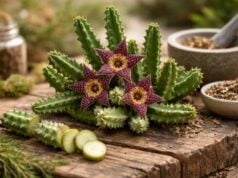
Cocklebur is a prickly, weedy plant best known for the burrs that cling to clothing and animal fur—but it also has a long, complicated history in traditional medicine. In East Asian herbal practice, the fruit (often called Xanthii Fructus or “cang er zi”) has been used for nasal congestion, sinus discomfort, and certain headache patterns. Modern lab studies add plausible explanations: cocklebur contains aromatic compounds and bitter plant chemicals that can influence inflammation pathways and microbial growth.
Still, cocklebur is not a “gentle herb.” The same plant family that gives us useful botanicals also includes strong sensitizers, and cocklebur itself can be dangerously toxic when misused—especially the seeds and young seedlings. Serious liver and kidney injury has occurred after unprocessed or excessive intake. Because of this narrow safety margin, most people are better served by safer, better-studied options unless they are working with a qualified clinician who understands processing, dosing, and contraindications.
Key Takeaways
- May support nasal comfort when used in traditional formulas under professional guidance.
- Unprocessed cocklebur can cause severe liver and kidney injury and should not be self-prescribed.
- Typical practitioner-guided use of processed fruit is about 3–10 g/day (decoction-equivalent).
- Avoid if pregnant, breastfeeding, a child, or living with liver or kidney disease.
Table of Contents
- What is cocklebur?
- Key ingredients and active compounds
- Does cocklebur have health benefits?
- How is cocklebur used?
- How much cocklebur is safe?
- Side effects, interactions, and who should avoid
- What the evidence actually says
What is cocklebur?
Cocklebur (Xanthium strumarium) is an annual plant in the Asteraceae family (the same broad family as daisies and ragweed). It grows aggressively in disturbed soil—field edges, roadsides, riverbanks, and farm areas—often appearing as a “weed” rather than a cultivated herb. The plant is recognizable by its rough, lobed leaves and the spiny burrs (technically an involucre enclosing two seeds) that mature in late summer and fall.
In traditional herbal systems, the part most often discussed is the dried fruit (“burr” or seed pod), sometimes referred to as Xanthii Fructus. In practice, this is not a casual kitchen herb: it is typically processed (commonly stir-baked) before use, with the intention of reducing toxicity and changing the herb’s energetic and pharmacologic profile.
It’s also important to understand naming confusion. Depending on the text and region, you may see cocklebur described under related names or synonyms, and different Xanthium species may be used interchangeably. This can matter because potency and toxicity can vary with species, growing conditions, and processing methods. For a consumer, that uncertainty is a safety issue.
Why do people look it up in the first place? Most searches cluster around:
- Nasal symptoms: congestion, sinus pressure, runny nose, sneezing, and reduced smell.
- Traditional “wind” headaches: especially those described with facial or forehead pressure.
- Itching and skin discomfort: in folk contexts, sometimes topical use is mentioned.
- Interest in “detox” herbs: which is a risky framing for cocklebur because toxicity is the central concern.
If you remember one thing from this section, make it this: cocklebur is a medicinal plant with a narrow therapeutic window. The same burr that is used traditionally is closely tied to the plant’s toxic chemistry. That reality should guide every decision about whether to use it at all, and how to evaluate any product claiming to contain it.
Key ingredients and active compounds
Cocklebur contains a diverse mix of plant chemicals—some potentially helpful, some clearly hazardous. Understanding the “key ingredients” is less about memorizing names and more about grasping what they do and why the safety profile is so strict.
The headline toxic compounds
The most safety-relevant compounds are atractyloside and carboxyatractyloside (often abbreviated as CATR). These are glycosides that can disrupt mitochondrial energy production. In simple terms: they can interfere with how cells make and move energy, and the liver is especially vulnerable because it is metabolically active and heavily involved in detoxification. This is why severe cases often present with symptoms and lab patterns consistent with acute liver injury, sometimes accompanied by kidney failure and clotting abnormalities.
Toxicity risk is highest with:
- Seeds and young seedlings (cotyledons)
- Unprocessed fruit
- Overdose or prolonged use
- Accidental ingestion in contaminated animal feed (a common veterinary scenario)
Bioactive constituents tied to “benefit” claims
Beyond the toxic glycosides, cocklebur contains many compound classes found in bitter, aromatic medicinal plants:
- Sesquiterpene lactones: a group often associated with anti-inflammatory and sometimes antimicrobial activity, but also with allergy risk (skin sensitization) in susceptible people.
- Phenolic acids (such as chlorogenic acid) and related polyphenols: these may contribute to antioxidant effects and mild anti-inflammatory signaling in lab models.
- Flavonoids and other plant antioxidants: potential roles in oxidative stress pathways.
- Volatile/aromatic constituents: relevant to traditional “opening the nose” uses and to topical applications.
A practical insight: the same chemical diversity that makes plants biologically active also makes them variable. Two cocklebur samples can differ meaningfully depending on harvest timing, geographic location, storage, and processing. For herbs with a wide safety margin, variability is mostly a “strength and effectiveness” issue. For cocklebur, variability becomes a risk issue.
How these compounds translate to effects
When traditional texts say cocklebur “opens the nose,” modern biology might interpret that as some combination of:
- inflammation modulation in nasal tissues,
- altered mucus secretion,
- antimicrobial effects on certain organisms (mostly shown in lab settings),
- and sensory effects from aromatic components.
But none of those plausible mechanisms cancel out the toxicity problem. If an herb can help with nasal congestion but can also cause severe organ injury when misused, safety must lead the conversation.
Does cocklebur have health benefits?
“Benefits” is a tricky word with cocklebur because the potential upsides are real enough to interest researchers, yet the risk profile makes self-experimentation a bad idea. The most realistic way to discuss benefits is to separate traditional clinical contexts from modern evidence quality.
Most common traditional benefit: nasal and sinus comfort
Historically, cocklebur fruit has been used for nasal obstruction, runny nose, sneezing, and sinus discomfort. In modern traditional practice, it is frequently combined with other herbs in formulas rather than used alone. In that formula context, it is typically positioned as an herb that supports nasal airflow and reduces the “stuffed” feeling that comes with irritation and swelling.
For readers comparing options: there are other botanicals people explore for seasonal symptoms, such as butterbur for allergy symptoms, but they come with their own safety requirements. The safest takeaway is to choose approaches with clear quality control and professional guidance.
Inflammation and pain pathways
Lab research suggests that certain cocklebur extracts and isolated compounds can influence inflammation mediators. In practical terms, that could translate to:
- reduced swelling signals,
- less local irritation,
- and modest analgesic activity in some models.
However, lab findings are not a guarantee of safe, meaningful results in humans—especially for a plant known to contain potent toxins.
Antimicrobial and antiparasitic activity
Some studies report antibacterial, antifungal, or antiparasitic effects of cocklebur constituents in test tubes. This is scientifically interesting, but it does not mean cocklebur is an appropriate home remedy for infections. Effective antimicrobial therapy requires the right dose delivered safely—two criteria cocklebur often fails outside controlled contexts.
Metabolic and “blood sugar” claims
You may see claims about metabolic support (blood sugar, lipids). These are primarily based on animal or cellular studies and are not strong enough to justify use given the potential for harm. If metabolic goals are your priority, safer, better-studied herbs and nutrients exist.
What “realistic benefits” looks like
If cocklebur helps, it is most plausibly in short-term, symptom-focused use for nasal complaints, usually as part of a professional formula with careful processing. It is not well suited for:
- long-term daily “wellness” use,
- DIY “detox,”
- or unsupervised dosing for chronic conditions.
How is cocklebur used?
Because cocklebur has a narrow safety margin, “how it’s used” is inseparable from “how it’s processed and supervised.” If you see casual instructions that treat it like a harmless tea herb, treat that as a red flag.
1) Traditional formula use (most common)
In East Asian herbal practice, cocklebur fruit is often used within multi-herb formulas for nasal symptoms. One well-known example is a formula commonly described as containing cocklebur fruit alongside other aromatic herbs that support nasal comfort. These companion herbs can change tolerability, direct the formula toward certain symptom patterns, and reduce the temptation to push the dose of any single ingredient.
Some formulas include peppermint. If you’re curious about how peppermint is typically used and what to watch for, see peppermint uses and precautions. (This does not imply peppermint “balances” cocklebur toxicity; it simply helps readers understand the broader formula context.)
2) Processed single-herb preparations (specialist use)
When cocklebur fruit is used as a single herb, it is commonly processed (often stir-baked) before decoction. Processing is intended to reduce toxicity and modify the herb’s properties. Even then, dosing is conservative and the duration is usually short.
3) Topical or external applications (varies by tradition)
Folk and traditional practices sometimes describe external applications for itching, localized discomfort, or insect-related complaints. Topical use may reduce systemic exposure, but it is not risk-free:
- the Asteraceae family can provoke contact dermatitis,
- and “natural” topical products can still irritate skin—especially broken skin.
If a product is labeled for external use only, treat it that way. Do not ingest it.
4) What not to do
Avoid these high-risk practices:
- Eating or chewing raw burrs or seeds.
- Using seedlings as food (a known cause of severe poisoning in scarcity situations).
- Combining cocklebur with other potentially hepatotoxic herbs or substances “to make it stronger.”
- Using cocklebur daily for weeks to months without monitoring.
In practice, safe use is less about clever preparation at home and more about conservative decision-making: choosing alternatives when possible, using standardized products if used at all, and treating warning signs as urgent.
How much cocklebur is safe?
For most people, the safest dose is none—because the potential downside is severe and the upside is usually achievable through safer strategies. Still, people ask about dosage because cocklebur appears in traditional texts and modern formulas. Here’s how to think about it responsibly.
Start with a safety reality check
Cocklebur toxicity is not theoretical. Severe poisonings have occurred from unprocessed use and overdose, including cases of multi-organ failure. Animal outbreaks also occur when cocklebur seeds contaminate feed. This tells us the plant can be dangerous at amounts that are not “obviously extreme,” especially when the material is unprocessed or concentrated.
Typical practitioner-guided ranges (processed fruit)
In professional settings where cocklebur fruit is properly processed and prescribed appropriately, use is often described in the low gram range per day, commonly about 3–10 g/day (decoction-equivalent). This is not a recommendation for self-treatment—rather, it reflects how cautious trained clinicians tend to be when they decide it’s appropriate.
Key variables that change “the right dose” include:
- whether the herb is processed (and how),
- whether it’s used alone or in a formula,
- the person’s body size and sensitivity,
- baseline liver and kidney function,
- and duration of use.
Timing and duration
If used, cocklebur is generally approached as a short-course herb, often days to a couple of weeks, aimed at symptom reduction rather than indefinite use. Longer duration increases cumulative risk and makes it harder to recognize early toxicity signals.
Product forms and their dosing traps
- Decoctions/teas: dose depends on raw herb grams and extraction; home preparation adds variability.
- Powders/pills: can be more concentrated than they seem, and dosing errors are common.
- “Proprietary blends”: may obscure how much cocklebur you’re actually taking.
A practical rule: if a label does not clearly specify the amount of cocklebur-derived material and the processing method, it’s not a product you should experiment with.
When to stop immediately
Stop and seek urgent medical advice if you develop:
- persistent vomiting, severe abdominal pain, profound weakness, confusion, jaundice, very dark urine, or markedly reduced urination.
Those are not “detox symptoms.” They can be signs of serious organ injury.
Side effects, interactions, and who should avoid
This is the section that should drive decision-making. With cocklebur, safety is not a footnote—it is the main story.
Common side effects (lower-severity)
Even at lower exposures, some people may experience:
- nausea or stomach discomfort,
- headache or dizziness,
- skin irritation (especially with topical products),
- allergic reactions (rash, itching, swelling, respiratory symptoms).
Because cocklebur is in the Asteraceae family, people with sensitivities to related plants (including ragweed-type allergies) may be more prone to reactions.
Serious toxicity: what it can look like
High-risk exposure (unprocessed fruit, seeds, seedlings, overdose, prolonged use) can lead to severe poisoning. Reported patterns include:
- intense GI symptoms (vomiting, abdominal pain),
- rapid weakness and neurologic symptoms in some cases,
- acute liver injury (jaundice, abnormal clotting, confusion),
- kidney injury (decreased urination, swelling),
- and potentially multi-organ failure.
This is why cocklebur should not be treated as a casual “immune” or “detox” herb.
Interactions to consider
Formal interaction studies are limited, but risk-based reasoning matters here. Avoid combining cocklebur with:
- medications or supplements that stress the liver (for example, high-dose niacin or multiple concentrated herbal extracts),
- heavy alcohol intake,
- and any regimen that already carries hepatotoxic warnings.
If you’re managing a chronic condition with prescription medications, the safest assumption is that cocklebur introduces unnecessary uncertainty unless a qualified clinician reviews your full list.
Who should avoid cocklebur
Avoid cocklebur unless specifically directed by a trained professional—and in many cases avoid entirely—if you are:
- Pregnant or breastfeeding (safety is not established, and toxicity risk is not acceptable).
- A child or teenager (higher risk of dosing errors and more serious outcomes).
- Living with liver disease, kidney disease, or a history of abnormal liver enzymes.
- Taking multiple medications with narrow safety margins.
- Known to react strongly to Asteraceae plants.
Some people reach for “liver support” products when they feel unwell—such as milk thistle and liver support—but these are not antidotes for cocklebur poisoning. If serious symptoms appear, the correct response is urgent medical evaluation.
What the evidence actually says
Cocklebur sits in an evidence gray zone: it has extensive traditional use, abundant laboratory research, and a small but growing body of clinical literature—yet it also has a well-documented toxicity risk that limits real-world usefulness.
Where evidence is strongest
The best human-facing evidence related to cocklebur tends to involve multi-herb formulas used for allergic rhinitis and related nasal conditions. In pooled analyses of randomized trials, these formulas often show improvements in symptom scores and overall response compared with control approaches. That said, the trials vary widely in:
- diagnostic criteria,
- formula versions and dosing,
- duration and follow-up,
- and reporting quality.
So while the direction of effect may be promising, it’s not the kind of clean, standardized evidence you’d want for a do-it-yourself herb—especially one with meaningful toxicity concerns.
What lab studies can and cannot tell us
Cell and animal studies frequently report anti-inflammatory, analgesic, antioxidant, antimicrobial, and other effects from cocklebur extracts and isolated compounds. These studies help map mechanisms and identify candidate molecules, but they often use:
- concentrated extracts not comparable to typical human preparations,
- doses scaled in ways that don’t translate safely,
- and controlled conditions that don’t reflect product variability.
For a low-risk herb, that gap is mostly academic. For cocklebur, the gap matters because the line between “active” and “harmful” is thin.
Toxicity evidence is unambiguous
Unlike many herbs where safety concerns are theoretical, cocklebur has a clear record of severe poisonings (including fatal outcomes) tied to unprocessed use and overdose. Mechanistic work on atractyloside and carboxyatractyloside supports why liver and kidney injury can be profound. Veterinary literature also reinforces that seeds and seedlings can cause rapid, life-threatening toxicity.
A balanced conclusion for readers
- If your goal is nasal symptom relief, there may be a place for cocklebur-containing formulas under professional care, with careful processing and conservative dosing.
- If your goal is general wellness, cocklebur is a poor fit because the risk profile is disproportionate to the likely benefit.
- If you’re drawn to cocklebur because it sounds “strong,” that’s exactly why you should be cautious: strong herbs demand strong safety practices.
In short, cocklebur is better understood as a specialist herb—one that requires expertise, quality control, and clear clinical justification.
References
- Direct and indirect targets of carboxyatractyloside, including overlooked toxicity toward nucleoside diphosphate kinase (NDPK) and mitochondrial H+ leak 2023 (Review)
- Multiorgan failure caused by Chinese herbal medicine Xanthii Fructus poisoning: a case report 2023 (Case Report)
- Evaluation of the efficacy and safety of Chinese medicine Cang-Er-Zi-San in the treatment of allergic rhinitis in children: A meta-analysis and systematic review 2024 (Systematic Review)
- Intoxication of dairy cows in Uruguay by ingestion of cocklebur (Xanthium strumarium) seeds in sorghum silage 2024 (Case Series)
- Traditional Uses, Botany, Phytochemistry, Pharmacology, Pharmacokinetics and Toxicology of Xanthium strumarium L.: A Review 2019 (Review)
Disclaimer
This article is for educational purposes only and does not replace medical advice, diagnosis, or treatment. Cocklebur (Xanthium strumarium) can be toxic and has been associated with severe liver and kidney injury when misused. Do not self-prescribe cocklebur for any condition. If you are pregnant, breastfeeding, have a medical condition, or take medications, consult a qualified healthcare professional before using any herbal product. If you suspect poisoning or develop symptoms such as persistent vomiting, severe abdominal pain, jaundice, confusion, or reduced urination, seek emergency medical care immediately.
If you found this guide helpful, consider sharing it with friends or colleagues on Facebook, X (formerly Twitter), or your preferred social platform.