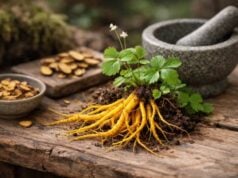
Crowfoot (Ranunculus acris), often called meadow buttercup or tall buttercup, is a familiar yellow wildflower in many temperate fields and roadsides. It belongs to the buttercup family (Ranunculaceae), a group known for striking blooms and surprisingly potent plant chemistry. While crowfoot has a long history in folk traditions—especially as a “counterirritant” plant used for aches—it is not a gentle herb in its fresh state. When bruised, the plant releases an acrid compound that can irritate skin and mucous membranes, sometimes severely.
Modern interest in crowfoot tends to focus on two angles: the plant’s defensive chemicals (and how drying changes them), and the biological activity of extracts studied in laboratory settings. Yet the most important practical message is straightforward: crowfoot is better approached as a plant to understand than a plant to self-dose. This article explains what crowfoot is, what’s in it, what research suggests, and how to make safety-first decisions—especially if you garden, forage, or have pets and livestock.
Quick Summary
- Crowfoot’s fresh sap can cause blistering skin irritation, so safety considerations come before benefits.
- Dried plant material is less irritating because key compounds change during drying, but oral use is still not recommended.
- No established safe oral dosage range exists; the safest supplement dose is 0 mg (avoid ingestion).
- Use caution around children, pets, and livestock, and avoid handling crushed plants with bare skin.
- Avoid medicinal use if pregnant, breastfeeding, photosensitive, or prone to severe skin reactions.
Table of Contents
- What is crowfoot?
- Key ingredients and medicinal properties
- Does crowfoot have health benefits?
- Traditional uses and modern practical uses
- How much crowfoot per day?
- Side effects, interactions, and who should avoid
- What the evidence actually says
What is crowfoot?
Crowfoot (Ranunculus acris) is a perennial wildflower best recognized by its glossy, bright yellow petals and upright habit. It thrives in meadows, pastures, field margins, and disturbed ground, often blooming through late spring and summer. In many places it is considered a pasture weed, not because it is aggressive in a dramatic way, but because grazing animals tend to avoid it and it can reduce usable forage.
The name “crowfoot” refers to the look of the plant’s divided leaves, which can resemble a bird’s foot. “Meadow buttercup” is the more common name in everyday conversation, and it hints at a common mix-up: people often assume buttercups are harmless because they look cheerful and are widely encountered. In reality, many Ranunculus species contain defensive compounds that make the fresh plant acrid and irritating. That is why grazing animals usually leave it alone unless forage is scarce.
A point worth emphasizing early is identification. “Buttercup” is a broad nickname used for many Ranunculus species, and different species can vary in potency. In addition, some unrelated plants share similar yellow flowers. If your interest is medicinal use, identification must be exact—yet even with correct identification, the safety profile is still restrictive.
Crowfoot’s plant chemistry also shifts with handling and time. When the plant is crushed, chewed, or otherwise damaged, enzymes quickly transform a stored precursor compound into a more reactive irritant. This is why a bouquet of intact buttercups is usually harmless to hold briefly, while crushing stems and leaves against skin—or rubbing the plant into the body—can trigger a stronger reaction.
From a practical health perspective, crowfoot is a “contact-risk” plant more than a “supplement herb.” Understanding where it grows, how it is mistaken for other plants, and why its fresh sap can irritate skin is the foundation for every other question about benefits, uses, and safety.
Key ingredients and medicinal properties
Crowfoot’s reputation comes from a small set of compounds that behave like a built-in chemical defense system. The most important concept is that the plant stores relatively stable molecules until it is damaged—then the chemistry shifts quickly into a more reactive form. This is why “fresh vs. dried” matters so much for buttercup-family plants.
Ranunculin, protoanemonin, and anemonin
The best-known chemical chain is:
- Ranunculin (a glycoside stored in the plant)
- Protoanemonin (a reactive, irritating compound formed when the plant is bruised or chewed)
- Anemonin (a less reactive dimer that forms as protoanemonin breaks down, often during drying)
Protoanemonin is the main reason fresh crowfoot can irritate skin and mucous membranes. It can act like a chemical irritant, leading to redness, burning pain, blisters, or mouth irritation if chewed. Drying tends to reduce this risk because protoanemonin is unstable and can convert into anemonin. That conversion is also why dried buttercups in hay are generally considered less hazardous than fresh plants—though “less hazardous” is not the same as “medicinally safe.”
Polyphenols and flavonoids
Like many flowering plants, crowfoot contains polyphenols and flavonoids that can show antioxidant behavior in test systems. These compounds are often used to explain why extracts may demonstrate antimicrobial, anti-inflammatory, or cell-signaling effects in laboratory research. However, antioxidant capacity in a lab assay does not automatically translate to a safe or useful human remedy—especially when a strong irritant compound is also part of the plant’s profile.
Other constituents and variability
Crowfoot chemistry varies with plant part (flowers vs. leaves), growth stage, and environmental conditions. Studies that analyze flowers and aerial parts commonly highlight that the same plant can contain both “interesting” bioactive compounds and compounds that raise safety concerns. A useful way to think about it is: crowfoot is chemically active, but its activity is not selectively “therapeutic.” It is defensive first.
The most important medicinal-property takeaway is not a promise of benefit—it is a rule of handling: damage activates irritants. That one fact explains most reported problems with home use and most of the caution around dosage discussions.
Does crowfoot have health benefits?
If you search for crowfoot benefits, you’ll often see two very different narratives: folk uses that treat it like a pain herb, and modern warnings that frame it as a blistering plant. Both contain truth, but they live at different levels of risk and evidence.
Potential benefits are mostly indirect
Crowfoot is not a mainstream wellness herb with a clear, consumer-friendly benefit profile. The “benefits” most often discussed relate to:
- Antimicrobial and anti-inflammatory activity in lab studies (usually from extracts, not casual home preparations)
- Counterirritant effects (the idea that a strong surface irritation can distract from deeper aches)
- Traditional topical use for joint discomfort, warts, or localized pain in some folk settings
The problem is that the same compound that produces the counterirritant effect can also produce a chemical-burn-like injury. That makes the benefit-to-risk ratio unfavorable for most self-care contexts.
What you can realistically expect
For most people, crowfoot does not offer a reliable “take this and feel better” pathway. Realistic outcomes look more like:
- Learning to avoid and manage skin exposure
- Recognizing why fresh plant rubbing can backfire
- Understanding why dried plant chemistry is different, but still not a green light for oral use
If your goal is inflammation support or pain relief, you will almost always be better served by herbs with clearer dosing and safer profiles. For example, people seeking food-based anti-inflammatory support often start with ginger’s active compounds and practical uses, because it has extensive culinary use and a much more favorable safety margin.
Where crowfoot may be scientifically interesting
Researchers are interested in the buttercup family partly because the ranunculin-to-protoanemonin system is a vivid example of plant chemical defense, and partly because anemonin and related compounds have shown biological activity worth studying. That is a “drug discovery” style interest, not a “home remedy” endorsement.
So, does crowfoot have health benefits? Possibly at the level of isolated compounds and carefully prepared extracts in controlled research. As a DIY herb, the safer answer is: crowfoot’s risks are clearer than its benefits, and most people should not attempt medicinal use.
Traditional uses and modern practical uses
Crowfoot appears in folk medicine records primarily as a topical plant used for pain, swelling, or stubborn skin concerns. The logic was often “strong plants move stubborn conditions,” which, translated into modern terms, means the plant was used as a powerful irritant to provoke a response. In some traditions, fresh plant poultices were applied briefly to painful joints or areas of localized discomfort. The intent was counterirritation—creating a surface sensation that competes with deeper pain signals.
The modern problem is that counterirritation is a narrow therapeutic strategy that can easily overshoot. Crowfoot can cause blistering, skin breakdown, and prolonged discoloration, especially when the plant is crushed and held against skin under a bandage. Even short contact can be too much for sensitive individuals. What is described as a “warming rub” in folk language can become a painful injury in real life.
Why people used it anyway
A fair reading of traditional use recognizes context:
- Limited access to analgesics and topical medications
- Reliance on strong sensory herbs for acute discomfort
- Knowledge passed through local practice, often with specific timing and preparation rules
But modern readers rarely have that full context, and the cost of a mistake is high. That is why most responsible herbal guidance today treats crowfoot as a plant to avoid for self-treatment.
Modern practical uses that make sense
There are ways crowfoot can be “useful” without ingesting it or rubbing it on skin:
- Garden ecology: a hardy wildflower that supports pollinators in some landscapes
- Education: a clear example of why plant families can be chemically potent
- Pasture awareness: learning why animals avoid certain plants and how hay differs from fresh forage
Safer alternatives for similar goals
If someone is tempted to use crowfoot topically for aches, it usually means they want a strong, localized herbal approach. In that category, arnica’s topical uses and precautions is a more common comparison point because it is widely discussed for bruising and muscle soreness (with its own safety rules), while generally lacking crowfoot’s blistering sap chemistry when used properly.
Crowfoot’s historical uses are real, but in modern self-care, the best “use” is often replacing it with safer options and keeping crowfoot in the category of “recognize and respect.”
How much crowfoot per day?
This is one of those topics where a responsible dosage answer is intentionally unsatisfying: there is no established safe oral dose for crowfoot as a supplement, and self-dosing is not recommended. Unlike culinary herbs, crowfoot is not used as a routine tea, capsule, or tincture in evidence-based practice because the plant’s irritant chemistry makes both safety and standardization difficult.
Oral dosage: the safest dose is none
If you are looking for a supplement-style number, the most defensible guidance is:
- Crowfoot oral supplement dose: 0 mg per day (avoid ingestion).
This is not meant to be dramatic; it reflects the absence of human dosing trials, the presence of known irritants, and the reality that accidental ingestion is more likely to cause harm than benefit.
Topical “dosage” is not a safe DIY concept
Some plants have topical dosing logic (for example, a 1% cream vs. a 5% cream). Crowfoot does not fit that model for home use because the irritant is generated by bruising and enzyme activity, which is unpredictable. A “little bit” of crushed plant can still cause a strong reaction, especially if covered with a dressing that traps moisture and prolongs contact.
If exposure happens, timing matters more than quantity
For crowfoot, the most practical quantitative guidance is time-based:
- Wash exposed skin promptly after contact with crushed plant material.
- Avoid re-exposure and monitor the area over the next 24–48 hours for delayed blistering.
- If mouth contact occurs (especially in children), rinse well and seek medical guidance if irritation, drooling, vomiting, or swelling develops.
What about processed extracts or research preparations?
Some studies analyze Ranunculus acris extracts and report biological activity in vitro, but that is not the same as a consumer dosage recommendation. Research extracts are prepared under controlled conditions and are evaluated with toxicity screening precisely because the plant can be irritating.
If your intent is anti-inflammatory or antioxidant support, choose plants with known dosing guidance and better safety margins. For supplement-style inflammation support, many people compare options like curcumin dosing and safety considerations rather than relying on high-irritant wild plants.
Side effects, interactions, and who should avoid
Crowfoot’s safety profile is the defining feature of the plant. The main risk is not subtle: fresh crowfoot can cause irritant contact dermatitis. This may present as burning pain, redness, swelling, and blisters that can resemble a chemical burn. Reactions are more likely when the plant is crushed and held against skin, but sensitive individuals may react to smaller exposures as well.
Common side effects
- Skin redness, burning, itching, or blistering after contact with crushed plant material
- Mouth irritation, drooling, or lip blistering if chewed
- Gastrointestinal irritation (nausea, vomiting, abdominal pain) with ingestion
- Eye irritation if sap is transferred from hands to eyes
Who should avoid medicinal use
Crowfoot should be avoided for self-treatment by:
- Pregnant or breastfeeding individuals
- Children (higher accidental exposure risk and lower ability to report symptoms early)
- People with highly sensitive skin, eczema flares, or a history of severe contact dermatitis
- Anyone who cannot confidently identify the plant and control exposure conditions
- Households with pets that chew plants or livestock that graze weedy pasture edges
Interactions
Crowfoot is not known for classic “drug interactions” the way some supplements are, largely because it is not widely used internally in modern practice. The meaningful interactions are practical:
- Combining crowfoot with other topical irritants can increase skin damage risk.
- Occlusive bandages can intensify exposure by trapping moisture and prolonging contact.
- Sun exposure is not required for crowfoot irritation, but heat and sweating can worsen discomfort and itching once a reaction begins.
First-response care after skin contact
If you suspect you handled crushed crowfoot, wash skin with soap and cool water, remove contaminated clothing, and avoid rubbing the area. If blistering occurs, treat it like a burn: keep it clean, avoid popping blisters, and seek medical evaluation if the area is large, very painful, shows signs of infection, or involves the face or genitals.
For minor residual dryness or irritation after the acute phase has settled, some people reach for soothing botanicals with better-established topical safety. One commonly used option is aloe vera for skin comfort and safe topical use, though it is not a substitute for medical care in true blistering burns.
Crowfoot is a plant where “natural” does not mean gentle. Respecting its irritant potential is the most protective health decision you can make.
What the evidence actually says
Crowfoot sits at an intersection of ethnobotany, plant defense chemistry, and early-stage pharmacology. The evidence is most solid in two areas: the chemistry of ranunculin-derived irritants, and the observation that Ranunculus plants can cause significant skin injury when misused. Where evidence is weakest is where most marketing claims tend to land: clear, repeatable human benefits from safe doses.
What research supports well
- Chemical mechanism: The conversion of ranunculin to protoanemonin when plant tissue is damaged is well described, and it explains both skin blistering and mouth irritation risks.
- Bioactivity of related compounds: Anemonin and related molecules have documented biological activity in experimental settings, including anti-inflammatory signaling targets. This supports scientific interest, but not do-it-yourself dosing.
What studies suggest, with limits
Some laboratory and screening studies evaluate extracts from Ranunculaceae plants—including Ranunculus acris—for antioxidant capacity and other biological effects. These results can be useful for mapping what compounds exist and what they might do under controlled conditions. However, lab evidence has three key limitations for readers:
- Extracts vary widely in how they are prepared, so results are not easily comparable.
- “Active in a dish” does not guarantee safe or effective use in humans.
- Crowfoot’s irritant risk is part of the same chemistry that makes it biologically active.
A good example of why safety testing matters is research that specifically examines R. acris extracts for toxic and genotoxic effects in test systems. That line of work does not mean the plant is “useless,” but it reinforces the need for caution and controlled evaluation.
What evidence does not support
- Routine internal use for immunity, inflammation, or chronic disease
- Home poultice use as a safe treatment for joint pain
- Reliable dosing recommendations for the general public
How to use the evidence responsibly
The most evidence-aligned approach is to treat crowfoot as a plant to avoid medicinally unless you are working within a controlled research or clinical framework. If you want botanical support for pain or inflammation, choose plants with human data, standardized products, and clearer safety margins. Crowfoot’s story is valuable, but it is mainly a reminder that powerful plant chemistry can cut both ways.
References
- Therapeutic Potential of Ranunculus Species (Ranunculaceae): A Literature Review on Traditional Medicinal Herbs – PMC 2022 (Review)
- Influence of Ranunculus acris Flower Extract on Allium cepa Root Meristem | MDPI 2023 (Experimental study)
- Traditional Medicinal Ranunculaceae Species from Romania and Their In Vitro Antioxidant, Antiproliferative, and Antiparasitic Potential – PMC 2024 (In vitro study)
- Ranunculin, Protoanemonin, and Anemonin: Pharmacological and Chemical Perspectives – PubMed 2025 (Review)
Disclaimer
This article is for educational purposes only and does not provide medical advice. Crowfoot (Ranunculus acris) can cause significant skin irritation and blistering when fresh plant material is crushed and contacted with skin, and it may irritate the mouth and digestive tract if chewed or ingested. Do not use crowfoot for self-treatment. If you develop blistering, severe pain, facial or eye exposure, widespread rash, or signs of infection, seek medical care promptly. If you are pregnant, breastfeeding, managing a chronic condition, or take prescription medications, consult a qualified healthcare professional before using any herbal product.
If you found this guide helpful, consider sharing it on Facebook, X (formerly Twitter), or your preferred platform to help others make safer choices around wild plants and herbal remedies.