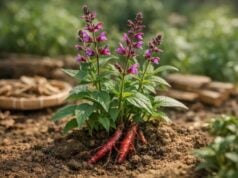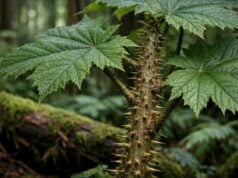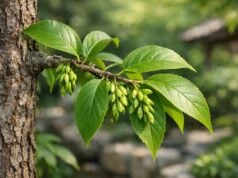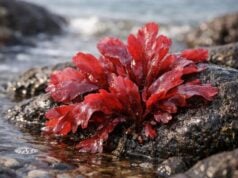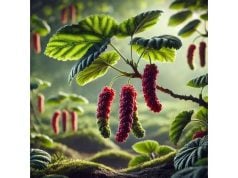
Damak-damak Tahun (Scolopia macrophylla) is a Southeast Asian shrub or small tree known by several local names, including pokok rukam gajah and rukem laut. While it is not as globally mainstream as ginger or turmeric, it appears in regional folk practices where plant decoctions are used for day-to-day resilience, physical discomfort, and recovery after hard work or illness.
What makes Damak-damak Tahun especially interesting is how it fits the “quiet middle” of herbal use: not a single-molecule remedy, but a plant valued for broad, supportive properties that may relate to polyphenols and other protective phytochemicals. In practical terms, people usually approach it as a tea or decoction, sometimes blended with other botanicals, and used in short courses rather than as a daily forever supplement.
Because modern clinical research on this plant is limited, the safest way to think about Damak-damak Tahun is as a traditional herb with promising but unconfirmed benefits—best used conservatively, with careful attention to dosage, product quality, and personal risk factors.
Essential Insights for First-Time Use
- May provide gentle antioxidant and soothing support, but effects are not clinically established.
- Start low: 1–2 g dried leaf or bark per 250 mL water, up to 2 times daily.
- Stop use if you develop stomach upset, rash, dizziness, or unusual bleeding or bruising.
- Avoid if pregnant, breastfeeding, under 18, or managing a hormone-sensitive or bleeding-risk condition.
Table of Contents
- What is Damak-damak Tahun?
- Key ingredients and phytochemicals
- Potential health benefits
- Traditional uses and preparations
- How much Damak-damak Tahun per day?
- Side effects, interactions, and who should avoid
- What the evidence says
What is Damak-damak Tahun?
Damak-damak Tahun is the common name often used for Scolopia macrophylla, a member of the Salicaceae family (a modern classification that includes several woody species; older references may place Scolopia in Flacourtiaceae). In the landscape, it is typically described as a scrambling shrub or small tree that thrives in warm, wet tropical conditions. Depending on where it grows, it may be found along forest edges, coastal habitats, or wetter lowland areas—places where plants tend to develop tougher leaves and protective chemistry to handle heat, humidity, insects, and environmental stress.
From a practical health perspective, the “herb” part of Damak-damak Tahun usually refers to its leaves and woody parts (small branches, bark, or wood), which are traditionally simmered into a decoction. In many folk traditions, woody herbs are chosen not because they are stronger in a stimulant sense, but because they produce a deeper, more astringent brew—often associated with “toning” effects in traditional frameworks.
Identification matters. The broader Scolopia genus includes species that vary by region, and local names can overlap between unrelated plants. If you are sourcing Damak-damak Tahun, prioritize reputable suppliers that provide the full botanical name (Scolopia macrophylla) and plant part used (leaf vs bark vs wood). Avoid harvesting from the wild unless you are highly confident in identification and local regulations allow it; in some areas, the plant can be uncommon, and slow regrowth makes overharvesting a real concern.
If you are new to botanical remedies, it helps to treat Damak-damak Tahun as you would any unfamiliar herb: start with a small trial, monitor your response, and keep your use goal-specific (for example, a short course during a period of fatigue) rather than open-ended daily use.
Key ingredients and phytochemicals
One challenge—and an opportunity—with Damak-damak Tahun is that its detailed chemical profile is not as widely mapped in mainstream herbal references as more commercial botanicals. That means you should be cautious with any product that claims a long list of specific “active compounds” as if they were firmly established. A more accurate, evidence-aligned approach is to talk about likely phytochemical classes that commonly occur in woody tropical plants and that are consistent with how the herb is traditionally prepared.
Here are the main categories most often discussed for plants used as leaf or bark decoctions:
- Polyphenols (including flavonoids): These compounds are commonly associated with antioxidant activity and with the “drying” or slightly bitter taste you may notice in some herbal brews. In everyday terms, polyphenols are often used to support the body during periods of oxidative stress (hard physical work, heat exposure, poor sleep), though this does not automatically translate into proven clinical effects for a specific plant.
- Tannins: Tannins are a subset of polyphenols known for astringency. In a tea, they can create a “grippy” mouthfeel. Traditionally, tannin-rich plants are used to “tighten” tissues—one reason they are often associated with digestive steadiness. The flip side is that high-tannin preparations can aggravate constipation, nausea, or reflux in sensitive people.
- Terpenoids and related bitter compounds: Many tropical shrubs contain bitter constituents that may influence appetite, digestion, and subjective feelings of heaviness or sluggishness.
- Plant acids, sugars, and minerals (minor components): These are less likely to be the “headline act,” but they shape how a decoction feels—whether it is harsh, soothing, or neutral.
If you want a useful comparison point for understanding polyphenol-rich botanicals, it can help to read about other well-studied sources such as grape seed polyphenols, then mentally scale your expectations down for Damak-damak Tahun until better species-specific data exists.
A practical takeaway: the most meaningful “key ingredient” information for this herb is often not a lab list—it is the preparation method. Leaves steeped briefly tend to be gentler; bark or wood simmered longer tends to extract more tannins and bitter fractions, which can feel stronger and also carry a higher chance of stomach irritation.
Potential health benefits
People rarely seek out Damak-damak Tahun for a single narrow outcome. Instead, interest usually clusters around broader support goals—especially fatigue, recovery, and everyday discomfort. Because modern clinical evidence is limited, it helps to frame benefits as “plausible and traditionally consistent” rather than guaranteed.
1) Fatigue and day-to-day stamina
In some regional contexts, Damak-damak Tahun is discussed as part of herbal combinations used to prevent or ease fatigue. If you are experimenting for this purpose, the most realistic expectation is subtle support: feeling slightly more “settled” or less run down, rather than a stimulant-like boost. Many users find that calming routines (warm tea, hydration, rest) do as much as the plant itself—so it is wise to view the herb as an add-on to basics, not a replacement for sleep, calories, or medical evaluation.
2) Soothing support for mild aches and post-activity heaviness
Traditional plant decoctions are often used after long physical days. When people describe benefits here, it usually sounds like “less stiffness” or “easier movement” rather than dramatic pain relief. This is also the category where expectations can drift into wishful thinking—so set a clear personal rule: if pain is persistent, worsening, or linked to swelling, fever, numbness, or injury, treat it as a medical issue first.
3) Digestive steadiness
Astringent botanicals are commonly used for digestion, especially when meals, travel, or stress disrupt the gut. For some, a mild infusion can feel grounding. For others—especially those prone to reflux or constipation—stronger decoctions may backfire.
4) General antioxidant and “protective” positioning
Many woody tropical plants contain phenolic compounds that play protective roles in the plant and may have antioxidant activity in lab testing. This can be part of why the herb is valued, but it should not be translated into disease-treatment claims.
If you are specifically looking for an “adaptogen” style effect, you may prefer herbs that have more human data, such as those discussed in adaptogenic gynostemma. Damak-damak Tahun may still be worth exploring, but with lower expectations and tighter safety boundaries.
Traditional uses and preparations
Traditional use patterns for Damak-damak Tahun are often practical: simmer the plant, drink it warm, repeat for a short period, and combine it with other herbs when a more specific goal is desired. Even when the exact cultural rationale differs by region, the preparation logic tends to be consistent—water-based extraction, taken orally, and adjusted by “strength” (how much plant material and how long it is simmered).
Common preparation forms
1) Simple infusion (gentlest option)
This is the best starting point if you are experimenting for mild fatigue or general support.
- Add dried leaves (or a small amount of finely cut bark/wood) to a mug.
- Pour hot water over it and steep 10–15 minutes.
- Strain and drink.
2) Decoction (stronger, more traditional for woody parts)
Decoctions are typically used when the plant part is tougher or when a deeper extraction is desired.
- Add the herb to a small pot with water.
- Bring to a low simmer (not a hard boil).
- Simmer 15–30 minutes, then strain.
Decoctions often taste more bitter and astringent. If you feel stomach tightness or nausea, shorten simmer time or switch to an infusion.
3) Blended herbal tea (balanced taste and gentler feel)
In traditional settings, herbs are often combined. If you want a familiar, warming blend, pairing with aromatic botanicals can make the tea easier to tolerate. For example, a small amount of ginger can soften harshness and improve palatability; if that interests you, see ginger active compounds and uses for practical ideas on preparation.
4) External use (use extra caution)
Some traditional systems use plant washes for skin comfort. With Damak-damak Tahun, external use should be approached conservatively because allergy risk is always possible. If you try a cooled wash:
- Test a small area first.
- Avoid broken skin unless advised by a qualified clinician.
- Stop immediately if burning, itching, or rash appears.
A key safety principle: “traditional” does not automatically mean “safe for everyone.” Preparation strength, individual sensitivity, and product purity make a major difference.
How much Damak-damak Tahun per day?
There is no universally established clinical dosage for Damak-damak Tahun. That means any dosing guidance should be treated as conservative trial ranges, not proven therapeutic doses. Your goal should be to find the lowest amount that feels tolerable (or helpful) without side effects.
Practical starting ranges (adult use)
For a leaf infusion (milder):
- 1–2 g dried leaf in 200–250 mL hot water
- Up to 2 times daily
For bark or wood decoction (stronger extraction):
- 2–4 g dried bark/wood in 400–600 mL water
- Simmer to yield roughly 1–2 cups, taken in 1–2 divided doses
Timing and duration
- Timing: Many people prefer morning or early afternoon use, especially if their goal is daytime steadiness. If you feel sleepy after taking it, shift it later; if you feel wired or restless (less common with astringent herbs), shift earlier or stop.
- With or without food: If you are sensitive to bitter teas or prone to reflux, take it after food.
- Course length: Consider 5–14 days, then pause and reassess. Open-ended daily use is harder to justify when safety data is limited.
- Hydration: Decoctions can feel drying. Pair use with adequate water intake.
Adjustments that matter
- Body size and sensitivity: Smaller bodies and sensitive stomachs usually do better at the low end.
- Other herbs and medications: If you are stacking multiple botanicals, reduce the amount of each.
- Desired effect: If you are not noticing anything, do not keep increasing indefinitely. Instead, shorten the experiment and choose an herb with stronger human evidence.
If you have a medical condition (especially kidney, liver, bleeding, or hormone-related concerns), it is safer to avoid self-dosing and speak with a qualified clinician who understands herb–drug considerations.
Side effects, interactions, and who should avoid
Because Damak-damak Tahun is not well studied in modern clinical settings, safety planning should be stricter than it would be for a well-characterized herb. Think in terms of risk management: reduce exposure, avoid high-risk situations, and stop quickly if something feels off.
Possible side effects
- Stomach upset: nausea, cramping, or reflux—more likely with stronger decoctions or empty-stomach use
- Constipation or “dry” digestion: possible with high-astringency preparations (tannin-rich plants can do this)
- Headache or lightheadedness: can happen with dehydration, low food intake, or individual sensitivity
- Allergic reaction: itching, rash, swelling, or wheezing requires immediate discontinuation and medical evaluation
Potential interactions (use caution)
Without direct interaction studies, it is safest to assume Damak-damak Tahun could behave like other polyphenol-rich botanicals in a few important scenarios:
- Blood thinners and antiplatelet drugs: increased bleeding risk is a concern with many botanicals, especially around surgery
- Diabetes medications: herbs can sometimes shift appetite, digestion, or glucose handling in unpredictable ways
- Blood pressure medications or diuretics: decoctions may affect hydration status and blood pressure symptoms in sensitive people
If you want a clear example of how an herb can matter for bleeding risk and medication interactions, review a well-known case such as ginkgo biloba extract—then apply that caution mindset to Damak-damak Tahun, where the interaction data is thinner.
Who should avoid Damak-damak Tahun
- Pregnant or breastfeeding people (insufficient safety data; traditional uses may involve reproductive contexts)
- Children and teens
- Anyone with a bleeding disorder, on anticoagulants, or preparing for surgery
- People with significant liver or kidney disease (until safety is clearer)
- Those with a history of strong reactions to bitter or astringent herbs
When in doubt, the safest “dose” is none—especially if you have a complex medical history or are taking multiple prescriptions.
What the evidence says
The current evidence landscape for Damak-damak Tahun is best described as thin but suggestive. The plant is recognized botanically and appears in ethnobotanical records, yet it lacks the kind of modern research pipeline that produces confident dosing ranges, standardized extracts, and human trials for specific outcomes.
What we can say with reasonable confidence
- Botanical identity and distribution are documented: Scolopia macrophylla is a recognized species, and its regional presence is established.
- Traditional use exists in parts of Southeast Asia, including uses that overlap with common folk-medicine goals such as fatigue management and supportive care via decoctions.
- Plausible phytochemical classes (polyphenols, tannins, bitter compounds) fit the sensory profile of the plant when prepared as tea or decoction, and these classes are frequently associated with antioxidant and astringent effects in other plants.
What remains uncertain
- Which plant part is most appropriate for a given goal (leaf vs bark vs wood)
- Safety in special populations (pregnancy, breastfeeding, children, older adults with multiple medications)
- Toxicity thresholds and long-term use risks
- Human effectiveness for specific outcomes like energy, pain, digestion, or urinary comfort
How to use this herb responsibly, given the gaps
If you still want to explore Damak-damak Tahun, a careful approach looks like this:
- Keep your goal narrow: fatigue support for a short period is more reasonable than attempting to “treat” a disease.
- Choose the mildest preparation first: infusion before decoction.
- Track your response: energy, digestion, sleep, skin changes, bruising, and any unusual symptoms.
- Stop early if adverse effects appear: do not push through discomfort.
- Reassess after 1–2 weeks: if there is no meaningful benefit, switch strategies rather than escalating dose.
In short: Damak-damak Tahun is best viewed as a culturally significant, locally used herb that may have supportive properties, but it has not yet earned “clinically validated” status. Your decisions should reflect that reality.
References
- NParks | Scolopia macrophylla 2024
- Scolopia macrophylla (Wight and Arn.) Clos | Plants of the World Online | Kew Science 2025 (Database)
- ETHNOBOTANY AND ETHNOPHARMACOLOGY OF MEDICAL PLANTS FROM TAMBON PAK RO, SINGHA NAKHON, SONGKHLA | Thai Bulletin of Pharmaceutical Sciences 2021 (Original Research)
- Active self-treatment of a facial wound with a biologically active plant by a male Sumatran orangutan | Scientific Reports 2024 (Research Article)
- Dietary Supplements: What You Need to Know – Consumer 2023 (Government Fact Sheet)
Disclaimer
This article is for educational purposes only and does not provide medical advice, diagnosis, or treatment. Herbal products can vary widely in identity, potency, and purity, and they may interact with medications or medical conditions. If you are pregnant, breastfeeding, have a chronic condition, take prescription drugs (especially blood thinners), or are preparing for surgery, consult a qualified healthcare professional before using Damak-damak Tahun or any herbal remedy. Stop use and seek medical care promptly if you develop symptoms of an allergic reaction, unusual bleeding or bruising, severe stomach pain, or other concerning effects.
If this guide helped, consider sharing it with friends or family on Facebook, X (formerly Twitter), or your favorite platform so others can use herbs more safely and thoughtfully.