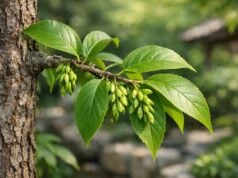
Dwarf bottlebrush is the compact, garden-friendly form of Melaleuca viminalis (also known in older references as Callistemon viminalis). While most people know it for its vivid “bottlebrush” blooms, its leaves are aromatic and can yield an essential oil rich in eucalyptus-like compounds. That aroma hints at the plant’s traditional “freshening” roles—supporting cleaner-feeling airways, helping with odor control, and offering topical cleansing benefits when used correctly.
Still, dwarf bottlebrush is not a standardized medicinal herb in the way that some culinary and pharmacy-grade botanicals are. Most of what we know comes from laboratory studies of leaf extracts or essential oils and from practical overlap with other Myrtaceae plants that contain similar terpenes. If you use it, think of it as a careful, external-use botanical—best suited to aromatherapy, gentle topical blends, and household applications—rather than a supplement to take internally. The key to safety is dilution, sourcing, and knowing who should avoid it.
Essential Insights
- May support fresher-feeling skin and scalp when diluted properly for topical use.
- Aromatic compounds may help promote easier breathing comfort when used in diffusion or steam (with precautions).
- Do not ingest the essential oil; oral exposure increases risk of toxicity and irritation.
- Typical topical dilution range is 0.5%–2% (about 1–4 drops per 10 mL carrier oil, depending on strength and sensitivity).
- Avoid if pregnant, breastfeeding, very young, or prone to asthma flares triggered by scents.
Table of Contents
- What is dwarf bottlebrush?
- Key ingredients in Melaleuca viminalis
- Does it have antimicrobial benefits?
- Respiratory comfort and aromatherapy
- Skin, scalp, and oral care
- How to use dwarf bottlebrush
- Evidence and safety overview
What is dwarf bottlebrush?
Dwarf bottlebrush refers to compact cultivars of Melaleuca viminalis, a small tree or shrub in the Myrtaceae family. You may also see it labeled Callistemon viminalis; many bottlebrush plants were reclassified into the Melaleuca genus. In practice, this means plant labels, older books, and online listings can use different botanical names for the same plant.
Most people encounter dwarf bottlebrush as a landscape ornamental: it tolerates heat well, attracts pollinators, and produces distinctive red, pink, or crimson flower spikes. The “medicinal” interest is mainly in the leaves. When crushed, the leaves release a strong, clean scent due to volatile compounds (terpenes) that can be captured as essential oil through distillation.
It is important to set expectations early: dwarf bottlebrush is not widely standardized for human therapeutic use. You will not commonly find regulated, dosage-defined products made specifically from M. viminalis in the way you might for peppermint, chamomile, or standardized extracts. When products do exist, they are usually:
- Essential oil (leaf oil) intended for aromatherapy or topical blending
- Leaf extracts used in laboratory research (not typical consumer forms)
- Ornamental leaf material from the garden (not quality-controlled for internal use)
If you want a Myrtaceae plant with a deeper consumer safety and usage tradition, many people compare bottlebrush to tea tree. The chemistry overlaps in broad categories, but they are not interchangeable in strength, irritation potential, or typical recommended uses. If you want that comparison as a starting point, see this Australian tea tree oil overview—then come back and treat bottlebrush as its own, less-studied option.
Practical takeaway: approach dwarf bottlebrush as an aromatic, external-use botanical where sourcing and dilution matter more than “how much to take.” If you cannot verify the plant species and intended-use labeling, it is safer to enjoy the plant as a garden feature rather than a home remedy.
Key ingredients in Melaleuca viminalis
The most discussed “active ingredients” in dwarf bottlebrush are its volatile oils—a mix of aromatic terpenes that evaporate easily and create the plant’s signature scent. While exact profiles vary by cultivar, climate, harvest timing, and distillation method, bottlebrush oils are often described as cineole-forward, meaning they may contain notable amounts of 1,8-cineole (eucalyptol). This compound is also found in many eucalyptus species and contributes to the cool, penetrating aroma people associate with respiratory rubs and steam inhalations.
Other common terpene categories you may encounter in plant analyses include:
- Monoterpenes (often associated with “fresh,” sharp aromas)
Examples: alpha-pinene, limonene - Oxygenated monoterpenes (often more “medicinal,” camphor-like, or cooling)
Examples: 1,8-cineole, alpha-terpineol - Aromatic hydrocarbons (can add warmth or intensity and sometimes irritation potential)
Examples: p-cymene
Why do these matter? Terpenes are biologically active in several ways that are relevant to common bottlebrush “use cases”:
- Surface-level antimicrobial behavior (lab context). Many terpenes can disrupt microbial membranes in test settings. This does not automatically translate into a safe or effective infection treatment on human tissue, but it does explain traditional cleansing and deodorizing uses.
- Odor control and “freshness” perception. Strong volatile profiles can reduce perceived stale odors and make a space smell cleaner, which is one reason cineole-rich oils are popular in diffusion.
- Sensory effects on breathing comfort. Cineole-containing aromas can create a subjective sense of easier airflow, even when they are not treating the underlying cause.
- Inflammation signaling (early evidence). Some terpenes show anti-inflammatory activity in preclinical research, but this remains preliminary for bottlebrush-specific products.
It is also worth noting what bottlebrush does not reliably offer: consistent, standardized polyphenol levels like you might find in a well-characterized berry extract. Leaf extracts can contain flavonoids and other antioxidants, but consumer products are usually essential oil–based, and essential oils do not provide fiber, vitamins, or minerals in meaningful amounts.
Bottom line: dwarf bottlebrush is primarily valued for aromatic terpenes, especially cineole-like compounds. That makes it most relevant for aromatherapy, topical blends, and household use, not as a nutritional supplement.
Does it have antimicrobial benefits?
“Antimicrobial” is one of the most common search intents for bottlebrush oils and leaf extracts. The honest answer is: it may show antimicrobial activity in laboratory tests, but the leap from a Petri dish to safe, reliable human treatment is big. For dwarf bottlebrush, the strongest practical use case is usually surface-level support—helping you feel cleaner, managing odor, or adding a botanical boost to hygiene routines—rather than treating active infections.
Where people use it most realistically:
- Occasional skin cleansing support (for example, post-workout, after gardening, or for oily areas), only when properly diluted
- Household deodorizing (rooms, linens, shoe area), where the goal is freshness rather than disinfection
- Minor “environmental hygiene” routines (for example, wiping frequently touched non-food surfaces)
If you are considering it for skin issues like blemishes, the safest mindset is spot support, not “medical treatment.” Even when an oil has antimicrobial potential, it can also irritate skin, disrupt the barrier, and worsen redness—especially if used too strong or too often.
A more balanced way to use bottlebrush in a routine is to combine “active” aromatics with barrier-friendly practices:
- Cleanse gently (avoid stripping cleansers).
- Use a low dilution topical blend for limited areas.
- Moisturize and protect the barrier to reduce rebound dryness and sensitivity.
For those comparing essential oils, it helps to remember that different plants can have similar “antimicrobial” reputations but very different irritation profiles. If you want a broader context for how essential oils are used as supportive antimicrobials (and where the limits are), this overview of thyme essential oil applications can help you frame bottlebrush more realistically: helpful as a supportive tool, not a substitute for medical evaluation when symptoms are persistent or severe.
When to choose a different path: if you have fever, spreading redness, significant pain, drainage, eye involvement, or symptoms that worsen over 24–48 hours, treat it as a medical issue. Essential oils are not a safe “wait it out” strategy in those scenarios.
Respiratory comfort and aromatherapy
Because dwarf bottlebrush oils can be rich in cineole-like compounds, the plant is often discussed for respiratory comfort—especially that “clear, open” feeling people associate with mentholated rubs. The key point is that aromatics can influence perception (how breathing feels) and comfort (how congested you feel), even when they are not curing the trigger (like a virus, allergy, or dry air).
Common aromatherapy goals include:
- Feeling less “stuffy” in dry indoor air
- Supporting comfort during seasonal changes
- Promoting a clean-smelling environment that feels easier to breathe in
- Pairing scent with relaxation habits (breathing exercises, warm showers, bedtime routines)
Practical methods, in order of safety:
1) Passive diffusion (generally the gentlest).
A diffuser disperses tiny amounts into the air. This is often better tolerated than steam inhalation because the exposure is lower and more gradual.
2) Indirect inhalation (low-intensity).
Place a drop on a tissue and keep it nearby—not pressed to the face—and inhale naturally for a short period.
3) Steam inhalation (higher intensity, needs care).
Steam can intensify exposure and can irritate airways, especially for people with asthma or scent-triggered cough. It can also be unsafe for children due to burn risk.
A smart way to think about respiratory use is: short, gentle, and optional. Overdoing aromatic exposure can backfire, causing headache, throat irritation, watery eyes, or coughing.
Many readers find it helpful to compare bottlebrush’s “cineole lane” with eucalyptus, which is more widely known for similar aromatic effects. If you want that broader perspective on how cineole-rich oils are used in self-care—and the kinds of benefits people seek—see eucalyptus uses and applications.
Aromatherapy troubleshooting tips:
- If you feel tight-chested or wheezy, stop exposure and ventilate the room.
- If you get a headache, reduce drops and shorten session time.
- If you feel nauseated, you are likely using too much for your sensitivity level.
- If sleep gets worse, diffuse earlier in the evening or skip diffusion entirely (some people find camphor-like scents too stimulating).
The best respiratory support remains the basics: hydration, humidity when appropriate, saline for nasal comfort, and medical guidance when symptoms are persistent or severe.
Skin, scalp, and oral care
Topical use is where dwarf bottlebrush most often shows up in real life: as a diluted oil in a carrier, or as a component in blends aimed at oily skin, scalp freshness, or occasional blemish support. The benefits people seek typically fall into three buckets—cleansing, odor control, and comfort.
Skin (especially oily or congestion-prone areas)
A properly diluted bottlebrush essential oil blend may help skin feel cleaner and less “stale,” especially when sweat and occlusion (tight clothing, masks, helmets) are factors. The mistake is using it like a harsh spot antiseptic. Over-concentrated essential oils can disrupt the skin barrier and trigger more irritation and more breakouts over time.
Practical approach:
- Use low dilution for facial areas (often 0.5%–1%).
- Limit application to once daily or less, and reassess after a week.
- Prioritize barrier support: a gentle cleanser and a moisturizer you tolerate.
Scalp (freshness and flakes)
Scalp products often rely on fragrance and mild antimicrobial effects to reduce odor and support a cleaner-feeling scalp. If you try bottlebrush topically, keep it conservative:
- Use 1% dilution in a carrier oil for short contact (10–20 minutes) before shampoo, or
- Add a very small amount to an unscented product you already tolerate (and patch test first).
Oral care (use extra caution)
Some essential oils are used in oral products, but bottlebrush-specific safety data is limited. If you use any essential oil near the mouth:
- Do not apply undiluted oil to gums or mucosa.
- Do not swish essential oil in water without an emulsifier (it will float in droplets and can burn).
- Prefer commercially formulated products designed for oral use, and do not swallow.
For sensitive, reactive, or dry skin, it can help to pair “active” aromatics with calming botanicals rather than increasing concentration. If you want a gentle skin-support counterpart, consider how calendula skin uses are often framed: more soothing than “strong,” and better suited to barrier-friendly routines.
Patch testing is non-negotiable. Apply a diluted blend to a small area (inner forearm is common), wait 24 hours, and only then consider broader use. If you experience burning, itching, hives, or worsening redness, discontinue and treat it as a sensitivity.
How to use dwarf bottlebrush
Because dwarf bottlebrush is most commonly used as an essential oil (or in blends), the most practical question is not “How much should I take?” but “How do I use it safely and consistently?” Below are conservative, real-world methods.
Choose the form
- Essential oil (most common): best for diffusion and topical blends when properly diluted.
- Hydrosol (if available): gentler aromatic water; still patch test.
- Garden leaves: pleasant for scent, but not reliable for dosing or internal use.
Topical dilution guidelines (conservative)
A useful range for most adults is 0.5%–2%.
Approximate drop guide (using a typical 20 drops = 1 mL, which can vary):
- 0.5% in 10 mL carrier: ~1 drop
- 1% in 10 mL carrier: ~2 drops
- 2% in 10 mL carrier: ~4 drops
Where to start:
- Face or sensitive areas: 0.5%–1%
- Body or scalp (short contact): 1%–2%
Diffusion (low-intensity aromatherapy)
- Start with 2–4 drops per 100 mL water in a diffuser.
- Diffuse 15–30 minutes, then reassess.
- Ventilate if anyone develops headache, nausea, or cough.
Steam method (higher intensity, optional)
If you tolerate aromatic steam well:
- Add hot (not boiling) water to a bowl.
- Add 1 drop of essential oil (start low).
- Keep eyes closed, inhale gently for 2–5 minutes.
- Stop immediately if you feel throat irritation or tightness.
Avoid steam inhalation for children, and be cautious if you have asthma, scent-triggered migraines, or chronic airway sensitivity.
Best carrier choices
A carrier oil reduces irritation and spreads the blend evenly. Many people prefer lightweight options for face or scalp. If you want a widely used carrier profile, jojoba skin applications are often discussed because it feels lighter than many oils and suits a range of skin types.
Duration and routine
- Try a conservative routine for 7–14 days, then reassess.
- If benefits plateau, do not automatically increase concentration. Consider frequency changes, different carrier oils, or discontinuation.
Most essential-oil benefits come from consistency at low exposure, not intensity.
Evidence and safety overview
The evidence for dwarf bottlebrush (Melaleuca viminalis) sits in a middle ground: the plant’s chemistry suggests plausible benefits, and laboratory studies support antimicrobial and antioxidant potential, but high-quality human trials are limited. That is why the most responsible guidance emphasizes modest goals (comfort, freshness, supportive care) and strict safety practices.
What the evidence supports best
- Aromatic, comfort-based use: diffusion and low-intensity inhalation for perceived freshness and breathing comfort.
- Topical support in low dilution: skin and scalp routines where the goal is a cleaner feel and odor control.
- Household deodorizing: using scent to improve perceived cleanliness.
Where evidence is weakest
- Internal use (teas, capsules, drops): not standardized, not recommended.
- Treating infections: lab activity does not equal safe, effective medical treatment.
- Long-term daily high-dose use: increases risk of sensitization and irritation.
Side effects to watch for
- Skin burning or stinging (often from too-high concentration)
- Rash, itching, or hives (possible allergy or sensitization)
- Headache, nausea, or dizziness (often from excessive diffusion)
- Cough, throat irritation, or chest tightness (airway sensitivity)
Who should avoid it or use only with professional guidance
- Pregnant or breastfeeding individuals (limited safety data for essential oils in these populations)
- Infants and young children (higher sensitivity, higher risk if accidental ingestion)
- People with asthma or scent-triggered symptoms
- Those with eczema, rosacea, or very reactive skin
- Pets in the home (especially cats), since many essential oils pose higher toxicity risk to animals
Interactions and practical cautions
Essential oils can interact with the body in ways that are hard to predict because they are concentrated mixtures. While classic “drug interactions” are less defined for bottlebrush than for oral herbs, there are real-world interaction points:
- Skin medications: combining irritants can worsen dermatitis.
- Respiratory conditions: strong aromas can trigger symptoms even when the goal is relief.
- Multiple essential oils at once: blending several “hot” oils increases irritation risk.
Safety rules that prevent most problems:
- Do not ingest the essential oil.
- Dilute every topical use.
- Patch test before regular use.
- Use the smallest effective amount.
- Store safely (child-resistant, clearly labeled, away from food).
If you treat dwarf bottlebrush as a careful external-use botanical—rather than a supplement—you can capture its most realistic benefits while minimizing avoidable risks.
References
- Pleiotropic Chemodiversity in Extracts and Essential Oil of Melaleuca viminalis and Melaleuca armillaris of Myrtaceae Family 2017
- Assessment of Antibacterial Efficacy of Callistemon viminalis (Sol. ex Gaertn.) G. Don against Some Isolates Obtained from Urinary Tract Infections 2022
- Efficacy and safety of Melaleuca alternifolia (tea tree) oil for human health—A systematic review of randomized controlled trials 2023 (Systematic Review)
- Safety assessment and adverse drug reaction reporting of tea tree oil (Melaleuca aetheroleum) 2023
- Therapeutic applications of eucalyptus essential oils 2024 (Review)
Disclaimer
This article is for educational purposes only and does not provide medical advice, diagnosis, or treatment. Essential oils and herbal preparations can cause allergic reactions, skin irritation, and harmful effects if misused—especially in children, during pregnancy or breastfeeding, and in people with respiratory conditions or sensitive skin. Do not ingest dwarf bottlebrush essential oil. If you have a medical condition, take prescription medications, or have symptoms that are severe, persistent, or worsening, consult a qualified healthcare professional before using any botanical product.
If you found this guide helpful, consider sharing it on Facebook, X (formerly Twitter), or your favorite platform so others can make safer, better-informed choices.