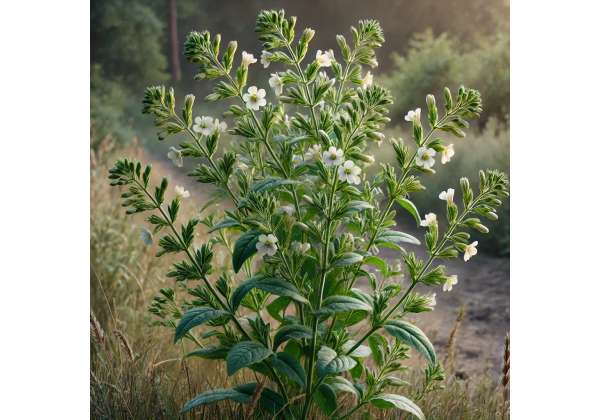
False gromwell, botanically known as Lithospermum officinale, is a traditional Boraginaceae herb with a long but very uneven medicinal record. It has been used in different folk systems for urinary complaints, skin issues, mild inflammatory states, and, in some regions, as a calming or diuretic plant. What makes it interesting today is its chemistry: the plant contains phenolic acids, flavonoids, fatty acids, and pigment-like compounds that may help explain its soothing, antioxidant, and tissue-supportive actions. At the same time, false gromwell is not a simple “wellness tea” herb. Like other members of the borage family, it can also contain safety-limiting pyrrolizidine alkaloids, which change how cautiously it should be used.
For most readers, the most practical question is not whether false gromwell sounds promising, but where it may fit in real life. The honest answer is that it is best approached as a specialist herb with traditional value and laboratory interest, not as a first-choice self-treatment. Topical use is generally easier to justify than routine oral use, and any internal use should be short-term, source-aware, and safety-first.
Essential Insights
- False gromwell is mainly valued for traditional urinary support and short-term topical soothing, but strong human proof is still lacking.
- Its best-known constituents include rosmarinic acid, flavonoids, fatty acids, and alkannin and shikonin-type pigments linked to anti-inflammatory activity.
- There is no well-established oral standard dose; topical use is usually limited to a thin application 1 to 2 times daily for short periods.
- Avoid false gromwell during pregnancy, breastfeeding, childhood, and with liver or thyroid disorders unless a qualified clinician advises otherwise.
- Because Boraginaceae herbs may contain pyrrolizidine alkaloids, casual long-term internal use is not a low-risk choice.
Table of Contents
- What is false gromwell?
- False gromwell active compounds
- Does false gromwell help?
- How false gromwell is used
- How much false gromwell per day?
- Side effects and who should avoid it
- What the research actually shows
What is false gromwell?
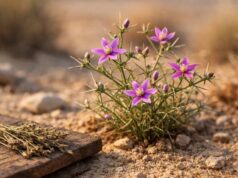
False gromwell is a perennial herb in the borage family, the same broad plant family that includes borage, comfrey, and several rough-leaved medicinal species. It is native to Eurasia and has also been reported in other regions. The plant typically grows upright, develops rough hairy stems and leaves, and carries small pale flowers followed by smooth, hard, shining nutlets. Those stone-like fruits are part of the reason older common names such as “gromwell” and “stoneseed” became attached to the plant.
One useful point for readers is that false gromwell is a plant with a strong historical identity but a weaker modern herbal identity. In traditional records, different parts of the plant were used differently. Seeds were described as diuretic and stone-related remedies in some traditions. Leaves were sometimes used for their calming effect. Roots and other aerial parts were used in decoctions or syrups for older folk indications that ranged from bowel complaints to eruptive illnesses. In parts of Asia and Europe, the plant also had a place in urinary and spasm-related traditional formulas.
That history matters, but it should be read carefully. Traditional use tells us where a plant may have practical value, not that it has been clinically proven for those uses. False gromwell sits in a category of herbs that are fascinating to herbal historians and phytochemistry researchers, yet less established in evidence-based everyday self-care.
Another important distinction is plant identity. False gromwell, or Lithospermum officinale, is not automatically interchangeable with every red-rooted or dye-producing “Lithospermum” remedy sold in Asian medicine markets. Some related species are richer in certain pigments and have their own preparation traditions. That means the name on the label, the plant part used, and the extraction method all matter. A reader who buys “gromwell” or “Lithospermum” without species confirmation may not actually be buying the same herb discussed here.
In modern practical terms, false gromwell is best thought of as a narrow-use herb. It may appeal to readers looking into older urinary herbs, topical plant preparations, or specialized phytochemistry. It is much less suitable for people who simply want a gentle, low-risk daily tonic. The real story of false gromwell is not that it is weak. It is that it is chemically interesting enough to deserve respect, careful sourcing, and realistic expectations.
False gromwell active compounds
False gromwell’s medicinal reputation comes from a mixed chemical profile rather than from one single “magic” ingredient. That profile helps explain both its possible benefits and its major cautions.
Among the most discussed compounds are phenolic acids, especially rosmarinic acid and lithospermic acid. These are often associated with antioxidant and inflammation-modulating actions. In practical terms, that means they may help reduce some of the chemical stress that accompanies irritated tissues. This does not make false gromwell a proven anti-inflammatory medicine, but it does make its traditional soothing reputation more understandable.
The plant also contains flavonoids and flavonoid glycosides, including compounds related to rutin and quercetin chemistry. These are widely studied plant molecules that often support antioxidant activity, capillary stability, and general tissue protection. When readers see false gromwell described as a “cooling,” “soothing,” or “protective” herb, this group of compounds is part of the reason.
Another notable category is the naphthoquinone pigments, especially alkannin and shikonin-type compounds. These are among the most pharmacologically interesting constituents connected with Lithospermum and related Boraginaceae plants. They are often discussed for wound-supportive, antimicrobial, and inflammation-related actions. They also help explain why some related species have been valued in skin-focused traditional medicine and even in dye production. One subtle but useful insight here is that false gromwell’s reputation is often shaped by family chemistry. Even when the exact concentration changes by species or plant part, this pigment chemistry is one reason the genus keeps drawing scientific interest.
False gromwell also contains lipids and seed fatty acids, including gamma-linolenic acid and stearidonic acid. These are relevant because fatty acids can influence barrier function, inflammatory signaling, and skin comfort. That does not mean every false gromwell product behaves like a seed oil supplement, but it does broaden the plant’s profile beyond “just a urinary herb.”
Then there is the safety-defining side of the chemistry: pyrrolizidine alkaloids. These are the compounds that sharply limit how casually false gromwell should be used internally. Certain pyrrolizidine alkaloids identified in Lithospermum species are associated with liver toxicity concerns. This is the same pattern that makes some other Boraginaceae herbs useful in narrow ways but unsuitable for routine, unsupervised oral use. In false gromwell, that means chemistry is not just a benefit story. It is also the reason that preparation quality and route of use matter so much.
So what do these compounds actually mean for a reader? They mean false gromwell is not chemically bland. It contains several groups of constituents that support its traditional image as a soothing, protective, and possibly skin-friendly herb. But the same plant also contains compounds that argue against “more is better” thinking. In other words, false gromwell is best understood as a targeted herb with an interesting phytochemical profile, not as a harmless all-purpose botanical.
Does false gromwell help?
False gromwell may help in a few areas, but the key word is may. Its strongest modern support comes from phytochemistry, lab data, and animal work rather than from large human trials. That makes it reasonable to discuss possible benefits, but not to promise clinical outcomes.
The most defensible traditional use is urinary support. Historical records describe false gromwell as a plant used for urinary tract discomfort, spasm-related complaints, and stone-associated problems. That does not mean it can treat infection, dissolve stones, or replace medical evaluation. It means the herb has a long-standing place in the older urinary-herb tradition. For readers interested in gentler, better-known urinary herbs, uva ursi for urinary comfort is often discussed more often in practical herbal care.
A second area is topical soothing. False gromwell and related Boraginaceae species have attracted interest for skin-calming and wound-supportive actions. This fits with the plant’s phenolic acids, flavonoids, fatty acids, and pigment compounds. In real life, that may translate to short-term use in a salve, wash, or ointment aimed at irritated but intact skin. The promise is not that it rebuilds skin dramatically. It is that it may support a calmer local environment while tissue recovers.
A third area is general inflammation and oxidative stress. Several compounds identified in false gromwell show anti-inflammatory or antioxidant behavior in preclinical models. That matters because many traditional herb uses are less about curing a disease and more about nudging irritated tissues back toward balance. A plant that reduces inflammatory signaling in cells or animal tissues may, in theory, help with discomfort, redness, or local irritation. But until that is shown clearly in people, the benefit remains plausible rather than proven.
There is also endocrine interest. Older animal work suggested thyroid-related and hormone-related effects from Lithospermum officinale extracts. That is scientifically interesting, but it is not a reason to self-treat thyroid imbalance with this herb. In fact, it is one of the main reasons people with thyroid disorders should be careful around it. An herb that might influence thyroid signaling is not a casual wellness choice.
The most honest benefit summary looks like this:
- Traditionally promising for short-term urinary support
- Potentially useful in carefully chosen topical formulas
- Chemically equipped for antioxidant and anti-inflammatory effects
- Too under-studied in humans to justify bold claims
- Potentially active enough to create safety issues if used carelessly
That final point is important. Many herbs disappoint because they do little. False gromwell is different. Its chemistry suggests that it may do enough to matter, which is exactly why it should not be oversold or used without thought. The practical takeaway is that false gromwell belongs in the “possibly helpful, but not first-line and not carefree” category.
How false gromwell is used
False gromwell has been used in several forms, but the right form depends heavily on the goal. Traditional and modern uses do not all point in the same direction, so it helps to separate them.
Historically, the herb appeared in infusions, decoctions, syrups, and simple extracts made from seeds, leaves, roots, or mixed plant material. That broad tradition can make the herb look flexible, but it also creates a problem: different parts of the plant can have different chemistry and different safety profiles. A seed-focused product is not identical to a root extract, and a whole-herb tea is not equivalent to a concentrated topical pigment extract.
For modern readers, topical use is usually the simpler place to start. This may include:
- Salves or ointments for small areas of irritated, intact skin
- Compresses or washes for short-term soothing
- Combination formulas aimed at surface inflammation or mild skin stress
This is where false gromwell often makes more sense than casual oral use. If the purpose is to calm a local area rather than affect the whole body, the risk-benefit balance is usually easier to manage. In that role, it is often compared with other traditional skin-support herbs such as calendula for skin comfort, though the chemistry and safety profile are not the same.
Oral use is more complicated. A reader may encounter teas, tinctures, powders, or capsules marketed for urinary health, inflammation, or broader herbal balance. Here, the quality questions become much more important:
- Is the species clearly identified as Lithospermum officinale?
- Which plant part is being used?
- Is the product standardized, tested, or at least sourced from a supplier that addresses alkaloid risk?
- Is the intended use short-term and specific, or vague and long-term?
Those questions matter because false gromwell is not a great candidate for casual supplement stacking. A vague plan such as “I’ll take a tincture, a capsule, and a tea for a month” is exactly the kind of approach that makes a chemically active herb less safe.
A smart way to think about false gromwell use is external-first, internal-second. If the goal is skin comfort, minor irritation support, or a narrow traditional application, a short course of topical use is usually easier to justify. If the goal is urinary or internal support, it is better to treat false gromwell as a specialist herb, not a daily beverage.
One more practical point: false gromwell should not be assumed to be interchangeable with Asian “zi cao” style products or other red-rooted Boraginaceae formulas. Shared chemistry does not mean identical species, doses, or safety. In herbal medicine, the gap between “related” and “equivalent” can be very large. With false gromwell, that difference matters.
How much false gromwell per day?
This is the section where honesty matters most: there is no well-established, evidence-based daily oral dose for false gromwell that can be recommended broadly for self-care. That is the clearest answer.
When a herb has limited human data and meaningful safety questions, a confident dosing chart would be more misleading than helpful. False gromwell is not like magnesium, psyllium, or peppermint, where more practical dosing norms exist. Product type, plant part, extraction method, and alkaloid content can vary enough that one number does not safely fit all preparations.
A cautious framework looks like this:
- For topical use, follow the product label and keep the application limited, usually a thin layer 1 to 2 times daily on a small area for a short course.
- For oral use, do not improvise a daily target from scattered historical references.
- If a qualified clinician recommends oral use, use one product only, at the lowest labeled amount, for the shortest practical duration.
- Avoid turning false gromwell into a routine daily tonic.
Timing also matters. If an internal preparation is used under guidance, taking it with food may reduce stomach upset. It is also sensible to separate it from prescription medicines by a few hours when possible, simply because interaction data are limited and herbal extracts can alter tolerance or absorption in unpredictable ways.
Duration is just as important as dose. A short, defined course is easier to defend than open-ended use. For example:
- A topical product for brief skin support may be reasonable for several days.
- A short clinician-guided internal trial is more sensible than habitual long-term oral use.
- Ongoing daily use without reassessment is a poor fit for this herb.
Variables that should change the dose conversation include:
- Root versus leaf versus seed preparation
- Tea versus tincture versus concentrated extract
- Whether the product has been screened for alkaloid risk
- Liver status
- Thyroid status
- Pregnancy status
- The specific symptom being addressed
For many people, the practical answer is that false gromwell is not the herb to “dose by instinct.” If the goal is gentle urinary support, better-known and easier-to-dose options such as corn silk preparations often make more practical sense. If the goal is topical soothing, a short, labeled topical course is usually the better starting point.
A good stopping rule is simple: if the product causes nausea, stomach discomfort, rash, headache, unusual fatigue, dark urine, or any sign that feels system-wide rather than local, stop and reassess. With false gromwell, duration discipline is part of safe dosing.
Side effects and who should avoid it
False gromwell’s side-effect profile is best understood in layers. Some concerns are mild and common to many herbs. Others are the reason this plant should not be treated casually.
The mild end includes stomach upset, nausea, unpleasant taste, skin irritation with topical use, or an allergy-like rash in sensitive people. These are not unique to false gromwell. They are the kinds of reactions that can happen with many concentrated plant extracts.
The more important concern is liver safety. Because false gromwell belongs to a plant family known for pyrrolizidine alkaloids, internal use raises a more serious question than “Will this upset my stomach?” The better question is “Could repeated use expose me to compounds that are not ideal for the liver?” That is why sourcing, plant part, and preparation quality matter so much. It is also why long-term internal use is hard to defend.
A second major concern is endocrine activity. Older work suggests Lithospermum officinale may influence thyroid-related signaling. Even if that effect is not fully mapped in modern practice, it is enough to justify caution. People with hyperthyroidism, hypothyroidism, thyroid nodules, autoimmune thyroid disease, or those taking thyroid medication should not experiment with false gromwell on their own. The same caution applies to people using antithyroid drugs or being evaluated for hormone-related symptoms.
Who should avoid false gromwell unless specifically guided by a qualified clinician?
- Pregnant people
- Breastfeeding people
- Children
- People trying to conceive
- Anyone with liver disease or a history of unexplained liver enzyme elevation
- People with thyroid conditions or on thyroid medication
- People using multiple supplements with uncertain liver effects
- Anyone taking other pyrrolizidine alkaloid-containing herbs
Interaction-wise, the most relevant concerns are not always proven interactions but plausible ones. These include:
- Thyroid medications
- Antithyroid drugs
- Other hepatotoxic medicines or supplements
- Heavy alcohol use
- Multi-herb formulas with overlapping endocrine or liver burden
For topical use, the main rules are simpler:
- Do not use on large damaged areas unless advised professionally.
- Avoid deep, infected, or clearly worsening wounds.
- Patch test first if you have reactive skin.
- Stop if the area becomes more red, itchy, painful, or swollen.
This external-first and short-term logic is similar to the caution often discussed with comfrey topical products: a plant may be useful in a narrow way and still be a poor choice for casual internal use.
Seek medical care promptly if symptoms suggest infection, worsening burn or wound depth, urinary obstruction, fever, jaundice, dark urine, pale stools, marked fatigue, severe abdominal pain, or rapid changes in thyroid symptoms. False gromwell is not a substitute for diagnosis in situations that may need antibiotics, imaging, or endocrine treatment.
What the research actually shows
The research picture on false gromwell is promising in the laboratory and limited in the clinic. That is the most accurate summary.
What looks strongest right now is the plant’s chemistry. Modern papers have mapped important groups of constituents in Lithospermum officinale, including phenolic acids, flavonoids, fatty acids, and alkannin and shikonin-type compounds. That matters because it gives a scientific basis for the herb’s traditional reputation. It also shows why the plant keeps attracting interest in inflammation, wound support, and topical formulation research.
The next strongest tier is preclinical evidence. In cell studies, false gromwell extracts have shown anti-inflammatory potential, including reduced inflammatory signaling in activated immune-related cells. There is also animal work suggesting topical false gromwell preparations may support burn-wound healing compared with control conditions. This is meaningful, but it does not automatically predict the same effect in a person buying an herb cream online.
An especially interesting line of research involves callus extracts. In one study, a false gromwell callus extract showed anti-neuroinflammatory activity in cell models and was noted for lacking the pyrrolizidine alkaloids found in root extract. That is not a consumer-ready product recommendation. It is an important research clue. It suggests future formulations may be able to separate some of the plant’s useful chemistry from some of its safety-limiting chemistry.
Where the evidence becomes thin is direct human use of isolated false gromwell. There are not robust, modern clinical trials establishing a standard oral dose, proving benefit for urinary symptoms, or confirming long-term safety. That gap matters. Without solid human data, the herb stays in the category of “supported by tradition and preclinical findings, but not yet well validated.”
A practical evidence ranking for false gromwell would look like this:
- Strongest: phytochemistry and compound identification
- Moderate: cell and animal data for anti-inflammatory and wound-related actions
- Weak: direct human evidence for isolated false gromwell products
- Unresolved: standardized oral dosing and long-term safety in routine use
This is why false gromwell should not be sold as a proven cure-all. It is better framed as a research-interest herb with some credible traditional uses and a few rational topical applications. Readers looking for urinary herbs with more established practical guidance often end up comparing it with options such as golden rod, while readers interested in skin support may prefer herbs with clearer topical traditions and easier safety rules.
The bottom line is balanced: false gromwell is not hype-only, because the chemistry is real and the preclinical data are meaningful. But it is also not a fully validated modern herbal mainstay. Its best use today is careful, narrow, and informed by its limits as much as by its potential.
References
- Exploring the Pharmacological Potential of Lithospermum officinale L.: A Review of Phytochemicals and Ethnomedicinal Uses 2024 (Review)
- Dynamics of alkannin/shikonin biosynthesis in response to jasmonate and salicylic acid in Lithospermum officinale 2022
- Neuroprotective Effect of Lithospermum officinale Callus Extract on Inflamed Primary Microglial Cells 2024
- The Effect of Lithospermum officinale, Silver Sulfadiazine and Alpha Ointments in Healing of Burn Wound Injuries in Rat 2017
- Extracting and Analyzing Pyrrolizidine Alkaloids in Medicinal Plants: A Review 2020 (Review)
Disclaimer
This article is for educational purposes only and does not replace medical advice, diagnosis, or treatment. False gromwell is a specialized herb with limited human research, variable product quality, and meaningful safety considerations, especially for internal use. Do not use it to self-treat infections, kidney stones, thyroid disorders, burns, persistent skin disease, or liver-related symptoms. Speak with a qualified healthcare professional before using false gromwell if you are pregnant, breastfeeding, trying to conceive, taking prescription medicines, or managing a liver or thyroid condition.
If you found this article helpful, please share it on Facebook, X, or your preferred platform so more readers can make informed, safety-first decisions.