Felon herb, better known today as comfrey, is a traditional European medicinal plant whose roots and leaves have long been used for bruises, sprains, sore muscles, and slow-healing skin problems. Botanically, it is Symphytum officinale, a member of the borage family. Its reputation comes from a blend of soothing mucilage, tissue-supportive allantoin, anti-inflammatory phenolic compounds, and a long history in poultices, salves, and ointments.
Modern interest in comfrey is more cautious than older folklore. Topical products made from comfrey root can help ease pain and swelling in minor musculoskeletal injuries, and this is where the strongest evidence sits. At the same time, the plant contains pyrrolizidine alkaloids, compounds linked to liver toxicity and other safety concerns when taken by mouth or used carelessly. That is why current guidance focuses on short-term external use only, with strict attention to product quality and duration.
For readers, the real question is not whether comfrey is powerful. It is. The better question is how to use it in a way that respects both its benefits and its boundaries.
Essential Insights
- Comfrey is most useful as a short-term topical herb for minor sprains, bruises, back pain, and localized muscle soreness.
- Its best-known supportive compounds include allantoin, rosmarinic acid, mucilage, and tannins, but toxic pyrrolizidine alkaloids limit safe use.
- Semi-solid topical products made with about 10% liquid extract are commonly applied in a thin layer 2 times daily for up to 10 days.
- Do not take comfrey orally, and do not apply it to broken skin, irritated skin, or large body areas.
- Pregnant or breastfeeding people, children, and anyone with liver disease should avoid unsupervised use.
Table of Contents
- What Is Felon Herb
- Key Ingredients in Comfrey
- Does Comfrey Help Pain and Skin Repair
- How to Use Comfrey Safely
- Comfrey Dosage and Timing
- Side Effects and Who Should Avoid It
- What the Research Actually Says
What Is Felon Herb
Felon herb is an older folk name associated with comfrey, a coarse, hairy perennial herb native to Europe and parts of Asia and now widely naturalized elsewhere. The accepted botanical name is Symphytum officinale. Many readers also know it by traditional names such as knitbone, boneset, blackwort, or simply comfrey. Those older names hint at how the plant was viewed in herbal tradition: not as a gentle daily tonic, but as a plant called upon when tissues were bruised, strained, or thought to need help “knitting” back together.
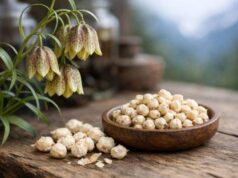
The plant grows in moist ground, produces clusters of nodding bell-shaped flowers, and develops a thick, dark root that has been the main medicinal part in most formal preparations. Leaves were also used in household herbalism, often as poultices. Historically, comfrey was applied to sprains, bruises, fractures, sore joints, ulcers, and wounds. Some older traditions even used it internally as tea or tincture, especially for cough, stomach upset, or ulcers. That older internal use is no longer considered acceptable self-care because of the plant’s toxic alkaloids.
That point matters more than many people realize. Comfrey has not “fallen out of favor” because it stopped working. It became more restricted because researchers learned more about its chemistry. The same plant that can support local comfort and recovery also contains compounds that can seriously injure the liver if swallowed. As a result, modern herbal use draws a bright line between external short-term use and unsafe internal use.
Another practical detail is species confusion. Symphytum officinale is common comfrey, but related species and hybrids, especially Symphytum × uplandicum, also appear in topical products and older research. That does not make every comfrey preparation interchangeable. Different species, plant parts, extraction methods, and pyrrolizidine alkaloid levels can change both benefits and risk. A home-dug root from the garden is not the same thing as a regulated topical extract.
For modern readers, the most accurate way to think about felon herb is this: it is a historically important medicinal plant now used mainly in topical creams, ointments, and gels for short-term support of minor musculoskeletal pain and bruising. It is not a general edible herb, not a safe tea, and not a plant to improvise with casually. Comfrey works best when its traditional strengths are kept, but its old unsafe habits are left behind.
Key Ingredients in Comfrey
Comfrey’s medicinal profile comes from a mixture of soothing, tissue-active, and potentially toxic compounds. That combination is exactly why the plant attracts both respect and caution. If you understand its chemistry, comfrey’s modern place in herbal medicine makes much more sense.
The compound most often associated with comfrey is allantoin. It is widely discussed because it supports epithelial turnover and is linked to skin-conditioning and tissue-repair functions. Allantoin is not unique to comfrey, but comfrey helped make it famous in herbal medicine. In topical use, allantoin is part of the reason comfrey feels at home in salves and creams aimed at soothing overworked or irritated tissue.
Another important group is phenolic compounds, especially rosmarinic acid and related molecules. These are associated with antioxidant and anti-inflammatory activity. In plain terms, they may help calm some of the local inflammatory signaling that accompanies bruising, tenderness, and strain. That does not mean comfrey acts like a strong drug anti-inflammatory, but it does help explain why topical comfrey can feel helpful in sore, swollen areas.
Comfrey also contains mucilage and other polysaccharides. These give the plant some of its soothing, softening character. Mucilage helps explain why traditional preparations often felt moistening and protective rather than sharp or stimulating. Tannins add an astringent element, which may contribute to the plant’s traditional role in superficial tissue care.
The most important cautionary compounds are pyrrolizidine alkaloids, often shortened to PAs. These are the chemicals that changed comfrey’s safety reputation. PAs can be metabolized into toxic compounds that damage the liver and have been linked to genotoxic and carcinogenic risk. They are the reason modern guidance tells people not to ingest comfrey and to be selective even with external products. Root material often contains more PAs than aerial parts, though leaves are not automatically safe.
A balanced way to think about comfrey’s chemistry is to divide it into two functional groups:
- Helpful topical constituents:
- Allantoin
- Rosmarinic acid and related phenolics
- Mucilage and polysaccharides
- Tannins
- Risk-driving constituents:
- Pyrrolizidine alkaloids such as symphytine, lycopsamine, and related compounds
This mixed chemistry explains why a high-quality comfrey product should do more than say “natural” on the label. Better products identify the plant part, the extract type, and ideally the PA control strategy. That is also why modern comfrey is best used as a standardized topical rather than as a homemade tea or a folk remedy made from unknown plant material.
If you compare comfrey with other topical herbs, the chemistry feels distinct. For example, topical arnica for bruises is usually discussed in terms of sesquiterpene lactones, while comfrey is better known for its blend of allantoin, phenolics, and mucilage, with safety limits set by its alkaloids. Understanding that difference helps you choose the right herb for the right job instead of assuming all herbal pain creams work the same way.
Does Comfrey Help Pain and Skin Repair
This is the section most readers care about, and the honest answer is more precise than either enthusiasts or skeptics often make it sound. Comfrey does appear to help certain kinds of localized pain and swelling when used topically for a short time. Its strongest real-world use is for minor musculoskeletal complaints, not broad internal healing claims.
The most realistic targets include:
- Minor sprains
- Bruises and contusions
- Acute back pain
- Muscle soreness after strain or overuse
- Mild, localized joint discomfort
In these settings, the goal is not dramatic numbing. Comfrey is better understood as a local recovery-support herb. People tend to notice less tenderness, less movement pain, or a faster settling of swelling and stiffness over a few days. That is a meaningful benefit, especially for a topical option, but it is not the same as treating a severe injury.
The skin-repair story needs more nuance. Traditional herbalists often praised comfrey for wounds, ulcers, and “knitting” tissue together. Modern caution changes that picture. While the plant has compounds associated with tissue support, current responsible use usually avoids applying comfrey to broken or irritated skin. So yes, comfrey has a wound-healing reputation, but today that reputation is best understood as part of the plant’s history and laboratory profile rather than a broad home-use recommendation.
Where comfrey shines most is in the gap between a minor injury and a major one. Consider a twisted ankle that is painful but stable, a sore lower back after lifting, or a bruise that is tender but uncomplicated. In these cases, a good comfrey cream may fit alongside rest, protection, gradual movement, and time. It is less appropriate when there is open skin, suspected fracture, spreading redness, severe swelling, fever, or pain that keeps worsening.
A useful way to frame comfrey’s benefits is by what it is likely and unlikely to do.
More likely:
- Reduce pain on movement
- Ease local soreness and stiffness
- Help swelling settle in minor blunt injury
- Improve comfort over several days
Less likely:
- Fix a serious structural injury
- Replace rehabilitation
- Work well for widespread chronic pain
- Be appropriate for open wounds or broken skin in self-care
For superficial skin calming rather than bruise-and-strain support, many people may do better with calendula for minor skin healing, which has a different safety profile and a more natural fit for everyday skin-soothing contexts.
So, does comfrey help? Yes, but in a narrow, useful lane. It is not a miracle herb, and it is not obsolete either. Its value is practical: short-term topical relief for minor pain, swelling, and soft-tissue stress when used in the right preparation and with the right limits.
How to Use Comfrey Safely
Using comfrey well is mostly about choosing the right form and avoiding outdated habits. The safest modern approach is a prepared topical product meant for external use only. Creams, ointments, gels, and semi-solid extracts are the usual choices. These are very different from the old practice of drinking comfrey tea or making a homemade root mash for general healing.
If you are considering comfrey, look for these features on the label:
- Symphytum officinale or clearly identified comfrey species
- External use only
- Cream, gel, or ointment rather than tea, capsule, or tincture for oral use
- Clear ingredient list and concentration
- A statement suggesting PA control, PA depletion, or regulatory-quality manufacturing
A thin-layer topical is the most sensible default. You do not need a heavy coating. Apply enough to lightly cover the affected area, then rub it in gently unless the area is too tender. Wash your hands after use, and keep the product away from eyes, lips, inside the nose, and other mucous membranes.
Good uses tend to be focused and short term. Examples include a mild ankle sprain after the first injury assessment, a tender bruise, a sore calf after exercise, or localized low back pain after lifting. In these cases, comfrey is a support tool, not the whole plan. Ice, rest from aggravating movement, gradual return to activity, and medical evaluation when needed still matter.
Several practical mistakes make comfrey less safe:
- Applying it to broken or irritated skin
- Using it over a very large body area
- Covering it tightly under occlusive bandaging unless advised
- Using it for weeks without reassessment
- Swallowing it or using homemade teas
- Treating a serious injury as though it were minor
Homemade preparations deserve a special warning. Many herbal traditions describe fresh-leaf poultices or root infusions, but homemade comfrey is hard to standardize and impossible for most people to assess for PA content. Modern readers are usually better served by a regulated topical product than by a backyard remedy.
There is also the matter of choosing the right herb for the job. Comfrey is not the best first pick for every skin or pain issue. For example, witch hazel for topical astringent support may make more sense for minor skin irritation or post-cleansing care, while comfrey is better matched to bruised, strained, or sore soft tissue.
The bottom line is simple: use comfrey as a targeted external remedy, on intact skin, in modest amounts, for a clear reason, and for a short window. The herb tends to behave best when you use it with discipline instead of with folk-medicine enthusiasm.
Comfrey Dosage and Timing
Comfrey dosing is one of the easiest places to go wrong because older herbal sources and modern safety guidance do not agree. Current practice does not support an oral dose for self-care. The meaningful dosage discussion is topical only.
A practical adult topical pattern is this:
- Use a semi-solid product such as a cream, ointment, or gel
- Apply a thin layer to the affected area
- Use it 2 times daily when following monograph-style guidance
- Keep use short term, usually no longer than 10 days unless a clinician directs otherwise
That structure matters more than chasing a large amount. Comfrey is not a “more is better” herb. The goal is to deliver a controlled topical exposure, not to saturate the skin. Many readers expect herbal pain products to work like a muscle rub that can be slathered on all day. Comfrey is not that kind of product.
When products specify strength, a common reference point is a semi-solid preparation containing about 10% liquid extract. That is the level often cited in formal topical guidance. If your product uses a different concentration, follow the label rather than trying to translate the dose yourself. A high-quality label should tell you how often to apply it and for how many days.
Timing also changes the experience. For a fresh bruise or mild sprain, most people use comfrey after the initial injury is recognized and the skin is confirmed intact. Early application can be reasonable, but not at the expense of basic injury care. If you have a serious twist, inability to bear weight, deformity, or rapidly increasing swelling, get the injury evaluated first.
A helpful way to use topical comfrey is to think in phases:
- First day:
- Confirm the injury is minor and the skin is intact.
- Use standard first-aid measures.
- Start comfrey only if it fits the product directions.
- Days 2 to 5:
- This is often when comfrey feels most useful for soreness, stiffness, and movement pain.
- Days 6 to 10:
- Continue only if the area is steadily improving.
- Stop sooner if the problem has settled.
- After 10 days:
- Reassess rather than simply continuing.
There is no good self-care reason to drink comfrey tea, take comfrey capsules, or use oral tinctures for “extra healing.” That older practice is exactly what modern safety guidance moves away from.
If you need longer-lasting support for ongoing joint symptoms, an herb better suited to a broader inflammatory discussion, such as boswellia for joint support, may be more appropriate than stretching comfrey beyond its short-term topical role.
Side Effects and Who Should Avoid It
Comfrey’s side effects depend heavily on how it is used. Oral use carries the greatest concern and should be avoided. Topical use is safer, but it is not risk-free. The safest way to understand the herb is to separate local skin reactions from systemic toxicity.
Possible topical side effects include:
- Redness
- Itching
- Burning or stinging
- Contact dermatitis
- Worsening irritation if used on already inflamed skin
These reactions are more likely if you use the product on sensitive skin, apply it too often, use it under occlusion, or react to other ingredients in the base such as fragrance, alcohol, or preservatives. A simple patch test on a small area can help if you are prone to skin reactions.
The bigger issue is pyrrolizidine alkaloid exposure. These compounds are linked to liver injury, especially when comfrey is swallowed. Serious liver harm has been reported after oral use in teas, capsules, and other preparations. That is why “natural” does not mean “safe enough to drink.” Even with topical use, caution is still sensible because skin absorption is not zero and product quality varies.
People who should avoid unsupervised comfrey use include:
- Pregnant people
- Breastfeeding people
- Children and adolescents
- Anyone with liver disease or a past liver injury
- Anyone with a history of heavy alcohol use or current liver stress
- People using comfrey over large areas or for long periods
- People who want to use it internally
There are also use-situation warnings. Do not apply comfrey to broken skin, surgical wounds, infected skin, or oozing rashes. Do not use it near the eyes or inside the mouth. Do not use it as a substitute for assessment when swelling is severe, the joint is unstable, or the pain seems out of proportion to the injury.
Formal topical drug interactions are not well documented, but that should not be mistaken for proof of no risk. The interaction picture becomes more serious if a person ingests comfrey or combines it with other liver-stressing exposures. If you are on multiple medicines, have chronic illness, or are not sure whether your product is well controlled for PAs, ask a clinician or pharmacist before use.
The safety summary is blunt because it needs to be: comfrey can be useful, but its safety comes from strict limits. Short-term external use on intact skin is the lane. Oral, long-term, improvised, or high-exposure use is the problem.
What the Research Actually Says
Comfrey research tells a coherent story, but only if you keep the indications narrow and the safety boundaries firm. The best evidence supports short-term topical use for minor musculoskeletal problems. The weakest and riskiest area is internal use.
Clinical trials have reported benefits from topical comfrey preparations in acute back pain, ankle sprains, bruising, and some localized joint complaints. The reported gains usually involve less pain on movement, reduced swelling, better mobility, and faster day-to-day improvement over a short treatment window. That is meaningful, and it is the reason comfrey remains relevant in topical herbal medicine rather than disappearing into folklore.
At the same time, several limitations matter:
- Many of the better-known trials are older
- Some use specific branded products, which makes generalization harder
- Studies do not all use the same species, extract, or concentration
- Long-term safety data are limited
- Modern self-care restrictions are driven as much by toxicology as by efficacy data
Chemistry and toxicology research have sharpened the safety picture. Recent work continues to show that comfrey contains variable amounts of pyrrolizidine alkaloids, with roots often carrying higher levels than leaves. This helps explain why regulatory guidance emphasizes controlled topical preparations and rejects oral use. Research is also exploring PA-removal strategies and better extract standardization, which could improve the future safety profile of specialized products.
What about wound healing? Laboratory and animal work still support the idea that comfrey has tissue-supportive properties, especially through allantoin, phenolics, and local inflammatory modulation. But current practical guidance remains more conservative than the older folklore. The fact that a compound supports repair in a model does not automatically mean people should apply homemade comfrey to cuts, ulcers, or open wounds.
So how strong is the evidence overall?
- Strongest support:
- Short-term topical use for minor sprains, bruises, and acute localized pain
- Moderate support:
- Local symptom relief in some overuse and joint conditions
- Weak or inappropriate use:
- Oral use for any self-care purpose
- Broad claims about internal healing
- Long-term, repeated, unsupervised topical use
The most grounded conclusion is that comfrey is neither an overhyped myth nor a universal healer. It is a genuinely active topical herb with credible short-term use in minor musculoskeletal pain, paired with a toxicology profile that demands restraint. That combination is unusual, and it is exactly why comfrey needs a more disciplined conversation than many other herbs.
References
- European Union herbal monograph on Symphytum officinale L., radix 2024 (Monograph)
- Comfrey – LiverTox – NCBI Bookshelf 2022 (Clinical Safety Review)
- LC-MS/MS Evaluation of Pyrrolizidine Alkaloids Profile in Relation to Safety of Comfrey Roots and Leaves from Polish Sources 2023 (Open Analytical Study)
- Symphytum genus—from traditional medicine to modern uses: an update on phytochemistry, pharmacological activity, and safety 2025 (Review)
- Efficacy and safety of comfrey root extract ointment in the treatment of acute upper or lower back pain: results of a double-blind, randomised, placebo controlled, multicentre trial 2010 (RCT)
Disclaimer
This article is for educational purposes only and does not replace medical advice, diagnosis, or treatment. Comfrey is a topical herb with real pharmacologic activity and real safety limits. It should not be taken orally, and it should not be used to delay evaluation of serious pain, infection, fracture, worsening swelling, or any persistent health problem. People who are pregnant, breastfeeding, under 18, living with liver disease, or taking regular medicines should speak with a qualified healthcare professional before using comfrey products.
Please share this article on Facebook, X, or any other platform you prefer if it helped you.