Filipendula ulmaria, better known in many herbal traditions as meadowsweet, is a fragrant flowering plant in the rose family with a long history of use for aches, feverish colds, digestive discomfort, and mild inflammatory complaints. It is especially interesting because it combines salicylate-related compounds with tannins, flavonoids, and aromatic constituents, giving it a profile that is both soothing and pharmacologically active. That dual nature explains why it has been valued as a tea herb for centuries and why it still appears in modern formulas for joint comfort and upper digestive support.
What makes Filipendula distinctive is that it is not simply a “natural aspirin.” Its chemistry is broader than that, and so are its traditional uses. The herb has a genuine place in European phytotherapy, particularly for minor articular pain and supportive care at the start of a common cold, yet the modern evidence base remains much thinner than the marketing around it. The most useful way to approach Filipendula is as a traditional herb with real strengths, practical limits, and a safety profile that deserves more attention than many casual tea drinkers realize.
Top Highlights
- Filipendula is most often used for minor joint discomfort, early cold symptoms, and upper digestive irritation such as acid-related discomfort.
- Its key compounds include salicylate derivatives, tannins, flavonoids, and phenolic compounds that may work together rather than through a single ingredient.
- Traditional oral tea use commonly falls around 2 to 18 g/day of the herb, depending on the preparation and reason for use.
- Avoid it if you are sensitive to aspirin or salicylates, and do not combine it casually with other NSAIDs.
- Pregnancy, breastfeeding, and use under age 18 are not recommended without professional guidance.
Table of Contents
- What is Filipendula?
- Filipendula active compounds
- Does Filipendula help pain and inflammation?
- Filipendula for digestion and colds
- How to use Filipendula
- How much Filipendula per day?
- Side effects, interactions, and who should avoid it
- What the research actually says
What is Filipendula?
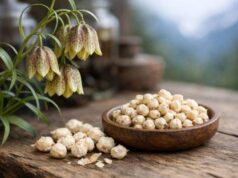
Filipendula ulmaria is a perennial herbaceous plant in the Rosaceae family. It grows in damp meadows, marshy ground, riverbanks, and other moist habitats across Europe and parts of western Asia. In summer it produces clusters of creamy white, sweetly scented flowers, and those flowering tops are the parts most commonly used in herbal medicine. Depending on the product, the dried flowers alone or the broader flowering aerial parts may be used.
Historically, Filipendula developed a reputation as both a comfort herb and a corrective herb. Traditional texts describe it for feverish states, aching joints, gout-like complaints, acidity, gastritis, heartburn, and mild urinary or inflammatory problems. In later European herbal practice, two uses became especially important: relief of minor articular pain and support at the first signs of a common cold. This narrower modern pattern is useful because it reflects where the herb remained most credible rather than where folklore became overly broad.
One of the most important points for readers is plant identity. Filipendula ulmaria is usually discussed under the common name meadowsweet, but in practice, the herb may also appear under older botanical synonyms such as Spiraea ulmaria. That can confuse buyers who assume different names mean different plants. In most traditional European references, they point to the same medicinal species.
Another important distinction is plant part. Flowers are often preferred for tea because of their aroma and gentler sensory profile. Flowering tops or herba preparations may offer a broader chemical range. That matters because people sometimes talk about “meadowsweet” as though every product is chemically identical. It is not. A delicate flower tea and a powdered whole flowering herb capsule may not feel the same in use.
The best modern description of Filipendula is that it is a traditional European salicylate-containing herb with digestive, antirheumatic, and cold-supportive uses. But it should not be reduced to that phrase alone. Unlike a pure drug, it is a mixed botanical preparation whose effects probably depend on the interaction of several compound groups at once. That is one reason many herbalists describe it as gentler on the stomach than the aspirin comparison suggests, even though it still deserves caution in salicylate-sensitive people.
Used well, Filipendula is a focused herb for short-term, traditional purposes. Used vaguely, it becomes one more plant burdened with exaggerated claims about “detox,” “pain cure,” or “natural aspirin” simplicity. The truth is more interesting and more useful than any of those shortcuts.
Filipendula active compounds
Filipendula’s medicinal character comes from a layered chemical profile. This is not a plant defined by one active ingredient alone. Instead, its effects appear to come from a combination of salicylate-related constituents, flavonoids, tannins, phenolic acids, and volatile aromatic compounds.
The best-known part of the chemistry is its salicylate content. Meadowsweet is often described as a source of salicylate derivatives and aromatic precursors such as salicylaldehyde and methyl salicylate. These compounds help explain the herb’s long-standing association with fever, pain, and rheumatic discomfort. They also explain why people compare it to willow bark’s salicin-based pain profile. But the comparison only goes so far. Filipendula is not standardized aspirin in plant form, and its pharmacology should not be simplified that way.
Flavonoids are another major group. Important compounds reported in Filipendula include spiraeoside, hyperoside, quercetin derivatives, and kaempferol derivatives. These molecules are relevant because flavonoids often contribute antioxidant, vessel-supportive, and inflammation-modulating actions. In practical terms, they help explain why the herb is associated with soothing irritated tissues rather than only numbing pain.
Tannins are also central to the plant’s personality. Meadowsweet contains hydrolyzable tannins, including compounds such as rugosin D and tellimagrandin-related structures. This matters because tannins can produce astringent, mucosa-supportive effects. That is one reason Filipendula developed a traditional reputation in acid dyspepsia, gastritis, and irritated upper-digestive states. A herb can contain salicylate-related compounds and still behave differently from aspirin if tannins and other polyphenols shift the overall effect.
Additional relevant components include:
- Phenolic acids and other antioxidant polyphenols
- Volatile aromatic substances that contribute scent and some traditional cold-use identity
- Small amounts of mucilage and carbohydrates in some preparations
- Minor coumarin-related or trace compounds noted in older monographs
One subtle but useful insight is that Filipendula’s chemistry changes with the plant part, harvest stage, and preparation. Flower-rich material can differ from broader aerial parts. Early and later bloom stages may differ in volatile oils and salicylate balance. Water infusions and alcohol extracts do not pull out the same fractions equally. This is a practical reason why one meadowsweet tea may feel mild and soothing, while another concentrated extract feels far more medicinal.
The most honest way to describe the “key ingredients” is as a functional group, not a single hero molecule:
- Salicylate-related compounds for pain and fever associations
- Flavonoids for antioxidant and anti-inflammatory support
- Tannins for astringent and mucosa-supportive actions
- Aromatic volatiles for sensory and traditional cold-use relevance
That chemistry also explains why Filipendula is both promising and easy to misrepresent. It has enough active constituents to matter, but not in a way that can be captured by one easy slogan.
Does Filipendula help pain and inflammation?
Pain and inflammation are among Filipendula’s best-known traditional uses, especially for minor articular pain, rheumatic discomfort, and feverish aches. This is also the area where many readers assume the herb must be well proven because of its salicylate story. The evidence is more modest than that assumption suggests.
Traditional use is strong. Meadowsweet has long been used in European herbal practice for aching joints, minor rheumatic discomfort, and states that mix soreness with mild inflammatory tension. Regulatory herbal monographs still recognize it for the relief of minor articular pain, but importantly, those recognitions are based on long-standing traditional use, not on a robust body of modern clinical trials.
The plant’s chemistry gives the claim real plausibility. Salicylate-related constituents help explain why it has been viewed as antipyretic and pain-relieving. Flavonoids and tannins likely add anti-inflammatory and antioxidant effects. Some laboratory and animal work supports this wider picture, suggesting that Filipendula acts through multiple compounds rather than through a single aspirin-like mechanism.
That is a more realistic framing than calling it “nature’s aspirin.” In fact, one of the more useful insights about Filipendula is that it may work best as a broad anti-irritant herb rather than as a strong direct analgesic. People using it for minor, nagging discomfort may find it more fitting than people expecting medication-level relief.
Filipendula may be most reasonable for:
- Mild joint stiffness or soreness
- Minor inflammatory aches during a cold
- Low-level rheumatic discomfort
- Situations where a gentle tea-based traditional option is preferred
It is much less appropriate for:
- Severe pain
- Acute swollen joints needing diagnosis
- Recurrent inflammatory flares without medical care
- Pain that may be due to infection, fracture, or autoimmune disease
This is also where comparisons can help. Readers looking for stronger anti-inflammatory herbal options often end up considering boswellia for joint-focused support, which has a more direct modern joint-health evidence base than meadowsweet. Filipendula sits in a different niche: gentler, more traditional, and more tea-friendly, but not as well studied for structured chronic pain management.
The likely outcome with Filipendula is modest relief, not transformation. It may take the edge off mild discomfort, especially when the problem includes irritation, feverishness, or digestive sensitivity. That final point is important. Unlike aspirin, Filipendula developed a folk reputation for being compatible with acid-sensitive digestion in some users. That does not make it risk-free, but it does explain why some herbal traditions treated it as a pain herb with a digestive conscience.
So does Filipendula help pain and inflammation? Yes, probably in a mild and traditionally meaningful way. But the honest expectation is supportive relief, not drug-level analgesia.
Filipendula for digestion and colds
Filipendula’s digestive reputation is one of the most interesting parts of its history because it seems slightly paradoxical. A salicylate-containing herb might sound like a poor choice for an irritated stomach, yet meadowsweet has long been used for acid dyspepsia, heartburn, gastritis-like discomfort, and mucosal irritation. The reason is likely that the plant’s action is not driven by salicylate chemistry alone. Its tannins and broader polyphenol content appear to matter just as much.
Traditional herbal texts describe Filipendula as a stomachic, astringent, and soothing herb for hot, irritated digestive states. In practical terms, that usually means discomfort marked by sourness, upper-abdominal irritation, or a sense of rawness rather than heavy, cold, sluggish digestion. It is one of those herbs that has historically been chosen when the digestive tract feels both inflamed and sensitive.
A likely explanation is that the tannins help tone and calm irritated mucosa while the plant’s anti-inflammatory compounds reduce local inflammatory signaling. That does not mean Filipendula is a proven treatment for ulcers, reflux disease, or chronic gastritis. It means its traditional digestive role has more internal logic than it first appears to.
This is also where it overlaps with gentler kitchen-herb territory. People who want a more familiar herbal option for upper digestive discomfort often choose peppermint for digestive spasm and heaviness or chamomile for a softer calming effect. Filipendula fits a slightly different pattern: more astringent, more old-world medicinal, and more associated with sour heat and irritation.
Its cold-use reputation is better recognized by official herbal monographs. Meadowsweet has traditional recognition for supportive treatment of the common cold, especially at the first signs. Here the plant is valued less as an antiviral herb and more as a comfort herb. It may help with:
- Mild feverishness
- Achy, inflamed feeling during a cold
- Sore, irritated throat or upper-digestive discomfort that accompanies illness
- The general “hot and uncomfortable” phase at the start of a cold
What it will not do is replace proper care when symptoms are severe or prolonged. If fever is high, breathing is difficult, or symptoms worsen after several days, this is no longer a meadowsweet question.
A good practical insight is that Filipendula often makes the most sense in mixed symptom pictures. For example, a person with a scratchy cold, mild body aches, and stomach sensitivity may be a better candidate than someone with only severe congestion or only severe reflux. The herb’s traditional usefulness lies in these overlaps: pain with digestive sensitivity, cold symptoms with mild inflammatory discomfort, acidity with a need for a warming but not harsh tea.
This section is also where meadowsweet’s reputation can be overstated. It is a helpful traditional herb for minor digestive irritation and early cold support. It is not a substitute for acid-suppressing treatment when serious disease is present, and it is not a strong anti-infective medicine on its own.
How to use Filipendula
Filipendula is used most often as tea, but it also appears as powder, tincture, dry extract, syrup, and combination formulas. The right form depends on the reason for using it and how gentle or concentrated you want the preparation to be.
Tea is the classic form. This is usually made from the dried flowering tops or flowers and is the most traditional way to use the herb for colds, mild aches, or upper-digestive discomfort. Tea is especially suitable when the goal is steady, short-term support rather than aggressive dosing. It also matches the herb’s historical role as something taken warm, early in the course of symptoms, or between meals when the stomach feels sour or irritated.
Powdered herb or capsules are more convenient and make dosing easier for some people. These are often chosen when the herb is being used for a more structured purpose, such as regular support for minor articular discomfort. The tradeoff is that capsules can make the herb feel more supplement-like and less self-regulating. With tea, taste and preparation naturally slow people down. Capsules make it easier to overuse a plant simply because it feels effortless.
Tinctures and liquid extracts are a middle ground. They are concentrated, portable, and often used in custom herbal formulas. These may be useful for adults who want smaller volumes and clearer dose control. The main caution is that tincture strength varies widely, so one brand’s 2 mL is not necessarily comparable to another’s.
Common forms include:
- Herbal tea or infusion
- Powdered herb in capsules or tablets
- Alcohol-based tincture
- Dry extract in standardized or semi-standardized products
- Combination formulas for cold or joint support
A practical way to match form to goal looks like this:
- For early cold discomfort or mild digestive irritation, tea is often the best fit.
- For convenience and more consistent dosing, capsules or powder may work better.
- For custom herbal practice, tinctures are often preferred.
- For casual self-use, short-term tea use is usually easier to keep safe and sensible.
One reason tea works so well is that Filipendula is not merely a delivery system for salicylates. Heat, aroma, and the water-soluble polyphenol fraction are part of the experience. That is why people often compare it with chamomile tea traditions rather than only with analgesic supplements. The herb has a beverage identity as well as a medicinal one.
A few use errors are worth avoiding:
- Do not assume stronger forms are always better.
- Do not use it indefinitely because it is “just tea.”
- Do not mix it casually with aspirin-like herbs or NSAID-style strategies.
- Do not treat persistent joint pain or digestive pain without diagnosis.
Filipendula tends to work best when the reason is clear, the form matches the goal, and the duration is limited. That is a recurring pattern with traditional herbs that have meaningful chemistry: they reward intention more than improvisation.
How much Filipendula per day?
Filipendula dosing is best discussed by preparation type, because tea, powder, and extract are not equivalent. The most established guidance comes from traditional European monographs rather than from modern dose-finding clinical trials.
For comminuted herbal substance used as an infusion, a traditional single dose is about 1.5 to 6 grams, with a total daily dose of 2 to 18 grams. That is a fairly wide range, which reflects the fact that the herb may be used gently as a tea or more deliberately as a medicinal infusion. In practice, most people stay toward the lower or middle end unless they are working with a professional or using a standardized product.
For powdered herbal substance, traditional monographs list about 250 to 500 mg as a single dose and 250 to 1,500 mg daily. This lower figure does not mean powdered herb is “weaker” in all cases. It reflects the fact that different preparations are intended to be used differently.
A practical dosing framework looks like this:
- Tea or infusion: 1.5 to 6 g per serving
- Daily total for tea-type use: about 2 to 18 g
- Powdered herb: about 250 to 500 mg per serving
- Daily total for powder: about 250 to 1,500 mg
Timing also matters. For cold support, meadowsweet is traditionally started at the first signs rather than late in the course. For minor joint discomfort, it is often used consistently for a period rather than only as a single rescue dose. For digestive irritation, a warm infusion between meals or after meals may make the most sense depending on the symptom pattern.
Duration is one of the most important safety variables. Traditional guidance is not open-ended:
- For common cold support, if symptoms persist beyond about 7 days, reassessment is advised.
- For minor articular pain, use beyond about 4 weeks is generally not the intended self-care pattern.
- For recurrent digestive or pain complaints, long-term repetition should prompt evaluation rather than simply another cup of tea.
A few practical dosing lessons are easy to miss:
- The herb’s pleasant aroma can make people forget that it contains pharmacologically relevant salicylate-related compounds.
- Bitter-sour digestive complaints often respond better to moderate, regular tea use than to one large dose.
- Capsules can make it easier to exceed a reasonable short-term use pattern.
- The dose should match the purpose, not the marketing promise.
For readers used to stronger pain herbs, meadowsweet is not usually a “high-dose or nothing” plant. It often makes more sense as measured, repeated, short-term support. That fits both its traditional identity and its modern evidence limits.
Side effects, interactions, and who should avoid it
Filipendula is often described as a gentle herb, and in many cases that is fair. But gentle is not the same as universally safe. The plant contains salicylate-related compounds and other active constituents that create clear boundaries for who should use it and how.
The first major caution is salicylate sensitivity. Anyone with a known aspirin allergy, salicylate intolerance, or aspirin-triggered respiratory or skin reactions should avoid meadowsweet unless a clinician specifically advises otherwise. This is not a technical footnote. It is the most important safety distinction for the herb.
The second is medication overlap. Meadowsweet should not be used casually alongside aspirin, other NSAIDs, or complex pain regimens without medical advice. Even when the herb is milder than a drug, combining similar effect directions without thought is not wise. The same caution applies to people on anticoagulants or antiplatelet therapy, where the issue is less a proven predictable interaction in every case and more a reasonable concern about additive effects.
Other side effects may include:
- Stomach discomfort in sensitive users
- Nausea or irritation if the dose is too high
- Rash or hypersensitivity reactions
- Worsening of symptoms in those who simply do not tolerate salicylate-containing herbs well
Who should avoid Filipendula or use it only with professional guidance?
- People with aspirin or salicylate sensitivity
- Pregnant people
- Breastfeeding people
- Children and adolescents under 18
- People with active peptic irritation that worsens with salicylate exposure
- Those already using aspirin, NSAIDs, or blood-thinning medication
- People with unexplained fever, acute joint swelling, or persistent digestive pain
One especially useful safety insight is that meadowsweet’s traditional stomach-friendly reputation does not cancel its salicylate caution. Both can be true at once. For some adults, the tannin-rich, polyphenol-rich whole herb may feel gentler than aspirin. For others, salicylate sensitivity makes it a poor fit from the start.
It is also important to know when not to self-treat. A fever above 39°C, severe headache with cold symptoms, painful swollen joints, black stools, vomiting blood, or persistent heartburn or upper-abdominal pain are all reasons to stop treating the problem as a simple herbal question.
For mild, short-term use in the right person, Filipendula is often well tolerated. The problem is not usually the herb itself. It is the assumption that anything available as tea must be harmless at any dose, with any medication, for any symptom. That assumption is exactly what a safety-first approach should prevent.
What the research actually says
The research picture for Filipendula is promising in theory, respectable in phytochemistry, interesting in preclinical pharmacology, and still thin in direct human evidence. That is the balanced summary.
The plant has been studied enough to confirm that it is chemically rich. Modern profiling work has identified salicylate-related constituents, flavonoid glycosides, tannins, and other polyphenols in meaningful detail. That matters because it supports the plausibility of its traditional uses rather than leaving them entirely in folklore.
The next level of support comes from laboratory and animal studies. These studies suggest anti-inflammatory, antioxidant, gastroprotective, and tissue-protective actions. Some work indicates that the anti-inflammatory activity may come from additive or synergistic effects among multiple constituents and their metabolites rather than from one isolated compound. That is a sophisticated and believable explanation for a traditional herb.
But where many articles become too confident is in translating this directly into clinical certainty. The human evidence is limited. Official European assessment documents have been clear that adequate modern clinical data are not available to establish well-established use indications based on current standards. The recognized indications for common cold support and minor articular pain are traditional-use indications, not modern evidence-backed therapeutic approvals in the stronger sense.
A practical evidence ranking looks like this:
- Strongest: traditional use history and phytochemical characterization
- Moderate: laboratory and animal evidence for anti-inflammatory and gastroprotective activity
- Weak: direct, modern, condition-specific human trial evidence
- Unresolved: long-term safety and comparative efficacy in real-world patients
This matters because Filipendula is often marketed with more certainty than its evidence warrants. Claims about reliable ulcer healing, major anti-inflammatory potency, or strong aspirin-equivalent pain relief go beyond what the best evidence can support. The herb is more credible when described as a traditional, multi-compound support herb than as a proven substitute for established treatment.
At the same time, it should not be dismissed. Many herbs have only vague folklore behind them. Filipendula has better chemistry, clearer traditional indications, and more coherent preclinical pharmacology than that. It deserves serious attention, just not inflated claims.
The most honest conclusion is that Filipendula is useful within a traditional-care frame: early cold discomfort, minor articular pain, and some patterns of upper-digestive irritation. Its value is real, but modest. Its safety is manageable, but not trivial. And its modern evidence is good enough to justify informed use, though not strong enough to justify hype.
References
- Community herbal monograph on Filipendula ulmaria (L.) Maxim. (= Spiraea ulmaria (L.)), herba 2010 (Monograph)
- Filipendula ulmaria (L.) Maxim. (Meadowsweet): a Review of Traditional Uses, Phytochemistry and Pharmacology 2022 (Review)
- In Vitro Biotransformation and Anti-Inflammatory Activity of Constituents and Metabolites of Filipendula ulmaria – PMC 2023
- Rapid Chemical Profiling of Filipendula ulmaria Using CPC Fractionation, 2-D Mapping of 13C NMR Data, and High-Resolution LC–MS – PMC 2023
- Antioxidant, anti-inflammatory and gastroprotective activity of Filipendula ulmaria (L.) Maxim. and Filipendula vulgaris Moench – PubMed 2018
Disclaimer
This article is for educational purposes only and does not replace medical advice, diagnosis, or treatment. Filipendula may affect pain pathways, salicylate exposure, digestive symptoms, and medication tolerance. It should not be used to self-treat severe joint pain, high fever, persistent reflux, black stools, or symptoms that may need urgent medical care. Speak with a qualified healthcare professional before using Filipendula if you are pregnant, breastfeeding, under 18, take aspirin or other NSAIDs, use blood thinners, or have a known salicylate sensitivity.
If this article was useful, please share it on Facebook, X, or your preferred platform so more readers can find accurate, balanced information about Filipendula.