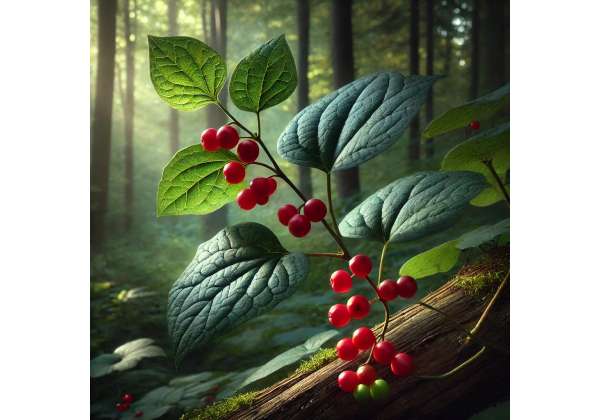
Five flavor berry, the fruit of Schisandra chinensis, is one of the best-known tonic berries in East Asian herbal traditions. It is also called schisandra, wu wei zi, or omija, and its unusual name comes from the way the fruit seems to combine sour, sweet, bitter, pungent, and salty notes at once. Traditionally, it has been used to support stamina, mental focus, recovery after stress, respiratory strength, and liver resilience. Modern research has added a useful layer to that history by identifying lignans, polyphenols, organic acids, and polysaccharides that help explain its antioxidant, anti-inflammatory, and hepatoprotective reputation.
What makes five flavor berry especially interesting is that it sits between food and medicine. It is used in teas, powders, tinctures, and standardized extracts, yet it is not as simple as an everyday berry supplement. The strongest modern evidence points toward liver support, stress-resilience effects, and promising but still limited roles in physical performance and metabolic health. That means the berry is best understood as a well-studied traditional tonic with meaningful potential, but not as a cure-all.
Core Points
- Five flavor berry is most often used for liver support, stress resilience, and recovery from mental or physical strain.
- Its most studied compounds are dibenzocyclooctadiene lignans such as schisandrin, schisandrin B, schisandrin C, and gomisins.
- A 12-week human study used 1000 mg of extract daily, while food-supplement safety discussions use much lower crude-equivalent amounts.
- Avoid unsupervised use during pregnancy, breastfeeding, or while taking medicines affected by CYP3A or P-glycoprotein pathways.
Table of Contents
- What is five flavor berry
- Key compounds and medicinal properties
- Does five flavor berry help liver health
- Can it support stress focus and stamina
- How to use five flavor berry
- How much should you take
- Safety, interactions, and evidence limits
What is five flavor berry
Five flavor berry is the dried fruit of Schisandra chinensis, a woody climbing vine native to parts of China, Korea, and the Russian Far East. The plant is widely known in traditional Chinese medicine as wu wei zi and in Korea as omija. Its bright red berries are valued both for their distinctive taste and for their long history as a tonic herb. The “five flavor” idea is more than a poetic label. It reflects the old observation that the berry has a layered sensory profile rather than one dominant note, which helped shape its reputation as a whole-body balancing herb.
Traditionally, five flavor berry has been used for patterns involving fatigue, low endurance, excessive sweating, poor stress tolerance, chronic cough, and weakness after illness. In East Asian herbal systems, it is often described as an astringent and tonic fruit that helps “contain” energy and fluids while supporting the lungs, kidneys, and liver. Modern readers do not need to adopt that framework fully to see its value. The practical message is that schisandra has historically been used more as a resilience herb than as a symptom-suppressing quick fix.
The medicinal part is the fruit, although seeds and extracts enriched in lignans are also used in modern research and supplements. You will find it sold as whole dried berries, cut-and-sifted fruit for tea, powders, capsules, tinctures, and standardized extracts. That variety is helpful, but it also creates one of the main challenges with this herb: form matters. A handful of dried berries in tea is not the same as a concentrated capsule standardized for schisandrins.
Botanically and commercially, five flavor berry belongs to the same broad category as several other “tonic berries,” but it occupies a more specialized place. It is less familiar than culinary berries and more medicinal in tone. Readers who compare it with other stress-resilience herbs often also explore rhodiola as another classic adaptogenic plant, though five flavor berry differs in its strong astringent tradition and its more developed liver-centered research.
In modern practice, five flavor berry is best understood as a bridge herb. It connects food and medicine, traditional energy support and modern phytochemistry, and daily wellness use with more clinically interesting questions around stress, liver function, and drug interactions. That mix is exactly what makes it compelling. It is not obscure folklore, yet it is not so standardized that every bottle can be treated the same way.
Key compounds and medicinal properties
The chemistry of five flavor berry is one of the main reasons it has earned serious research attention. Its signature compounds are dibenzocyclooctadiene lignans, a group that includes schisandrin, schisandrin A, schisandrin B, schisandrin C, gomisin A, gomisin B, gomisin C, and related lignans. These molecules are studied because they appear to drive much of the berry’s antioxidant, anti-inflammatory, hepatoprotective, neuroprotective, and pharmacokinetic activity.
That lignan profile is the centerpiece, but it is not the entire story. Five flavor berry also contains polyphenols, anthocyanins, triterpenoids, organic acids, sugars, and polysaccharides. Together, these compounds create a broader medicinal pattern than “adaptogen” alone suggests. The berry is not simply energizing. It is biochemically rich enough to influence oxidation, inflammation, membrane signaling, detoxification pathways, and possibly the way the body handles other compounds.
The medicinal properties most often associated with five flavor berry are:
- Hepatoprotective support.
- Adaptogen-like stress resilience.
- Antioxidant and anti-inflammatory effects.
- Mild performance and recovery support.
- Neuroprotective and focus-related potential.
- Astringent respiratory support in traditional use.
The liver-support reputation deserves early mention because it is unusually prominent for a tonic berry. Schisandra lignans are studied for their effects on oxidative stress, inflammatory signaling, bile acid handling, and cellular stress responses. This does not mean every schisandra product is a liver treatment. It does mean the herb has a more specific research identity than many general wellness botanicals.
Another major feature is its effect on enzymes and transporters. Some schisandra lignans can influence cytochrome P450 enzymes and P-glycoprotein. That is part of why the herb draws both interest and caution. On one hand, it helps explain why the plant may have meaningful physiologic effects. On the other, it means five flavor berry cannot be treated as a harmless berry powder in all circumstances.
The adaptogen label is often used loosely online, but it fits five flavor berry better than it fits many herbs. Traditionally, the fruit is taken to improve resistance to wear and tear, sharpen recovery, and help the body cope with cold, fatigue, and prolonged exertion. In practical terms, that means people use it not only when something feels wrong, but when they want more stable performance under stress.
Compared with more familiar cognition-support herbs such as ginkgo for brain and circulation support, five flavor berry looks less like a direct blood-flow herb and more like a systems-level tonic with broader liver, endocrine, and stress-recovery implications. That difference helps explain why its effects can feel less immediate, but potentially wider in scope.
Does five flavor berry help liver health
If there is one benefit area where five flavor berry stands out, it is liver support. This is the part of schisandra’s reputation that moves beyond vague wellness language and into a more defined medical tradition. In China, schisandra-derived preparations have been used for liver injury and chronic liver-related conditions, and modern reviews repeatedly identify hepatoprotection as one of the plant’s most credible therapeutic directions.
The strongest evidence does not mean the berry is a proven cure for liver disease. It means the liver is the organ system where traditional use, chemistry, animal data, and some clinical experience line up more closely than they do for many other herbal claims. Schisandra lignans are studied for their ability to reduce oxidative stress, influence inflammatory pathways, support mitochondrial function, and affect detoxification enzymes. These actions are especially relevant in the setting of drug-induced, alcohol-related, and fatty-liver patterns in experimental models.
From a practical perspective, five flavor berry may be most helpful as a supportive herb in people who are:
- Recovering from periods of physical strain.
- Trying to reduce the metabolic burden of poor sleep, stress, and heavy diet patterns.
- Using liver-support strategies under clinician supervision.
- Looking for a tonic herb with more liver-focused research than a typical adaptogen.
That does not mean it should be used casually in place of diagnosis. Jaundice, unexplained nausea, dark urine, pale stools, right-upper-quadrant pain, or major enzyme elevations need medical care. A berry extract cannot safely stand in for liver workup.
One helpful way to understand schisandra is to compare it with herbs that are already strongly associated with liver care. Readers often place it beside milk thistle in broader liver-support discussions. The comparison is useful because the two herbs have different personalities. Milk thistle is often chosen for direct hepatic protection and silymarin-based standardization. Five flavor berry has a more tonic, adaptogen-like profile and a more complex interaction story because of its lignans.
The clinical picture is also more nuanced than advertisements suggest. Some reviews of schisandra fruit use in drug-induced liver injury report encouraging findings, but they also note that higher-quality and more internationally rigorous studies are still needed. So the right conclusion is not that schisandra “treats liver disease.” It is that schisandra is one of the more promising traditional botanicals for liver resilience, especially when used as part of a medically sound plan.
That distinction matters. It allows you to value the herb without overselling it. Five flavor berry may support liver function and hepatic recovery pathways. It does not remove the need to limit alcohol, address fatty liver drivers, review medications, or get proper testing when symptoms or liver enzymes suggest real disease.
Can it support stress focus and stamina
This is the area where five flavor berry is most often marketed as an “adaptogen,” and there is some truth behind that label. Traditional use consistently frames the fruit as a tonic for endurance, mental steadiness, and recovery from physical or emotional depletion. Modern research supports that direction, but the human data remain more limited than the popularity of the herb might imply.
The clearest modern takeaway is not that five flavor berry is a stimulant. It is that it may help the body perform better under load. That distinction matters. Schisandra is usually described as enhancing resilience rather than creating a quick rush. In one 12-week randomized, placebo-controlled trial in postmenopausal women, 1000 mg of schisandra extract daily improved quadriceps muscle strength and lowered resting lactate. That is a narrow finding, but it supports the broader traditional idea that the berry may aid physical performance and recovery in selected contexts.
There are a few plausible pathways behind this effect:
- Modulation of oxidative stress during exertion.
- Support for mitochondrial and cellular energy processes.
- Reduction of inflammatory signaling after strain.
- Better tolerance of mental and physical fatigue.
Cognitive and mood claims should be handled more carefully. Schisandra appears in traditional formulas for concentration, mental clarity, and calm endurance, and some reviews discuss neuroprotective and anti-stress potential. But most of the stronger evidence here is preclinical or comes from combination-adaptogen formulas rather than from many large single-herb trials.
That means five flavor berry may reasonably be considered for:
- High-demand periods with mental fatigue.
- Mild stress-linked drop in endurance.
- Recovery-oriented routines after overwork.
- People who want a tonic that is neither highly sedating nor strongly stimulating.
It should not be presented as a stand-alone treatment for:
- Anxiety disorders.
- Depression.
- ADHD.
- Insomnia.
- Burnout severe enough to impair daily function.
A useful comparison is with ashwagandha for stress and recovery support. Ashwagandha is often chosen when stress is linked with sleep disruption, tension, and a need for a more clearly calming effect. Five flavor berry tends to fit better when the goal is steady focus, recovery, and performance under pressure rather than sedation or quieting alone.
Traditional East Asian use also adds another nuance. Five flavor berry was not taken only for energy. It was also used to preserve fluids, reduce excessive sweating, and support a sense of inner steadiness during prolonged effort. That older description actually aligns well with its modern reputation as a resilience herb. The berry seems less about pushing harder and more about leaking less—less energy, less recovery capacity, and less composure under stress.
How to use five flavor berry
Five flavor berry can be used in several practical forms, and the best choice depends on what you want from it. Traditional use often starts with dried berries simmered into a decoction or steeped into a strong tea. Modern supplement use more often relies on powders, capsules, tinctures, and standardized extracts. Each form has its own strengths, and they are not interchangeable in effect or dosing.
The most common forms are:
- Whole dried berries.
- Cut-and-sifted fruit for tea.
- Powdered berry in capsules.
- Tincture.
- Standardized extract.
- Functional beverages or food blends.
Whole berries or tea make the most sense if you want a more traditional, food-meets-medicine approach. The taste is sharp, layered, and astringent, so it is often combined with other herbs or lightly sweetened. A decoction tends to be more medicinal than a quick infusion, especially when the berries are gently crushed first.
Capsules and extracts are more practical for people who want consistency. This is especially useful with schisandra because supplement labels sometimes specify lignan content or crude extract ratio. That does not guarantee clinical effectiveness, but it does make the product easier to compare and track than a loose handful of berries.
A simple real-world use plan might look like this:
- Choose tea or whole berry for traditional tonic use.
- Choose capsules or extract if you want a more measurable daily amount.
- Take it earlier in the day if you are using it for stamina or performance.
- Use it after meals if you are sensitive to strong botanicals on an empty stomach.
One common mistake is to treat schisandra like a one-note berry powder. It is more pharmacologically active than that. Another is to combine it with several other stimulating or adaptogenic herbs at once and then assume any effect—or any side effect—came from schisandra alone. It is usually better to start with one clear preparation and learn how you respond.
Five flavor berry also appears in classic formulas alongside tonic herbs, but that does not mean every combination is appropriate for self-care. The fruit’s strong astringent and interaction-related profile makes it wiser to keep the herb simple at first. If you want to evaluate it honestly, use one product, one goal, and one time window.
It also helps to be realistic about what “how to use” means. Schisandra is not a culinary berry for casual handfuls. It is better treated like a tonic herb with food-like roots. Used thoughtfully, it can fit tea routines, work-recovery plans, and targeted supplement use. Used casually, it becomes harder to dose well and easier to overestimate.
How much should you take
Five flavor berry does not have one universally accepted modern dose, and that is important to understand before you buy it. The appropriate amount depends on the form, the concentration, and the goal. A dried berry tea, a tincture, and a standardized extract cannot be treated as though they were equivalent.
The most evidence-grounded number from recent human research is 1000 mg of schisandra extract daily for 12 weeks, which was the dose used in a placebo-controlled trial on muscle strength and fatigue-related biomarkers in adult women. That is useful because it gives at least one modern reference point for standardized extract use.
At the same time, traditional use and commercial products often differ widely. Some products provide a modest berry powder dose, while others use concentrated extracts standardized for schisandrins or total lignans. This is why a label matters more with schisandra than with many simple herbs.
A practical dosing approach is:
- Start at the low end of the product label.
- Use one schisandra product at a time.
- Reassess after a defined period rather than drifting into long-term use.
- Stay more conservative with extracts than with food-style teas.
For many adults, a lower-to-moderate daily dose is enough to test tolerance and effect. That is especially true if the product is standardized or combined with other tonic herbs. If you are using whole berries in tea, the intake is usually gentler and easier to titrate. If you are using capsules or liquid extracts, the potency can climb quickly.
Timing also matters. People who use five flavor berry for mental or physical performance often take it earlier in the day. Those using it in tonic formulas may divide the dose. Because some people find it activating, taking a strong dose late in the evening may not be ideal.
The most sensible questions are not only “how much,” but also:
- What form am I taking?
- What am I trying to improve?
- How long will I try it before deciding whether it helps?
- Am I taking medicines that could interact?
It is also worth noting that official food-safety discussions for schisandra fruit extract are much more conservative than many supplement habits. That does not mean medicinal use is impossible. It means that concentrated extracts should not be treated as nutritionally trivial.
In practical terms, the best self-care strategy is modest and specific. Start low, match the form to the goal, and resist the urge to escalate quickly. With schisandra, more is not always better. Sometimes it simply means a higher chance of side effects or interactions.
Safety, interactions, and evidence limits
Five flavor berry is often described as safe in moderate amounts, and that is broadly true for short-term use in otherwise healthy adults. But safety is exactly where this herb stops being a simple “superberry” and becomes a true medicinal botanical. The main reason is interaction potential. Schisandra lignans can affect cytochrome P450 enzymes and P-glycoprotein, which means they may alter the absorption or metabolism of certain drugs.
That matters most for people taking medicines with narrow therapeutic margins or heavy CYP3A dependence. It is one of the reasons schisandra deserves more caution than its fruit form might suggest.
Use extra caution or seek professional guidance if you take:
- Immunosuppressants such as tacrolimus.
- Warfarin or other blood-thinning medicines.
- Certain statins, sedatives, or seizure medicines.
- Multi-drug regimens with known CYP3A or P-glycoprotein sensitivity.
Pregnancy and breastfeeding are also areas where restraint makes sense. Official safety discussions have noted insufficient data to establish higher-intake safety for sensitive groups, especially with standardized extracts. Because the herb is concentrated in many modern products and interaction questions remain active, pregnancy and breastfeeding are not good settings for casual experimentation.
Possible side effects are usually mild when they do occur, but they can include:
- Digestive upset.
- Reduced appetite.
- Heartburn or acid discomfort in sensitive people.
- Restlessness or trouble sleeping when taken too late or too strongly.
The evidence limits are just as important as the safety questions. Schisandra has stronger chemistry and more research than many tonic herbs, but much of the evidence is still preclinical, mechanistic, or based on small human studies. Liver support has the best case. Stress resilience and performance support are promising. Broader claims about immunity, blood sugar control, anti-aging, and major cognitive enhancement are more preliminary.
So what should a realistic reader conclude?
Five flavor berry is:
- One of the more scientifically interesting tonic berries.
- Genuinely promising for liver support.
- Plausibly helpful for stress resilience and recovery.
- Worth respecting as an herb-drug interaction risk.
It is not:
- A harmless fruit powder for everyone.
- A stand-alone treatment for liver disease.
- A guaranteed cognition enhancer.
- A reason to ignore medication review or medical symptoms.
That balance is what makes schisandra a serious herb rather than a fad ingredient. It deserves attention because its benefits are plausible and sometimes well supported. It deserves caution because its activity is real enough to matter. For many readers, that is the most useful place to land: interested, but disciplined.
References
- A comprehensive review of Schisandra chinensis lignans: pharmacokinetics, pharmacological mechanisms, and future prospects in disease prevention and treatment 2025 (Review)
- Dibenzocyclooctadiene lignans from the family Schisandraceae: A review of phytochemistry, structure-activity relationship, and hepatoprotective effects 2023 (Review)
- A Comprehensive Review of the Main Lignan Components of Schisandra chinensis (North Wu Wei Zi) and Schisandra sphenanthera (South Wu Wei Zi) and the Lignan-Induced Drug-Drug Interactions Based on the Inhibition of Cytochrome P450 and P-Glycoprotein Activities 2022 (Review)
- Effect of Schisandra Chinensis Extract Supplementation on Quadriceps Muscle Strength and Fatigue in Adult Women: A Randomized, Double-Blind, Placebo-Controlled Trial 2020 (RCT)
- Decision on Schisandra chinensis fruit extract as a supplemental ingredient in foods 2024 (Official Safety Review)
Disclaimer
This article is for educational purposes only and is not a substitute for medical advice, diagnosis, or treatment. Five flavor berry may support liver health, stress resilience, and recovery in some contexts, but it can also interact with prescription medicines and is not well established for pregnancy, breastfeeding, or long-term unsupervised use. Seek guidance from a qualified clinician before using it medicinally, especially if you have liver disease, take regular medication, or plan to use a concentrated extract.
If you found this article helpful, please share it on Facebook, X, or any platform where thoughtful herbal education is appreciated.