Rhodiola rosea is a cold-climate herb best known for helping people feel more resilient during periods of stress, fatigue, and mental overload. The part used in supplements is the root and rhizome, which contain a mix of compounds often associated with “adaptogenic” effects. In practical terms, that means rhodiola is usually taken not as a sedative or stimulant, but as a short-course herb meant to support steadier energy, sharper focus under pressure, and better tolerance of demanding days.
Its popularity has grown because it sits in a useful middle ground. Some people do not want the wired feeling that comes with caffeine-heavy products, but they also do not want an herb that feels too calming or sleepy. Rhodiola often appeals to that group. The research is promising, especially for stress-related fatigue and mental performance under strain, but the evidence is still mixed and product quality matters a great deal. That makes dosage, timing, extract standardization, and safety rules especially important if you want realistic benefits without turning a helpful herb into an avoidable problem.
Quick Overview
- May help ease stress-related fatigue and mental tiredness during demanding periods.
- Can support focus, work capacity, and exercise tolerance, but effects are usually modest rather than dramatic.
- A common adult range is 144–400 mg per day of a standardized extract, usually taken earlier in the day.
- Avoid self-prescribing if you are pregnant, breastfeeding, under 18, or taking medicines with known interaction risk.
Table of Contents
- What rhodiola is and why people use it
- Key ingredients and how rhodiola may work
- Rhodiola’s main health benefits and what the evidence suggests
- Practical uses and when rhodiola makes the most sense
- Dosage, timing, and how long to take it
- How to choose a product and avoid common mistakes
- Safety, side effects, interactions, and who should avoid it
What rhodiola is and why people use it
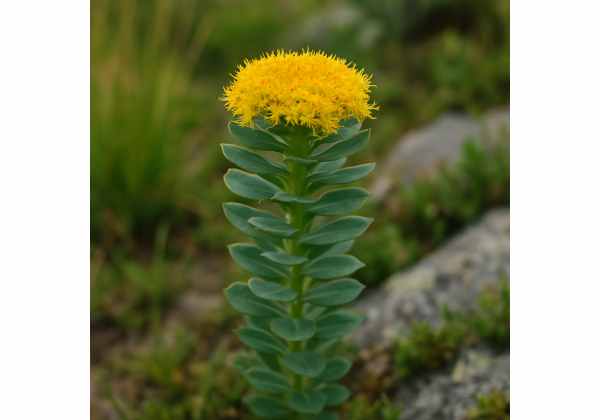
Rhodiola rosea is a perennial plant that grows in cold, mountainous, and northern regions of Europe, Asia, and North America. It is sometimes called arctic root, golden root, or rose root. Traditional use centers on the underground parts of the plant, especially the root and rhizome, which are prepared as extracts, powders, or tinctures. In modern supplement language, rhodiola is usually grouped with “adaptogens,” a term used for herbs taken to support resilience during physical or mental stress.
That description is useful, but only if it stays grounded. Rhodiola is not a cure for burnout, not a substitute for sleep, and not a guaranteed mood booster. It makes the most sense when stress has started to show up as tired thinking, reduced work capacity, or a sense that ordinary effort suddenly feels heavier than it should. People often reach for it during exam periods, intense work deadlines, heavy training blocks, or times when mental fatigue and irritability seem to build together.
Its appeal also comes from the way it tends to feel. Many users describe rhodiola as more “steadying” than stimulating. It may help some people feel less mentally worn down without delivering the obvious punch of a caffeinated pre-workout or energy drink. That distinction matters. Rhodiola is usually a better match for strain-related tiredness than for simple sleep deprivation or the kind of exhaustion that needs medical evaluation.
It is also an herb where comparison helps. People shopping for stress support often weigh it against ashwagandha for calmer stress support. That comparison is useful because the two herbs often fit different personalities and schedules. Ashwagandha is more often chosen when tension, poor sleep, or evening restlessness are central. Rhodiola is more often chosen when the problem feels like depleted drive, shaky focus, or daytime fatigue under pressure.
Another reason people use rhodiola is convenience. Most products come as capsules with standardized extracts, which makes dosing easier than with loose powders. That said, convenience can create overconfidence. The fact that rhodiola is sold as a supplement does not mean every bottle contains the same plant chemistry, the same level of active compounds, or the same risk profile.
So the best way to think about rhodiola is not as a miracle “stress herb,” but as a targeted tool. It may fit adults dealing with temporary overload who want a short-course botanical that supports function, not just sedation. Used that way, it can be practical. Used as a catch-all answer to deeper fatigue, it is often the wrong tool for the job.
Key ingredients and how rhodiola may work
Rhodiola’s reputation rests largely on two groups of compounds: rosavins and salidroside. Rosavins is a collective term for rosavin, rosin, and rosarin, while salidroside is a separate marker compound often used in product testing and standardization. Many quality extracts list one or both on the label because they help identify whether a product is actually built around authentic rhodiola rather than a vague plant blend.
These compounds are important, but they are not the whole story. Rhodiola contains many other phenolic compounds, flavonoids, and plant chemicals that may contribute to its overall effect. That is one reason the herb does not behave like a single-molecule drug. A standardized extract can be helpful, but the full effect likely comes from a broader phytochemical pattern rather than one ingredient working alone.
Mechanistically, rhodiola is thought to influence the body’s stress-response systems in several ways. Researchers have explored how it may interact with stress hormones, fatigue signaling, neurotransmitters, and cellular energy balance. In plain language, the herb seems most relevant where the nervous system and stress load overlap: the point where pressure starts to reduce mental sharpness, mood stability, stamina, or recovery.
That does not mean its mechanisms are settled. Some studies suggest support for cognitive performance under strain, reduced perceived fatigue, or improved resilience during effort, but the exact pathways are still being worked out. This is common in herbal medicine. A plant can have a recognizable use pattern before its complete mechanism is nailed down.
For buyers, the most practical lesson is that labels matter. Two rhodiola products may both say “500 mg,” yet still behave very differently because of:
- plant part used
- extract ratio
- standardization to rosavins or salidroside
- overall product purity
- whether the product contains undisclosed fillers or blends
This is where rhodiola differs from simple whole-food herbs. It is often used in concentrated extract form, so details of manufacturing affect real-world outcomes. A low-quality product may underdeliver even if the label looks impressive. A stronger product may feel more activating than expected if the person taking it is sensitive.
The other important point is that “more actives” does not always mean “better herb.” Rhodiola works best when the extract is authentic, appropriately standardized, and dosed sensibly. Chasing the biggest number on the label can push people toward poor choices.
In short, rhodiola’s key ingredients help explain why the herb is associated with stress resilience and fatigue support, but they do not turn it into a predictable, one-size-fits-all supplement. Its effects depend on chemistry, product quality, timing, and the reason the person is taking it in the first place.
Rhodiola’s main health benefits and what the evidence suggests
Rhodiola’s strongest modern use is for stress-related fatigue. That phrase matters. It does not mean every form of tiredness. It points to the kind of weariness that develops when workload, pressure, or sustained mental effort begin to drag down performance and make ordinary tasks feel heavier. This is where rhodiola has shown the most consistent promise.
The first likely benefit is improved mental stamina under strain. Some clinical studies and reviews suggest that rhodiola may help with concentration, attention, and task performance when people are under stress or feeling mentally spent. Users often describe this not as a surge of energy, but as a cleaner sense of function. The day may still be hard, but thinking feels less bogged down.
The second likely benefit is support for perceived stress and exhaustion. This is one reason rhodiola is often marketed for burnout-like states. That marketing should be handled carefully. It may help with symptoms linked to overload, but it is not a stand-alone answer for true burnout, major depression, or chronic fatigue with medical causes. Still, for short-term stress symptoms, the herb may offer enough relief to make work, study, or training feel more manageable.
A third area is physical performance. Here the evidence is mixed but interesting. Some reviews suggest that rhodiola may help certain endurance outcomes, rating of perceived exertion, or exercise-related fatigue in some settings. The effects are not uniform, and not every study is positive. A good working expectation is modest support rather than major performance enhancement.
Mood is another area that attracts attention. Rhodiola may help some people whose low mood is closely tied to stress, fatigue, or mental depletion. That is different from saying it treats major depressive disorder. People sometimes compare it with ginkgo for cognition and circulation, but the use pattern is different. Ginkgo is more often discussed for blood flow and memory-related goals, while rhodiola is more often chosen for resilience, stress, and mental stamina.
The most realistic benefit profile looks like this:
- less sense of being mentally drained
- better ability to stay on task during stressful periods
- modest help with physical fatigue or exercise tolerance
- possible support for mood when stress is the main driver
The limits matter just as much as the positives. Evidence quality is uneven, many studies are small, and rhodiola preparations differ widely. That means one product used in a clinical trial may not resemble the bottle someone buys online. It also means people should resist the common internet habit of turning “promising” into “proven.”
So does rhodiola work? For some people, yes, especially when the goal is short-term help with stress-linked fatigue and reduced performance. But it is more accurate to think of it as a supportive herb with modest but meaningful potential, not a dramatic fix. If expectations are realistic, its benefits can still be useful.
Practical uses and when rhodiola makes the most sense
Rhodiola makes the most sense when the problem is temporary strain rather than chronic illness. It is most useful in situations where a person is still functioning, but can feel that stress is starting to erode clarity, stamina, or recovery.
Good real-life use cases include:
- a demanding work stretch with rising mental fatigue
- exam or study periods that require sustained concentration
- heavy training blocks where effort feels harder than usual
- stressful travel or schedule compression that leaves you flat
- periods when stress shows up as reduced focus more than as insomnia
It is less convincing when the main complaint is deep emotional collapse, severe anxiety, or chronic unexplained exhaustion. In those cases, supplements can become a way to delay proper care. Rhodiola should support function, not mask a problem that needs a diagnosis or a major lifestyle change.
Many people also use rhodiola as a “daytime herb.” It is often chosen by people who feel that stress has become draining rather than agitating. That can include professionals, students, caregivers, athletes, or shift workers. The common thread is not the job title. It is the pattern: pressure plus fatigue plus slipping performance.
Rhodiola can also be a sensible option for people who want a botanical that feels more active than calming. Someone whose evenings are tense and sleepless may do better with a different herb. Someone who says, “I wake up tired, hit a wall by midday, and lose focus under pressure,” is more aligned with rhodiola’s usual niche.
People comparing herbs in this category sometimes look at eleuthero for steady stress and energy support. That comparison is helpful because eleuthero is often framed as broader long-haul support, while rhodiola is frequently chosen for sharper fatigue and performance-related stress. The distinction is not absolute, but it can guide trial-and-error more intelligently.
A practical way to use rhodiola is to define one clear reason for taking it before starting. For example:
- “I want to feel less mentally drained during a three-week deadline.”
- “I want to see whether stress-related fatigue improves during a training block.”
- “I want to assess whether my morning focus holds up better under pressure.”
That kind of specificity matters because it stops people from treating rhodiola as a vague cure-all. It also makes it easier to judge whether it is helping.
Used this way, rhodiola becomes much more practical. It is not there to transform your life. It is there to support a specific phase, for a defined purpose, with clear expectations. That is where herbs often work best.
Dosage, timing, and how long to take it
Rhodiola dosing is easiest to understand when you focus on standardized extracts rather than raw powder. Official European monograph guidance for traditional use centers on dry extract products, with a single dose of 144 to 200 mg, taken once or twice daily, for a total daily range of 144 to 400 mg. That is a strong reference point because it reflects a formal review of traditional use, preparation type, and safety boundaries.
In practice, many adults do best by starting lower rather than jumping to the top of the range. A sensible self-trial often looks like this:
- start with 100 to 150 mg in the morning if you are sensitive
- move to 144 to 200 mg once daily for several days
- consider a second dose only if needed, and take it early in the day
- keep the total daily amount within the typical 144 to 400 mg range unless a clinician advises otherwise
Timing matters because rhodiola can feel mildly activating in some people. Morning is usually the safest place to start. If a second dose is used, early afternoon is generally better than evening. People who take it too late sometimes misread the herb as “bad for them” when the real problem is simply timing.
Food is optional, but taking it with breakfast or lunch can be a smart choice if you are prone to stomach sensitivity. Capsules also tend to be easier to dose consistently than powders or tinctures.
Duration matters too. Rhodiola is best viewed as a short-course herb, not something to take mindlessly for months on end. If you are using it for temporary stress symptoms, a two- to six-week trial is often enough to decide whether it suits you. Some safety summaries describe short-term use up to about 12 weeks, but that should not be read as a reason to take it continuously without reassessment.
Three common dosing mistakes are worth avoiding:
- Treating powder and extract as interchangeable.
- Taking the first dose on a high-stakes day without testing tolerance.
- Increasing the dose too quickly because the effect feels subtle.
Subtle is not failure. Rhodiola usually works best when it helps you function a little better with less strain, not when it creates a dramatic sensation. People looking for a smoother stack sometimes compare it with l-theanine for calm focus and sleep support, but rhodiola should still be trialed on its own first so you can tell what it is doing.
The key rule is simple: use the smallest effective dose, take it early, and reassess rather than escalating automatically. That is the most reliable way to get value from rhodiola without turning a reasonable trial into an unnecessary problem.
How to choose a product and avoid common mistakes
Rhodiola is an herb where product quality can change the entire experience. The label may look professional, the bottle may use phrases like “adaptogenic energy,” and the ingredient amount may sound impressive, yet none of that guarantees that the product contains a high-quality rhodiola extract.
Start by looking for a few basics:
- the plant name Rhodiola rosea
- the plant part, ideally root and rhizome
- a standardized extract rather than an undefined powder blend
- stated marker compounds such as rosavins and salidroside
- third-party testing or quality documentation when available
This is more important than many buyers realize. Recent supplement-quality research has shown large variation in marker compounds across products, along with issues involving labeling accuracy and contamination concerns. That means a bottle can be weak, inconsistent, or poorly verified even when the marketing sounds confident.
One common mistake is buying by milligrams alone. A 500 mg capsule of an unclear powder is not automatically better than a 200 mg standardized extract. Another mistake is assuming rhodiola should feel like caffeine. Unlike yerba mate’s caffeine-based lift, rhodiola is usually subtler and less immediate. People who chase a fast buzz often either overtake it or dismiss a potentially useful herb because it does not feel dramatic.
A third mistake is using rhodiola as a shortcut around basic stress hygiene. If sleep is poor, meals are erratic, and the workday never stops, rhodiola may help only at the margins. That does not make the herb ineffective. It means the problem is larger than the supplement.
A fourth mistake is taking complicated blends from day one. When rhodiola is mixed with caffeine, green tea extract, nootropics, or several other adaptogens, it becomes hard to judge tolerance, dose response, and side effects. A clean single-ingredient trial is almost always smarter.
A fifth mistake is ignoring sourcing and authenticity. Rhodiola has a real history of adulteration and uneven standardization in the supplement market. That makes careful buying more than a perfectionist habit. It is part of safety.
The best buying mindset is practical, not perfectionistic:
- Pick one standardized product from a reputable company.
- Start low and keep the trial simple.
- Track energy, focus, stress tolerance, and sleep.
- Reassess after a defined period instead of drifting into indefinite use.
That approach will teach you more about rhodiola than any glossy label ever will.
Safety, side effects, interactions, and who should avoid it
Rhodiola is often described as well tolerated in short-term use, but “well tolerated” does not mean side-effect free or universally appropriate. The most useful safety view is balanced: many healthy adults do fine with short, sensible use, but there are clear situations where caution is warranted.
Reported side effects include:
- headache
- dizziness
- stomach upset
- nausea or abdominal discomfort
- diarrhea
- dry mouth or, less commonly, extra saliva
- insomnia or feeling overstimulated, especially if taken late
These effects are usually more likely when the dose is too high, the product is too stimulating for the person, or the herb is taken at the wrong time of day. That is why a low starting dose and morning timing are so valuable.
Some groups should avoid self-prescribing rhodiola. Pregnancy and breastfeeding are the clearest examples because safety data are not strong enough. Children and adolescents are also generally outside the usual self-care use range. Anyone with a known allergy to the plant should obviously avoid it.
People with significant insomnia, agitation, or a history of mood instability should be more careful as well. Rhodiola is not a classic stimulant, but it can feel activating. For some people that is the whole appeal. For others, especially those who are already wired, that quality can backfire.
Interactions deserve special attention. Rhodiola is not known for a huge list of established interactions, but that should not be mistaken for “no interaction risk.” One human study found an effect on CYP2C9 activity, and interaction potential has also been noted around losartan. A cautious rule is to speak with a clinician or pharmacist before using rhodiola if you take:
- blood pressure medicine
- blood thinners
- seizure medicines
- medicines with a narrow therapeutic window
- psychiatric medicines for mood or anxiety disorders
This is not because rhodiola is known to interact with everything. It is because herbs that affect stress and signaling pathways deserve more respect when prescription drugs are already doing related work.
You should also stop and reassess if rhodiola makes you feel too restless, irritable, rash-prone, nauseated, or sleep-disrupted. “Pushing through” mild herb side effects is usually unnecessary and often unwise.
The most sensible safety summary is this: rhodiola can be a reasonable short-term herb for healthy adults under temporary stress, but it is not a casual add-on for everyone. If you are pregnant, breastfeeding, taking prescription medicines, unusually sensitive to activating supplements, or managing a complex health condition, professional advice is the safer starting point.
References
- European Union herbal monograph on Rhodiola rosea L., rhizoma et radix 2024 (Monograph)
- The Effectiveness of Rhodiola rosea L. Preparations in Alleviating Various Aspects of Life-Stress Symptoms and Stress-Induced Conditions-Encouraging Clinical Evidence 2022 (Review)
- Rhodiola rosea supplementation on sports performance: A systematic review of randomized controlled trials 2023 (Systematic Review)
- The quality and safety of Rhodiola rosea supplements on the U.S. market: An analysis of biomarkers, heavy metals, and pesticide residues 2026 (Quality and Safety Study)
- Effect of commercial Rhodiola rosea on CYP enzyme activity in humans 2016 (Randomized Controlled Trial)
Disclaimer
This article is for educational purposes only and is not a substitute for medical advice, diagnosis, or treatment. Rhodiola may be appropriate for short-term self-care in some healthy adults, but it is not suitable for everyone and should not replace evaluation of persistent fatigue, depression, severe anxiety, sleep disorders, or other health concerns. Talk with a qualified healthcare professional before using rhodiola if you are pregnant, breastfeeding, under 18, taking prescription medicines, or managing a chronic medical or psychiatric condition.
If this guide was helpful, please share it on Facebook, X, or your preferred platform so others can find clear, practical, and safety-aware information on rhodiola.