Flame nettle, long known in gardens as Coleus blumei and now more often classified under Coleus scutellarioides or Plectranthus scutellarioides, is best known for its vivid leaves rather than for a well-established place in modern herbal medicine. That distinction matters. Although the plant appears in folk medicine in parts of Southeast Asia and Indonesia, most modern interest comes from laboratory studies of its leaf chemistry, not from strong human trials. Its leaves contain rosmarinic acid, colorful phenolic pigments, volatile compounds, and diterpenoids that show antioxidant, antimicrobial, and anti-inflammatory activity in test systems.
For readers searching for health benefits, the most responsible answer is nuanced. Flame nettle may have medicinal potential, especially in topical and experimental settings, but it is still primarily an ornamental plant with limited clinical evidence. It is also easy to confuse with better-known coleus products based on forskolin, which come from a different species. In practice, flame nettle is more credible as a phytochemical and ethnobotanical subject than as a proven self-care herb.
Key Insights
- Flame nettle is mainly an ornamental coleus with promising leaf chemistry, not a clinically proven medicinal herb.
- Its leaves contain rosmarinic acid, phenolic pigments, and diterpenoids linked with antioxidant and anti-inflammatory activity in laboratory research.
- Traditional use centers on leaf-based preparations for minor inflammatory or skin-related complaints, but human evidence is very limited.
- No standardized oral dose in g, mg, or mL has been established for safe self-treatment.
- Children, pregnant or breastfeeding people, and anyone planning internal use should avoid unsupervised medicinal experimentation.
Table of Contents
- What Is Flame Nettle
- Key Ingredients in Flame Nettle
- What Benefits Are Realistic
- How Flame Nettle Is Used
- How Much Flame Nettle Per Day
- Safety Side Effects and Avoidance
- What the Research Actually Shows
What Is Flame Nettle
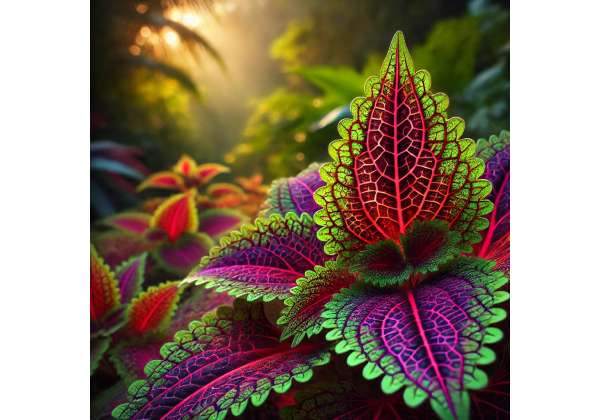
Flame nettle is a tender perennial in the mint family, grown around the world for its dramatic foliage. Depending on the cultivar, the leaves can be deep burgundy, lime, copper, gold, purple, or multicolored, which is why the plant is often treated more as a design feature than as a medicinal species. Botanically, the naming has shifted over time. Many gardeners still know it as Coleus blumei, while modern taxonomic sources place common garden coleus under Coleus scutellarioides, with Plectranthus scutellarioides and Solenostemon scutellarioides listed among older names and synonyms.
This naming history is more than a technical detail. It explains why online herbal content about “coleus” is often misleading. A large share of commercial supplement information refers to Coleus forskohlii, now better known as Plectranthus barbatus, because that species yields forskolin. Flame nettle is not that plant, and it should not be treated as if it shares the same standardized extracts, dosing conventions, or clinical profile as forskolin-based coleus products. Confusing the two is one of the easiest ways for readers to overestimate what flame nettle can actually do.
Traditional use does exist, especially in Indonesia and nearby regions. Published background sections and ethnopharmacology notes describe leaf or root use for abscesses, ulcers, inflammation involving the ear or eye, stomach pain, diarrhea, constipation, fever, dysmenorrhea, and other local complaints. That record gives the plant legitimate ethnomedicinal interest, but it does not automatically convert traditional use into proven modern treatment. Most of those uses remain supported by custom, small studies, or preclinical work rather than strong clinical trials.
It also helps to understand what part of the plant people mean when they discuss medicinal use. With flame nettle, the leaf is the main focus of both traditional preparations and laboratory analysis. The roots appear in some folk-use reports, but modern phytochemical work is centered mainly on leaves and aerial parts. This is also the part richest in colorful phenolic compounds and rosmarinic acid, which helps explain why medicinal interest tends to follow the foliage, not the flowers.
So the most accurate description is this: flame nettle is primarily an ornamental coleus with a real but still underdeveloped medicinal profile. It belongs in conversations about folk medicine and plant chemistry, but not in the same category as herbs with established human dosing, monographs, and clinical outcomes. That difference should shape every later decision about benefits, uses, and safety.
Key Ingredients in Flame Nettle
The medicinal interest in flame nettle comes mainly from its leaves, and especially from the compounds packed into those leaves. The standout constituent is rosmarinic acid, a well-known polyphenol found in several mint-family plants. In flame nettle, rosmarinic acid has drawn attention because the leaves can accumulate it at unusually high levels, and because it is strongly linked with antioxidant and antimicrobial activity in extraction studies.
Rosmarinic acid is important because it helps explain several of the plant’s most plausible actions. It has recognized antioxidant behavior and may contribute to anti-inflammatory and antimicrobial effects in test systems. That does not mean flame nettle acts exactly like every other rosmarinic-acid-rich herb, but it does place the plant in a more interesting phytochemical category than a casual garden annual might suggest. In broad mint-family terms, it shares some chemical logic with other aromatic, phenolic-rich plants discussed in a mint-family herb overview, even though flame nettle is far less studied clinically.
Beyond rosmarinic acid, flame nettle leaves contain several other potentially active groups:
- Anthocyanins and other pigments that contribute to the red, purple, and maroon leaf colors
- Flavonoids and phenolic acids with antioxidant potential
- Volatile compounds such as pinene-, cadinene-, and selinene-type components
- Abietane-type diterpenoids, some of which have shown anti-inflammatory and antiproliferative activity in vitro
These compounds matter for different reasons. The anthocyanins and colorful phenolics help explain the plant’s striking appearance and some of its antioxidant reputation. The volatile compounds are part of the leaf’s aromatic profile, although flame nettle is not used like a classical essential-oil herb. The diterpenoids are especially interesting from a pharmacology perspective because researchers have isolated novel compounds from Plectranthus scutellarioides with measurable activity in inflammatory and tumor-cell models. That does not make the plant an anticancer herb in practice, but it does show that the species is chemically active in more than a decorative way.
One reason readers should be cautious, however, is that “key ingredients” are not the same as “proven active principles in humans.” Most of the work on flame nettle chemistry comes from extraction studies, tissue-culture research, and cell experiments. That means the plant’s compounds are real, measurable, and promising, but the route from leaf chemistry to reliable therapeutic effect is still incomplete. A colorful leaf with rosmarinic acid is not automatically a safe oral remedy.
The chemistry also varies with cultivar and growing conditions. Modern studies on in vitro cultures show that the levels of volatile constituents can shift substantially depending on plant-growth conditions and hormones. This likely means that one flame nettle cultivar in a shady container may not match another cultivar grown under controlled culture conditions. For medicinal use, that variability is a major limitation because it prevents the plant from behaving like a standardized herb.
In short, flame nettle’s ingredient profile is its strongest argument for medical relevance. Rosmarinic acid, pigments, flavonoids, volatiles, and diterpenoids make it chemically noteworthy. But chemistry alone is only the first step. The real question is what benefits survive once those compounds are tested beyond the lab.
What Benefits Are Realistic
The realistic benefits of flame nettle are much narrower than a generic “medicinal coleus” label suggests. Based on the available literature, the plant’s strongest case is not as a proven oral remedy, but as a source of bioactive compounds with topical, antimicrobial, antioxidant, and anti-inflammatory promise. In other words, the plant is biologically interesting, but the practical health claims should stay modest.
The first realistic benefit cluster involves laboratory antioxidant activity. This is supported mainly by the leaf’s rosmarinic acid and phenolic profile. Antioxidant findings are common in plant research, and they do tell us something useful: the leaves contain compounds capable of scavenging radicals and stabilizing oxidative processes in test systems. What they do not tell us is whether a person drinking or applying a home preparation will experience a meaningful clinical effect. So antioxidant activity is best understood as mechanistic support, not as a direct user-facing benefit.
The second plausible area is antimicrobial or antiseptic potential. Experimental studies have found antibacterial activity from flame nettle leaf extracts against several oral or skin-relevant bacteria in controlled conditions. This makes the plant interesting for oral-care or topical-research contexts, but it still falls short of proving that a homemade rinse or poultice is effective or safe for actual infections.
The third realistic area is anti-inflammatory support at the preclinical level. Diterpenoids isolated from the plant have shown inflammatory-pathway inhibitory activity, and broader extract studies suggest anti-inflammatory potential in cell models. This is meaningful science, but it is still early science. Readers looking for clinically established anti-inflammatory help should not assume flame nettle works like better-studied anti-inflammatory herbs with a clearer human evidence base.
A balanced hierarchy of likely benefit looks like this:
- Most realistic:
- Source of antioxidant and phenolic compounds
- Experimental antibacterial activity
- Preclinical anti-inflammatory potential
- Possible usefulness in researched topical or oral-rinse formulations
- Plausible but not proven:
- Minor topical support for irritated skin
- Traditional support for boils, ulcers, or mild inflammatory complaints
- Mild folk use in digestive or feverish states
- Not established:
- Reliable oral treatment for diabetes, constipation, or dysmenorrhea
- Safe and effective internal self-treatment
- Proven anticancer, immune, or infection-treating effects in humans
This middle position is important because flame nettle sits in a category that often gets overhyped. A colorful medicinal-looking plant with a long list of folk uses and some strong lab results can sound far more established than it is. But once the evidence is sorted, a simpler picture appears. Flame nettle may be medicinally promising, especially at the level of chemistry and early-stage pharmacology, yet it remains clinically thin.
That does not make the plant irrelevant. It means the best current use of the evidence is to guide caution, not enthusiasm. Flame nettle is a plant worth studying, and perhaps worth careful topical exploration in traditional settings, but it is not a herb that should be casually promoted as a broad natural treatment. Its benefits are real mainly as possibilities, not as confirmed outcomes.
How Flame Nettle Is Used
How flame nettle is used depends heavily on whether you are talking about traditional practice, laboratory research, or modern self-care. These are not the same thing, and blending them together creates most of the confusion around the plant.
In traditional settings, especially in Indonesia and nearby regions, the leaves are the most common medicinal part. They may be used fresh, boiled, infused, or crushed for external application. Reported uses include treatment of abscesses, ulcers, mild inflammatory complaints, ear or eye irritation, and some digestive or fever-related problems. In those traditions, the plant is part of local practice rather than a standardized commercial herb.
In laboratory and formulation research, flame nettle is used very differently. Scientists prepare ethanol extracts, water extracts, isolated fractions, or in vitro plant material under controlled conditions. These preparations are then tested for antibacterial action, antioxidant capacity, cytotoxicity, volatile composition, or anti-inflammatory pathways. That is a very different use case from home herbalism. It tells us what the plant may be capable of, but it does not automatically create a recipe for self-treatment.
For a modern reader, the most practical uses fall into three categories:
- Ornamental cultivation, which remains the plant’s primary role
- Very cautious traditional-style external use, such as leaf-based poultice ideas
- Research interest, especially in cosmetics, topical formulations, and phytochemical extraction
What deserves caution is unsupervised internal use. Flame nettle is not a plant with an established tea tradition, a trusted pharmacopoeial monograph, or a clear modern dosage form for digestive or systemic health. That means boiling the leaves into an improvised medicinal drink is much harder to justify than using a better-known topical herb such as aloe vera for minor skin support.
If someone is determined to explore traditional use, external application is the more defensible route than internal self-dosing. Even then, several rules matter:
- Use correctly identified leaves only.
- Avoid combining it with essential oils or strong solvents at home.
- Do not apply to broken, infected, or worsening skin without medical evaluation.
- Patch-test first because irritation and contact reactions are possible.
- Stop immediately if redness, burning, or swelling increases.
It is also worth noting that flame nettle’s colorful leaves are part of why people assume the plant is strongly medicinal. But ornamental value and medicinal value are not the same. Plenty of ornamental plants contain useful phytochemicals without making good home remedies. Flame nettle fits that pattern well. Its leaves are rich and active, but the safest conclusion is still that everyday use should stay conservative.
So how is flame nettle used? Historically, as a local folk leaf remedy. Scientifically, as an extract source and test plant. Practically, mostly as an ornamental species whose medicinal use remains limited and selective. That is the most honest answer, and it keeps the plant in the lane where it currently belongs.
How Much Flame Nettle Per Day
There is no clinically established oral daily dose for flame nettle. That is the central fact of the dosage discussion, and it should come before any numbers. Unlike better-studied herbs that have traditional monographs or modern clinical dosing ranges, Coleus blumei does not have a widely accepted oral dose in grams, milliliters, or standardized extract equivalents for self-treatment. The published literature around this species is still dominated by phytochemistry, cell work, and experimental extraction rather than human dosing studies.
That means a responsible article cannot pretend there is a safe, evidence-based daily amount for tea, capsules, or tincture. In fact, this lack of standardization is one of the strongest reasons not to use flame nettle like a routine internal herb. Different cultivars vary, extraction methods differ sharply, and even the plant’s naming history complicates product identity. A person could think they are using “coleus” medicinally while consuming a preparation with no meaningful quality standard.
The safest dosage guidance is therefore based on what not to do:
- Do not assume ornamental leaves can be converted into a safe medicinal tea.
- Do not borrow dosing information from Coleus forskohlii or forskolin products.
- Do not treat capsule or extract products as interchangeable unless they clearly identify the species and preparation.
- Do not extrapolate from laboratory extract concentrations to oral home use.
- Do not improvise internal dosing for fever, constipation, menstrual complaints, or diabetes.
If external use is being considered, dose becomes more about exposure than quantity swallowed. For example, cautious traditional-style topical use would involve a very small, patch-tested amount on intact skin only, not repeated broad applications. But even there, no universally accepted gram-based medicinal standard exists. In other words, topical caution is possible, but standardized dosing is still absent.
This is exactly why users often do better with herbs that have clearer self-care traditions. If the goal is mild digestive comfort, something like ginger offers a far more practical path because the form, the dose, and the clinical expectations are easier to understand. Flame nettle does not offer that same clarity.
A few readers may still want a traditional reference point. The most defensible answer is that traditional use appears preparation-based rather than dose-standardized. Leaves may be crushed, infused, or boiled depending on the local practice, but the modern literature does not translate that into a reliable daily oral range for contemporary use. That means the right modern dosage advice is not “start with less.” It is “do not self-dose internally unless guided by someone with specific expertise and a verified preparation.”
So the dosage section for flame nettle is intentionally cautious because the evidence demands it. No standardized oral dose exists, no clinical range is established, and no common supplement framework makes it easy to use safely at home. In herbal medicine, sometimes the safest dosage advice is simply not to force one where the science is not ready.
Safety Side Effects and Avoidance
Safety matters more than usual with flame nettle because the plant’s ornamental reputation can make it seem harmless, while its medicinal reputation can make it seem more established than it is. In reality, it sits in an uncertain middle ground: not a high-alert poisonous herb in ordinary contact, but not a well-validated medicinal plant for internal use either.
One useful clue comes from horticultural sources. Common coleus is generally treated as low in toxicity severity, but that does not mean it is edible or appropriate for medicinal experimentation. It means exposure is usually limited in severity, while irritation or poisoning concerns are still relevant enough to be noted in plant-safety references.
The most plausible side effects include:
- Contact dermatitis or skin irritation
- Stomach upset if ingested
- Nausea or loose stool with inappropriate internal use
- Allergic reactions in sensitive people
- Unpredictable effects from concentrated homemade extracts
There are also important groups who should avoid unsupervised medicinal use entirely:
- Children
- Pregnant people
- Breastfeeding people
- People with known mint-family sensitivity
- People taking multiple medications
- Anyone considering internal use of non-standardized extracts
Another practical concern is pets. Identification is easy to confuse across ornamental coleus relatives, and ingestion can cause irritation or gastrointestinal symptoms in animals or people. Because of that uncertainty, the safest household rule is simple: do not treat flame nettle as edible, and keep casual plant-chewing by pets or children from happening.
Interaction data are almost nonexistent for this species in humans. That lack of evidence should not be read as proof of safety. It should be read as uncertainty. Extracts with antibacterial, anti-inflammatory, and cell-active properties may interact in ways that are still poorly defined. This becomes especially relevant if someone is using anticoagulants, prescription anti-inflammatories, diabetes medication, or several herbal products at once.
The route of use also changes the safety picture. A small topical patch test on intact skin is one thing. Drinking a boiled leaf preparation daily is another. In general, topical exposure is easier to control and stop. Internal exposure is more uncertain and harder to reverse if the preparation is too strong or simply not appropriate.
The best practical rules are:
- Do not self-medicate internally with ornamental leaves.
- Do not use the plant on damaged, infected, or serious wounds without medical guidance.
- Patch-test any external use first.
- Stop at the first sign of rash, burning, or digestive upset.
- Choose a better-studied herb when safety matters more than novelty.
That last point is worth emphasizing. For mild topical astringent or calming goals, something like witch hazel has a much clearer real-world use profile. Flame nettle may be interesting, but interesting is not the same as ready for broad home use.
What the Research Actually Shows
The research on flame nettle is promising at the laboratory level and thin at the clinical level. That is the clearest summary. There is enough evidence to say the plant is chemically active and biologically interesting. There is not enough evidence to say it is a proven medicinal herb for routine human use.
The strongest part of the evidence is phytochemical. Several papers show that Plectranthus scutellarioides leaves are rich in rosmarinic acid and other phenolics. Additional work has mapped volatile compounds and isolated novel diterpenoids. This gives the plant a solid chemical foundation for further study and explains why researchers continue to revisit it.
The second strongest area is preclinical pharmacology. In vitro and cell-model work suggests antioxidant, antimicrobial, antifungal, anti-inflammatory, and cytotoxic potential. More applied studies have tested leaf extract against oral bacteria, while in vitro culture work explores how aerial and root extracts behave in cell systems and notes findings that deserve caution as much as excitement. These are important signals, but they still belong to early-stage research.
What is largely missing is the part most readers assume already exists:
- Controlled human trials
- Standardized oral dose studies
- Long-term safety data
- Clear interaction data
- Recognized clinical monographs for self-care use
That gap matters because some plants move from folklore to modern medicine through repeated human validation. Flame nettle has not completed that journey. It still lives mostly in the space between ethnobotany and pharmacology. A good way to phrase that is: the plant has evidence of potential, not evidence of practice.
It is also important that much of the recent work uses in vitro cultures or specialized extracts rather than fresh leaves prepared in household ways. This means the material tested by scientists may not resemble what a gardener or home herbalist would actually use. That weakens the jump from “extract showed activity” to “the plant is a good home remedy.”
A careful evidence ladder for flame nettle looks like this:
- Strong:
- Ornamental identity and taxonomy
- Rich phenolic and diterpenoid chemistry
- Preclinical antioxidant and antimicrobial activity
- Moderate:
- Ethnomedicinal relevance in some regions
- Topical or oral-rinse formulation potential
- Weak:
- Clinical effectiveness for internal use
- Safe consumer dosing
- Broad medicinal recommendations
That is why the right conclusion is restrained. Flame nettle deserves respect as a phytochemically rich plant and a valid subject of medicinal research. It does not yet deserve broad claims about treating infection, inflammation, diabetes, constipation, or pain in ordinary self-care. Readers who want herbs with a stronger human record should look elsewhere. Readers interested in medicinal plant science, however, may find flame nettle a very good example of how promising chemistry can outpace clinical proof.
References
- Biological Properties of Extracts Obtained from In Vitro Culture of Plectranthus scutellarioides in a Cell Model 2024
- Plant In Vitro Cultures of Coleus scutellarioides (L.) Benth. “Electric Lime” and Possibilities of Modification in the Biosynthesis of Volatile Compounds 2024
- The antibacterial effect of Plectranthus scutellarioides (L.) R.Br. leaves extract against bacteria associated with peri-implantitis 2022
- Green Ultrasound Assisted Extraction of trans Rosmarinic Acid from Plectranthus scutellarioides (L.) R.Br. Leaves 2019
- Nomenclatural changes in Coleus and Plectranthus (Lamiaceae): a tale of more than two genera 2019
Disclaimer
This article is for educational purposes only and does not replace medical advice, diagnosis, or treatment. Flame nettle is primarily an ornamental plant with limited human clinical evidence and no standardized oral dosing guidance. Do not use it to self-treat infection, inflammation, diabetes, constipation, skin disease, or menstrual symptoms without qualified professional guidance. Seek medical care for persistent pain, fever, spreading skin changes, eye symptoms, or any adverse reaction after plant exposure.
If this guide helped, please share it on Facebook, X, or your preferred platform to support careful, evidence-aware herbal writing.