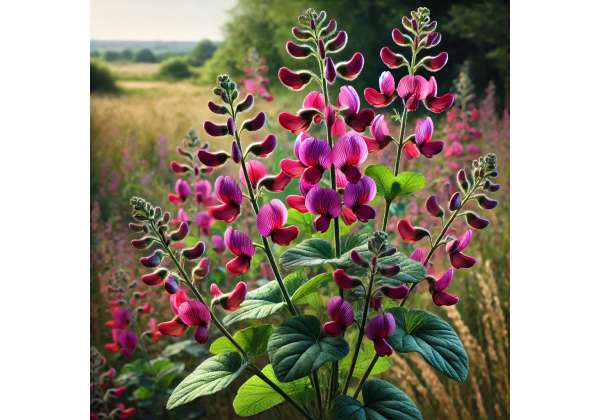
French honeysuckle, botanically known as Hedysarum coronarium, is a Mediterranean legume better known to farmers as sulla than to herbal shoppers as a standard remedy. That matters because this plant sits in an unusual middle ground: it is edible, rich in polyphenols, and supported by intriguing laboratory research, yet it remains far less established in human herbal practice than classic medicinal flowers and roots. Its bright red flowers, leafy tops, and tannin-rich chemistry have drawn attention for antioxidant, astringent, anti-inflammatory, and skin-supportive potential.
In traditional food use, the flowering tops have appeared in salads, soups, and omelets in parts of Italy, while dried flowers have also been associated with mild astringent and laxative uses. Modern studies focus more on its flavonoids, condensed tannins, and saponins than on clear clinical outcomes in people. That means French honeysuckle is best approached with interest and caution. It may offer real value as a medicinal food and experimental botanical, but the practical questions are still the same: what it contains, what it may actually help with, how to use it conservatively, and where the safety gaps remain.
Core Points
- French honeysuckle is mainly valued for polyphenols, condensed tannins, and flavonoids rather than for a well-established clinical dosing tradition.
- The most plausible benefits are antioxidant, mild astringent, and skin-supportive effects, with human evidence still limited.
- If used as an infusion, a conservative traditional range is about 1 to 2 g dried flowering tops per cup, up to 1 to 2 cups daily for short-term use.
- Because human safety data are sparse, concentrated extracts are a less predictable choice than modest culinary or infusion use.
- People with legume allergy, pregnancy, breastfeeding, or complex medication regimens should avoid self-directed use.
Table of Contents
- What Is French Honeysuckle
- Key Compounds in French Honeysuckle
- Potential Benefits and Properties
- Traditional and Practical Uses
- How Much to Use
- Safety Side Effects and Interactions
- What the Evidence Really Shows
What Is French Honeysuckle
French honeysuckle is a flowering legume native to the Mediterranean region and widely known by the name sulla. Despite the common name, it is not a true honeysuckle from the Lonicera genus. It belongs to the pea family, Fabaceae, which already tells you something important about its profile: this is a protein-bearing, tannin-rich, forage-style plant rather than a fragrant ornamental flower traditionally centered in European apothecaries.
In agriculture, Hedysarum coronarium has long been valued as a forage crop because it grows well in dry conditions, contributes nitrogen to the soil, and contains moderate levels of condensed tannins. In food traditions, especially in parts of southern Italy and Sicily, the flowers and tender tops have also been used in simple dishes such as salads, soups, and omelets. That edible background is one reason the plant now attracts interest as a “medicinal food” rather than as a standard single-herb supplement.
Its medicinal reputation is modest but real. Traditional descriptions link the dried flowers with mild astringent, refreshing, cholesterol-lowering, and laxative uses. Modern researchers have been more cautious. Instead of assuming those traditional claims are proven, they have focused on identifying the compounds behind them and testing extracts in cell, skin, and antioxidant models. This work suggests the plant may have useful bioactive potential, especially in the flowers, but it does not yet create the kind of evidence base that exists for better-studied herbs.
The plant’s identity can also be confusing. French honeysuckle has been mixed up online with unrelated species that have “honeysuckle” or “French” in their common names. For practical readers, the botanical name matters more than the common name. If a product does not clearly say Hedysarum coronarium, it is too easy to buy the wrong plant.
One helpful way to frame it is as a Mediterranean legume with more phytochemical interest than its agricultural role alone would suggest. It shares that “food plus function” identity with some other green forage herbs and legumes, including alfalfa as a nutrient-rich forage herb, but French honeysuckle stands out for its flower chemistry and condensed tannin content.
So what is it, in the simplest terms? It is an edible and forage legume with traditional local uses, promising plant compounds, and a much thinner human evidence base than many mainstream herbal articles imply. That is not a weakness if it is stated honestly. It simply means the plant should be approached as interesting, limited, and still emerging rather than fully established.
Key Compounds in French Honeysuckle
French honeysuckle does not depend on one star compound. Its potential comes from a cluster of phytochemicals, especially in the flowers and leaves, that appear to work together. The most important groups are flavonoids, condensed tannins, and saponins, with smaller contributions from phenolic acids and other secondary metabolites.
The compounds most often discussed include:
- Flavonoids such as quercetin, kaempferol, isorhamnetin, and related derivatives.
- Condensed tannins, especially prodelphinidin-type tannins.
- Saponin glycosides.
- Broader phenolic compounds that contribute antioxidant behavior.
Flavonoids help explain why the plant is repeatedly described as antioxidant and anti-inflammatory in laboratory settings. These molecules are common across many medicinal plants, but their exact mix matters. In French honeysuckle, the flowers appear especially rich in flavonoid material, which is one reason they receive more attention than the stems.
Condensed tannins are the other major piece of the story. These are not just abstract phytochemicals. They help shape the plant’s astringency, influence protein binding, and likely contribute to some of the plant’s traditional uses. In animal nutrition, these tannins are valued because they can modify protein metabolism and parasite pressure. In human herbal thinking, they help explain why the plant has been linked with tightening, toning, and surface-protective effects.
Saponins add another layer. These compounds are often discussed in plants with membrane-active, emulsifying, or metabolic effects. In French honeysuckle they are not the main public-facing compounds, but they are part of the broader reason researchers see the species as chemically versatile.
An important detail is that plant part matters. The flowers, leaves, and whole aerial parts do not have identical chemistry. Some analyses suggest the flowers contain especially high phenolic content, while the leaves may provide a different balance of tannins and flavonoids. That means a flower-focused extract is not chemically interchangeable with a powder made from mixed aerial material.
Preparation matters too. A water infusion will not extract the same profile as an alcohol tincture or a lab solvent extract. This is a common problem in herbal marketing: an in vitro study may use a concentrated extract that looks impressive, but the home tea made from the plant will behave more gently and less predictably.
This is where comparison can help. Like red clover as another bioactive legume, French honeysuckle belongs to a plant family known for pharmacologically interesting compounds. But unlike red clover, it has not developed a strong supplement tradition with familiar standardized extracts. Its chemistry is compelling, yet the bridge from chemistry to dependable human use remains incomplete.
The practical takeaway is that French honeysuckle’s “medicinal properties” come from a flavonoid-tannin-saponin matrix rather than from a single isolated ingredient. That makes the plant promising, but it also makes dosage, product quality, and interpretation more complicated.
Potential Benefits and Properties
The most responsible way to describe French honeysuckle’s benefits is to divide them into plausible, traditional, and proven. Plausible means the chemistry and preclinical work support the idea. Traditional means local food or folk use points in that direction. Proven would require good human trials, and that is where the plant still falls short.
The most plausible benefits include:
- Antioxidant support.
French honeysuckle flowers and extracts show strong antioxidant activity in laboratory work. This likely comes from the plant’s phenolic and flavonoid content, especially quercetin and related compounds. - Mild anti-inflammatory activity.
Experimental studies suggest the plant may help reduce inflammatory signaling and protect skin-related cells under stress. This is one of the better-supported mechanistic themes. - Astringent and surface-toning effects.
Because of its tannin content, the plant has a credible basis for mild astringent activity. That may help explain its traditional use in preparations meant to tone tissues or calm minor irritation. - Skin-supportive potential.
The best species-specific experimental data in humans do not come from oral supplementation. They come from skin-focused models. Extracts have shown interesting effects on collagen-related enzymes and dermal fibroblasts, which has led to talk of cosmeceutical use. - Mild digestive and traditional wellness roles.
Folk use has associated the dried flowers with refreshing, laxative, and cholesterol-supporting roles, but these remain traditional claims more than clinically verified effects.
The most realistic benefit category is topical or surface support, not internal disease treatment. That distinction matters because some herbs with good skin-model evidence get stretched into broad wellness claims they do not deserve. French honeysuckle may indeed become useful in creams, rinse-type applications, or mild astringent formulas, but that does not automatically mean it is a validated herb for blood lipids, inflammation disorders, or long-term daily supplementation.
As an oral plant, its benefits are probably best understood through a medicinal-food lens. Small food amounts may contribute polyphenols and a slightly astringent digestive effect, but the evidence does not justify bold claims. For readers mainly interested in better-established topical flower herbs, calendula for skin-focused use has a more familiar and clinically grounded profile.
This is also a good plant for expectation management. It may support wellness in subtle ways. It may offer useful phytochemicals. It may even help inspire future natural-product research. But it should not be sold as a strong immune herb, a reliable cholesterol therapy, or a proven anti-inflammatory supplement.
In short, French honeysuckle’s potential benefits are real enough to discuss, especially around antioxidant and skin-supportive actions, but still too preliminary to treat as established therapeutic outcomes. It is a promising botanical, not yet a mainstream evidence-based remedy.
Traditional and Practical Uses
French honeysuckle is one of those plants whose practical uses depend heavily on whether you approach it as food, folk herb, or experimental botanical. That matters because each route has a different risk profile and a different level of evidence.
The most traditional human uses are culinary. In Mediterranean food traditions, especially in southern Italy, the flowering tops have been eaten in mixed salads, soups, and omelets. Used this way, the plant behaves more like an edible wildflower or tender seasonal green than a high-dose herb. Culinary use is also the most conservative entry point because the amounts are small and the preparation is familiar.
A second route is infusion use. Dried flowering tops or flowers may be steeped as a mild herbal tea. This is where the plant’s astringent and refreshing reputation begins to matter more. A simple infusion is likely the gentlest way to explore the plant beyond food use, though it still lacks a strong clinical tradition with standardized human outcomes.
A third route is topical or cosmetic use. Modern studies have made this route more interesting than many readers might expect. Extracts from Hedysarum coronarium have shown activity in skin models involving oxidative stress, collagenase, elastase, and fibroblast response. That does not mean home users should rush to make their own concentrated skin serum, but it does suggest why the plant is increasingly discussed as a candidate for cosmeceutical products.
The practical forms most likely to appear are:
- Fresh flowers or young tops in small food amounts.
- Dried flowers for infusion.
- Experimental extracts in creams, serums, or botanical blends.
- Mixed herbal formulas where the plant is only one ingredient.
There are also uses that should be approached cautiously. Because the plant is sometimes described as mildly laxative or cholesterol-supportive in traditional contexts, some readers may assume capsules or tinctures are the obvious next step. They are not. There is too little standardized guidance to make concentrated oral products the best first choice.
A smart user would begin with three questions:
- Am I using this as food, tea, or a concentrated extract?
- Is the product clearly identified as Hedysarum coronarium?
- Is my goal realistic, such as mild culinary wellness support or gentle topical experimentation, rather than disease treatment?
Tea use also deserves a practical note. The plant is not a famous beverage herb, so many people may prefer to blend it lightly with gentler, more familiar flowers. If someone wants a better-established comparison for simple herbal infusion use, chamomile for everyday infusion support is much more predictable and better studied.
The best overall use case for French honeysuckle is modest and specific: seasonal edible use, cautious infusion use, or professionally formulated topical applications. The worst use case is assuming that because it is edible and rich in polyphenols, it must be safe and effective in any concentrated form. With this plant, restraint is part of good practice.
How Much to Use
Dosage is the weakest part of the French honeysuckle conversation, not because the plant is necessarily dangerous, but because there is no widely accepted, evidence-based human dosing framework for Hedysarum coronarium. That means any numbers should be presented as conservative practice guidance, not as clinically validated prescriptions.
The safest way to think about dose is by form.
For culinary use, the plant is best treated like a seasonal edible flower or tender herb. Small food-level amounts are the most reasonable choice. That could mean a modest addition to a mixed salad, soup, or omelet rather than a large quantity eaten daily. Since this is a low-evidence plant in human nutrition, “modest and occasional” is a smarter standard than “more is better.”
For infusion use, a cautious traditional-style range is about 1 to 2 g of dried flowering tops or flowers per cup of hot water. Steep for around 10 to 15 minutes, strain, and start with one cup to assess tolerance. If well tolerated, some adults may use up to 1 to 2 cups daily for short periods. This is a conservative herbal guideline rather than a clinically tested dose.
For topical or cosmetic use, dosing becomes even less standardized. Research studies use characterized extracts, not the kind of home-prepared formula that most consumers can reproduce accurately. In real life, that means the best rule is to follow product directions rather than trying to reverse-engineer a lab extract.
A practical dose framework looks like this:
- Fresh culinary use: small food amounts only.
- Infusion: 1 to 2 g dried material per cup.
- Frequency: start once daily, then increase cautiously if needed.
- Duration: short-term use is more defensible than long-term daily use.
The absence of a validated dose also means timing and duration matter. This is not a plant with a strong case for month-after-month supplementation. If someone is using it in tea form, a short defined trial makes more sense than open-ended use. For example, several days to two weeks is more reasonable than taking it indefinitely.
Label quality matters too. If a product simply says “French honeysuckle extract” with no plant part, no extraction ratio, and no standardization information, there is no sensible way to compare it with a tea, culinary use, or research extract. In that case, the product is too vague for confident dosing.
This is also one of those plants where honesty is better than false precision. Giving a neat milligram range for capsules would sound helpful, but it would not be well grounded. The better answer is that human dosing is not standardized, and the most defensible forms are small culinary amounts or gentle infusion use.
So the dosage summary is simple. Use modest food portions when eaten as a flower or green, or use a conservative infusion of 1 to 2 g dried material per cup for short-term use only. Beyond that, practitioner guidance or product-specific directions are more important than generic internet numbers.
Safety Side Effects and Interactions
French honeysuckle is not known as a highly toxic plant, but that should not be confused with proven safety. The biggest safety issue is not dramatic poisoning. It is uncertainty. Human safety data are sparse, standardized products are uncommon, and most of the strongest research has been laboratory-based rather than clinical.
The most likely side effects are relatively mild:
- Digestive upset if too much is taken as a tea or concentrated product.
- Bitter or astringent mouthfeel.
- Allergy or sensitivity reactions in people who do not tolerate legumes or specific plant compounds.
- Skin irritation if a home-prepared topical product is poorly made or not patch tested.
People who should be more cautious include:
- Anyone with a known allergy to legumes or related forage plants.
- Pregnant or breastfeeding individuals, because safety data are too limited for confident self-use.
- Children, especially with extracts or concentrated preparations.
- People taking multiple prescription medicines.
- Those with chronic digestive disorders, since tannin-rich plants can feel irritating or binding in some users.
Interaction data are also thin. That does not mean there are no interactions. It means they have not been studied carefully enough to map with confidence. Because the plant contains tannins and other polyphenols, there is a reasonable theoretical concern that concentrated preparations could affect absorption of some compounds or medications if taken at the same time. The safest approach is to separate any herbal infusion from medications by a few hours unless a clinician says otherwise.
Topical use requires its own caution. Experimental skin benefits do not guarantee universal tolerance. A patch test is sensible before broader use, especially if the preparation contains alcohol, other botanicals, or fragrance ingredients. Home cosmetic projects are especially variable, and poor extraction methods can create irritation rather than soothing.
Food use is the lowest-risk route, but even there, moderation matters. Edible flowers are not automatically harmless in unlimited amounts, and traditional food use usually involves small, seasonal, mixed preparations rather than concentrated daily intake.
The broader safety message is this: French honeysuckle may be a low-drama plant, but it is not a fully characterized one. That means the best safety strategy is conservative use, clear botanical identification, simple preparations, and quick discontinuation if any reaction appears.
A useful rule of thumb is to stop and reassess if you notice rash, throat irritation, unusual digestive discomfort, wheezing, or any symptom that feels out of proportion to a mild culinary herb. With well-studied plants, people can sometimes troubleshoot dosing confidently. With this one, new symptoms are a reason to back off, not to push through.
What the Evidence Really Shows
The evidence for French honeysuckle is promising but narrow. That is the cleanest summary. The plant has enough chemistry, food tradition, and experimental activity to justify interest, but not enough human clinical research to justify strong therapeutic claims.
What the evidence supports reasonably well:
- The flowers and aerial parts contain flavonoids, tannins, saponins, and other bioactive compounds.
- The flowers appear especially rich in phenolic material.
- Extracts show antioxidant and anti-inflammatory activity in preclinical settings.
- Skin-focused models suggest possible value for topical or cosmetic formulations.
- The plant has real ethnobotanical relevance as an edible flower and local medicinal food.
What the evidence does not yet support strongly:
- Standardized oral dosing for general consumers.
- Reliable claims for cholesterol lowering in humans.
- Strong clinical use for digestive disorders.
- Long-term daily supplement use.
- A clear drug-interaction or safety map.
This matters because it changes how the herb should be positioned. French honeysuckle is not a fraud. It is simply early-stage. Some plants reach the public long before their evidence base matures, and this species fits that pattern. It is far more substantiated at the level of phytochemistry and lab activity than at the level of clinical human practice.
Another important limit is that some of the plant’s most impressive literature comes from agriculture and animal nutrition, where its tannins and polyphenols have practical effects. That research is valuable, but it cannot be translated directly into human herbal recommendations. A forage plant with interesting chemistry is not automatically a clinically useful supplement.
The skin evidence is perhaps the most intriguing because it is species-specific and mechanistically coherent. Still, even there, “interesting for cosmeceutical development” is not the same as “proven topical treatment.” That distinction should stay front and center.
The strongest modern use case, then, is cautious exploration in food, mild infusion, or professionally formulated topical products. The weakest use case is treating it like an established internal medicinal herb with broad systemic benefits.
For readers who want the most honest conclusion, it is this: French honeysuckle deserves attention, especially as a Mediterranean medicinal food with rich polyphenol content, but it remains a low-certainty botanical in human care. It is best approached with curiosity, modest expectations, and a clear understanding that chemistry and tradition are ahead of clinical proof.
References
- Pelleted Sulla Forage (Hedysarum coronarium L.) as a Resource for Sheep Feeding Systems: In Vitro Nutritional Value and Sustainability Perspectives 2025
- Protective Effects of Wild Sulla coronaria (Fabaceae) Flowers Phytocomplex in Human Dermal Fibroblasts Stimulated with Interleukin-1β 2024
- Edible Flowers Used in Some Countries of the Mediterranean Basin: An Ethnobotanical Overview 2022 (Review)
- Chemical Identification of Specialized Metabolites from Sulla (Hedysarum coronarium L.) Collected in Southern Italy 2021
- The bioactivity of Hedysarum coronarium extracts on skin enzymes and cells correlates with phenolic content 2017
Disclaimer
This article is for educational purposes only and does not replace medical advice, diagnosis, or treatment. French honeysuckle is not a well-standardized medicinal herb, and human research on its safety, dosing, and long-term use is limited. Do not use it as a substitute for prescribed care, and avoid self-directed use during pregnancy, breastfeeding, childhood, or alongside multiple medications unless a qualified clinician approves it.
If you found this article useful, please share it on Facebook, X, or your preferred platform.