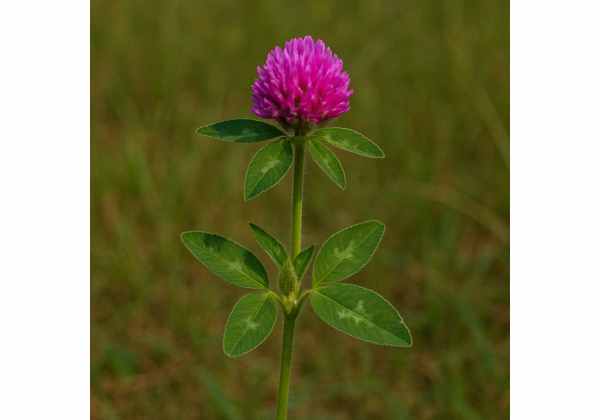
Red clover is a familiar meadow plant with pinkish-purple flower heads, but in herbal medicine it is known for much more than its appearance. Trifolium pratense has long been used as a women’s health herb, especially during menopause, and modern interest centers on its naturally occurring isoflavones—plant compounds that can interact with estrogen receptors in subtle, selective ways. That chemistry helps explain why red clover is often discussed for hot flashes, circulatory support, skin vitality, and overall menopausal comfort.
At the same time, red clover is not a simple “natural estrogen,” and it should not be marketed as a cure-all. The strongest modern evidence points to possible support for vasomotor symptoms such as hot flashes, with more modest and less consistent findings for cholesterol, bone health, and broader wellness outcomes. Product quality, dose, metabolism, and individual hormone sensitivity all matter. A useful guide to red clover therefore has to do two things well: explain what the herb may realistically offer, and make its precautions clear enough that readers can use it thoughtfully rather than optimistically.
Essential Insights
- Red clover provides isoflavones that may modestly reduce hot flashes and improve overall menopausal symptom scores in some women.
- Some studies also suggest small benefits for cholesterol markers, especially total cholesterol, though results remain mixed.
- Standardized extracts used in studies commonly provide about 40 to 80 mg of isoflavones per day.
- People who are pregnant, breastfeeding, using anticoagulants, or living with hormone-sensitive conditions should avoid self-prescribing red clover.
Table of Contents
- What Red Clover Is and Why It Has Medicinal Interest
- Key Ingredients and How Red Clover May Work
- Health Benefits of Red Clover and What the Evidence Really Shows
- Traditional Uses, Modern Forms, and Practical Applications
- Dosage, Timing, and How to Use Red Clover Wisely
- Safety, Side Effects, Interactions, and Who Should Avoid It
What Red Clover Is and Why It Has Medicinal Interest
Red clover is a perennial legume native to Europe, western Asia, and northern Africa, though it now grows widely in many temperate regions. Most people recognize it as a pasture or meadow plant, with rounded flower heads made up of many small pink-to-crimson blossoms. In herbal practice, the aerial parts—especially the flowering tops—are the most commonly used portions. These are dried for teas, tinctures, capsules, and standardized extracts.
Historically, red clover occupied an interesting middle ground between food-adjacent herb and medicinal plant. Traditional European and North American herbalism used it as a “blood purifier,” skin herb, expectorant, and gentle alterative. That older language does not map perfectly onto modern medical vocabulary, but it points to how people experienced the plant: as something that seemed to support transition, drainage, and recovery rather than deliver a fast, dramatic effect. It was often used in formulas for chronic skin irritation, coughs, and female hormonal change.
Modern interest, however, is much more focused. Red clover supplements are now primarily marketed for menopausal symptoms and healthy aging. That shift happened once researchers identified its rich content of isoflavones, plant compounds with structural similarities to estradiol. These compounds do not behave exactly like the body’s own estrogen, but they are active enough to attract real clinical and scientific attention.
That said, red clover’s popularity has created a familiar problem: marketing often outruns evidence. Because it is a flowering meadow herb and not a prescription hormone, people sometimes assume it is inherently mild, universally safe, or appropriate for any hormone-related complaint. None of those assumptions is reliable. Red clover is usually well tolerated, but it is pharmacologically active. Whether that is helpful depends on the person, the goal, the product, and the medical context.
It also helps to understand what red clover is not. It is not a direct substitute for hormone therapy. It is not an established treatment for severe menopause symptoms. It is not a proven protection against osteoporosis, cardiovascular events, or hormone-sensitive cancers. It may offer support in some settings, but its role is supportive and selective, not comprehensive.
A grounded way to think about red clover is this: it is a traditional herb with modern relevance because it contains bioactive phytoestrogens, and those compounds may help some people—particularly around menopause—when used carefully and with realistic expectations. That makes it worth discussing seriously, but not romantically.
Key Ingredients and How Red Clover May Work
The key ingredients in red clover are its isoflavones, a class of polyphenolic compounds often described as phytoestrogens. The most important ones are biochanin A and formononetin, along with smaller amounts of genistein and daidzein. These names matter because they help explain almost every modern claim made about red clover, from menopause support to possible vascular and bone effects.
Isoflavones are structurally similar enough to estrogen to bind to estrogen receptors, especially estrogen receptor beta. That does not mean red clover “acts like estrogen” in a simple or uniform way. Its behavior is subtler. Depending on dose, metabolism, tissue type, and the hormonal environment of the person taking it, red clover may produce mild estrogen-like effects, mixed effects, or sometimes very little noticeable effect at all. This is one reason clinical studies do not always agree.
Biochanin A and formononetin are especially important because they are methylated isoflavones that can be metabolized into more familiar compounds such as genistein and daidzein. The body’s gut microbiome plays a major role here. Some people convert isoflavones more efficiently than others, and some produce metabolites such as equol more readily. That may partly explain why one person feels noticeably better on red clover while another feels no difference.
Red clover also contains other plant constituents, though they are usually secondary to the isoflavone discussion. These include:
- Flavonoids and phenolic compounds with antioxidant potential
- Coumarin-related constituents, which help explain some safety cautions
- Minerals and trace nutrients in the whole herb
- Small amounts of volatile and supportive plant compounds found in flowering tops
Mechanistically, red clover is often described in four overlapping ways:
- Phytoestrogenic: because its isoflavones can interact with estrogen receptors
- Antioxidant: because polyphenols may help buffer oxidative stress
- Anti-inflammatory: based mainly on preclinical and mechanistic evidence
- Vascularly supportive: because isoflavones may influence endothelial function and lipid handling in some settings
The important nuance is that these are medicinal properties, not guarantees of clinical benefit. A plant can have antioxidant and receptor-active chemistry without translating into strong real-world outcomes. Red clover illustrates that point well. Its chemistry is convincing; its clinical results are promising in places, but uneven.
If you want a broader comparison, red clover belongs to the family of phytoestrogen-rich botanicals often discussed beside flax and its lignan profile. Both are interesting for hormone-adjacent wellness, but neither should be confused with standardized hormone therapy.
Another practical point is product variation. Different red clover supplements are not interchangeable. Some are standardized to a defined isoflavone content, while others are simply powdered herb. Teas made from flowering tops may preserve traditional use, but they are less predictable than extract-based products. For a herb whose main modern value depends on identifiable actives, that difference matters a great deal.
Health Benefits of Red Clover and What the Evidence Really Shows
The most searched health benefit of red clover is relief of menopausal symptoms, and that is still the area where the herb has the clearest modern relevance. Even here, however, the evidence is best described as mixed but promising, not definitive. Some randomized trials and meta-analyses show modest reductions in hot flashes and improvements in menopausal symptom scores, especially when standardized extracts provide higher isoflavone doses. Other trials show smaller effects or fail to separate clearly from placebo. That mixed pattern is important because hot-flash studies are known for high placebo response.
For many readers, the most accurate summary is this: red clover may help some peri- and postmenopausal women with mild to moderate vasomotor symptoms, but it is not reliably effective for everyone, and results depend heavily on the preparation used.
The second major benefit area is lipid and cardiovascular support. Some reviews suggest that red clover extracts may modestly lower total cholesterol and may have favorable effects on HDL or broader vascular function in certain populations. These findings are interesting, especially because many women looking at red clover are also thinking about long-term cardiometabolic health after menopause. Still, the effects are not strong enough to position red clover as a primary cholesterol-lowering strategy.
A third area is bone support, but the evidence here is weaker and less consistent. Some individual studies and isoflavone research more broadly suggest potential benefits for bone turnover or bone mineral density, particularly over longer periods. Yet red clover cannot currently be described as a proven bone-protective herb. At best, it remains a plausible adjunct in some postmenopausal settings, not a substitute for evidence-based osteoporosis prevention.
Other frequently claimed benefits require extra restraint:
- Skin vitality: plausible in theory because estrogen decline affects skin hydration and elasticity, but direct red clover evidence is limited.
- Mood and cognitive comfort: some studies report secondary improvements, but these are not red clover’s most established use cases.
- Circulatory and antioxidant support: chemically plausible, but not a stand-alone clinical claim.
What often gets missed is that red clover’s strongest benefit may be narrower than its marketing. It is not a general hormone-balancing herb for every stage of life. It is much more relevant to peri- and postmenopausal support than to cycle regulation, fertility, or broad endocrine repair. That is why it is useful to compare it with other menopause-focused options such as black cohosh for vasomotor symptom support, which occupy a similar decision space but work through different mechanisms.
The evidence also suggests a threshold effect may matter. Higher-quality trials often use standardized extracts, and some analyses suggest better results when isoflavone intake reaches around 80 mg per day. That does not prove “more is better,” but it does show why a weak tea and a clinically studied extract should not be judged by the same standard.
Overall, the evidence supports red clover as a reasonable, cautious trial herb for menopause-related discomfort, especially hot flashes. Beyond that, the claims should become more modest. It may support lipids, may assist overall symptom burden, and may offer some longer-term wellness value—but “may” is the right word.
Traditional Uses, Modern Forms, and Practical Applications
Traditional herbalists did not use red clover only for menopause. It was also valued for persistent skin problems, swollen glands, chronic cough, and general constitutional support. In older practice, it was often prepared as a tea or included in compound formulas aimed at slow, lingering conditions rather than acute crises. That historical reputation still influences how people think about the herb today, especially in the language of “gentle cleansing” or “spring support.”
Modern use is more targeted. Red clover now appears mainly in three practical contexts:
- Menopause support supplements
- Traditional teas made from dried flowering tops
- Blended women’s-health formulas
Of these, standardized menopause supplements are the most evidence-aligned. They usually specify total isoflavone content and are easier to compare with clinical trials. Teas are still common in traditional herbalism, but their isoflavone delivery is less standardized, which makes them better suited to gentle, ritual use than to measurable trial-style outcomes.
In real-life practice, red clover often appeals to people who want a middle path. They may not want hormone therapy, but they also do not want to rely on folklore alone. Red clover can fit that space because it is both traditional and studied. Still, it works best when people use it with a clear goal rather than as a vague “female tonic.”
Common practical uses include:
- Trying to reduce the frequency or intensity of hot flashes
- Supporting overall comfort during perimenopause or postmenopause
- Pairing with lifestyle measures for vascular and metabolic health
- Using as part of a broader herbal plan guided by a clinician
There is also a category error that deserves attention. People sometimes group all “women’s herbs” together and move between them as if they do the same job. They do not. Red clover, black cohosh, vitex, dong quai, and evening primrose oil are discussed together constantly, but their best-fit uses differ. For example, chaste tree is usually discussed for cycle-pattern and premenstrual concerns, not for classic postmenopausal hot flashes. Knowing that difference keeps herb use more rational.
For topical and skin-related use, red clover still appears in creams, salves, and herbal wash blends, especially in traditional settings. The problem is that this area is much less studied than menopause supplementation. People may genuinely find it soothing, but the modern evidence base is thin. It makes sense to mention these uses as traditional, not to present them as clinically proven.
A final practical application involves the ritual value of the herb. Red clover tea is one of those plants that many people enjoy because it feels nurturing, mildly sweet, and emotionally grounding. That does not replace clinical evidence, but it does matter. Herbs are often used partly because they fit a season or stage of life in a way that feels supportive. Used thoughtfully, red clover can occupy that role well—provided the user keeps its limits in view.
Dosage, Timing, and How to Use Red Clover Wisely
Red clover dosage depends heavily on the form being used. The most evidence-based dosing comes from standardized extracts, not from casual tea drinking. In clinical studies on menopausal symptoms, red clover products commonly provide 40 to 80 mg of total isoflavones per day, often taken once or twice daily. That range is the most useful starting point for readers because it reflects how the herb has actually been studied.
A practical framework looks like this:
- Lower end: about 40 mg isoflavones daily
- Common studied range: 40 to 80 mg isoflavones daily
- Trial duration: often 8 to 12 weeks before making a fair judgment
- Longer study use: some extracts have been studied for months and even up to 2 years, but longer use still deserves supervision
One reason dosing is confusing is that labels do not always present the same information. Some list milligrams of extract. Others list milligrams of whole herb. Others list standardized isoflavones. For red clover, the most useful number is the isoflavone content, because that is the part most tied to modern research.
Tea is different. Red clover tea usually uses the dried flowering tops and is valued for tradition and gentleness more than for extract-level potency. It may be a good choice for someone who wants a mild, supportive herb ritual, but it should not be assumed to match the outcomes of a standardized supplement. That distinction prevents a lot of disappointment.
Timing also matters. Red clover is not typically an instant herb. If it helps, the change is often gradual. People often notice whether it is worthwhile only after several weeks of steady use. That means the best way to test it is with structure:
- Choose one well-labeled product.
- Start at the low end of the suggested dose.
- Take it consistently, preferably with the same routine each day.
- Track hot flashes, sleep disruption, and general symptom burden for at least 8 weeks.
- Stop if there is no meaningful benefit or if side effects appear.
This “structured trial” approach matters because menopause symptoms fluctuate on their own. Without tracking, it is easy to misread a good week as an herb effect or to miss a small but real improvement.
Red clover also works best when expectations match its role. It is usually a supportive adjunct, not a rescue remedy. Someone with severe daily flushing, profound sleep loss, or complex hormone-sensitive medical history should not rely on self-directed red clover alone.
Finally, do not assume that combining multiple herbs improves the outcome. Stacking red clover with several other hormone-oriented botanicals can make it harder to tell what is helping and may complicate safety. This is especially important if someone is also looking at herbs with overlapping women’s-health reputations such as dong quai in traditional hormonal support. One clear variable is much easier to judge than a crowded blend.
In short, use red clover like a studied botanical, not a vague supplement: standardized product, defined dose, enough time, and a clear stop rule.
Safety, Side Effects, Interactions, and Who Should Avoid It
Red clover is generally described as well tolerated in clinical studies, but safety is not simply a yes-or-no question. It depends on who is taking it, why they are taking it, and what other medical factors are in the picture. This is especially true because red clover’s defining compounds are phytoestrogens.
Common side effects are usually mild and may include:
- Upset stomach or digestive discomfort
- Headache
- Nausea
- Rash in sensitive individuals
- A sense that the product simply does not “agree” with the body
These effects are often manageable by lowering the dose or stopping the product, but they still matter because red clover is often used by people who are already navigating hormonal change, sleep disruption, and medication use.
The biggest safety discussions center on pregnancy, breastfeeding, estrogen-sensitive conditions, and drug interactions. Red clover supplements are generally not advised during pregnancy or while breastfeeding. This is not because danger has been conclusively proven in every case, but because the hormonal activity makes routine self-use inappropriate when safety data are limited.
Caution is also warranted in people with:
- A history of estrogen-sensitive breast, uterine, or ovarian cancer
- Endometriosis or significant fibroid disease
- Unexplained vaginal bleeding
- Current endocrine therapy, including tamoxifen or aromatase inhibitors
- Use of anticoagulants or antiplatelet drugs
- Planned surgery in the near term
The anticoagulant question deserves nuance. Red clover contains coumarin-related constituents, but that does not mean it acts like prescription anticoagulants in a simple way. Still, the combination of uncertain clotting relevance and polypharmacy risk is enough to justify caution. If someone is taking warfarin, a direct oral anticoagulant, or multiple agents that affect bleeding risk, red clover should not be added casually.
Another point that often gets oversimplified is long-term safety. Some studies report good tolerability over extended periods, including up to 2 years. That is encouraging, but it does not settle every question for every population. It certainly does not make red clover universally appropriate for people with hormone-sensitive histories.
It also helps to remember what red clover should not be used for. It is not a replacement for evaluation of abnormal bleeding, breast symptoms, severe menopausal distress, or unexplained pelvic pain. It should never delay diagnosis.
For readers comparing botanicals, red clover is one of several herbs that call for more caution in hormone-sensitive situations. That is why decisions about it should be more deliberate than decisions about a simple digestive tea or culinary herb. If someone is already navigating reproductive or endocrine concerns, it is worth separating red clover from gentler general herbs such as chamomile for nonhormonal calming support and treating it as a more specialized choice.
The safest conclusion is straightforward: red clover may be well tolerated for many healthy adults, especially in the short to medium term, but it is not the right herb for unsupervised use in every body or every life stage.
References
- Red Clover: Usefulness and Safety 2025 (Official Government Summary)
- Evaluation of Clinical Meaningfulness of Red Clover (Trifolium pratense L.) Extract to Relieve Hot Flushes and Menopausal Symptoms in Peri- and Post-Menopausal Women: A Systematic Review and Meta-Analysis of Randomized Controlled Trials 2021 (Systematic Review and Meta-Analysis)
- Role of Phytoestrogen-Rich Bioactive Substances (Linum usitatissimum L., Glycine max L., Trifolium pratense L.) in Cardiovascular Disease Prevention in Postmenopausal Women: A Systematic Review and Meta-Analysis 2022 (Systematic Review and Meta-Analysis)
- Isoflavones obtained from red clover improve both dyslipidemia and menopausal symptoms in menopausal women: a prospective randomized placebo-controlled trial 2024 (RCT)
- Isoflavones derived from plant raw materials: bioavailability, anti-cancer, anti-aging potentials, and microbiome modulation 2023 (Review)
Disclaimer
This article is for educational purposes only and does not provide medical advice, diagnosis, or treatment. Red clover is a biologically active herb, and although it is often marketed as a natural menopause support, it may not be appropriate for everyone. Anyone who is pregnant, breastfeeding, taking blood-thinning medication, living with a hormone-sensitive condition, or receiving cancer-related endocrine therapy should speak with a qualified clinician before using it. Do not use red clover to self-treat severe menopausal symptoms, abnormal bleeding, or unexplained breast or pelvic symptoms.
If this article helped you, please share it on Facebook, X, or your preferred platform so others can make more informed decisions about red clover.