Fringe sage, botanically known as Artemisia frigida, is a small silvery Artemisia with a long record of use in steppe and northern herbal traditions, especially in Mongolian medicine. It is sometimes called fringed sagewort or fringed sagebrush, though it is not a true culinary sage. What makes the plant interesting is the way its traditional reputation and modern chemistry partly meet: the aerial parts contain flavonoids, phenolic acids, sesquiterpenoids, and aromatic compounds that help explain why it has been explored for anti-inflammatory, antioxidant, and antimicrobial effects.
At the same time, fringe sage is not a mainstream clinical herb with clear human dosing guidelines or large modern trials. That distinction matters. It may be promising for short-term herbal use, topical applications, and carefully prepared infusions, but most of the stronger evidence still comes from laboratory and animal studies rather than human research. A grounded guide therefore needs to do two things at once: describe the herb’s real potential and keep expectations realistic. The most useful questions are what it contains, what it may help with, how it is traditionally used, how much is sensible, and where caution belongs.
Key Takeaways
- Fringe sage appears most promising for anti-inflammatory, antioxidant, and mild astringent support.
- Its best-studied constituents include flavonoids, caffeoylquinic acids, sesquiterpenoids, and variable essential-oil compounds.
- There is no clinically established dose, but cautious tea use is often kept to about 1 to 2 g dried aerial parts per cup, up to 1 to 2 times daily for short-term use.
- Concentrated extracts and essential oils are less predictable than simple infusions because human safety data remain limited.
- Avoid self-directed use during pregnancy, breastfeeding, childhood, and in anyone with Asteraceae allergy or a complex medication regimen.
Table of Contents
- What Is Fringe Sage
- Key Compounds in Fringe Sage
- Potential Benefits and Properties
- Traditional and Practical Uses
- How Much Fringe Sage Per Day
- Safety Side Effects and Interactions
- What the Evidence Actually Says
What Is Fringe Sage
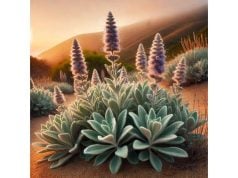
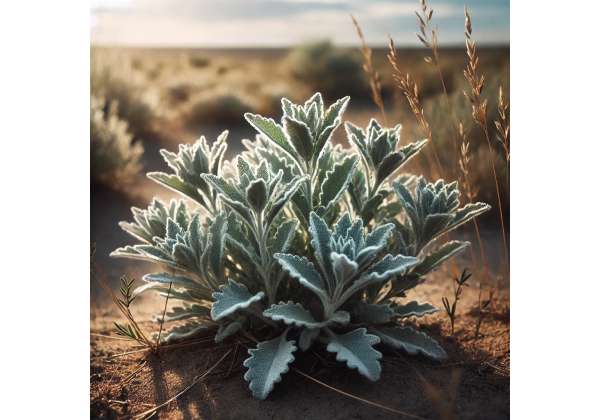
Fringe sage is a perennial Artemisia species that grows across large parts of Eurasia and North America, especially in dry grasslands, steppes, and open cold regions. Its soft, gray-green foliage and low, spreading habit help it tolerate wind, drought, and poor soils. That ecology matters because many Artemisia species that survive harsh environments also build rich profiles of aromatic and phenolic compounds, and fringe sage is no exception.
In traditional medicine, Artemisia frigida has been especially important in Mongolian herbal practice, where the whole plant or aerial parts have been used for conditions involving swelling, soreness, irritation, and what traditional systems describe as heat, dampness, or stagnation. Historical records and modern reviews describe uses for joint swelling, edema, menstrual complaints, skin irritation, sore lesions, and general herbal tea use. In some regions it has also been consumed as a bitter, aromatic infusion rather than only as a formal medicine.
One useful way to understand the plant is to separate its identity from the word “sage.” Fringe sage is not a Salvia species, so it should not be treated as a direct cousin of culinary sage. It belongs to the Artemisia genus, which includes herbs better known for bitterness, volatility, and traditional digestive or inflammatory uses. That makes its flavor and chemistry closer in spirit to wormwoods and mugwort-like plants than to kitchen sage.
The form of the herb also matters. Traditional preparations usually use the aerial parts, especially leaves and flowering tops, dried and steeped or decocted. Modern research studies, however, often investigate isolated flavonoids, essential oils, or extracts prepared with solvents that home users would never use. That gap between folk tea and lab extract is one of the main reasons dosage and effect cannot be assumed to match.
Fringe sage also has a broader cultural role than many supplement-style herbs. In steppe traditions it has functioned not just as a remedy, but as an aromatic plant woven into local health habits, seasonal teas, and botanical identity. That kind of use tends to produce softer, cumulative expectations rather than quick pharmacological ones.
If you want a more familiar comparison within the “bitter aromatic herb” category, boswellia for better-studied inflammatory support offers a far more developed clinical profile, while fringe sage remains an herb of strong traditional interest and developing scientific support.
The simplest definition, then, is this: fringe sage is a traditional Artemisia herb with long folk use, rich phytochemistry, and promising but still incomplete modern evidence. It is best approached as a serious traditional botanical, not as a fully standardized modern supplement.
Key Compounds in Fringe Sage
Fringe sage has a more complex chemical profile than many short herb summaries suggest. It is not a one-compound plant. Its potential actions seem to come from several overlapping groups of molecules, especially flavonoids, phenolic acids, sesquiterpenoids, and volatile aromatic compounds.
One of the most important findings in the literature is that Artemisia frigida is rich in hydroxycinnamates and flavonoids. Detailed profiling work has identified dozens of phenolic compounds, including caffeoylquinic acids and multiple flavone and flavonol derivatives. That matters because caffeoylquinic acids are often linked to antioxidant activity and enzyme-modulating effects, while flavonoids are among the strongest candidates for the herb’s anti-inflammatory reputation.
The plant also contains methoxylated flavones and related compounds that appear repeatedly in Artemisia research. These are not just chemical curiosities. In animal studies of Artemisia frigida extracts, total flavonoids have shown dose-dependent anti-inflammatory effects, and several isolated compounds are believed to contribute to that action. In other words, the anti-inflammatory story is not built on tradition alone. There is at least a plausible biochemical basis behind it.
Another major branch of the chemistry is the essential oil. The oil composition can vary with geography, altitude, climate, and season, but commonly reported dominant components include camphor, 1,8-cineole, bornyl acetate, and germacrene D. This variability is important for two reasons. First, it helps explain why one sample of fringe sage may smell or taste noticeably different from another. Second, it means concentrated oils and extracts are less predictable than the whole herb.
Sesquiterpenoids also deserve attention. Artemisia species are well known for these compounds, and fringe sage includes sesquiterpenoid constituents that may contribute to its bitterness, aromatic profile, and experimental pharmacology. Some modern papers also identify dehydrovomifoliol and other specialized constituents as potential lead compounds in metabolic and liver-related research, although those findings remain exploratory.
A practical user can think of fringe sage chemistry in four tiers:
- Flavonoids for anti-inflammatory and antioxidant potential.
- Caffeoylquinic acids and other phenolic acids for broader phenolic activity.
- Sesquiterpenoids for bitter and bioactive complexity.
- Essential-oil components for aroma, volatility, and some of the plant’s more stimulating characteristics.
This layered chemistry is also why whole-plant tea and concentrated extracts should never be treated as interchangeable. A gentle infusion highlights water-soluble phenolics differently than an alcohol extract or essential oil does.
For readers interested in how aromatic herbs can shift dramatically with chemistry and extraction, chamomile active compounds and common uses provide a useful contrast. Chamomile is gentler and better standardized in modern herbal use, while fringe sage remains more variable and more experimental.
In practical terms, fringe sage’s key ingredients are best understood as a working matrix, not a single signature molecule. That makes the plant scientifically interesting, but it also makes dosage, standardization, and real-world prediction more difficult.
Potential Benefits and Properties
Fringe sage is most often discussed for anti-inflammatory, antioxidant, antimicrobial, and astringent properties. Those themes are not invented by marketing, but the evidence behind them is uneven. Some effects are strongly supported by chemistry and preclinical work, while others remain mostly traditional or theoretical.
The most plausible benefit is anti-inflammatory support. Traditional Mongolian use for swelling, painful joints, and irritated lesions aligns with animal studies showing that total flavonoid fractions from Artemisia frigida can reduce experimentally induced inflammation. This makes fringe sage one of the more mechanistically convincing niche Artemisia herbs, even though the work has not yet translated into strong human trials.
Antioxidant support is the second major theme. The plant’s caffeoylquinic acids, flavonoids, and other phenolics show clear antioxidant behavior in laboratory studies. That does not mean drinking the herb will produce dramatic whole-body effects, but it does support the idea that fringe sage herbal tea and extracts may help buffer oxidative stress in a modest way.
There is also a credible case for mild antimicrobial or cleansing value. Artemisia species as a group are known for antimicrobial potential, and fringe sage appears to share some of that activity. The problem is that most of the evidence is still in vitro or based on nonhuman models. That means the herb may support topical hygiene or traditional external applications, but it should not be presented as a stand-alone treatment for infection.
Astringency is easier to accept from a practical standpoint. Bitter aromatic herbs rich in phenolics often have a tightening, drying, or toning feel, and fringe sage fits that pattern. This may help explain why it has been used for weepy skin states, irritated lesions, or swollen tissues in some traditions.
Some research has also explored compounds from Artemisia frigida in metabolic contexts, including fatty liver pathways. Those results are interesting, but they are too early-stage to make liver-health claims for the herb itself.
The most realistic benefits, then, are:
- Short-term support for inflammatory discomfort.
- Mild antioxidant support from tea or simple extracts.
- External or topical use for irritated tissues.
- Gentle bitter-herbal support in traditional preparations.
What should readers not expect? Fringe sage is unlikely to act like a rapid painkiller, a proven immune enhancer, or a validated liver therapy. It may help, but mostly in the modest, layered way many traditional botanicals do.
If your main goal is better-established topical soothing rather than a bitter aromatic Artemisia, calendula for topical skin support is far easier to use and better understood in modern herbal care.
The most honest summary is that fringe sage has credible medicinal properties, especially anti-inflammatory and antioxidant ones, but the herb still lives closer to the “promising traditional botanical” category than to the “clinically proven modern herb” category. That may be enough for careful users, but it is not a reason to overstate what it can do.
Traditional and Practical Uses
Fringe sage has been used in several ways, but not all of them make equal sense for modern self-care. Traditional use includes internal herbal teas, external washes, bitter decoctions, and sometimes smoke or aromatic applications. Modern practical use should focus on the simpler and lower-risk forms rather than trying to recreate every older method.
The most accessible route is infusion. A tea made from dried aerial parts is the easiest way to work with the herb and the form most consistent with its traditional role as an aromatic medicinal beverage. In this form, fringe sage is used more for short-term support than as a daily tonic. People usually reach for it when the goal is calming inflammatory discomfort, using a bitter herb seasonally, or exploring traditional steppe botanicals.
A second route is external use. Mildly concentrated tea can be used as a wash or compress for irritated skin, minor weepy lesions, or swollen areas, as long as the skin is intact and the reaction is not severe. The plant’s astringent and aromatic character fits this kind of use better than it fits aggressive internal dosing.
A third route is formula use. Fringe sage has historically been combined with other herbs rather than used in isolation for every purpose. In practice, that often means it is part of a broader strategy directed at pain, swelling, circulation, or surface irritation rather than a single-herb answer.
A modern user can think about its applications like this:
- Tea for short-term internal use when the goal is gentle, bitter, aromatic support.
- Compress or rinse for mild external irritation.
- Inclusion in practitioner-guided formulas rather than casual stacking with multiple supplements.
What does not translate well to home use is fumigation or smoke-based use. While smoke and aromatic exposure exist in traditional practice, modern self-care has better and safer ways to work with herbs. Smoke introduces dose uncertainty and airway irritation, so it is better treated as ethnobotanical history than as a recommended modern method.
Preparation quality matters. Because the herb is aromatic and chemically variable, old or poorly stored material may lose much of its character. A fresh, properly dried herb should smell clean, bitter, and slightly resinous rather than dull or stale.
It also helps to choose the right expectation. Fringe sage is not a pleasant “daily wellness tea” for most people. It is better suited to brief, intentional use. If someone wants an easier bitter herb for digestion or a more soothing infusion, there are gentler options. But for those specifically interested in Artemisia frigida, a short tea course or external rinse is the most grounded way to begin.
For comparison, witch hazel for other astringent topical uses offers a more familiar example of how astringent plants are often used externally rather than pushed into large internal doses.
In practical terms, fringe sage works best when kept simple: one plant, one clear purpose, one modest preparation, and a short trial rather than a complicated or highly concentrated regimen.
How Much Fringe Sage Per Day
Dose is where fringe sage becomes most uncertain. There is no clinically established human dose for Artemisia frigida, and the research often uses animal models, isolated fractions, or compounds that do not translate neatly into home herbal use. That means any dosage advice should be conservative and framed as traditional-style guidance rather than evidence-based prescription.
For tea use, a cautious range is about 1 to 2 g of dried aerial parts per cup of hot water. A cup here usually means about 200 to 250 mL. Steep for around 10 to 15 minutes, strain, and start with one cup daily to assess tolerance. If the herb is well tolerated and the intended use is short term, some adults may go up to 1 to 2 cups daily. That is a reasonable ceiling for self-care rather than a target to chase.
For external use, a somewhat stronger tea can be prepared for compresses or washes, but it still makes sense to stay within simple household proportions. A stronger infusion is better used on a cloth or as a rinse than applied under occlusion or on broken skin.
What about extracts and tinctures? This is where caution matters most. Because fringe sage chemistry varies by region, season, and extraction method, one extract can differ sharply from another. Unless a product gives clear standardization details, there is no reliable way to convert a traditional tea amount into a capsule or tincture dose.
A grounded dose framework looks like this:
- Tea: 1 to 2 g dried herb per cup.
- Frequency: once daily to start, up to twice daily if well tolerated.
- Duration: several days to two weeks is more sensible than long open-ended use.
- Topical rinse or compress: use freshly prepared strained tea on intact skin only.
The strongest evidence-backed doses in the literature do not help much for home use. For example, total flavonoids have shown anti-inflammatory effects in rats at 100 to 400 mg/kg, but that tells you about pharmacology, not about how much dried herb a person should brew. It would be a mistake to treat those animal numbers as a human dosing guide.
Duration matters because fringe sage is not a standard daily nutritive herb. It is aromatic, bitter, and still under-studied. The safest assumption is that short-term use is more appropriate than chronic unsupervised use. If symptoms do not improve, or if the herb causes nausea, headache, rash, or unusual agitation, stop rather than increase the amount.
The most useful rule is this: use the simplest form at the lowest reasonable range, and let the response guide whether the herb is worth continuing. With fringe sage, restraint is not a weakness. It is part of correct use.
Safety Side Effects and Interactions
Fringe sage is not among the best-studied herbs for safety, so caution depends more on uncertainty than on a long list of confirmed harms. The main risk is not dramatic toxicity at tea-level use. It is the combination of limited human data, variable essential-oil chemistry, and the common tendency to assume that a traditional Artemisia is safe in any form.
At modest tea doses, the most likely side effects are:
- Bitter stomach upset or nausea.
- Dry mouth or an overly astringent sensation.
- Headache or dislike of the aroma in sensitive users.
- Rash or contact irritation with topical use.
People with Asteraceae sensitivity deserve extra caution. Artemisia species belong to the daisy family, and some users may react if they are already sensitive to ragweed-type plants or other members of the family. This matters especially for topical use, compresses, or inhaled exposure.
Pregnancy and breastfeeding are stronger no-use categories for self-treatment. Artemisia species have a long history of traditional use in reproductive contexts, which is precisely why unsupervised use is not advisable during pregnancy. The modern problem is not proven harm at tea doses. It is the lack of enough good safety data to say the herb is clearly appropriate.
Children should also avoid casual use unless a qualified practitioner specifically recommends it. The same applies to concentrated extracts and essential oils. Essential-oil chemistry can be variable, and aromatic concentrates are much less predictable than a simple tea.
Interactions are poorly studied at the species level. The safest statement is that drug-herb interactions are not well characterized. Because the plant contains phenolics and volatile constituents, it is sensible to separate fringe sage from prescription medicines by a few hours and to avoid concentrated use when someone is on multiple drugs, especially for seizures, psychiatric conditions, clotting, or liver-metabolized therapies. That is a precaution, not a confirmed interaction list.
The people most likely to avoid self-use are:
- Pregnant or breastfeeding individuals.
- Children.
- People with Asteraceae allergy.
- Anyone with seizure history who is considering concentrated essential oil or extract use.
- People taking multiple prescription medicines.
Topical use should begin with a patch test. If irritation, redness, burning, or itching worsens, discontinue the preparation. The same principle applies internally. A bitter herb should not be forced just because it seems traditional or impressive on paper.
One overlooked safety issue is product identity. Fringe sage can be confused with other Artemisia species, and genus-level substitution is common in low-quality herbal markets. That matters because one Artemisia is not chemically identical to another. Always favor a clearly labeled botanical name over a vague common name.
In short, fringe sage is probably reasonable for short-term, low-dose, well-identified use in healthy adults, but it is not a herb that invites casual experimentation with potent extracts or long unsupervised courses.
What the Evidence Actually Says
The evidence for fringe sage is interesting but incomplete. That is the best headline. Artemisia frigida has real traditional use, strong phytochemical characterization, and meaningful preclinical data, but it still lacks the kind of human trial base that would support confident clinical recommendations.
The strongest part of the evidence is phytochemistry. Researchers have identified rich profiles of flavonoids, caffeoylquinic acids, and essential-oil constituents, and those findings are consistent across several modern studies. This gives the herb a strong chemical identity and helps explain why antioxidant and anti-inflammatory activity keep appearing in the literature.
The second-strongest area is preclinical pharmacology. Animal studies on total flavonoid fractions support anti-inflammatory potential, while other studies suggest antioxidant, antimicrobial, immunomodulatory, and even metabolic effects. Some isolated compounds from fringe sage, such as dehydrovomifoliol, have been examined in liver-related experimental models. These results are useful, but they remain one step removed from real-world human herbal care.
Human evidence is the weak point. There are no major randomized clinical trials that clearly establish dose, benefit size, duration, or safety in ordinary users. That means fringe sage should not be marketed like a proven anti-inflammatory remedy or a validated liver-support herb. The correct language is “promising,” “traditional,” and “preclinical,” not “clinically confirmed.”
That distinction changes how the herb should be used. It makes more sense as:
- A traditional botanical of interest.
- A short-term tea or external herb.
- A subject for future research.
- A specialist herb rather than a mass-market daily supplement.
It makes less sense as:
- A substitute for evidence-based treatment.
- A high-dose self-prescribed extract.
- A long-term tonic taken without a clear reason.
- A herb promoted with disease-treatment claims.
There is also a broader lesson here. Niche herbs are often described online with the same language used for much better-studied plants. Fringe sage does not deserve that kind of flattening. Its story is more nuanced. It is chemically rich, historically important, and pharmacologically promising, but still clinically underdeveloped.
That is not a reason to dismiss it. It is a reason to use it with proportion. For the right reader, that can actually make the herb more valuable. Instead of chasing exaggerated claims, you can appreciate fringe sage for what it probably is: a serious traditional Artemisia with measurable anti-inflammatory and antioxidant promise, modest practical applications, and a clear need for more human research before stronger conclusions can be drawn.
References
- Artemisia frigida Willd.: Advances in Traditional Uses, Phytochemical Constituents, Extraction and Separation Methods, and Pharmacological Activities 2025 (Review)
- Potential immunomodulatory effects of the extract from Artemisia frigida Willd on loaches infested with Aeromonas hydrophila revealed by microRNA analysis 2025
- Essential Oils of Artemisia frigida Plants (Asteraceae): Conservatism and Lability of the Composition 2023
- Caffeoylquinic Acids and Flavonoids of Fringed Sagewort (Artemisia frigida Willd.): HPLC-DAD-ESI-QQQ-MS Profile, HPLC-DAD Quantification, in Vitro Digestion Stability, and Antioxidant Capacity 2019
- Anti-inflammatory effects, nuclear magnetic resonance identification, and high-performance liquid chromatography isolation of the total flavonoids from Artemisia frigida 2016
Disclaimer
This article is for educational purposes only and does not replace medical advice, diagnosis, or treatment. Fringe sage is a traditional herb with limited human research, so its benefits, ideal dosing, and long-term safety are not firmly established. Do not use it as a substitute for prescribed care, and avoid self-directed use during pregnancy, breastfeeding, childhood, or alongside complex medication regimens unless a qualified clinician approves it.
If this article helped you, please share it on Facebook, X, or your preferred platform.