Fringecup, Tellima grandiflora, is a woodland perennial native to the Pacific Northwest and nearby western North America. Most people know it as a graceful shade-garden plant with fringed green-to-rose flowers, but it also has a quieter medicinal history. Ethnobotanical records describe it as a traditional tea or decoction plant, especially for poor appetite and general sickness, and modern phytochemical research has shown that it contains hydrolyzable tannins called ellagitannins. Those compounds help explain why fringecup draws scientific interest despite having almost no modern clinical use.
That balance matters. Fringecup is not a mainstream herbal remedy, and it is not supported by human trials in the way better-known herbs are. Its value lies more in its traditional role and unusual chemistry than in well-proven therapeutic outcomes. In practice, it is best understood as a caution-first herb: one with possible astringent, antioxidant, and digestive-supportive actions, but with sparse dosage data and limited safety mapping. For readers who want a clear picture, the most useful question is not whether fringecup is “powerful,” but whether its traditional and chemical profile justifies careful, limited use today.
Core Points
- Fringecup is mainly associated with traditional use for poor appetite and general sickness rather than with broad modern herbal applications.
- Its best-known compounds are ellagitannins, which give the plant antioxidant and astringent potential.
- A very conservative trial range is 1 to 2 g dried aerial parts per 250 mL water as a short-term tea.
- Because safety data are limited, medicinal use should stay brief and cautious rather than routine.
- Children, pregnant or breastfeeding people, and anyone using multiple medicines should avoid self-treatment with fringecup.
Table of Contents
- What is fringecup and what’s in it?
- Could fringecup help appetite and digestion?
- Could it offer other benefits?
- How is fringecup used?
- How much should you use?
- Side effects, interactions, and who should avoid it
- What the evidence actually says
What is fringecup and what’s in it?
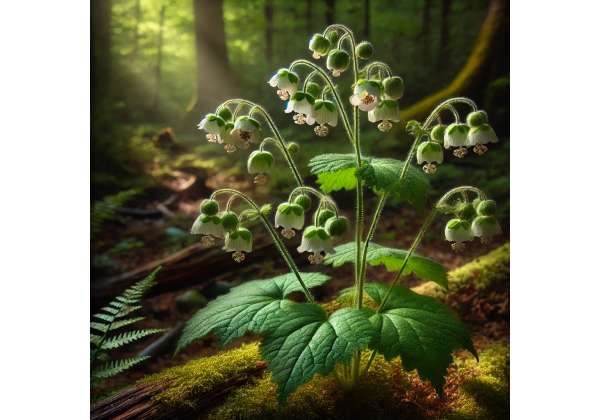
Fringecup is a perennial herb in the saxifrage family, Saxifragaceae. It grows naturally from the Aleutian Islands down through the western United States, especially in cool, moist woods, stream banks, and shaded slopes. Botanically, it is a compact but spreading plant with rounded, softly hairy basal leaves and tall stems of delicate cup-like flowers whose fringed petals shift from greenish white to pink or reddish tones as they age. That elegant look is one reason gardeners love it, but the plant’s medicinal story is much more understated.
Unlike famous medicinal herbs that have entered global commerce, fringecup remains largely regional. Most references to its use come from Indigenous and ethnobotanical records rather than from modern herbal formularies. That alone tells you something important: this is not a plant with a strong supplement industry, a standardized extract market, or a large body of dosing guidance. Its medicinal identity is still tied more closely to place, tradition, and plant knowledge than to capsules and labels.
What gives fringecup scientific interest is its chemistry. Studies on Tellima grandiflora have identified hydrolyzable tannins, especially ellagitannins, including tellimagrandin-related compounds and the dimeric tannin cornusiin E. These are dense polyphenolic molecules better known to chemists than to everyday herb users. In plain language, they are compounds that often behave as plant defense molecules and are commonly linked to astringency, antioxidant effects, and interactions with proteins and membranes.
That chemistry helps explain several practical features of the plant:
- It likely has a tightening, drying, or mildly puckering quality rather than a soft or mucilaginous one.
- It belongs more naturally in the astringent-bitter end of herbal tradition than in the sweet, soothing category.
- Its most interesting modern “medicinal” reputation comes from laboratory chemistry and biosynthesis research rather than clinical treatment studies.
A useful distinction is that fringecup’s key compounds are not simply generic tannins. The plant has been important in phytochemistry because researchers used it to study how tellimagrandin II and related ellagitannins form. That gives fringecup real scientific credibility, but not in the way most readers might assume. It means the plant is chemically important, not that it has already proved itself as a widely effective medicine.
Another practical point is that fringecup is sometimes described too broadly online. When a rare or regional herb has only a small traditional record, modern summaries often inflate vague phrases like “used for many sicknesses” into an unrealistic list of benefits. That is not a good way to read this plant. A better approach is to stay close to what is actually documented: a traditional tea or decoction plant linked especially to poor appetite and general sickness, and a plant with well-identified ellagitannins that make researchers curious about its biochemical potential.
So, what is fringecup in herbal terms? It is best viewed as a lightly documented Pacific Northwest medicinal plant with distinctive tannin chemistry, modest traditional use, and more research value than modern therapeutic certainty.
Could fringecup help appetite and digestion?
If fringecup has one traditional use that stands out more than the rest, it is appetite support. Ethnobotanical records describe the plant, especially as a pounded tea or decoction, being used when appetite was poor and when a person felt generally unwell. That matters because traditional herbal systems often separate herbs into broad functional patterns. Some plants are warming and stimulating, some are soothing and moistening, and some act more like a mild reset for digestion. Fringecup seems to belong closest to that third group.
Why might it help? The best explanation is not that it has one modern drug-like mechanism, but that its tannin-rich chemistry may create a mild bitter-astringent effect. In traditional practice, bitter plants often help initiate digestive readiness by stimulating taste receptors and digestive secretions, while astringent plants may help tone irritated tissues. Fringecup may sit somewhere between those two actions. That would make it more relevant for low appetite, vague digestive heaviness, or mild post-illness digestive sluggishness than for severe nausea, reflux, ulcers, or chronic inflammatory bowel disorders.
This is also where realistic expectations matter. Traditional “restores the appetite” does not necessarily mean the plant acts like a strong modern appetite stimulant. It may simply have helped people feel more settled, more ready to eat, or less weighed down after minor sickness. In a traditional setting, that can be a real benefit. But it is still different from treating a major medical problem such as unexplained weight loss, ongoing nausea, or appetite loss from serious disease.
There are a few reasons not to oversell the digestive story:
- The documented human use is ethnobotanical, not clinical.
- There is no validated modern dose for appetite stimulation.
- Astringent plants can sometimes worsen dryness or digestive tightness if used too strongly.
- There is no good evidence that fringecup outperforms better-known digestive herbs.
That last point is worth stressing. If someone is looking specifically for a better-studied herb for low appetite or sluggish digestion, gentian for appetite and digestive bitterness is much easier to justify in modern practice. Fringecup may still be interesting, but it is not the herb most clinicians or herbalists would reach for first.
That does not make fringecup irrelevant. It simply changes its role. It is better seen as a historically grounded, regionally used plant whose digestive benefit is plausible and modest. It may have been helpful in the context of temporary appetite loss, especially when prepared lightly and used for a short time. It is far less convincing as a daily digestive tonic or as a remedy for chronic gut disease.
A balanced reading would be this: fringecup might help digestion mainly by gently nudging appetite and digestive readiness rather than by strongly changing gut function. That can be useful, but only when the problem is mild, short-lived, and well understood. When appetite loss is persistent or unexplained, the right next step is medical evaluation, not a stronger tea.
Could it offer other benefits?
Beyond appetite and general sickness, fringecup becomes much more speculative. Its chemistry suggests broader possibilities, but modern evidence does not yet support broad health claims. This is where an herb article can become misleading very quickly if it treats laboratory potential as though it were proven human benefit.
The most credible “other” benefit is antioxidant potential. Ellagitannins are highly reactive polyphenols, and this class of compounds is widely studied for its ability to interact with free radicals, proteins, and microbial systems. That does not automatically translate into a clinical result from fringecup tea, but it does explain why the plant attracts phytochemical attention. In other words, fringecup does contain molecules that are biologically active and not just decorative plant chemicals.
A second possible benefit is mild astringent action. This is less about a disease label and more about tissue behavior. A tannin-rich herb can sometimes feel useful when tissues are lax, damp, irritated, or mildly over-secretory. In theory, that could make fringecup relevant for brief digestive looseness or low-grade mucosal irritation. But here the evidence is mostly inferred from the chemical class, not from modern human use studies. That means this idea belongs in the “possible but unproven” category.
A third area of interest is antiviral or antimicrobial research, but the wording needs to stay careful. The ellagitannin family contains compounds that researchers have explored for antimicrobial and antiviral effects in broader phytochemical literature. Since fringecup is a source of tellimagrandin-related tannins, it is reasonable to say the plant has mechanistic relevance. It is not reasonable to say that fringecup itself has been clinically shown to fight infections. That leap is much too large.
A grounded way to frame the plant’s possible benefits is this:
- Likely more antioxidant than nutritive.
- Likely more astringent than soothing.
- More promising in the chemistry lab than in clinical practice.
- More suitable for short-term experimental use than for long-term health claims.
That distinction is especially important because obscure herbs often get upgraded online into “immune boosters,” “detox plants,” or “anti-inflammatory powerhouses” on very little evidence. Fringecup does not deserve that treatment. Its chemistry is interesting, but the real-world proof is still thin.
If your main interest is a gentle everyday herb for unsettled digestion, chamomile for digestive comfort and mild calming support is much more practical and better known. Fringecup belongs to a different category: not an everyday kitchen herb, but a lesser-known woodland plant with enough tannin chemistry to justify cautious curiosity.
One subtle but useful insight is that fringecup may be more important as a source of information than as a common home remedy. It has helped researchers understand the biosynthesis of ellagitannins, and that gives it value even when its direct medical role remains uncertain. Some plants teach us more through their compounds than through their household use. Fringecup seems to be one of them.
So, yes, fringecup may offer more than appetite support. But those “more” benefits are still mostly theoretical, class-based, or laboratory-linked. That is exactly why the plant should be discussed with precision and restraint.
How is fringecup used?
Historically, fringecup was not used as a tincture, capsule, standardized extract, or essential oil. It appears in the record as a simple plant medicine: pounded, boiled, or taken as a tea. That matters because the form tells you how the plant was understood. People were not isolating one compound or chasing potency. They were using the plant in a low-technology, whole-herb way.
The main traditional preparation was a tea or decoction made from the pounded plant. Ethnobotanical summaries describe it being taken for poor appetite and general illness. That implies a short-term, situational use rather than a daily maintenance habit. It also suggests that mild extraction in water was considered sufficient. For a tannin-bearing plant, that makes sense. Water will pull out many of the relevant compounds without creating the aggressive concentration that can happen in strong extracts.
In practical modern terms, the only plausible home-use form would be a weak infusion or short decoction. Not because we know it is ideal, but because it is the closest match to the limited tradition that exists. That also means several things are hard to justify:
- Heavy alcohol extraction.
- Long-term internal use.
- Strong root-focused use without clear identification and guidance.
- Concentrated powders or homemade resinous extracts.
The modern user should also remember that fringecup is not a culinary herb. It does not have a broad food tradition, and there is no strong case for treating it like an edible tonic plant. Its role, if used at all, is closer to a cautious traditional medicine than to a wild food.
A careful way to use it, if one were choosing to experiment conservatively, would be:
- Use properly identified, clean plant material.
- Favor the aerial parts rather than a root-heavy preparation.
- Make a light tea rather than a strong decoction.
- Use it briefly and for a single clear purpose.
- Stop if the taste or body response feels too drying, bitter, or irritating.
Why favor the aerial parts? Because the historical record is too sparse to assume every plant part has the same safety or usefulness. Whole-plant references in traditional use do not automatically translate into safe modern whole-plant self-treatment. A weak tea made from aerial parts is a more cautious modern adaptation.
If someone mainly wants a gentler, more familiar herb for short-term stomach upset or everyday digestive discomfort, peppermint for digestive relief and practical use is far easier to justify. Fringecup belongs in a more experimental corner of herbalism, where good identification and modest expectations matter.
There is also a sustainability point. Because fringecup is still primarily a native woodland plant and garden ornamental, it should not be casually wild-harvested in ways that damage local populations. A plant with a limited medicinal tradition and no standardized commercial stream is not a good candidate for careless foraging.
In the end, how fringecup is used tells you a lot about how it should be respected. It is not a “more is better” herb. It is a small-scale, light-preparation plant whose traditional method was simple, short-term, and purpose-specific.
How much should you use?
Dosage is the weakest part of the fringecup evidence base. There is no established modern therapeutic dose, no widely used monograph, and no standard extract to anchor expectations. For that reason, any dosage guidance has to be presented as cautious, provisional, and clearly non-standardized.
The safest and most honest starting point is this: there is no validated medicinal dose for Tellima grandiflora. That means the plant should not be approached the way one might approach ginger, chamomile, or peppermint, where typical household ranges are much more familiar.
Still, because the tradition points to tea or decoction use, a conservative modernized range can be sketched for readers who want practical context:
- 1 to 2 g dried aerial parts per 250 mL hot water.
- Steep 10 to 15 minutes for a light infusion.
- Start with 1 cup once daily.
- Limit use to 3 to 5 days unless supervised by a qualified clinician.
A slightly stronger preparation, such as a short decoction, could be made with roughly 2 to 3 g dried herb per 250 mL water simmered briefly, but this is exactly where caution rises. Tannin-rich plants can go from “mildly helpful” to “too drying or irritating” with surprisingly little increase in strength. Since fringecup has almost no modern dose-testing in humans, it makes more sense to underuse it than to push it.
A few dosing principles matter more than the number itself:
- Start with the weakest form, not the strongest.
- Use it for a clear reason, not as a vague tonic.
- Do not combine it with several other experimental herbs.
- Do not treat traditional whole-plant use as proof that roots should be used freely.
- Stop early rather than escalating.
Timing may matter too. If the aim is appetite support, a light cup taken 15 to 30 minutes before food is more logical than taking it at bedtime. If the aim is a short digestive reset after mild illness, once-daily use is more defensible than repeated cups throughout the day.
It is also wise to separate any internal use from supplements or medications by at least 2 to 3 hours. This is not based on a specific fringecup interaction trial. It is a reasonable class-based precaution because tannin-rich herbs can sometimes reduce absorption of minerals or drugs.
What should not be recommended? Strong tincture-equivalent dosing, concentrated powders, daily long-term use, or any oral essential-oil-like preparation. Those approaches simply outpace the evidence.
If what you really want is a safer and more clearly soothing herb for irritated mucous membranes or delicate digestion, marshmallow for gentler mucosal support is far easier to dose and generally easier to tolerate. Fringecup is not impossible to use, but it is much harder to dose with confidence.
So the practical conclusion is narrow: use only a light, short-term tea if you use it at all, and treat any dose range as a conservative placeholder rather than a proven therapeutic standard.
Side effects, interactions, and who should avoid it
Fringecup does not have a well-described toxicology profile in the medical literature, and that uncertainty shapes every safety recommendation. The absence of strong poisoning reports is not the same as proof of safety. With little human research, the most responsible position is cautious use with conservative exclusions.
The most likely problems come from its chemistry rather than from any famous toxicity syndrome. A tannin-rich herb can feel drying, tightening, or irritating if prepared too strongly. In real-world terms, that may mean:
- Stomach heaviness or nausea.
- Dry mouth or throat.
- Constipation or a sluggish feeling in the gut.
- Reduced appetite if the dose is too strong or too frequent.
- General intolerance to a bitter, puckering preparation.
These are not dramatic side effects, but they matter because they can be easy to misread. Someone may think a stronger dose is “working” when the herb is actually becoming too astringent for their system.
Interactions are also mostly theoretical but worth respecting. Because fringecup contains hydrolyzable tannins, it is sensible to assume that it may reduce absorption of certain medications, minerals, or iron if taken at the same time. That does not mean the herb is dangerous in all cases. It means spacing it away from medicines is prudent.
Groups who should avoid medicinal self-use include:
- Pregnant people.
- Breastfeeding people.
- Children.
- People with chronic digestive disease.
- People with iron deficiency or who take iron supplements regularly.
- People taking multiple prescription medicines.
- Anyone with liver or kidney disease unless a clinician specifically approves use.
There is also a practical identification issue. Fringecup is a well-known native plant in some regions, but not everywhere. A person who is not confident in plant identification should not experiment with a lesser-known woodland herb simply because it has an appealing folk record.
Another safety point is that tradition and safety are not the same thing. A plant can have a valid Indigenous or regional medicinal history and still be a poor candidate for modern unsupervised use. The distance between those two things is often overlooked in herbal writing. Fringecup is a good example. It has a real ethnobotanical footprint, but almost no modern safety mapping.
This is also where comparison helps. If your goal is simply to use a tannin-rich herb, oak bark and other better-known astringent herbs are at least more familiar in herbal literature, even if they are not always gentler. Fringecup’s problem is not obvious danger. It is uncertainty.
Stop use and seek proper care if you notice persistent abdominal pain, vomiting, rash, swelling, trouble swallowing, or worsening loss of appetite. Those are signs that the experiment has stopped being reasonable.
The best safety summary is simple: use little, use briefly, and do not assume that “native plant” means “safe daily medicine.” With fringecup, the main risk is not recklessness alone. It is false confidence.
What the evidence actually says
The evidence for fringecup is thin, uneven, and mostly non-clinical. That does not make the plant unimportant, but it does define what can be said honestly.
The strongest evidence falls into two categories. First, ethnobotany. There are real records of fringecup being used as a pounded tea or decoction, particularly for poor appetite and general sickness. That gives the plant historical legitimacy. It shows that fringecup was not merely ornamental. It had a recognized medicinal role in at least some communities.
Second, phytochemistry. Fringecup is well known in plant chemistry for its ellagitannins, including tellimagrandin-related compounds and cornusiin E. Research on the plant has helped clarify how these molecules form, which is why Tellima grandiflora appears in biochemical literature more often than in clinical herbal references. This is an unusual pattern. Some herbs are clinically famous but chemically ordinary. Fringecup is almost the reverse: chemically notable, clinically obscure.
What is missing is just as important:
- No meaningful human clinical trials for appetite, digestion, or general illness.
- No standard dose established from modern studies.
- No robust long-term safety data.
- No clear evidence that a home tea reproduces the more interesting laboratory findings.
This is where readers need to be especially careful with interpretation. A plant can contain compounds that are scientifically exciting and still fail to become a dependable medicine. The gap between “contains interesting ellagitannins” and “is a clinically useful herb” is large. With fringecup, that gap is still wide open.
Recent review literature on ellagitannins helps explain why researchers stay interested in compounds from plants like this. Ellagitannins are studied for antioxidant behavior, gut-related metabolism, and broader biological effects. But those reviews are about the compound class, not about fringecup tea as a proven therapy. That difference matters. It is reasonable to say fringecup belongs to an interesting chemical family. It is not reasonable to say fringecup has the same evidence as better-studied ellagitannin foods or extracts.
A useful comparison is green tea and other better-studied polyphenol-rich herbs. Those plants have both chemistry and clinical familiarity. Fringecup mainly has the chemistry.
So what should a careful reader conclude?
- Fringecup has a real traditional medicinal record.
- It contains genuinely notable ellagitannins.
- Its likely actions are modestly astringent and polyphenol-driven.
- Its modern therapeutic claims remain largely untested.
- It is more appropriate for cautious historical or educational interest than for confident self-medication.
That is not a dismissal. It is a fair placement. Fringecup is an herb that teaches restraint. It reminds us that not every medicinal plant needs to become a supplement, and not every interesting compound needs to become a consumer claim. Sometimes the most accurate article is the one that leaves a plant mysterious in the right way: respected, documented, and not exaggerated.
References
- Fringecup – North Creek Wetland n.d. (University resource)
- Tellima grandiflora (Pursh) Douglas ex Lindl. | Plants of the World Online | Kew Science n.d. (Official database)
- Complex ellagitannins from Tellima grandiflora 1976
- Oxidation of pentagalloylglucose to the ellagitannin, tellimagrandin II, by a phenol oxidase from Tellima grandiflora leaves 2003
- Ellagitannins and Their Derivatives: A Review on the Metabolization, Absorption, and Some Benefits Related to Intestinal Health 2025 (Review)
Disclaimer
This article is for educational purposes only and is not medical advice. Fringecup is a traditional plant with limited modern safety and efficacy data, so it should not replace professional evaluation, diagnosis, or treatment. Speak with a qualified healthcare professional before using it medicinally, especially if you are pregnant, breastfeeding, giving herbs to a child, taking prescription medicines, or managing ongoing digestive, liver, or kidney problems. Seek prompt care for persistent appetite loss, unexplained weight loss, severe abdominal pain, vomiting, rash, or any symptom that worsens during use.
If this article was helpful, please share it on Facebook, X, or your preferred platform to help more readers find careful, evidence-based herbal information.