Fucus is the old herbal name most readers now meet as bladderwrack, a brown seaweed traditionally gathered from cold Atlantic coasts and used in food, mineral-rich tonics, and weight-support formulas. The accepted botanical spelling is Fucus vesiculosus, and that detail matters because modern research is tied to the correct species. What makes this seaweed interesting is not one single compound but a cluster of them: iodine, alginates, fucoidan, phlorotannins, minerals, and other marine polysaccharides that may influence satiety, antioxidant activity, and thyroid-related physiology. Yet Fucus is also one of the herbs where “natural” can become misleading. Its iodine content varies widely, contamination control matters, and the same product that seems helpful for one person may be risky for another. The strongest reasons people use Fucus today are thyroid-related interest, metabolic support, and digestive bulking effects, but the evidence is mixed and the safety rules are stricter than many supplement labels suggest. This guide explains what Fucus is, what it contains, what it may realistically help with, how to use it, what dose questions matter most, and when it is better avoided.
Top Highlights
- Fucus is a brown seaweed rich in iodine, alginates, fucoidan, and phlorotannins, with potential roles in satiety and metabolic support.
- Human studies show only modest or inconsistent benefits, so it should not be treated as a proven thyroid or weight-loss remedy.
- Product dosing should be guided by iodine content, and medicinal products should generally stay at or below 400 µg iodine per day from Fucus.
- People with hyperthyroidism, autoimmune thyroid disease, or those taking thyroid medication should avoid self-prescribing Fucus.
- Heavy metal testing and iodine standardization matter more with this herb than with most land plants.
Table of Contents
- What is Fucus
- Key compounds in Fucus
- What Fucus may help with
- How Fucus is used
- How much Fucus per day
- Side effects and interactions
- What the evidence actually shows
What is Fucus
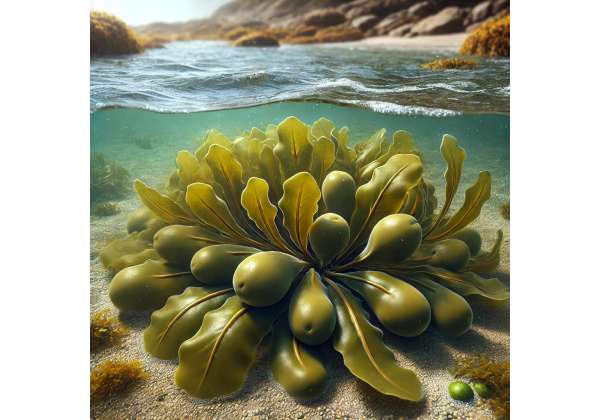
Fucus usually refers to Fucus vesiculosus, the brown seaweed better known as bladderwrack. It grows on rocky shorelines in the North Atlantic and nearby cold-water coasts, where it forms tough olive-brown fronds with small air bladders that help keep the plant buoyant. For generations it was used in food, animal feed, poultices, and folk medicine. In nineteenth- and early twentieth-century herbal practice, it was especially associated with mineral nourishment, glandular support, and weight-management formulas.
That older reputation makes sense when you look at the plant’s setting. Seaweeds draw minerals directly from seawater, and bladderwrack became one of the most famous iodine-rich marine herbs. Before thyroid physiology was fully understood, it was often recommended whenever someone seemed sluggish, puffy, or prone to enlargement of the thyroid gland. Modern science changed that picture in an important way. It showed that iodine can be helpful in deficiency, but it also showed that too much iodine can disturb thyroid function. So the same feature that once made Fucus famous now explains why it must be used carefully.
Another reason Fucus stays relevant is that it is more than an iodine source. It contains viscous polysaccharides, bitter-saline compounds, and antioxidant-rich marine phenolics. That makes it interesting for digestive bulk, satiety, and functional-food research. It is also widely used in cosmetic products, especially creams, gels, and wraps aimed at hydration, texture, or skin conditioning.
Still, it helps to see Fucus for what it really is: a marine botanical with meaningful chemistry, not a simple thyroid herb. A good Fucus product is defined less by romance and more by standardization. The key questions are not just “Is this bladderwrack?” but “How much iodine does it contain?” and “Has it been screened for contaminants?” That is very different from the way most readers think about leafy herbs or kitchen spices.
In modern use, Fucus sits at the crossroads of herbal medicine, nutrition, and marine supplement science. It can be sold as dried thallus, powder, capsule, extract, or topical ingredient. It can appear in slimming blends, thyroid-support products, and seaweed mineral formulas. But unlike many herbs that can be loosely described as “gentle,” Fucus demands a more measured approach. Its variability is part of the story. So are its traditional uses. And so is the fact that modern regulators tend to be more cautious about it than marketing copy would suggest.
Key compounds in Fucus
The most important compound in Fucus is iodine, because it shapes both the seaweed’s potential value and its risk profile. Iodine is essential for thyroid hormone production, and that is the main reason bladderwrack has historically been linked with metabolism, thyroid support, and weight formulas. But iodine content in seaweed is not fixed. It varies by harvest site, season, processing, and product quality. That means two Fucus products can behave very differently even when the label looks similar.
Beyond iodine, Fucus contains alginates. These are soluble polysaccharides that absorb water and form a gel-like texture. In practical terms, alginates help explain why seaweed can feel filling and why Fucus has been used in formulas aimed at appetite control or digestive bulk. This does not make it a miracle weight-loss ingredient, but it does give a biologically plausible reason for its traditional use in slimming regimens. For readers familiar with other soluble fibers used for digestive bulk, alginates play a somewhat similar functional role, although the overall chemistry is different.
Fucoidan is another major constituent. This sulfated polysaccharide is one of the best-studied marine bioactives in Fucus vesiculosus. Laboratory research links fucoidan with anti-inflammatory, immune-modulating, anticoagulant, and antioxidant actions, but its real-world effects depend heavily on molecular weight, extraction method, sulfation pattern, and dose. This is one reason fucoidan studies are difficult to compare. A fucoidan-rich extract is not the same thing as dried whole bladderwrack.
Fucus also contains phlorotannins, a class of polyphenols found mainly in brown algae. These compounds contribute antioxidant activity and are often cited in discussions of metabolic and cardiovascular support. Some extracts are marketed specifically for their phlorotannin content rather than for iodine. That distinction matters because a polyphenol-rich extract may be designed to emphasize antioxidant activity while limiting other variables.
Other constituents include mannitol, laminarin, minerals, and trace pigments such as fucoxanthin. These compounds deepen the functional-food appeal of Fucus, but they are not the main drivers of its traditional reputation. Iodine, alginates, fucoidan, and phlorotannins remain the core conversation.
The chemistry of Fucus points to one big practical lesson: the word “Fucus” can describe very different products. Whole dried thallus, standardized iodine capsules, fucoidan extracts, and topical marine gels should not be treated as interchangeable. If a person reads a clinical trial on a purified seaweed extract and then buys a crude powder, the results may not map over at all. With Fucus, chemistry is not a background detail. It is the reason product quality, label clarity, and intended use matter so much.
What Fucus may help with
The most realistic way to describe Fucus benefits is to say that it may help in a few specific areas, but the evidence is modest and far less decisive than supplement advertising often implies.
The first area is thyroid-related support, but this needs careful wording. Fucus does not “boost” the thyroid in a general sense. What it provides is iodine, and iodine only helps when iodine is actually relevant to the thyroid problem. In a person with iodine insufficiency, that can matter. In a person with normal intake, autoimmune thyroid disease, or hyperthyroidism, extra iodine may do nothing or may make things worse. This is why Fucus should be thought of as an iodine-delivering herb, not a universal thyroid tonic.
The second area is satiety and weight-management support. Traditional European use and the EMA assessment both place Fucus in the category of an adjuvant in slimming diets rather than a stand-alone treatment. That wording is revealing. It means the seaweed may play a supporting role, mainly through bulk, fiber-like effects, and perhaps through correcting low iodine in selected cases, but it is not a proven fat-loss agent. The strongest modern view is that Fucus may fit into a broader plan, not replace one.
A third possible area is cardiometabolic support. Brown seaweed extracts containing Fucus vesiculosus have been studied for lipids, blood sugar, and metabolic syndrome. Some data suggest modest improvement in HDL cholesterol with a polyphenol-rich extract, while other biomarkers show little or no change. A more recent pilot trial using 5 g daily of dried Fucus in people with type 2 diabetes found no clear differential effect on glucose levels. So the evidence here is mixed: promising enough to study further, but not strong enough to justify confident claims.
There is also interest in skin and topical use. Fucus extracts appear in cosmetic products aimed at hydration, elasticity, and texture. That use is plausible and historically consistent with marine topical care, but it belongs more to cosmetic support than to medical dermatology.
What Fucus probably does not do is deliver a reliable cure for hypothyroidism, obesity, diabetes, or chronic inflammation. That distinction matters. A product can contain interesting bioactives and still fail to produce clinically meaningful results in humans. Fucus is a good example of that tension.
A grounded benefit profile looks like this:
- Possible supportive role when iodine intake is relevant and monitored.
- Possible satiety or slimming-adjunct role rather than direct weight-loss power.
- Limited and inconsistent evidence for metabolic markers.
- Plausible topical and functional-food value.
This is why Fucus works best when expectations are modest. It is a marine botanical with useful chemistry, not a shortcut for endocrine or metabolic problems.
How Fucus is used
Fucus is used in several distinct ways, and the form matters as much as the herb itself. Traditional use centered on the dried thallus, which could be powdered or prepared in decoctions. Modern use is more varied. Today it appears in capsules, tablets, powders, liquid extracts, fucoidan-rich fractions, and topical cosmetic products. The problem is that these forms are often discussed as though they were equivalent, when they are not.
Whole dried Fucus is the form most closely tied to traditional herbal practice. It retains the full mineral and polysaccharide profile, including iodine and alginates, but it also carries the greatest variability. If the iodine content is not measured, two similar-looking powders can differ substantially in potency. That is why whole-herb use only makes sense when the product is standardized and contaminant-tested.
Extracts are more selective. Some emphasize iodine content, while others emphasize fucoidan or polyphenols. These are often used in modern metabolic or cardiovascular supplement formulas. A 2021 randomized trial used 2,000 mg per day of a polyphenol-rich Fucus extract and found a modest increase in HDL cholesterol but no meaningful change in most other chronic-disease biomarkers. That does not make the extract useless, but it does show that “marine polyphenol” is not automatically a clinically powerful intervention.
Another modern form is the functional-food or meal-support product. Fucus is sometimes added to shakes, fiber blends, or slimming supplements because of its gel-forming polysaccharides and mineral profile. This approach is sensible only when the iodine dose is transparent. Otherwise the user may unknowingly stack multiple iodine-containing products in the same day.
Topical use is common in cosmetic care. Marine wraps, gels, and seaweed creams often include Fucus for texture, hydration, or skin-conditioning purposes. These uses are usually less risky than internal dosing because systemic iodine exposure is lower, though sensitive individuals can still react to added fragrances or marine extracts.
The most practical way to think about Fucus forms is this:
- Whole thallus is traditional but variable.
- Standardized extracts are more predictable but not interchangeable.
- Fucoidan products are not the same as full-spectrum bladderwrack.
- Topicals are mainly cosmetic, not a substitute for internal treatment.
For everyday users, the smartest habit is to choose one clear purpose. Use a standardized iodine-containing product if the goal is monitored thyroid-related supplementation. Use a defined polyphenol or fucoidan product if the goal is experimental metabolic or wellness support. Do not mix several forms casually.
This is also why Fucus is not a great herb for improvisation. It is not the kind of plant where a home tea from unknown raw material is automatically reasonable. With marine herbs, source quality, species identity, and testing matter too much for that. The right use of Fucus is careful, labeled, and purpose-specific.
How much Fucus per day
The most responsible way to dose Fucus is by iodine content, not by plant weight alone. That is the single most important rule. Because iodine levels vary so widely, a gram-based dose is only useful when the manufacturer also states how much iodine the product delivers.
For traditional herbal medicinal products, the EMA assessment is especially useful. It supports traditional use of Fucus as an adjuvant in slimming diets, but with a clear limit: medicinal products based on Fucus should not provide more than 400 µg iodine per day from the seaweed itself, and total daily iodine intake should remain below 600 µg. That tells you two things immediately. First, regulators treat iodine as the main dose-limiting factor. Second, Fucus is not something to take casually in unknown amounts.
Modern human trials also illustrate how form changes the dose conversation. One placebo-controlled trial used 2,000 mg per day of a polyphenol-rich Fucus extract for twelve weeks. Another pilot trial used 5 g per day of dried Fucus in people with type 2 diabetes for five weeks. These are not general recommendations; they are study-specific protocols. They show what researchers tested, not what every user should copy.
A practical dosing framework looks like this:
- For traditional whole-thallus products, choose standardized products that disclose iodine and stay within the daily iodine limit.
- For extract products, follow the manufacturer’s stated dose only if iodine content is also clear.
- Do not stack Fucus with other iodine-rich products such as kelp blends unless the total daily iodine intake is known.
- Avoid long-term use without reassessing need, especially if the product is taken for thyroid or slimming reasons.
Timing is less important than consistency and monitoring. Taking Fucus with food may improve tolerance for some people. If the goal is satiety, using it before meals may make practical sense, but that is a formulation issue more than a proven clinical rule.
Duration also matters. Fucus should not be treated as a permanent wellness background supplement without a reason. If someone uses it for a defined purpose, thyroid function and total iodine exposure should be reviewed regularly. This is especially true if symptoms such as palpitations, heat intolerance, fatigue, new anxiety, or unexplained weight change develop.
For readers interested in thyroid-support nutrients more broadly, it is often helpful to think about the balance between iodine and other thyroid-relevant nutrients rather than focusing on one seaweed alone. Fucus dosage is really a question of endocrine exposure, not just herb quantity.
So the clean answer is this: dose Fucus by measured iodine, respect upper daily limits, and treat research doses as informative rather than universally applicable.
Side effects and interactions
The main side effect concern with Fucus is thyroid disruption from excess iodine. That can show up in more than one direction. In some people, too much iodine can trigger or worsen hyperthyroidism, especially when thyroid tissue is autonomous or already unstable. In others, excessive or fluctuating intake may contribute to thyroid dysfunction in more complex ways. This is why an herb once associated with “thyroid support” can actually be a poor fit for many thyroid patients.
Possible side effects include stomach upset, nausea, bloating, altered bowel habits, headache, and the metallic-saline aftertaste some seaweed products produce. But the more important issues are systemic: palpitations, restlessness, tremor, changes in heat tolerance, fatigue, unexpected weight change, or neck discomfort. These are the kinds of symptoms that should prompt the user to stop and review thyroid exposure.
Fucus also raises contamination questions. Brown seaweeds can accumulate heavy metals depending on where they are harvested. That does not mean every good-quality product is contaminated, but it does mean testing matters. A cheap unlabeled seaweed powder is not equivalent to a properly screened product.
Interaction risks include:
- Thyroid medication, because extra iodine can complicate management.
- Antithyroid drugs, for the same reason.
- Anticoagulants or antiplatelet medicines, because some marine extracts, especially fucoidan-rich products, may affect coagulation-related pathways.
- Other iodine-containing supplements, multivitamins, or seaweeds, due to dose stacking.
Who should avoid Fucus unless directly guided by a clinician?
- Anyone with hyperthyroidism.
- People with autoimmune thyroid disease or nodular thyroid disease.
- People taking levothyroxine or antithyroid medication.
- Pregnant or breastfeeding women unless specifically advised, because iodine needs are important but excess is also a problem.
- Children, unless use is supervised and clearly justified.
Caution is also wise for people with shellfish or marine-product sensitivities, even though seaweeds are not shellfish. The broader marine-allergy context can still matter in individual cases.
The practical safety lesson with Fucus is simple: it is not just a source of “natural minerals.” It is a bioactive seaweed with endocrine relevance. That places it closer to a targeted supplement than to a casual wellness food. If a product does not disclose iodine, source, and testing standards, it has not given the user the information needed to use it responsibly.
What the evidence actually shows
The evidence for Fucus is stronger in chemistry and tradition than in decisive human clinical benefit. That is the most honest summary.
On the positive side, there is a real biological basis for interest. Fucus vesiculosus contains iodine, alginates, fucoidan, phlorotannins, and other marine compounds with plausible effects on satiety, antioxidant activity, metabolic signaling, and thyroid-related physiology. Reviews of brown seaweeds also support the idea that Fucus is one of the more chemically active and extensively studied species in this category.
But when the focus shifts from mechanisms to outcomes in people, the picture narrows. The 2021 review of clinical trials on brown seaweeds including Fucus concludes that the human evidence base is still limited. The trials are few, formulations differ, and study sizes are generally small. That makes it hard to turn “promising marine bioactives” into strong clinical recommendations.
The individual trials reinforce that caution. A twelve-week randomized trial of a polyphenol-rich Fucus extract found a modest increase in HDL cholesterol, but little change in other disease-risk biomarkers. A 2024 pilot trial using 5 g daily of dried Fucus in overweight adults with type 2 diabetes found no meaningful differential effect on weekly glucose levels or related secondary outcomes. These are useful findings because they keep expectations realistic. Fucus may have measurable effects in some contexts, but it is not delivering broad, dramatic benefits in current human trials.
The EMA assessment also adds an important evidence-based perspective. It does not endorse Fucus as a well-established medicinal herb for a wide range of claims. Instead, it recognizes traditional use as an adjuvant in slimming diets, with specific limits tied to iodine exposure. That is a far more cautious conclusion than many supplement labels imply.
So what should a careful reader conclude?
- Fucus is a credible traditional marine herb with meaningful chemistry.
- It has enough human evidence to stay interesting, but not enough to justify hype.
- Safety issues, especially iodine exposure, are at least as important as any benefit.
- Product standardization is essential to any reasonable use.
That makes Fucus a good example of a herb that is scientifically interesting without yet being broadly convincing as a self-prescribed supplement. Its best current role is selective and careful, not casual and universal. When readers understand that balance, they are much less likely to mistake a promising seaweed for a guaranteed solution.
References
- Clinical Efficacy of Brown Seaweeds Ascophyllum nodosum and Fucus vesiculosus in the Prevention or Delay Progression of the Metabolic Syndrome: A Review of Clinical Trials – PubMed 2021 (Review)
- Twelve weeks’ treatment with a polyphenol-rich seaweed extract increased HDL cholesterol with no change in other biomarkers of chronic disease risk in overweight adults: A placebo-controlled randomized trial – PubMed 2021 (RCT)
- The Effect of Sargassum fusiforme and Fucus vesiculosus on Continuous Glucose Levels in Overweight Patients with Type 2 Diabetes Mellitus: A Feasibility Randomized, Double-Blind, Placebo-Controlled Trial – PubMed 2024 (RCT)
- The Biochemical Composition and Antioxidant Properties of Fucus vesiculosus from the Arctic Region – PMC 2022
- Assessment report on Fucus vesiculosus L., thallus 2014 (Regulatory Assessment)
Disclaimer
This article is for educational purposes only and does not replace medical advice, diagnosis, or treatment. Fucus products can alter iodine intake enough to affect thyroid function, and product quality varies widely. Do not use bladderwrack as a self-treatment for thyroid disease, weight loss, or diabetes without guidance from a qualified clinician, especially if you are pregnant, breastfeeding, taking thyroid medication, or have a known thyroid disorder.
If this guide was useful, please share it on Facebook, X, or another platform you prefer so more readers can find accurate, safety-first herbal information.