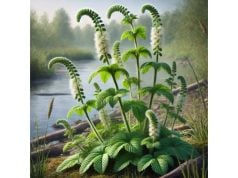
Goat’s foot is a creeping seaside vine with a long medicinal history that far exceeds its humble appearance. Botanically known as Ipomoea pes-caprae, it spreads across tropical and subtropical beaches, where its split leaves and purple funnel-shaped flowers help identify it quickly. In traditional medicine, especially in coastal communities, the leaves and sap have been used for pain, swelling, jellyfish stings, insect bites, skin irritation, and aching joints. Modern research has not turned it into a mainstream clinical herb, but it has strengthened interest in its anti-inflammatory, antinociceptive, antispasmodic, and wound-supportive potential.
What makes goat’s foot especially interesting is that its strongest case is topical. Unlike many herbs that are discussed mainly as teas or capsules, this plant is more often linked to warmed leaves, poultices, leaf extracts, and skin-focused applications. That does not mean it is fully proven or standardized. Human dosing remains limited, and much of the evidence still comes from lab and animal studies. Even so, goat’s foot stands out as one of the more credible traditional coastal remedies for localized pain and sting-related discomfort.
Quick Overview
- Goat’s foot is best known for topical support in swelling, pain, sting-related irritation, and inflamed skin.
- Its most relevant compounds include flavonoids, terpenoids, resin glycosides, sterols, and phenolic compounds linked to anti-inflammatory activity.
- Experimental topical formulas have commonly used about 0.5% to 2% extract in semisolid preparations.
- Oral dosing is not standardized, so casual internal use is much less established than external use.
- Pregnant or breastfeeding people, children, and anyone using unidentified beach-harvested plants medicinally should avoid self-directed treatment.
Table of Contents
- What is goat’s foot
- Key compounds in goat’s foot
- What can goat’s foot help with
- How to use goat’s foot
- How much per day
- Safety and who should avoid it
- What the evidence actually says
What is goat’s foot
Goat’s foot is a salt-tolerant coastal vine in the morning glory family. It is often called beach morning glory, bayhops, or railroad vine, depending on the region. The plant sprawls across sandy beaches and dunes, where it helps stabilize soil and withstands intense sun, wind, salt spray, and shifting sand. Its common name comes from the distinctive two-lobed leaf shape, which can resemble a goat’s hoof.
That harsh coastal environment is part of the reason the plant attracts medicinal interest. Species that survive in high-stress habitats often produce complex protective compounds, and goat’s foot appears to be one of them. Traditional systems in Asia, Africa, Australia, Brazil, and island cultures have used the leaves, stems, and sometimes sap for skin complaints, pain, swelling, digestive distress, rheumatic discomfort, and marine stings. The most consistent pattern across regions is external use for local symptoms rather than routine long-term internal supplementation.
The leaf is the part most often discussed medicinally. In ethnomedicine, people have used it in several ways:
- Warmed and applied over painful areas
- Crushed as a simple poultice
- Incorporated into decoctions or infusions
- Used as a plant juice or soft extract for topical relief
That matters because goat’s foot is not best understood as a standardized capsule herb. Its history is much more practical and situational. A beachside community uses what grows nearby, and goat’s foot became a first-aid style plant in many of those contexts.
The plant also has an identity challenge. Since it grows in exposed coastal areas, quality varies a great deal. A clean, correctly identified medicinal specimen is very different from an ornamental planting or a roadside beach vine exposed to pollutants. That is one reason modern herbal use should be more careful than folklore summaries sometimes suggest.
Goat’s foot is also a good example of a plant whose folk reputation partly aligns with pharmacology. Modern studies have found compounds that plausibly support anti-inflammatory, antinociceptive, antispasmodic, antimicrobial, and wound-related effects. That does not prove every traditional claim, but it does explain why the plant remained valuable for so long.
A helpful comparison is aloe vera. Both plants are often used externally for irritated skin and minor first-aid situations, but goat’s foot is more closely associated with pain, swelling, and sting-related discomfort, while aloe is better known for burns and soothing gel-like moisture. Goat’s foot sits in that same practical, topical-herb category, but with a more coastal and pain-focused tradition.
Key compounds in goat’s foot
Goat’s foot has a broader chemistry than most short herb profiles suggest. Reviews of the plant identify several classes of compounds that help explain why it has been studied for pain, inflammation, spasm, and skin-focused uses. The major groups include flavonoids, phenolic compounds, terpenoids, steroids, alkaloids, resin glycosides, coumarins, and volatile components.
Among the more relevant constituents reported from the plant are:
- Quercetin
- Isoquercetin
- Other quercetin glycosides
- Coumarin-type compounds such as mellein
- Triterpenes and triterpenoid derivatives
- Sterols such as beta-sitosterol and stigmasterol
- Resin glycosides associated with Convolvulaceae chemistry
- Phenolic acids and other antioxidant compounds
This chemistry matters because it maps fairly well onto the plant’s reputation. Flavonoids and phenolic compounds are often linked to antioxidant and anti-inflammatory effects. Triterpenes and sterols can contribute to membrane, enzyme, and inflammatory pathway activity. Resin glycosides in the Convolvulaceae family are especially interesting because they may help explain some of the plant’s traditional digestive and spasm-related uses, though they also raise caution for oral dosing.
Quercetin and isoquercetin are worth special attention. These are not unique to goat’s foot, but they are among the most familiar plant compounds associated with antioxidant and anti-inflammatory activity. Their presence makes goat’s foot more pharmacologically plausible than a purely symbolic folk remedy. Even so, the plant does not rely on one star ingredient. Its value seems to come from a mixture of compounds acting together.
Another important point is that different preparations emphasize different chemistry. A whole warmed leaf placed on the skin will not behave the same way as a methanolic laboratory extract. A hydroethanolic cream is different again. This is one reason readers should be careful when they see big claims based on extracts. Extract studies can be useful, but they do not automatically describe what a home-prepared leaf poultice can do.
There is also evidence that some of goat’s foot compounds have antispasmodic or vasomodulating behavior. That is relevant to traditional use for abdominal cramps and possibly to sting-associated skin reactions, where local vascular changes may matter. In other words, the plant’s chemistry is not only about inflammation. It may also influence tension, contractility, and localized discomfort in ways that help explain its first-aid reputation.
Like boswellia, goat’s foot is a good reminder that anti-inflammatory potential often comes from a network of compounds rather than a single isolated marker. The difference is that boswellia is far more standardized and clinically developed, while goat’s foot still sits closer to the traditional-use end of the spectrum.
What can goat’s foot help with
The strongest case for goat’s foot is localized, external support rather than broad internal wellness marketing. When the claims stay close to topical pain, swelling, sting-related irritation, and inflamed skin, the plant looks genuinely credible. When the claims expand into a cure-all for hypertension, arthritis, ulcers, diabetes, and fatigue all at once, the evidence becomes much thinner.
The most believable benefit is relief of localized pain and inflammation. Animal and extract studies have repeatedly found antinociceptive and anti-inflammatory activity. This aligns closely with traditional use for rheumatic pain, sore joints, swelling, and externally painful inflammatory conditions. In practical terms, that means goat’s foot is more convincing as a spot-treatment herb than as a general tonic.
Another important traditional use is sting and toxin-contact relief. In many coastal communities, the leaves and sap have been used after jellyfish stings, fish stings, insect bites, and other painful skin contacts. This may be one of the plant’s most distinctive ethnomedical roles. Modern pharmacology does not fully standardize that practice, but older and newer studies give it more support than many folk first-aid remedies receive.
Skin-focused support is another plausible area. Goat’s foot appears in traditional use for sores, inflamed skin, dermatitis-like irritation, and minor wound-related care. Recent work on topical gel formulations and skin-related models suggests there may be genuine value here, especially when inflammation and tissue stress are involved. Still, this should not be confused with evidence for treating infected wounds, serious burns, or chronic skin disease without medical care.
Internal uses do exist in traditional medicine. Decoctions and infusions have been used for digestive upset, cramps, kidney-related complaints, and rheumatic pain. Some reviews also discuss anti-ulcer, antispasmodic, antihypertensive, and antidiabetic potential. These areas are scientifically interesting, but much less secure for self-care guidance. The plant’s chemistry may support those possibilities, yet human evidence is limited and product standardization is weak.
A balanced summary of realistic benefit areas would be:
- Topical pain relief
- Local swelling and inflammatory discomfort
- Sting-related or toxin-contact skin irritation
- Mild supportive use for skin recovery
- Experimental interest in spasm, arthritis, and broader inflammatory states
That list is still impressive, but it is more honest than calling goat’s foot a proven medicine for every traditional indication. If the goal is deeper evidence for systemic pain control, willow bark has a much clearer medicinal identity. Goat’s foot is more niche and more topical, which is exactly what makes it useful on its own terms.
The most helpful mindset is to see goat’s foot as a localized remedy plant. It is best for the skin, the surface, and the painful spot in front of you. That is where its tradition and its emerging science overlap most clearly.
How to use goat’s foot
Goat’s foot can be used several ways, but not all routes are equally grounded. The traditional pattern strongly favors topical use, and that remains the most sensible route for modern self-care. Internal use exists in ethnomedicine, but because standardized oral dosing is weak and the chemistry is complex, it is much harder to recommend casually.
The simplest traditional method is a fresh leaf application. Leaves may be crushed, bruised, or gently warmed before being applied to the affected area. This style of use fits how the plant has often been used for stings, painful swelling, or localized skin discomfort. The goal is direct local contact, not systemic delivery.
A second route is a prepared topical product. Research on goat’s foot has included semisolid and gel-like formulas using plant extracts. This is more relevant to modern users because it allows dose control, easier storage, and better skin contact. A well-made topical product is usually more realistic than improvising a raw plant preparation if the herb is being used outside its native context.
Other reported use forms include:
- Decoctions of leaves for traditional internal use
- Infusions for rheumatic or digestive complaints
- Sap applied directly to the skin in some folk systems
- Extract-based topical creams or gels
- Experimental phenolic-rich topical formulas
For home herbal practice, the order of preference is usually this:
- Food-grade or medicinally intended dried plant from a trustworthy source
- Properly identified fresh leaves from a clean location
- Professionally formulated topical product
- Traditional oral use only with experienced guidance
That order matters because beach plants can easily pick up contamination, and misidentification is a real problem. A clean, verified plant is essential.
If someone wants to use the herb externally, it is wise to begin with a small test area. Even topical plants with a long history can irritate some people, especially when fresh sap, concentrated extract, or repeated application is involved. For sting or bite-related use, topical support should also be paired with basic first-aid judgment. Serious reactions, severe pain, spreading rash, or signs of infection are not situations for herbs alone.
Goat’s foot is sometimes described alongside better-known skin herbs. A practical comparison is witch hazel. Witch hazel is more astringent and often used for minor irritation, while goat’s foot is more associated with pain, swelling, and sting-contact tradition. They are not interchangeable, but that comparison helps position goat’s foot in the wider herbal toolkit.
The main rule is simple: use goat’s foot like a focused topical herb, not like a broad wellness supplement. That keeps the practice closer to both traditional experience and current evidence.
How much per day
This is the section where honesty matters most. Goat’s foot does not have a well-established human daily dose for general oral use. There is no standard capsule range, no widely accepted therapeutic tea dose, and no major clinical consensus that supports routine internal self-dosing. That means dosage guidance has to be built from tradition, formulation studies, and caution rather than from a strong human dosing literature.
For external use, the most useful data come from experimental topical preparations. Semisolid formulas studied in animal and preclinical settings have used extract concentrations around 0.5%, 1.0%, and 2.0%. That gives a practical reference point: goat’s foot seems best approached as a low-percentage topical ingredient rather than a highly concentrated raw active.
That does not mean people historically measured exact percentages when applying the plant. They usually did not. Traditional use was more likely to involve warmed leaves, crushed leaf mass, sap, or decoctions. But for modern readers, the low-percent topical range is one of the few dosage anchors that translates into something practical and reasonably conservative.
For oral use, caution is much greater. Animal studies have reported antinociceptive effects with methanolic extract in the approximate range of 12.5 to 37.7 mg/kg in pain models, and older in vitro work on jellyfish venom neutralization used entirely different activity metrics. None of that should be turned into a home oral dose. Those are research conditions, not consumer guidance.
So the safest dosage framework is:
- Fresh topical leaf use in a limited local area
- Formulated topical products in low-percent extract ranges
- No routine internal use without qualified supervision
- No essential-oil style assumptions, since goat’s foot is not used that way
Timing and duration should also stay conservative. For topical use, short-term application makes the most sense:
- During an acute flare of local discomfort
- After sting-related or contact-related skin irritation
- For several days while reassessing response
- Stopped promptly if irritation worsens
If symptoms are severe, prolonged, or recurrent, more herb is not the answer. Goat’s foot is not a substitute for evaluation of chronic joint disease, venomous injury, infected skin, or allergic reaction.
It is also helpful to avoid the assumption that “natural” means unlimited. Many topical medicinal plants are strongest when used in the smallest useful amount. That is true here. A thin application to a defined area is more rational than repeated heavy coating over large skin surfaces.
Compared with calendula, which is often used more freely in washes, salves, and skin preparations, goat’s foot feels more like a targeted remedy herb. Use it for the problem spot, not as an all-day, all-purpose skin plant.
Safety and who should avoid it
Goat’s foot looks relatively promising in safety terms, especially for topical use, but the evidence is still incomplete. That makes moderation and route of use especially important. A plant can appear low-risk in traditional practice and still be poorly defined for modern internal use, interactions, pregnancy safety, and product quality.
Topical use is generally the least problematic route, yet even there, caution is needed. Fresh plant material can irritate damaged or highly reactive skin. A beach-harvested plant may also carry salt, sand, microbes, pollutants, or chemical residues depending on where it grew. This means safety is not only about the plant itself. It is also about the preparation and the environment it came from.
Possible adverse effects may include:
- Skin irritation or redness
- Allergic contact response
- Worsening of broken or infected skin if used improperly
- Unpredictable oral effects from unstandardized internal use
- Interaction concerns if oral extracts are combined with medicines
Who should be especially cautious?
- Pregnant or breastfeeding people
- Children
- Anyone with significant plant allergies
- People using the herb internally without trained guidance
- Anyone with open, infected, or rapidly worsening skin lesions
- People using many topical products at once on the same area
Oral safety is the biggest unknown. Traditional infusions and decoctions exist, but that does not equal modern certainty. Goat’s foot contains resin glycosides and other pharmacologically active compounds, which means internal use may have more physiologic effects than a casual tea herb. People taking blood pressure medicines, anti-inflammatory drugs, sedatives, or drugs with narrow dosing margins should be particularly careful with internal experimentation, even though direct interaction studies are limited.
Another important safety point is identification. Goat’s foot has a recognizable look once learned well, but misidentification is never a trivial risk with beach flora or mixed ornamental plantings. People should not rely on a blurry social media image or vague common name before using a plant medicinally.
If topical soothing is the goal and the user wants a more familiar evidence base, plantain leaf is often easier to source and understand for mild skin applications. Goat’s foot has its own strengths, but it demands more context and care.
The most practical safety rule is this: topical, limited, clean, and short-term is the safest zone. Internal, concentrated, frequent, and improvised is the least defensible zone. Keeping that distinction clear prevents most avoidable mistakes.
What the evidence actually says
Goat’s foot has a stronger evidence base than many niche folk herbs, but it is still not a high-evidence clinical botanical. Most of its support comes from ethnomedicinal consistency, phytochemical studies, in vitro experiments, animal models, and formulation research. That combination is meaningful, but it is not the same as large, well-controlled human trials.
The best-supported themes are anti-inflammatory, antinociceptive, antispasmodic, and topical protective effects. These show up repeatedly across the literature and fit the plant’s traditional uses unusually well. Pain relief studies on extracts and fractions, older work on jellyfish venom-associated effects, and more recent topical gel research all point in the same general direction: goat’s foot seems most credible when used for localized inflammatory and painful skin-contact problems.
The chemistry also reinforces the case. Flavonoids, triterpenes, phenolics, sterols, and related compounds help explain why the plant can plausibly reduce oxidative stress, inflammatory signaling, local pain, and tissue irritation. More recent studies connected to rheumatoid arthritis models add another layer of mechanistic interest, but they remain preclinical. They show what the plant might do under experimental conditions, not what a person can expect from casual self-treatment.
The weak point is human standardization. There are no major modern clinical dosing frameworks for ordinary consumers. External use looks more developed than internal use, but even there, the literature leans more toward proof of concept than everyday prescribing guidance.
This leads to a fair summary of the evidence:
- Traditional use is broad and geographically consistent
- Topical pain and inflammation support is the strongest fit
- Sting-related and venom-contact use has old but notable support
- Extract chemistry is promising and biologically plausible
- Human internal dosing remains poorly defined
- Clinical certainty is not yet high enough for broad disease claims
That last point matters most. Goat’s foot is often described online as if it were already a validated anti-arthritis, anti-diabetic, anti-ulcer, anti-hypertensive medicine. The literature does not support that level of certainty. It supports interest, not overstatement.
A good comparison is arnica. Arnica has a clearer public identity as a topical herb for bruising and soreness, even if it also has limits. Goat’s foot may eventually earn a similar niche for topical inflammatory and sting-related uses, but it is not there yet in terms of mainstream recognition or standardization.
So the evidence actually says this: goat’s foot is a serious traditional topical herb with real pharmacologic promise, especially for pain, swelling, and sting-associated skin discomfort. It is worth knowing, worth respecting, and worth using carefully. It is not yet a fully established modern medicinal standard.
References
- A Medicinal Halophyte Ipomoea pes-caprae (Linn.) R. Br.: A Review of Its Botany, Traditional Uses, Phytochemistry, and Bioactivity 2022 (Review)
- Topical gel containing phenolic-rich extract from Ipomoea pes-capre leaf (Convolvulaceae) has anti-inflammatory, wound healing, and antiophidic properties 2022 (Preclinical Study)
- Investigating the Mechanism of Action of Ipomoea pes-caprae in the Treatment of Rheumatoid Arthritis Based on Serum Metabolomics and Network Pharmacology 2025 (Preclinical Study)
- Antinociceptive properties of the methanolic extract obtained from Ipomoea pes-caprae (L.) R. Br 2000 (Preclinical Study)
- Neutralization of toxic effects of different crude jellyfish venoms by an extract of Ipomoea pes-caprae (L.) R. Br 1991 (Seminal Study)
Disclaimer
This article is for educational purposes only and is not medical advice, diagnosis, or treatment. Goat’s foot is a traditional medicinal plant with promising laboratory and preclinical evidence, but human dosing and safety remain only partly defined, especially for internal use. Do not use it as a substitute for care in severe pain, allergic reactions, marine stings, infected wounds, chronic arthritis, or any condition that needs proper evaluation. Use only correctly identified, clean plant material or professionally prepared products, and seek medical guidance before medicinal use if you are pregnant, breastfeeding, have chronic illness, or take prescription medicines.
If this article was useful, please share it on Facebook, X, or your preferred platform.