
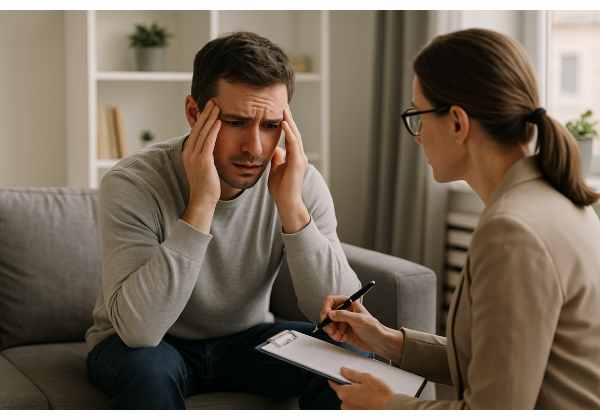
Panic disorder can make ordinary moments feel physically dangerous. A person may be sitting at home, walking through a store, driving, or waking from sleep when intense fear surges suddenly, accompanied by symptoms such as a racing heart, shortness of breath, dizziness, trembling, chest discomfort, nausea, or a frightening sense of losing control. The experience can be so convincing that many people worry they are having a heart attack, fainting, dying, or “going crazy.”
A single panic attack does not necessarily mean someone has panic disorder. Panic disorder involves repeated, unexpected panic attacks plus ongoing fear of more attacks, worry about what the attacks mean, or changes in behavior made to prevent them. That distinction matters because panic disorder is not just a brief episode of fear. It can shape daily routines, restrict travel, disrupt sleep, complicate medical evaluations, and increase the risk of other mental health concerns when it is not recognized.
What matters most to recognize
- Panic disorder involves recurrent, unexpected panic attacks and persistent worry or behavior changes related to future attacks.
- Panic attacks often feel physical first, with symptoms such as palpitations, chest discomfort, breathlessness, dizziness, sweating, trembling, nausea, chills, tingling, or feelings of unreality.
- Panic disorder is commonly confused with heart rhythm problems, thyroid disease, asthma, substance effects, generalized anxiety, social anxiety, PTSD, phobias, and other anxiety-related conditions.
- Professional evaluation may matter when attacks are new, recurrent, worsening, disabling, medically unusual, or accompanied by substance use, depression, self-harm thoughts, fainting, severe chest pain, or neurological symptoms.
- Panic attacks are distressing and frightening, but the diagnosis depends on the pattern around the attacks, not only the intensity of one episode.
Table of Contents
- What Panic Disorder Means
- Panic Attack Symptoms and Signs
- How Panic Disorder Is Diagnosed
- Causes and Brain-Body Mechanisms
- Risk Factors for Panic Disorder
- Conditions That Can Look Similar
- Complications and Daily Life Effects
- When Professional Evaluation Matters
What Panic Disorder Means
Panic disorder is an anxiety disorder defined by a pattern: repeated unexpected panic attacks, followed by ongoing fear, worry, or behavior changes related to those attacks. The key feature is not simply having intense anxiety, but having sudden episodes that feel alarming and then beginning to live around the possibility that they may happen again.
A panic attack is a sudden surge of intense fear or discomfort that reaches a peak within minutes. It can start from an anxious state or from a calm state. In panic disorder, attacks are often described as “out of the blue,” meaning they are not limited to one obvious trigger such as a specific phobia, a traumatic reminder, or a social performance situation.
This is why panic disorder is different from normal stress. Stress usually has a visible context: a deadline, argument, financial concern, illness, or major life change. Panic disorder may occur in people who also have stress, but the attacks themselves can feel disconnected from the situation. A person may intellectually know they are safe while their body reacts as if an emergency is happening.
Panic disorder is also different from having one isolated panic attack. Many people have a panic attack at some point, especially during periods of high stress, sleep deprivation, grief, substance use, or medical illness. Panic disorder is considered when attacks recur and are followed by at least a month of persistent concern about additional attacks, worry about their consequences, or significant behavior changes.
Those behavior changes can be subtle at first. Someone might avoid exercise because a fast heartbeat reminds them of panic. They may stop drinking coffee, avoid driving alone, sit near exits, skip crowded places, or repeatedly check their pulse. These changes may feel logical because they are meant to prevent another frightening episode, but over time they can shrink a person’s life.
A useful way to understand the condition is that panic disorder has two parts: the attack itself and the fear of the attack. The first part is the sudden physical and emotional surge. The second part is the anticipatory anxiety that develops afterward. For many people, the fear of future panic becomes as disruptive as the attacks themselves.
Panic disorder can occur with or without agoraphobia, which involves marked fear or avoidance of situations where escape might feel difficult or help might not be available if panic symptoms occur. Agoraphobia is now considered a separate diagnosis, but it often overlaps with panic disorder. A person may begin avoiding public transportation, stores, bridges, crowds, theaters, or being outside the home alone because those places feel unsafe if panic strikes.
The condition can affect adults, adolescents, and, less commonly, children. Symptoms often begin in adolescence or early adulthood, although they can start later. Because panic attacks produce strong bodily symptoms, many people first seek help in primary care, urgent care, cardiology, emergency departments, or other medical settings rather than in mental health care.
Panic Attack Symptoms and Signs
Panic attacks are marked by a sudden cluster of physical, emotional, and cognitive symptoms that rise quickly and feel difficult to control. The symptoms can be so intense that people often interpret them as a medical emergency, even when the attack itself is not life-threatening.
Common panic attack symptoms include:
- Pounding, racing, or irregular-feeling heartbeat
- Sweating
- Trembling or shaking
- Shortness of breath or a smothering sensation
- Feeling as if choking
- Chest pain, tightness, or discomfort
- Nausea, stomach pain, or abdominal distress
- Dizziness, lightheadedness, unsteadiness, or feeling faint
- Chills or hot flashes
- Numbness or tingling, often in the hands, face, lips, or feet
- Derealization, or feeling that the world is unreal
- Depersonalization, or feeling detached from oneself
- Fear of losing control
- Fear of dying
Not every panic attack looks the same. Some people mainly feel heart and breathing symptoms. Others notice dizziness, nausea, tingling, chills, or a detached, dreamlike feeling. The fear may be obvious, but sometimes the body symptoms come first and the fear follows because the sensations are so alarming.
The “signs” of panic disorder are often seen between attacks. A person may become preoccupied with monitoring their body, scanning for early warning sensations, or avoiding activities that produce normal physical arousal. Exercise, sex, public speaking, heat, caffeine, hunger, alcohol aftereffects, poor sleep, or crowded spaces may become feared because they can produce sensations that resemble panic.
Panic attacks usually build quickly. Many peak within minutes, although aftereffects can last longer. Some people feel exhausted, shaky, tearful, embarrassed, or mentally foggy afterward. This “panic hangover” can make the episode feel longer than the peak itself, especially if the person remains frightened by what happened.
Nocturnal panic attacks are another important pattern. These are panic attacks that wake a person from sleep with intense fear and physical symptoms. They can be especially frightening because they appear without conscious worry or an obvious trigger. Nocturnal panic should be distinguished from nightmares, sleep apnea, reflux, heart rhythm problems, and other sleep-related or medical causes. A separate discussion of waking at night with panic symptoms may be useful when attacks mainly happen during sleep.
Panic symptoms can also vary by culture and individual expression. Some people report headache, neck soreness, ringing in the ears, uncontrollable crying, or other distressing sensations along with the core panic symptoms. These experiences can be real and important, even if they are not part of the central diagnostic symptom list.
Because the symptoms are physical, panic attacks can be hard to interpret in the moment. Chest pain, breathlessness, faintness, and palpitations deserve careful attention when they are new, severe, unusual, or occur in someone with medical risk factors. Panic disorder should not be assumed before appropriate medical causes have been considered.
How Panic Disorder Is Diagnosed
Panic disorder is diagnosed from the overall pattern of attacks, worry, avoidance, impairment, and exclusion of better explanations. A clinician does not diagnose it from one symptom alone, because the same sensations can appear in medical conditions, substance effects, and other mental health disorders.
Diagnostic evaluation usually starts with a clear description of the attacks. Important details include when the attacks began, how suddenly they come on, how often they happen, how long they last, what symptoms occur, whether they are expected or unexpected, and what the person fears during the episode. Clinicians also ask what has changed afterward: avoidance, reassurance seeking, body checking, missed work or school, driving changes, emergency visits, or fear of being alone.
A central diagnostic point is that panic disorder requires recurrent unexpected panic attacks. Panic attacks that occur only in a specific context may point to another condition. For example, panic limited to public speaking may fit social anxiety disorder more closely. Panic triggered by a specific object or situation may fit a specific phobia. Panic tied to trauma reminders may fit PTSD. Panic linked to obsessions may occur in obsessive-compulsive disorder. More detail on the boundary between panic attacks and anxiety disorders can help clarify why the same attack-like symptoms can have different meanings.
Clinicians may also use screening tools. These do not replace a diagnostic interview, but they can organize symptoms and severity. General anxiety questionnaires, panic-focused questionnaires, and broader mental health screens may help identify patterns that need closer assessment. A panic-focused evaluation differs from broad anxiety screening because it pays close attention to sudden attacks, fear of recurrence, avoidance, and medical mimics.
A medical review is often part of the diagnostic context, especially when symptoms are new or strongly physical. Depending on the person’s age, medical history, medications, substance use, and symptoms, clinicians may consider heart rhythm problems, thyroid disease, asthma, chronic obstructive pulmonary disease, vestibular disorders, seizures, hypoglycemia, anemia, medication side effects, stimulant use, alcohol withdrawal, cannabis effects, or other causes.
The distinction between panic disorder and general anxiety can be especially important. Generalized anxiety disorder tends to involve persistent worry across many areas of life, while panic disorder centers on sudden attacks and fear of future attacks. The two can occur together, but they are not identical. A focused page on panic disorder and broader anxiety patterns can help separate these overlapping experiences.
| Pattern | Typical focus | Why it matters |
|---|---|---|
| Isolated panic attack | One or occasional sudden episodes | Does not automatically mean a person has panic disorder |
| Panic disorder | Recurrent unexpected attacks plus fear, worry, or behavior change | The pattern between attacks is central to diagnosis |
| Generalized anxiety | Persistent worry across everyday concerns | May include physical tension but is not defined by sudden unexpected attacks |
| Agoraphobia | Fear or avoidance of places where escape or help may feel difficult | Can occur with panic disorder but is diagnosed separately |
| Medical or substance-related symptoms | Physical symptoms caused by illness, medication, withdrawal, or substances | Needs careful consideration before symptoms are labeled psychiatric |
A thoughtful diagnostic process is not meant to dismiss the symptoms as “just anxiety.” It is meant to identify the most accurate explanation, especially when the body sensations are intense and frightening.
Causes and Brain-Body Mechanisms
Panic disorder does not have one single cause. It appears to develop from a combination of biological vulnerability, nervous system sensitivity, learned fear, stress exposure, genetics, and the way the brain interprets body sensations.
One common model describes panic as a false alarm in the body’s threat system. The same survival system that helps a person respond to danger can become activated when there is no immediate external threat. Heart rate rises, breathing changes, muscles tense, sweating increases, and the brain becomes highly alert. In a true emergency, these changes may be useful. During panic, they feel dangerous because they seem to come without a clear reason.
The interpretation of body sensations is especially important. A person may notice a normal sensation such as a skipped heartbeat, lightheadedness, breathlessness after climbing stairs, or tingling from overbreathing. If the brain interprets that sensation as a sign of catastrophe, fear rises. Fear then intensifies the physical sensations, which can confirm the person’s belief that something is wrong. This loop can escalate rapidly into a panic attack.
Breathing changes can contribute to some symptoms. During fear, people may breathe faster, shallower, or irregularly without realizing it. This can worsen lightheadedness, tingling, chest tightness, and feelings of unreality. Breathing is not the whole cause of panic disorder, but it is one pathway by which fear and bodily sensations can amplify each other.
Brain circuits involved in fear, threat detection, memory, and body awareness are also relevant. Structures and networks involved in detecting danger, interpreting internal sensations, regulating emotion, and learning from frightening experiences may become more reactive. Neurotransmitter systems, including serotonin, norepinephrine, gamma-aminobutyric acid, and stress-hormone pathways, have been studied in relation to panic and anxiety, although no single chemical imbalance fully explains the condition.
Genetic factors can play a role. Panic disorder sometimes runs in families, suggesting inherited vulnerability. Genes do not determine destiny, however. Family patterns may reflect a mixture of biology, temperament, early learning, stress exposure, and shared environment.
Learning and avoidance can maintain the disorder once it begins. If panic happens in a grocery store, on a highway, or during exercise, the brain may link that situation or sensation with danger. Avoiding the situation may reduce fear in the short term, but it can also strengthen the belief that the situation was truly unsafe. Over time, the person may avoid more places and sensations.
Stressful life events can contribute as well. Bereavement, illness, relationship strain, work stress, trauma, major transitions, caregiving strain, and chronic uncertainty may increase vulnerability. Panic disorder can also appear during periods when a person does not feel consciously stressed, which can make it confusing. The body’s threat system does not always follow a person’s conscious timeline.
Substances and medications can influence panic-like symptoms. Caffeine, stimulants, some decongestants, cannabis, withdrawal from alcohol or sedatives, and certain medical medications may trigger or worsen palpitations, jitteriness, sleep disruption, or anxiety in susceptible people. That does not mean substances are the root cause for everyone, but they are part of a careful history.
Risk Factors for Panic Disorder
Risk factors increase the likelihood of panic disorder, but they do not prove that someone will develop it. Panic disorder is best understood as a condition that emerges when several vulnerabilities and circumstances come together.
Commonly recognized risk factors include:
- Family history of panic disorder, anxiety disorders, or mood disorders
- Personal history of anxiety, depression, trauma, or high stress sensitivity
- Temperament marked by behavioral inhibition, high sensitivity to threat, or strong fear reactions
- Anxiety sensitivity, meaning fear of anxiety-related body sensations such as a racing heart or dizziness
- Major life stress, loss, illness, separation, or sudden role changes
- Childhood adversity, neglect, abuse, or unstable environments
- Chronic medical conditions that create frightening body sensations, such as asthma, vestibular problems, heart symptoms, or thyroid disease
- Substance use, intoxication, or withdrawal that affects arousal, breathing, sleep, or heart rate
- Sleep disruption, which can make the nervous system more reactive
- Prior frightening panic attacks, especially when the first attack was interpreted as dangerous or medically unexplained
Anxiety sensitivity is one of the most useful concepts for understanding panic disorder. Two people can feel the same physical sensation and respond differently. One person may notice a racing heart and think, “I walked quickly; it will settle.” Another may think, “Something is wrong with my heart.” The second interpretation increases fear, which can intensify the sensation and make panic more likely.
Medical vulnerability can also matter. People with asthma may be especially frightened by breathlessness. People with benign palpitations may become highly alert to every heartbeat. People with vestibular sensitivity may fear dizziness. In these cases, the medical symptom and panic fear can feed each other, even when the original physical condition is not dangerous.
Women are diagnosed with anxiety disorders more often than men, and panic disorder also appears more common in women. Hormonal transitions, social stressors, trauma exposure, and differences in help-seeking or diagnosis may all influence observed rates. Panic symptoms can occur across all genders, and under-recognition in men is possible, especially when symptoms are framed as anger, avoidance, alcohol use, or repeated medical reassurance seeking.
Age is another factor. Panic disorder often begins in late adolescence or early adulthood, but it can occur at many stages of life. New panic-like symptoms in later adulthood deserve especially careful evaluation because medical contributors become more common with age.
Risk factors should not be used to blame the person. Panic disorder is not a weakness, character flaw, or failure to stay calm. It is a recognizable pattern involving fear circuitry, body sensations, interpretation, avoidance, and vulnerability.
Conditions That Can Look Similar
Panic disorder can resemble several medical and mental health conditions, so accurate evaluation matters. The symptoms are real, but the cause may not always be panic disorder.
Cardiac conditions are among the most important look-alikes because panic attacks can cause chest discomfort, palpitations, sweating, shortness of breath, nausea, and fear of dying. Heart rhythm problems, coronary artery disease, and other cardiovascular issues may produce overlapping symptoms. A comparison of panic attack and heart attack symptoms can help explain why new or severe chest symptoms should not be casually dismissed.
Respiratory conditions can also overlap. Asthma, chronic obstructive pulmonary disease, pulmonary embolism, and other breathing-related conditions may cause shortness of breath, chest tightness, or a sense of suffocation. Panic can worsen breathing sensations, but breathing symptoms can also be medically driven.
Endocrine and metabolic conditions may produce anxiety-like symptoms. Hyperthyroidism can cause palpitations, tremor, heat intolerance, sweating, weight changes, and nervousness. Low blood sugar can cause shakiness, sweating, weakness, hunger, confusion, and fear. Anemia, vitamin deficiencies, dehydration, and electrolyte disturbances may also contribute to symptoms such as dizziness, fatigue, and palpitations.
Neurological and vestibular conditions can be confusing. Seizures, migraine, vestibular disorders, fainting syndromes, and post-concussion symptoms may produce dizziness, unreality, visual changes, tingling, weakness, or sudden fear. Some people with panic disorder also become highly fearful of dizziness or faintness, which can make vestibular symptoms and panic symptoms reinforce each other.
Substances are another major consideration. Caffeine, nicotine, stimulants, some recreational drugs, cannabis in some people, alcohol withdrawal, sedative withdrawal, and certain medications can cause or worsen panic-like symptoms. The timing of symptoms in relation to substance use, dose changes, missed doses, or withdrawal can be diagnostically important.
Several mental health conditions can also include panic attacks. Social anxiety disorder may involve panic in social or performance situations. Specific phobias may produce panic when a person encounters the feared object or setting. PTSD may involve panic when trauma reminders appear. OCD may involve panic when intrusive thoughts or feared contamination cues arise. Depression, bipolar disorder, eating disorders, and substance use disorders may also occur alongside panic symptoms.
This is why diagnostic context matters. Panic attacks are not exclusive to panic disorder. They are a type of episode that can occur across several conditions. Broader information on medical conditions that can mimic anxiety can be especially relevant when symptoms are new, unusually physical, or different from a person’s usual pattern.
Complications and Daily Life Effects
The main complication of panic disorder is that fear begins to organize a person’s life. Even if each panic attack is brief, the anticipation of the next one can affect work, school, relationships, travel, sleep, health decisions, and self-confidence.
Avoidance is one of the most common effects. A person may avoid highways, elevators, airplanes, public transportation, stores, meetings, restaurants, exercise, heat, being alone, or being far from medical help. At first, avoidance may seem practical. Over time, it can become a map of places where the person feels unable to function.
Agoraphobic avoidance can develop when the person fears situations where escape may feel difficult or help may feel unavailable. This may include crowds, open spaces, enclosed places, public transportation, standing in line, or leaving home alone. In severe cases, a person may become largely housebound.
Panic disorder can also create repeated medical reassurance cycles. Because symptoms can feel cardiac, respiratory, neurological, or gastrointestinal, people may seek repeated emergency or specialist evaluations. Medical assessment is sometimes necessary and appropriate, especially early on or when symptoms change. The complication arises when reassurance lasts only briefly before the fear returns and the person becomes trapped in repeated checking.
Sleep may suffer. Some people fear going to bed because they have had nocturnal panic attacks. Others wake frequently, monitor their heartbeat, or avoid sleeping alone. Poor sleep can then increase nervous system sensitivity and make the next day feel more physically unstable.
Relationships may be affected when others misunderstand the condition. Friends or family may interpret avoidance as disinterest, irritability, dependence, or unwillingness to participate. The person with panic disorder may feel ashamed, embarrassed, or frustrated that they cannot easily explain why a safe activity feels impossible.
Work and school functioning can also decline. Panic may lead to missed days, reduced concentration, avoidance of presentations, difficulty commuting, or fear of meetings and crowded settings. Some people choose jobs, schedules, or routes based mainly on where they feel safest rather than what they actually want or need.
Panic disorder is also associated with higher rates of depression, substance misuse, and other anxiety disorders. Alcohol or sedatives may be used in an attempt to reduce fear, but substance use can complicate symptoms and make evaluation harder. Depression may develop when avoidance, exhaustion, and loss of normal activities accumulate.
Quality of life can be reduced even when the person appears outwardly functional. Some people continue working, caring for others, and meeting obligations while privately arranging their days around exits, safe people, safe routes, and emergency reassurance. That hidden burden is one reason panic disorder deserves careful recognition rather than dismissal.
When Professional Evaluation Matters
Professional evaluation matters when panic-like symptoms are recurrent, new, medically unusual, disabling, or difficult to distinguish from other health conditions. The goal is not to alarm the person, but to avoid missing medical causes and to clarify whether the pattern fits panic disorder or another condition.
Evaluation is especially important when panic-like symptoms include:
- New chest pain, pressure, fainting, or severe shortness of breath
- Palpitations with fainting, near-fainting, known heart disease, or a family history of sudden cardiac death
- New neurological symptoms such as weakness on one side, trouble speaking, confusion, seizure-like activity, or severe sudden headache
- Symptoms that begin after starting, stopping, or changing a medication or substance
- Panic-like episodes that first appear later in life
- Frequent emergency visits or repeated fear of dying despite reassurance
- Avoidance that interferes with work, school, driving, caregiving, or leaving home
- Depression, hopelessness, self-harm thoughts, or suicidal thoughts
- Heavy alcohol use, sedative use, stimulant use, or withdrawal symptoms
- Panic attacks during pregnancy, postpartum, or major medical illness
Urgent evaluation is warranted when symptoms could represent a heart, lung, neurological, toxicological, or self-harm emergency. A person with severe chest pain, difficulty breathing, fainting, stroke-like symptoms, confusion, overdose risk, or suicidal intent should not try to sort out the diagnosis alone. A guide to urgent mental health or neurological symptoms may help clarify when emergency assessment is appropriate.
For non-emergency but recurrent symptoms, primary care and mental health evaluation can both be relevant. Primary care can help review medical history, medications, substance use, sleep, thyroid symptoms, cardiovascular risk, respiratory symptoms, and other possible contributors. Mental health evaluation can clarify whether the pattern fits panic disorder, another anxiety disorder, PTSD, depression, substance-related anxiety, or a combination.
It is also worth seeking evaluation when a person’s life is quietly shrinking. Avoiding one store, then one road, then one neighborhood can happen gradually. By the time the pattern is obvious, the person may have spent months or years adapting to fear.
Panic disorder is a recognized condition, and the symptoms are not imagined. The body sensations are real, the fear is real, and the impairment can be real. Accurate evaluation helps name the pattern, separate panic from medical look-alikes, and identify complications that may otherwise remain hidden.
References
- Generalized Anxiety Disorder and Panic Disorder in Adults 2022 (Review)
- Panic Disorder 2025 (Review)
- Panic Disorder: What You Need to Know 2025 (Government Health Information)
- Anxiety disorders 2025 (Fact Sheet)
- Panic Attacks and Panic Disorder 2026 (Professional Manual)
- Clinical Practice Guidelines for Assessment and Management of Anxiety and Panic Disorders in Emergency Setting 2023 (Guideline)
Disclaimer
This article is for general educational purposes only and is not a substitute for professional medical advice, diagnosis, or treatment. Panic-like symptoms can overlap with medical emergencies and other mental health conditions, so a qualified clinician should evaluate new, severe, recurrent, or disabling symptoms.
Thank you for taking the time to read this carefully; sharing it may help someone recognize panic symptoms with less fear and more clarity.





