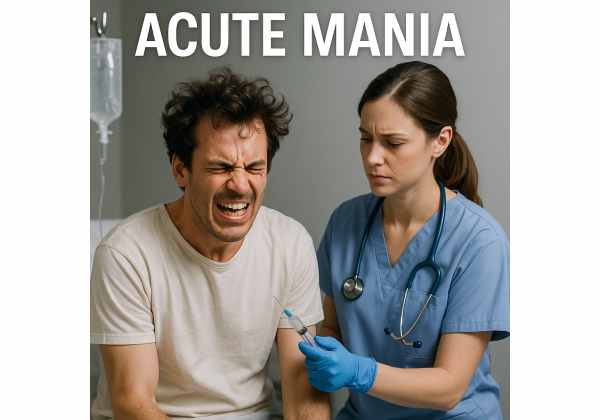
Acute mania is a severe change in mood, energy, thinking, and behavior that can move far beyond ordinary happiness, confidence, or productivity. It often appears as a period of unusually elevated, expansive, or irritable mood combined with increased activity, reduced need for sleep, impulsive decisions, and impaired judgment. In many cases, acute mania is part of bipolar I disorder, but manic symptoms can also be linked to substances, medications, medical conditions, or neurological illness.
Because mania can affect insight, a person experiencing it may not recognize how serious the change is. Family members, friends, coworkers, or clinicians may notice the pattern first. Understanding the symptoms, warning signs, possible causes, and complications helps distinguish acute mania from stress, enthusiasm, intoxication, anxiety, personality changes, or hypomania.
Table of Contents
- What acute mania means
- Symptoms of acute mania
- Observable signs and behavior changes
- Causes and contributing factors
- Risk factors and common triggers
- Effects on thinking, safety, and functioning
- Complications and urgent warning signs
- Diagnostic context and common lookalikes
What acute mania means
Acute mania is a distinct episode of abnormally elevated, expansive, or irritable mood with increased energy or activity that causes clear impairment, risk, psychosis, hospitalization, or major disruption. It is not simply feeling upbeat, ambitious, intense, or emotionally expressive.
In clinical use, mania is usually defined by a noticeable change from a person’s usual self. The mood shift is persistent, not just a brief reaction to good news or a stressful day. The person may sleep very little yet feel energized, talk rapidly, take on unrealistic plans, spend impulsively, become sexually disinhibited, drive recklessly, or believe they have special powers, insight, status, or a mission. The episode may feel exciting or meaningful to the person while also becoming alarming to others.
Acute mania is most closely associated with bipolar I disorder. A history of at least one manic episode is the defining feature of bipolar I, even if depressive episodes also occur. A broader discussion of manic and depressive patterns appears in bipolar disorder symptoms, but acute mania deserves special attention because it can escalate quickly and may involve safety risks.
A key distinction is the difference between mania and hypomania. Hypomania can include increased energy, confidence, talkativeness, reduced sleep, and impulsivity, but it is less severe. By definition, hypomania does not cause the same level of functional impairment, psychosis, or need for hospitalization. Mania, by contrast, can disrupt judgment so sharply that the person may lose money, damage relationships, behave dangerously, or become unable to work, study, parent, or manage basic responsibilities.
Mania can also occur with mixed features. In a mixed presentation, manic energy may appear alongside depressive symptoms such as despair, guilt, agitation, tearfulness, or suicidal thoughts. This combination can be especially distressing because the person may feel driven, restless, and hopeless at the same time. Mixed features can make the episode look less like “classic” euphoric mania and more like extreme agitation, rage, panic, insomnia, or emotional volatility.
Acute mania is also different from a personality trait. Some people are naturally energetic, social, intense, or quick-thinking. Mania is a marked episode: it has a beginning, a change in baseline functioning, a cluster of symptoms, and consequences. That change-over-time pattern is one reason clinicians ask about sleep, spending, speech, sexual behavior, irritability, grandiosity, substance use, and past episodes rather than relying on mood alone.
Symptoms of acute mania
The core symptoms of acute mania involve mood, energy, sleep, speech, thoughts, attention, self-confidence, and behavior. A manic episode is usually recognized by the combination of these symptoms, their intensity, and the degree to which they impair judgment or functioning.
The mood in mania may be euphoric, expansive, irritable, or rapidly shifting. Some people seem joyful, charismatic, funny, or unusually confident at first. Others appear angry, impatient, suspicious, argumentative, or impossible to interrupt. Irritability is common and may become more obvious when others question the person’s plans, spending, beliefs, or behavior.
Reduced need for sleep is one of the most important clues. This does not mean ordinary insomnia, where the person wants sleep but cannot get it and feels exhausted. In mania, a person may sleep only a few hours, or not at all, and still report feeling energized, powerful, or “better than ever.” Several nights of this pattern can worsen disorganization, impulsivity, paranoia, and emotional intensity.
Speech and thought patterns often change. A person may talk rapidly, jump between ideas, interrupt constantly, text or call people at all hours, start many projects, or describe thoughts as racing. The pace can be difficult for others to follow. In more severe mania, speech may become disorganized, with loose connections, rhyming, punning, or rapid shifts from one topic to another.
Grandiosity is another common symptom. It can range from inflated confidence to fixed beliefs that are not grounded in reality. A person might believe they are chosen for a special purpose, have extraordinary talents, possess secret knowledge, or can succeed at impossible tasks without preparation. Grandiosity can fuel risky decisions because the person may feel immune to consequences.
| Symptom area | How it may appear | Why it matters |
|---|---|---|
| Mood | Euphoria, irritability, agitation, emotional intensity | Mood shifts may be extreme and out of character |
| Sleep | Very little sleep without fatigue | Reduced sleep can intensify the episode |
| Speech | Pressured talking, interrupting, nonstop messaging | Speech may become hard to redirect |
| Thoughts | Racing ideas, distractibility, unrealistic plans | Judgment and follow-through often decline |
| Behavior | Spending, risky sex, reckless driving, conflict | Consequences may be serious or lasting |
| Reality testing | Delusions, hallucinations, paranoia, disorganization | Psychosis signals a more severe episode |
Not every person has every symptom. Some manic episodes are dominated by elation and grand plans; others by anger, agitation, and suspiciousness. Some people remain coherent enough to sound persuasive for a time, while others become visibly disorganized. The most important pattern is a sustained change in mood and energy with impaired control, impaired judgment, or significant consequences.
Screening tools can help organize symptoms, but they do not diagnose mania on their own. Clinical screening for bipolar symptoms may include a structured history and tools such as the Mood Disorder Questionnaire, especially when past episodes are unclear. A positive screen means symptoms need careful evaluation, not that a diagnosis is automatically confirmed.
Observable signs and behavior changes
Acute mania often becomes visible through behavior before the person labels it as a mental health problem. The signs may be clearest when compared with the person’s normal sleep, speech, spending, social style, work habits, and risk tolerance.
People close to the person may notice that conversations feel unusually intense. The person may speak faster, louder, or more insistently than usual. They may dominate discussions, become irritated when interrupted, or move so quickly between ideas that others cannot respond. They might send long streams of messages, make sudden announcements, or contact old acquaintances, employers, public figures, or strangers in ways that are out of character.
Activity level can rise sharply. A person may start multiple businesses, reorganize the house overnight, make grand creative plans, apply for jobs they are not qualified for, make major purchases, or travel suddenly. At first, some of this may look productive. The concern grows when activity becomes unrealistic, chaotic, financially risky, socially inappropriate, or impossible to sustain.
Behavioral signs can include:
- Sleeping far less than usual while seeming energized or wired.
- Spending unusually large amounts of money or making risky investments.
- Driving aggressively, speeding, or taking physical risks.
- Becoming sexually impulsive or acting outside usual boundaries.
- Starting conflicts, making accusations, or reacting with sudden rage.
- Showing unusual confidence that does not match the situation.
- Neglecting food, hygiene, childcare, work duties, or legal obligations.
- Appearing suspicious, spiritually preoccupied, or convinced of special messages.
The same behavior may have different meaning depending on baseline. For example, a naturally talkative person who speaks quickly during a stressful week is not necessarily manic. A quiet, careful person who suddenly sleeps two hours a night, quits a job, spends savings, and insists they have discovered a world-changing plan may be showing a more concerning pattern.
Mania can also change how a person relates to limits. They may feel controlled, criticized, or misunderstood when others express concern. Attempts to slow things down can lead to anger or accusations. This loss of perspective is not simply stubbornness. During mania, the brain’s ability to evaluate risk, weigh consequences, and integrate feedback may be impaired.
In some cases, outward signs resemble psychosis. The person may hear voices, believe others are spying on them, see special meanings in ordinary events, or hold fixed beliefs that others cannot verify. When hallucinations, delusions, or severely disorganized thinking are present, a psychosis evaluation may be part of the diagnostic picture.
Not all signs are dramatic. Some people experience “high-functioning” mania for a short time, especially early in an episode. They may appear unusually charming, energetic, productive, or persuasive. The episode may still be dangerous if sleep is collapsing, judgment is changing, and the person is making decisions they would not normally make.
Causes and contributing factors
Acute mania usually reflects a combination of biological vulnerability and triggering conditions rather than one simple cause. In bipolar I disorder, mania is part of the illness pattern, but similar symptoms can also arise from substances, medications, sleep disruption, medical illness, or neurological conditions.
Genetics play a major role in bipolar disorder risk. Having a close biological relative with bipolar disorder increases the likelihood of developing bipolar symptoms, although family history does not guarantee that a person will experience mania. Many genes appear to contribute small amounts of risk, and genetic vulnerability interacts with environment, development, stress, sleep, and substance exposure.
Brain and body rhythms are also important. Mania is strongly linked with changes in circadian rhythm, sleep-wake timing, energy regulation, reward processing, and stress response. A person vulnerable to mania may be more sensitive to disrupted sleep, overnight work, jet lag, intense stress, or periods of unusually high stimulation. Sleep loss may be both an early sign and an amplifier of the episode.
Substances can contribute to manic symptoms or make an existing mood episode worse. Stimulants, cocaine, methamphetamine, heavy cannabis use, hallucinogens, and some patterns of alcohol use can be associated with agitation, impulsivity, paranoia, sleep disruption, or mood elevation. Substance-related symptoms can be difficult to separate from bipolar mania because both can involve reduced sleep, risk-taking, irritability, and distorted thinking.
Some medications can also be associated with manic or manic-like symptoms in susceptible people. Examples may include antidepressants, corticosteroids, stimulants, dopaminergic medications, and certain other drugs that affect the central nervous system. This does not mean these medicines cause mania in everyone who takes them. It means that timing, dose changes, personal history, and family history matter when clinicians evaluate a sudden manic presentation.
Medical and neurological conditions can sometimes resemble or contribute to mania. Thyroid disease, seizure disorders, brain injury, brain tumors, infections, autoimmune or inflammatory illness, dementia-related syndromes, and metabolic disturbances may enter the differential diagnosis, especially when symptoms begin later in life, appear suddenly without prior mood history, include neurological signs, or follow a medical event. In these situations, clinicians may consider a broader workup to rule out medical contributors, similar in principle to how doctors assess medical causes of mood and cognitive symptoms.
Psychological and social stressors can act as triggers, but they are rarely the whole explanation. Bereavement, relationship breakdown, job loss, childbirth, academic pressure, legal stress, trauma reminders, or major life transitions may precede an episode. Positive events can also be activating: a promotion, new relationship, creative breakthrough, travel, or intense goal pursuit may disrupt sleep and routine enough to contribute.
The most accurate way to think about acute mania is as a syndrome with multiple possible pathways. The same outward picture may arise from bipolar I disorder, substance intoxication, medication effects, medical illness, or a combination of factors. That is why careful diagnostic context matters.
Risk factors and common triggers
The risk of acute mania is higher when a person has a history of bipolar disorder, previous mania or hypomania, a strong family history of bipolar disorder, or exposure to factors that disrupt sleep, mood regulation, or brain function. Triggers do not create the same risk in everyone; they matter most when they interact with underlying vulnerability.
A previous manic episode is one of the strongest predictors of future manic episodes. Even if years pass between episodes, a past episode of mania remains clinically important. A history of hypomania, recurrent depression with unusual activation, postpartum mood episodes, psychosis during mood episodes, or antidepressant-associated activation may also raise concern for bipolar-spectrum illness.
Age can shape how mania is recognized. Bipolar disorder often begins in adolescence or early adulthood, but first recognized mania can occur later. New manic symptoms in midlife or older adulthood deserve especially careful evaluation because medical, neurological, medication-related, and substance-related causes become more important considerations. In children and adolescents, diagnosis requires caution because irritability, impulsivity, sleep problems, ADHD, trauma, substance use, and developmental factors can overlap. Distinguishing bipolar disorder from ADHD can be especially challenging, and a focused comparison such as bipolar disorder versus ADHD may help clarify why episodic mood change matters.
Common risk factors and triggers include:
- Personal history of mania, hypomania, mixed episodes, or bipolar disorder.
- First-degree family history of bipolar disorder or recurrent severe mood episodes.
- Major sleep loss, shift work, jet lag, or repeated all-night activity.
- Recent childbirth or the postpartum period in someone vulnerable to mood episodes.
- Substance use, especially stimulants or patterns that disrupt sleep and judgment.
- Medication changes that affect mood, arousal, or sleep.
- High-stress life events, trauma exposure, bereavement, or relationship disruption.
- Medical or neurological illness affecting the brain, hormones, or metabolism.
- Seasonal rhythm changes in some people, especially when sleep timing shifts.
The postpartum period deserves special attention. Mania or psychosis after childbirth can develop rapidly and may be dangerous because it can affect judgment, sleep, bonding, and safety. This situation requires urgent professional evaluation, particularly if there are delusions, hallucinations, severe insomnia, confusion, or thoughts of harm.
Stress is often misunderstood as a cause. Severe stress can precede mania, but mania is not just “too much stress.” A stressed person may feel overwhelmed, tired, anxious, or irritable while still recognizing reality and needing rest. A manic person may feel unusually energized despite little sleep, become convinced of unrealistic ideas, and take risks that are sharply out of character.
Risk factors are not destiny. Many people with family history or stressful lives never develop mania. Conversely, someone can experience acute mania without knowing of any family history. Risk factors are best understood as clues that help clinicians ask better questions and interpret the episode more accurately.
Effects on thinking, safety, and functioning
Acute mania can affect nearly every area of functioning because it changes how a person evaluates risk, urgency, importance, and consequence. The episode may feel internally convincing while producing decisions the person would later view as confusing, embarrassing, harmful, or out of character.
Thinking often becomes fast but less organized. A person may connect ideas rapidly and experience this as insight, creativity, or certainty. Some ideas may be useful, but the ability to prioritize, test assumptions, and recognize limits often declines. The person may misread chance events as meaningful, interpret disagreement as betrayal, or believe ordinary obstacles do not apply to them.
Judgment can shift in specific, practical ways. Financial decisions may become impulsive: large purchases, donations, gambling, investments, business commitments, or giving away possessions. Social decisions may also change: sudden declarations of love, public arguments, boundary violations, excessive posting, or contacting people in intrusive ways. Occupational consequences can include quitting a job, confronting supervisors, missing deadlines, or making unrealistic commitments.
Safety risks may increase because the person feels less vulnerable. They may drive faster, use substances more heavily, travel without planning, confront strangers, enter unsafe situations, or ignore medical needs. Sexual risk can increase through reduced inhibition, impaired consent judgment, or decisions that conflict with the person’s usual values and boundaries.
Relationships are often strained. Loved ones may feel frightened, manipulated, blamed, or shut out. The person experiencing mania may feel controlled or judged. These conflicting perceptions can create intense arguments, especially if family members try to limit spending, driving, travel, or public behavior. Mania can also create practical fallout after the episode, including debt, damaged trust, legal trouble, job loss, academic disruption, or reputational harm.
Insight varies. Some people recognize that something is wrong but cannot slow down. Others deny any problem and see everyone else as obstructive. Lack of insight is especially common when grandiosity, paranoia, or psychosis is present. This is one reason outside observations are often important in evaluation. The person’s account may be sincere but incomplete because the episode itself changes self-perception.
Mania can also affect physical health. Prolonged sleeplessness, dehydration, poor nutrition, exhaustion, agitation, substance use, and accidental injury can accumulate. Some people stop taking prescribed medicines for other health conditions because they feel unusually well or invincible. Others become so distracted or disorganized that basic self-care falls apart.
The effects are not limited to the most extreme cases. Even a person who avoids hospitalization can experience serious consequences from a brief manic episode. A few days of impaired judgment may be enough to create financial, legal, interpersonal, or occupational problems that last far longer than the episode itself.
Complications and urgent warning signs
Acute mania can become an emergency when it involves psychosis, dangerous impulsivity, suicidal or violent thoughts, inability to sleep for days, severe agitation, confusion, or inability to meet basic needs. These signs call for urgent professional evaluation rather than watchful waiting.
One major complication is harm from risky behavior. This may include reckless driving, unsafe sex, confrontations, substance use, gambling, spending, or impulsive travel. The person may not intend harm, but impaired judgment can create situations where harm becomes more likely. Legal and financial consequences can also occur, including arrest, debt, eviction risk, workplace discipline, or damaged contracts.
Psychosis is another serious complication. During manic psychosis, a person may believe they have supernatural powers, a special mission, celebrity status, government connections, or secret enemies. They may hear voices, see signs in ordinary events, or become convinced that loved ones are plotting against them. Psychosis can intensify fear, aggression, vulnerability, and refusal of help.
Suicide risk can be present during mania, especially with mixed features, agitation, shame, psychosis, substance use, or a sudden shift into depression. It is a mistake to assume that elevated energy protects someone from suicidal danger. When high energy combines with despair or impulsivity, risk can rise quickly. Any mention of wanting to die, feeling commanded to self-harm, believing others would be better off without them, or preparing for death should be taken seriously.
Urgent warning signs include:
- No sleep or almost no sleep for several days with escalating energy or agitation.
- Threats of self-harm, suicide, violence, or dangerous confrontation.
- Hallucinations, delusions, paranoia, or severe disorganized thinking.
- Reckless driving, unsafe travel, weapon access, or escalating substance use.
- Spending, gambling, or sexual behavior that is dangerous or out of control.
- Confusion, fever, seizure, head injury, or new neurological symptoms.
- Mania or psychosis during pregnancy or after childbirth.
- Inability to care for basic needs, children, dependents, or medical conditions.
When these signs are present, the priority is timely assessment of safety and medical risk. A resource on ER-level mental health or neurological symptoms may help clarify why certain combinations of symptoms should not be minimized.
Complications can continue after the acute episode. People may feel embarrassed, depressed, angry, or confused when they look back on what happened. They may face debt, relationship strain, work consequences, legal issues, or gaps in memory. These after-effects are part of why accurate recognition matters: the seriousness of mania is measured not only by how the person feels during the episode but also by the risks and consequences that follow.
Diagnostic context and common lookalikes
Acute mania is diagnosed through clinical evaluation of symptoms, duration, impairment, past episodes, substance exposure, medical context, and observations from people who know the person well. No single blood test or brain scan can confirm ordinary bipolar mania by itself.
A clinician typically asks about the timeline: when symptoms began, how sleep changed, whether mood was elevated or irritable, what risks occurred, whether psychosis was present, and whether similar episodes happened before. Collateral information from family or close contacts can be important because mania may reduce insight. Records of spending, messages, sleep, work changes, or prior hospital visits may help establish the pattern.
Duration matters, but severity can matter even more. A classic manic episode lasts at least about a week, or any duration if hospitalization is required. However, real-world evaluation also considers whether symptoms are severe enough to cause major impairment, psychosis, or dangerous behavior. A shorter but severe episode may still need urgent clinical attention and careful diagnostic review.
Common lookalikes include:
- Hypomania, which resembles mania but is less impairing and does not include psychosis.
- Substance intoxication or withdrawal, especially involving stimulants, cannabis, alcohol, or sedatives.
- Medication-induced mood elevation or agitation.
- ADHD, which is usually chronic rather than episodic and begins earlier in life.
- Anxiety or panic, which may cause agitation and insomnia but usually lacks grandiosity and decreased need for sleep.
- Psychotic disorders, where hallucinations or delusions may occur outside mood episodes.
- Delirium, which involves fluctuating attention and confusion and is often medically driven.
- Thyroid disease, seizure disorders, brain injury, dementia syndromes, infections, or other medical conditions.
- Personality-related impulsivity, which may be longstanding rather than a distinct mood episode.
Screening may be used when bipolar disorder is suspected, but it is only one part of assessment. A broader explanation of bipolar disorder screening can help distinguish symptom checklists from diagnosis. Similarly, a positive bipolar screen means that further evaluation is warranted; it does not prove that acute mania is present.
Medical evaluation may be especially important when symptoms are new, atypical, late-onset, linked to substances or medications, accompanied by confusion, or associated with neurological signs. Depending on the situation, clinicians may consider vital signs, medication review, toxicology testing, thyroid testing, metabolic labs, pregnancy-related context, neurological examination, or brain imaging. The goal is not to “prove” a psychiatric condition with a scan, but to avoid missing medical or substance-related causes of manic symptoms.
A careful diagnosis also considers cultural and personal context. High emotion, spiritual language, intense creativity, or unconventional beliefs are not automatically mania. The concern rises when there is a clear change from baseline, reduced need for sleep, impaired judgment, risky behavior, psychosis, or major disruption in functioning.
The central diagnostic question is not simply “Is this person happy, energetic, or irritable?” It is whether there is a sustained, abnormal mood-and-energy episode that has changed the person’s thinking, behavior, judgment, and functioning in a clinically significant way.
References
- Bipolar disorder: assessment and management 2025 (Guideline)
- VA/DoD Clinical Practice Guideline for Management of Bipolar Disorder 2023 (Guideline)
- Diagnosis and Treatment of Bipolar Disorder: A Review 2023 (Review)
- Bipolar disorders: an update on critical aspects 2024 (Review)
- Bipolar disorder 2025 (Fact Sheet)
- Life expectancy and years of potential life lost in bipolar disorder: systematic review and meta-analysis 2022 (Systematic Review)
Disclaimer
This article is for general educational purposes only and is not a substitute for professional medical advice, diagnosis, or treatment. Acute mania can involve impaired judgment, psychosis, unsafe behavior, or suicidal risk; urgent symptoms should be assessed by qualified medical or mental health professionals.
Share this article on Facebook, X (formerly Twitter), or your preferred platform to help others recognize the signs and risks of acute mania.