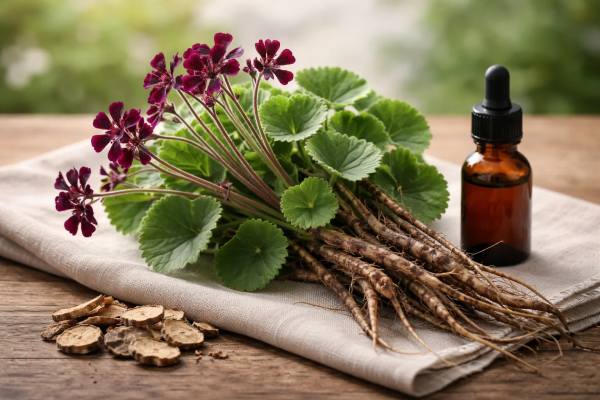
African geranium (Pelargonium sidoides), often marketed as Umckaloabo, is a southern African medicinal plant best known for supporting relief of acute respiratory symptoms—especially cough, chest congestion, and sore throat sensations that come with a common cold or acute bronchitis. Unlike many “respiratory herbs” that rely on aromatic oils, Pelargonium is valued for a root extract rich in polyphenols and proanthocyanidins that may reduce microbial adhesion, influence immune signaling at mucosal surfaces, and support the body’s natural clearance mechanisms. In modern practice, it is most commonly used as a standardized extract (frequently referenced as EPs 7630) taken for a short period early in an illness. The best evidence suggests symptom relief and faster recovery for some people, but results depend on product quality, timing, and the type of infection. Because it can interact with medications and has rare safety concerns, African geranium is best used as a structured, time-limited trial with clear stop rules.
Essential Insights
- May reduce cough severity and improve daily functioning during acute bronchitis or a common cold when started early.
- Works best as a short course (typically 7–10 days) using a standardized root extract rather than raw herb powders.
- Typical adult range: 60 mg/day dry extract (often 20 mg three times daily) or 4.2 ml/day liquid extract, depending on product.
- Stop use and seek care if jaundice, dark urine, significant abdominal pain, or unusual bleeding occurs.
- Avoid if pregnant or breastfeeding, under age 3, on warfarin, or living with significant liver disease unless advised by a clinician.
Table of Contents
- What is Pelargonium sidoides?
- Key ingredients and medicinal actions
- Does it help acute bronchitis and cough?
- Can it help with common colds?
- How to use African geranium
- Dosage, timing, and course length
- Side effects, interactions, and evidence quality
What is Pelargonium sidoides?
African geranium is the common name for Pelargonium sidoides, a plant native to South Africa and Lesotho. Although it shares a family relationship with ornamental geraniums, the medicinal use focuses on the root (sometimes described as “pelargonium root”), which has a long history in southern African traditional medicine. In contemporary European phytotherapy, Pelargonium root preparations are best known for supporting the symptomatic treatment of acute respiratory tract infections, particularly cough-dominant illnesses.
A key point for readers is that African geranium is rarely used as a simple home tea in modern research. Most clinical studies are based on a standardized root extract, commonly referenced in the literature as EPs 7630 (or similar standardized preparations). This matters because the effectiveness and safety data are largely tied to a specific extraction approach and a consistent dose range. In other words, “Pelargonium” is not a single, uniform remedy; what you buy and how it is made influences what you can reasonably expect.
You may encounter several names for the same general product category:
- Umckaloabo (a common commercial name)
- Pelargonium root extract
- EPs 7630 (a frequently studied proprietary extract)
- Pelargonii radix (a regulatory term used in European herbal monographs)
In practical use, African geranium is usually chosen for short, acute situations rather than long-term daily supplementation. The typical user is someone who wants a non-antibiotic option for viral-leaning symptoms like cough, scratchy throat, and chest discomfort—especially when they want to remain functional and reduce “sick day” disruption. It is not intended as a replacement for medical assessment when red flags are present (high fever, shortness of breath, chest pain, dehydration, or symptoms that worsen after initially improving).
Sourcing and sustainability also deserve a mention. Pelargonium roots are harvested from plants that take time to grow. Responsible manufacturing typically involves controlled cultivation or regulated wild collection. When choosing a product, preference usually goes to brands that provide clear labeling on plant part (root), extraction type, and dosage, rather than vague “proprietary blend” claims.
In short, Pelargonium sidoides is best understood as a root-extract respiratory support herb—useful for certain acute symptom patterns, especially when started early and used for a limited timeframe.
Key ingredients and medicinal actions
African geranium’s activity is often described in terms of “immune support,” but its more precise story is about what happens at mucosal surfaces—the lining of the throat and airways where many respiratory infections begin. The root contains a blend of compounds that may influence how microbes adhere to cells, how mucus is cleared, and how local immune signaling behaves during an acute illness.
The most discussed compound groups include:
Proanthocyanidins and polyphenols
Pelargonium root extracts are rich in proanthocyanidins and other polyphenols. These compounds are often studied for antioxidant and anti-adhesive properties. In practical terms, “anti-adhesive” means they may make it harder for certain microbes to stick to mucosal cells, which could support the body’s ability to clear organisms rather than letting them settle in. This is not the same as killing microbes outright, and it does not replace targeted antimicrobial therapy when a bacterial infection is clearly present.
Coumarin-type constituents and related markers
Pelargonium roots contain coumarin-related compounds (not the same as prescription anticoagulants, but still relevant to bleeding-risk discussions). This is one reason many clinicians advise caution if a person uses warfarin or has unusual bruising or bleeding tendencies.
Immunomodulatory signaling rather than “boosting”
A helpful way to think about Pelargonium is immunomodulation—supporting a more effective, balanced immune response at the site of infection—rather than simply “boosting immunity.” This is also why it may feel different from herbs that are primarily immune-stimulating. If you’re comparing herbal approaches to immune resilience, echinacea preparations are often discussed for a different style of immune support and can be useful context for how mechanisms vary.
Secretolytic and mucociliary support
Some studies and clinical observations emphasize improved “productive” cough and mucus clearance. The goal is not to shut down cough reflexes, but to make cough more effective and less disruptive. That distinction matters: suppressing cough is not always the best strategy in chest infections where clearance supports recovery.
Why standardization matters
These compound families can vary widely depending on:
- plant genetics and growing conditions
- root age and harvest timing
- extraction solvent and drug-extract ratio
- storage conditions and product formulation (drops, syrup, tablets)
That is why clinical benefits are most confidently discussed for standardized products that match studied preparations. When readers choose random Pelargonium products without clear dosing and extraction details, the experience becomes harder to predict—both for benefit and for side effects.
Overall, the best-supported medicinal actions for African geranium are symptom-focused: reducing cough burden, improving perceived recovery, and supporting daily functioning during acute respiratory infections when used early and for a short duration.
Does it help acute bronchitis and cough?
Acute bronchitis is one of the most common reasons people try African geranium. In typical cases, acute bronchitis is viral and self-limited, but cough can be persistent, disruptive, and exhausting—often lasting longer than people expect. Pelargonium root extract is most often used here as a short-term option to reduce symptom burden and improve day-to-day function while the illness resolves.
What benefits are most realistic
When African geranium helps, improvements often look like:
- reduced cough intensity and fewer “fits”
- easier mucus clearance with less chest tightness sensation
- improved sleep quality due to fewer nighttime cough awakenings
- faster return to usual daily activities for some people
These outcomes are meaningful because acute bronchitis is less about danger in healthy adults and more about lost time, poor sleep, and lingering symptoms. Pelargonium is not a guaranteed fix, and it is unlikely to erase cough overnight. The most consistent benefits tend to show up when it is started early and taken regularly for a defined period.
Who tends to benefit most
A practical pattern match is:
- adults with uncomplicated, viral-leaning bronchitis symptoms
- people without severe asthma or COPD flares
- people who want a non-antibiotic symptomatic approach
- individuals who can follow a consistent schedule for 7 days
If symptoms are severe or worsening, the decision flow changes: medical evaluation becomes the priority rather than a supplement trial.
How it compares with other cough botanicals
Some herbal products aim to reduce spasm, others to loosen mucus, and others to soothe irritated tissue. Pelargonium is often framed as a “multi-action” option—helping cough feel less burdensome while supporting clearance. For comparison, English ivy leaf is commonly used for cough support via different mechanisms and may be preferred by people who respond well to expectorant-style formulas. The best choice often depends on the cough pattern (dry, tickly, or productive), sensitivity to bitterness, and sleep impact.
What it cannot replace
Even if Pelargonium reduces symptoms, it does not replace:
- evaluation for pneumonia when breathing becomes difficult
- rescue inhalers and medical management in asthma flares
- targeted treatment for suspected bacterial complications
- supportive basics like hydration and rest
When to seek care rather than self-treat
Do not rely on herbal treatment alone if you have:
- shortness of breath at rest, blue lips, or chest pain
- fever that is high, persistent, or worsening
- coughing blood, significant wheezing, or fainting episodes
- symptoms lasting beyond 1–2 weeks without clear improvement
- major risk factors (older age, immunosuppression, serious heart or lung disease)
For many otherwise healthy adults with uncomplicated bronchitis, African geranium can be a reasonable short-course option to reduce cough burden and support functional recovery—provided it’s used early, at an appropriate dose, and with clear stop rules.
Can it help with common colds?
The common cold is another major use-case for African geranium, particularly when the cold is dominated by sore throat, cough, and a “descending” chesty feeling. Because colds are typically viral and self-limited, the most valuable outcomes are symptom relief and a faster return to normal routines. Pelargonium is not expected to “kill the virus,” but it may help shorten the period of high symptom burden for some people.
Where Pelargonium tends to fit best
In practice, people are most likely to notice benefit when:
- cough is present early and is disruptive
- throat irritation and mucus are prominent
- the cold affects sleep and daytime functioning
- the product is started within the first 24–48 hours of symptoms
If the cold is mainly nasal (sneezing, watery runny nose, minimal cough), Pelargonium may feel less targeted than other strategies such as saline rinses, hydration, and rest.
What “shortening a cold” usually means
For many cold remedies, the realistic target is not eliminating illness, but shifting the curve:
- fewer days of “worst” symptoms
- faster reduction in cough and throat discomfort
- fewer interruptions to sleep
- earlier return to work or school
These improvements can be valuable even if total illness duration changes only modestly. They also align with how Pelargonium is typically dosed: short courses rather than chronic daily use.
Combining Pelargonium with supportive care
Pelargonium tends to work best when you also use common-sense illness routines:
- prioritize hydration (warm fluids often feel especially supportive with cough)
- use humidified air if the throat is dry
- avoid heavy alcohol and late-night stimulants that worsen sleep
- keep activity gentle while symptoms are at their peak
If you’re comparing popular cold-season botanicals, elderberry is often discussed for a different style of respiratory support and may be chosen by people who experience repeated seasonal illness patterns. The key is not stacking everything at once; it’s using one main product consistently so you can tell what truly helps.
When cold symptoms are not “just a cold”
Seek medical evaluation if you have:
- symptoms lasting longer than about a week without improvement
- severe sore throat with high fever or swollen neck nodes
- sinus pain with escalating fever or worsening facial pain
- repeated “double worsening” (you improve, then suddenly get worse again)
- shortness of breath, chest pain, or dehydration signs
African geranium can be a sensible short-course option for cough-heavy colds, especially early in the illness. The most responsible way to use it is as part of a time-limited plan that includes rest, hydration, and clear thresholds for seeking medical care.
How to use African geranium
African geranium is most effective when used in the form and pattern that match the evidence base: a standardized root extract taken early in an acute respiratory illness for a short period. The goal is symptom relief and functional improvement, not long-term daily “immune boosting.”
Common product forms
You’ll typically see Pelargonium root extract as:
- Oral drops or solution (often ethanol-based)
- Syrup (often marketed for children, with age guidance)
- Tablets or capsules (often labeled in mg per dose)
- Combination products (mixed with other botanicals, which reduces interpretability)
If your priority is a clean trial, single-ingredient products are usually easier to evaluate. Combination formulas can be useful, but they make it harder to know what caused benefit or side effects.
Timing matters more than “high dose”
A practical rule is: start early, then stay consistent. Many people get the best results when they begin within the first day or two of symptoms and take it on a regular schedule. Waiting until day 5 of a cold and then taking a large dose often leads to disappointment (and increases the odds of stomach upset).
What to expect during use
Pelargonium is not a fast-acting anesthetic. It usually works gradually:
- day 1–2: some people notice slightly easier breathing or less throat “scratch”
- day 3–5: cough burden may decline and sleep may improve
- day 7–10: many users reassess and stop if clearly better
If symptoms persist, worsen, or develop red flags, the appropriate response is medical evaluation, not extending the herb indefinitely.
Practical “do and do not” list
Do:
- follow label dosing for your product type
- drink extra fluids, especially warm liquids if cough is prominent
- track symptoms daily so you can judge whether it truly helps
- stop after a short course if no meaningful benefit appears
Do not:
- combine with multiple new respiratory supplements at the same time
- use it as a substitute for medical care with significant fever or shortness of breath
- ignore unusual bleeding, allergic symptoms, or liver warning signs
Helpful adjuncts without overcomplication
Some people find Pelargonium pairs well with gentle throat and airway supports that do not strongly overlap mechanisms. For example, thyme preparations are often used for respiratory comfort and mucus support, but it’s still wise to introduce one main intervention at a time so you can interpret your results.
The most effective use of African geranium is disciplined and simple: standardized product, early start, consistent schedule, short duration, and clear stop rules.
Dosage, timing, and course length
Dosage guidance for African geranium depends on the preparation (liquid vs dry extract) and on whether a product matches the dosing used in research and European monographs. Because extracts differ, the most responsible approach is to follow the labeled instructions for the specific product you choose—while staying within widely used clinical-style ranges.
Common standardized dosing patterns
For many standardized dry extracts used in clinical research and monographs, typical dosing patterns include:
- Adults and adolescents over 12: often 20 mg three times daily (total 60 mg/day)
- Children 6–12: often 40 mg/day divided (for example, 13.3 mg three times daily or 20 mg twice daily, depending on product)
- Children 3–5: often 20 mg/day divided (commonly in liquid form)
For liquid extracts, monograph-style dosing is often expressed in ml per dose. A typical adult pattern is 1.4 ml three times daily (total 4.2 ml/day), with lower doses for children based on age.
When to take it
Most people do best taking Pelargonium:
- with or after food if they are prone to stomach sensitivity
- spaced across the day to keep exposure steady
- earlier in the day if cough disrupts sleep (not because it is stimulating, but because consistent daytime dosing may reduce nighttime symptoms)
How long to use it
A reasonable course length is usually:
- 7 days for acute bronchitis-style cough patterns
- 7–10 days for common cold symptoms with cough
If symptoms last longer than about a week without clear improvement, extending the herb is usually less useful than reassessing the diagnosis and care plan. Many respiratory illnesses become “lingering cough” states where hydration, airway calm, and time matter more than continuing an acute-phase remedy.
Dose adjustments and troubleshooting
If you notice mild side effects (nausea, stomach discomfort), consider:
- taking it with food
- reducing to the lower end of the dosing range
- switching formulations (tablet vs liquid), if appropriate
If there is no meaningful improvement after 3–4 days, consider whether:
- the illness pattern does not match Pelargonium’s strengths (for example, mainly nasal symptoms)
- dosing is inconsistent
- the product is not standardized or is underdosed
- a more serious condition is developing
Special populations
- Children: follow age guidance strictly; avoid use under age 3 unless directed by a clinician.
- Older adults: be cautious with polypharmacy and bleeding risk; introduce only one new supplement at a time.
- Pregnancy and breastfeeding: avoid due to limited safety data for standardized extracts.
Dose is only one part of success. Timing, consistency, and appropriate duration are what turn Pelargonium from a hopeful idea into a fair, interpretable trial.
Side effects, interactions, and evidence quality
African geranium is generally well tolerated for short-term use, but “generally safe” does not mean “risk-free,” especially when extracts are concentrated and used in people with complex medical histories. The safest way to use Pelargonium is to know the common side effects, understand who should avoid it, and keep expectations aligned with the strength of evidence.
Common side effects
The most frequently reported side effects are mild and gastrointestinal:
- stomach discomfort, nausea, or vomiting
- loose stools or diarrhea
- mild rash or itching in sensitive individuals
Some safety summaries also include very rare reports of:
- mild nasal or gum bleeding
- allergic reactions
If you develop hives, facial swelling, wheezing, or difficulty breathing, stop immediately and seek urgent care.
Liver safety and stop rules
Liver problems have been reported in association with Pelargonium products, though frequency and causality can be difficult to confirm in real-world reporting. The practical safety approach is clear: stop use and seek medical advice if you develop:
- yellowing of skin or eyes (jaundice)
- dark urine or pale stools
- persistent right-upper abdominal pain
- unusual fatigue with nausea or loss of appetite during use
These signals should override “finishing the bottle.”
Interactions and who should avoid it
Use clinician guidance (or avoid) if you:
- take warfarin or other anticoagulants or antiplatelet medications
- have a known bleeding disorder or unexplained bruising
- have significant liver disease or a history of hepatitis
- are pregnant or breastfeeding
- are using immunosuppressant therapies or managing an active autoimmune flare
A conservative rule: if you are on a high-stakes medication (blood thinners, transplant meds, chemotherapy, complex cardiac meds), do not add Pelargonium without professional input.
What the evidence actually supports
The evidence base for Pelargonium is stronger than for many traditional respiratory herbs, but it is also product-specific. The most consistent benefits are seen with standardized extracts and are largely symptom-focused:
- reduced cough intensity and earlier symptom relief in acute bronchitis and cough-dominant respiratory infections
- improved quality-of-life measures during the acute illness window
- potential reduction in “sick day” disruption in working adults
Limitations matter:
- many trials involve specific proprietary extracts, limiting generalization
- outcomes are strongest in uncomplicated acute infections, not chronic lung disease
- benefit sizes vary, and some people experience minimal change
The best way to use Pelargonium is to treat it as a short, evidence-informed symptomatic option—not a cure, not a preventive guarantee, and not a substitute for medical evaluation when warning signs appear.
References
- Effects of Pelargonium sidoides extract EPs 7630 on acute cough and quality of life – a meta-analysis of randomized, placebo-controlled trials 2022 (Meta-Analysis)
- Effects of EPs 7630 on the duration of inability to work in acute bronchitis – a meta-analysis 2023 (Meta-Analysis)
- Unlocking the therapeutic potential of Pelargonium sidoides natural extract: A scoping review 2024 (Scoping Review)
- Safety of Pelargonium extract EPs 7630 in young children with acute bronchitis 2023 (Safety Study)
- European Union herbal monograph on Pelargonium sidoides DC; Pelargonium reniforme Curt., radix 2024 (Monograph)
Disclaimer
This article is for educational purposes only and does not provide medical advice, diagnosis, or treatment. Herbal products can cause side effects and may interact with medications or medical conditions. Do not use African geranium (Pelargonium sidoides) to self-treat severe respiratory illness, pneumonia, asthma attacks, persistent high fever, shortness of breath, chest pain, dehydration, unusual bleeding, or signs of liver injury. If you are pregnant, breastfeeding, taking prescription medications (especially blood thinners), or managing a chronic condition, consult a qualified clinician before using Pelargonium root extracts. Seek urgent medical care for allergic reactions, breathing difficulty, chest pain, fainting, or symptoms that worsen instead of improving.
If you found this guide helpful, consider sharing it on Facebook, X (formerly Twitter), or your preferred platforms so others can access clear, safety-first information.