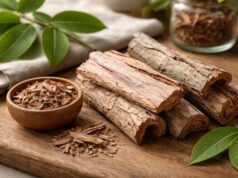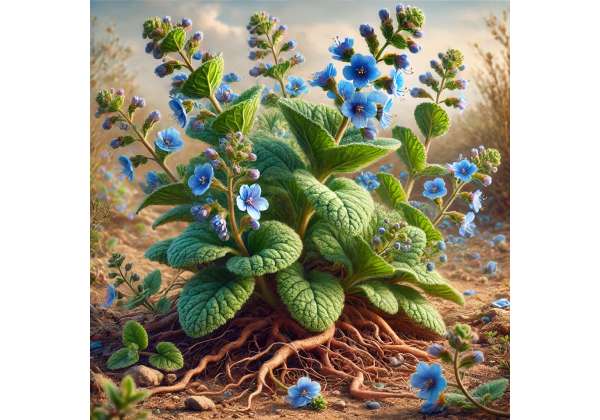
Alkanet (Alkanna tinctoria) is a Mediterranean and European herb best known for its deep red root pigments—historically used as a natural dye, and still valued today in skin-focused herbal preparations. In traditional practice, alkanet root is typically infused into oils and balms, where its lipid-loving compounds disperse easily and create richly colored topical products. Beyond color, alkanet’s chemistry has drawn interest for antimicrobial, antioxidant, and inflammation-modulating activity—properties that may support the comfort and appearance of irritated skin and the early stages of minor wound recovery when used appropriately.
At the same time, alkanet is not a “take it daily” internal tonic. Most practical, real-world use is topical, and safety depends on concentration, skin sensitivity, product purity, and how large an area you apply. This guide breaks down what alkanet is, what’s inside the root, what benefits are realistic, how people use it in modern herbal routines, and how to think about dosing and risk in a careful, evidence-informed way.
Essential Insights
- Topical alkanet may support skin comfort and minor wound recovery, especially in oil-based preparations.
- Start low; common topical ranges are 0.5%–5% for routine use, with higher strengths best reserved for clinician-guided care.
- Patch-test first; stop if burning, rash, or worsening redness occurs.
- Avoid oral use during pregnancy and breastfeeding, and avoid for infants and young children.
- People with very sensitive skin or Boraginaceae plant allergies should avoid or use only with professional guidance.
Table of Contents
- What is alkanet root?
- Key ingredients and how they work
- Does alkanet help skin healing?
- How to use alkanet safely
- How much alkanet to use
- Side effects and who should avoid it
- What the evidence actually says
What is alkanet root?
Alkanet is the common name for Alkanna tinctoria, a perennial plant in the borage family (Boraginaceae). Above ground, it has small, often blue flowers and rough, hairy leaves typical of the family. The part used most often is the root—especially the outer root bark—because that is where the plant concentrates the red-violet pigments that made alkanet famous in textiles, cosmetics, and traditional ointments.
You may also see alkanet marketed as “dyer’s alkanet,” “orchanet,” or “ratanjot” (a culinary name used in parts of South Asia). These names matter because they hint at the plant’s most reliable function: coloring fat-rich mixtures. Alkanet pigments dissolve far better in oils and alcohol than in plain water. That is why alkanet shows up more in infused oils, salves, and balms than in teas.
Traditional and modern uses in plain language
People typically reach for alkanet in two situations:
- As a natural colorant for oils, salves, soaps, lip products, and occasionally foods (usage varies by region and regulation).
- As a supportive topical herb in blends meant for irritated, dry, or rough skin, and for certain wound-care traditions where soothing and cleanliness are priorities.
Alkanet’s reputation as a “healing root” is closely tied to the broader family of red naphthoquinone pigments found in related Boraginaceae plants. In folk practice, these roots were often combined with waxes, animal fats, or olive oil to create protective films over skin.
Common confusions to avoid
- Alkanet is not henna. Henna stains keratin (hair and skin) differently and has a different safety and allergy profile. If you’re comparing plant dyes for hair or cosmetic tinting, it helps to understand what henna is used for in cosmetic routines.
- Not all “alkanet” is the same plant. Some products use different species names, mixed plant material, or vague labeling. For practical use—especially on compromised skin—identity and quality matter as much as the herb name.
Bottom line: alkanet root is best understood as an oil-compatible botanical dye with additional bioactive potential, most sensibly used in topical preparations where concentration can be controlled and skin response can be monitored closely.
Key ingredients and how they work
Alkanet’s core activity comes from a group of red pigments known as alkanin and shikonin (often discussed as a related pair). These are naphthoquinone derivatives—highly colored compounds that plants use for defense. They are also the reason alkanet behaves so differently in oil versus water: naphthoquinones and their esters are typically lipophilic, meaning they disperse into fats more readily than into plain water.
Primary active compounds
The root contains a mixture rather than a single “one-and-done” ingredient. Key groups include:
- Alkanin and shikonin (and esters/derivatives): The signature pigments. In lab research, these compounds show antimicrobial effects against certain microbes, anti-inflammatory signaling effects, and activity linked to tissue-repair pathways.
- Other naphthoquinones (related hydroxynaphthoquinones): These can contribute to antioxidant behavior and may help explain why traditional formulas emphasized “protective” topical use.
- Phenolic compounds (various types): These can add antioxidant capacity and may support product stability in some extracts, depending on how the root is processed.
- Minor volatile and resin-like fractions: These are less famous but may influence how a whole-root extract behaves on the skin.
Why extraction method changes the outcome
A practical detail many people miss: alkanet is preparation-sensitive. A water tea and an oil infusion are not interchangeable.
- Oil infusion: Pulls more pigment and more of the lipophilic naphthoquinones. This is the classic route for balms.
- Alcohol tincture: Can extract a broader chemical spread, but is often used more for making a concentrated intermediate than as a direct skin product (because alcohol can sting irritated skin).
- Powder-in-ointment: Gives color and some compound transfer, but can be gritty unless finely milled and well filtered.
How these compounds may translate to skin outcomes
In simplified terms, alkanet’s root chemistry aligns with three topical goals:
- Discouraging unwanted microbial growth on the surface (supportive, not a replacement for appropriate wound cleaning or medical treatment).
- Reducing excess irritation signals that can prolong redness and discomfort.
- Supporting the local environment where normal repair occurs—especially when combined with a protective, moisture-balanced base like an ointment.
Because these compounds are potent and deeply pigmented, the same chemistry that makes alkanet interesting also makes dose and tolerance central to safe use. Stronger is not always better—especially for sensitive skin.
Does alkanet help skin healing?
Most interest in alkanet’s health benefits centers on skin. That focus is appropriate: alkanet’s best-supported and most practical use is topical, not internal. When people say “alkanet helps healing,” what they usually mean is that it may support a cleaner, calmer skin surface and promote conditions that allow normal repair to proceed smoothly.
Where alkanet may be useful
Alkanet is most often considered for:
- Minor abrasions and superficial scrapes (after proper cleaning)
- Dry, irritated patches that benefit from an occlusive balm base
- Rough, cracked skin (hands, elbows, heels) where protection and comfort are priorities
- Low-grade redness and discomfort where a gentle anti-inflammatory approach is desired
It is not an emergency treatment for deep wounds, animal bites, spreading infections, or significant burns. Those situations require medical assessment.
Why it might help
A realistic, evidence-aligned way to think about alkanet is “supportive,” not “curative.” Potential supportive mechanisms include:
- Antimicrobial surface effects: Helpful for keeping the skin environment less hospitable to certain microbes, especially when hygiene is good and the wound is minor.
- Anti-inflammatory signaling moderation: May reduce persistent redness or tenderness in some contexts, especially when paired with a soothing ointment base.
- Antioxidant activity: Oxidative stress can be part of irritation and tissue breakdown; antioxidant effects are one plausible piece of the puzzle.
What results should look like in real life
If alkanet is going to help, benefits usually show up as:
- Reduced tightness or “angry” feeling of the skin
- Improved comfort and less friction on irritated areas
- Gradual improvements in appearance as the skin completes its normal repair cycle
A key point: alkanet is often used in blends, so results may come from the whole formula, not the root alone. For example, pairing alkanet with classic soothing herbs can make a formula more tolerable and balanced. Many people choose to combine it with gentle botanicals such as calendula; if you want a broader skin-soothing context, see how calendula is commonly used for minor skin irritation.
When it is not a good fit
Avoid relying on alkanet alone when you see:
- Increasing pain, heat, swelling, or pus
- Rapidly spreading redness
- Fever or systemic symptoms
- Wounds that are deep, dirty, or not improving after several days
- Slow-healing wounds linked to diabetes or poor circulation
In those cases, “natural” should not delay appropriate care. Alkanet can still be considered later, but only once safety and infection control are addressed.
How to use alkanet safely
Alkanet is most useful when you treat it like a topical ingredient with clear boundaries: controlled concentration, clean preparation, and careful monitoring. Because its pigments transfer best into fats, most practical methods revolve around oils and ointments.
Common forms you will see
- Dried root pieces or chips: Best for oil infusions you plan to strain well.
- Root powder: Convenient, but can be gritty; filtration matters.
- Oil infusions and macerates: The classic “alkanet oil,” used as a base for balms.
- Finished balms and ointments: Often blended with waxes and other herbs.
- Cosmetic colorant use: In soaps, lip products, tinted oils, and creams.
Simple infused oil method (practical and controlled)
A typical home approach is an oil infusion you later strain:
- Choose your oil: Stable, skin-friendly oils are best (olive, jojoba, sunflower, or similar).
- Use dry plant material: Moisture raises spoilage risk.
- Ratio: Start modestly—about 1 part dried root to 5–10 parts oil by volume (or by weight, if you measure precisely).
- Infuse: 2–4 weeks in a cool, dark place, shaking occasionally.
- Strain thoroughly: Filter through fine cloth to reduce grit and reduce irritation risk.
For sensitive skin, your carrier oil choice matters. Many people prefer waxy, low-irritation oils; jojoba’s skin applications make it a popular option for balanced, non-greasy topical blends.
Turning infused oil into a balm
You can thicken an infused oil into a balm by adding a wax (often beeswax). Keep the formula simple when you’re testing tolerance:
- Start with a small batch
- Use a lower wax percentage for spreadability
- Avoid adding multiple new essential oils at once, since they can be the true irritant
Best practices for topical use
- Patch test first: Apply a small amount to the inner forearm for 24 hours.
- Use thin layers: More product can mean more irritation.
- Avoid occlusion early: Covering tightly can increase absorption and irritation.
- Keep wounds clean: Alkanet is not a substitute for basic wound hygiene.
Also note the obvious-but-important reality: alkanet stains. Use old towels, protect clothing, and avoid applying before events where color transfer is a problem.
How much alkanet to use
Alkanet dosing is best approached as topical concentration and frequency, not as an oral “milligrams per day” supplement. That’s because human evidence and safety guidance are far stronger for topical use, and product variability is high.
Practical topical concentration ranges
These ranges reflect common real-world patterns and a conservative safety mindset:
- 0.1%–1% (cosmetic tint range): Often enough to add color to lip balms, soaps, or creams, with minimal risk for many users.
- 0.5%–5% (routine topical range): A reasonable starting window for skin comfort balms used on small areas.
- 5%–20% (higher-strength range): More “therapeutic” style preparations sometimes used in clinical or traditional wound-care contexts. If you are considering the upper end, it is wise to do so with clinician guidance, especially on compromised skin or larger areas.
If you’re making an oil infusion at home, concentration can be hard to calculate precisely. The most reliable safety strategy is to start lighter, confirm tolerance, and only increase strength if needed.
How often to apply
For most non-acute uses, a simple schedule works well:
- 1–2 times daily for dry or irritated patches
- Up to 3 times daily for small, superficial areas when the product is well tolerated and not causing redness
Apply a thin layer and reassess after 48–72 hours. If your skin looks more inflamed, not calmer, stop and switch strategies.
How long to use it
A practical self-care window is:
- 3–7 days for minor irritation support
- Up to 14 days for stubborn dryness or roughness, as long as the skin is improving and not reacting
If there is no improvement within a week—or if symptoms worsen—self-treatment should stop and you should seek medical advice.
What about oral dosing?
Because safety and dosing standards for oral alkanet are not well established (and because plant-family chemistry can be complicated), routine oral use is not recommended without professional oversight. If you see alkanet marketed as an internal supplement, treat that as a high-caution scenario: identity, purity testing, and dose control become essential.
If your goal is tissue-repair support and you want an herbal comparison point, it can help to understand how other topicals are handled. For example, comfrey is typically framed with strict topical boundaries due to safety considerations—an approach that mirrors the “respect the dose” mindset that makes sense for alkanet as well.
Side effects and who should avoid it
Alkanet is often well tolerated in small amounts, but “natural” does not mean risk-free. Side effects are most commonly skin-based and usually relate to concentration, product additives, or individual sensitivity.
Possible side effects
- Skin irritation: Burning, stinging, or a warm, uncomfortable feeling—often from high strength, gritty particles, or added fragrances.
- Allergic contact dermatitis: Itching, rash, hives, or swelling. This can occur even with “pure” plant material.
- Acne or follicle congestion: Heavier balms can trap oil and sweat on acne-prone skin.
- Staining and transfer: Not dangerous, but can be frustrating and can hide subtle redness if the product is very pigmented.
If you experience a strong reaction, stop immediately, wash gently, and do not re-test on the same area.
Who should avoid alkanet or use only with professional guidance
- Pregnancy and breastfeeding: Avoid internal use; be cautious with topical use due to limited safety data and higher stakes.
- Infants and young children: Avoid, especially on large areas or broken skin.
- People with known Boraginaceae allergies or strong plant allergies: Higher risk of reactions.
- Those using many topical actives already: Retinoids, acids, benzoyl peroxide, or strong steroids can increase irritation risk when layered with botanicals.
- People on narrow-therapeutic-index medications: Lab research on related compounds suggests potential interactions with drug-metabolizing systems. The relevance to normal topical use is unclear, but caution is sensible if applying high-strength products over large areas or under occlusion.
Interactions and “mixing mistakes”
Many adverse experiences come from formulation errors rather than alkanet itself:
- Combining alkanet with multiple essential oils (more irritants, more allergens)
- Using gritty, unfiltered powder on already inflamed skin
- Applying to an unclean wound and sealing it under a thick occlusive layer
If your goal is astringent “tightening” or oil control, alkanet is not the most predictable tool. In those cases, a more classic, clearly astringent botanical may be a better fit—see witch hazel’s topical uses for a different strategy that is often easier to dose and assess.
The safest mindset: use alkanet as a controlled, minimal-additive topical, and treat any unexpected skin change as a reason to stop and reassess.
What the evidence actually says
Alkanet’s research story is a blend of promising signals and real limitations. The most consistent thread is that alkanet’s signature pigments (alkanin/shikonin compounds and related derivatives) show biologically active behavior relevant to skin: antimicrobial effects in lab settings, inflammation-modulating activity, and tissue-repair signals in experimental models. That supports why traditional topical use developed—but it does not automatically guarantee dramatic outcomes for every person or every product.
Human evidence: encouraging but narrow
One of the more practical takeaways from the clinical literature is that a topical alkanet preparation has shown improved healing outcomes in a controlled setting for a specific wound type (skin graft donor sites). That matters because it moves beyond test tubes and animal models. However, it also comes with important constraints:
- The preparation was standardized to a particular strength and applied in a controlled care context.
- The wound type was specific (surgical donor sites), which does not perfectly represent everyday cuts, acne, eczema, or chronic ulcers.
- Sample sizes in herbal wound-care research are often modest, and replication is limited.
So the human evidence supports “potential,” not blanket claims.
Preclinical evidence: broad activity, uncertain translation
Lab and animal studies help explain how alkanet-related pigments might work:
- Effects on inflammatory pathways that can influence redness and tissue breakdown
- Activity that discourages certain microbial growth
- Signals related to collagen formation and tissue remodeling in wound models
But translation has a gap: doses used in experimental settings may be higher than typical home use, and purified compounds can behave differently than whole-root preparations.
Safety evidence: dose and route matter
A critical, balanced point from the wider shikonin/alkanin literature is that route of exposure changes the risk profile. Compounds that appear relatively tolerable on skin in low-to-moderate topical strengths may behave differently when taken internally or when delivered in high doses. That is one reason many professional herbal approaches treat alkanet as primarily topical.
What this means for your decision
If your goal is practical skin support, the evidence most strongly supports:
- Trying alkanet topically, not orally
- Using low-to-moderate concentrations first
- Treating it as a supportive product for minor issues, not a replacement for medical care
- Choosing formulations that are filtered, cleanly made, and not overloaded with irritants
In short: alkanet is best viewed as a pigment-rich topical botanical with plausible skin benefits, a small but meaningful amount of human support for wound contexts, and a clear need for careful dosing and realistic expectations.
References
- Review of Shikonin and Derivatives: Isolation, Chemistry, Biosynthesis, Pharmacology and Toxicology 2022 (Review)
- Pharmacological Effects of Shikonin and Its Potential in Skin Repair: A Review 2023 (Review)
- Ratanjot (Alkanna tinctoria L.) Root Extract, Rich in Antioxidants, Exhibits Strong Antimicrobial Activity against Foodborne Pathogens and Is a Potential Food Preservative 2024 (Study)
- The effects of Alkanna tinctoria Tausch on split-thickness skin graft donor site management: a randomized, blinded placebo-controlled trial 2017 (RCT)
Disclaimer
This article is for educational purposes only and does not provide medical advice. Herbal products can vary widely in strength and purity, and “natural” ingredients can still cause allergic reactions or interact with medications. Do not use alkanet as a substitute for professional care for burns, deep or infected wounds, rapidly spreading redness, fever, or wounds that do not improve promptly. If you are pregnant, breastfeeding, have a chronic medical condition, or take prescription medications—especially drugs that require careful dosing—speak with a qualified clinician before using alkanet or other herbal preparations.
If you found this guide helpful, consider sharing it with a friend or community on Facebook, X (formerly Twitter), or your favorite platform so others can make safer, more informed choices.