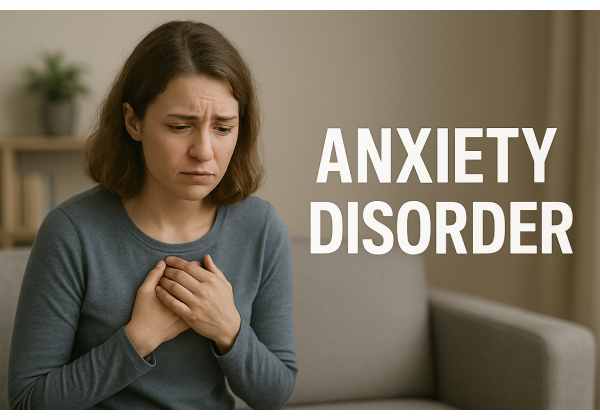
Anxiety becomes a disorder when fear, worry, physical tension, or avoidance are persistent, excessive for the situation, and disruptive to daily life. Occasional anxiety is part of being human; it can help people notice risk, prepare for challenges, and respond to pressure. An anxiety disorder is different because the alarm system becomes too easily triggered, stays active too long, or begins shaping a person’s choices, relationships, work, school, sleep, and health.
Anxiety disorders are not all the same. Some involve broad, hard-to-control worry. Others center on panic attacks, social judgment, specific fears, separation, or fear of being trapped or unable to escape. The shared pattern is that anxiety is intense or lasting enough to cause distress, impairment, or repeated avoidance.
Table of Contents
- What Anxiety Disorder Means
- Symptoms and Signs
- Main Types of Anxiety Disorders
- Causes and Risk Factors
- Effects on Daily Life
- Complications and Co-Occurring Conditions
- Diagnostic Context
- When Symptoms Need Urgent Attention
What Anxiety Disorder Means
An anxiety disorder is a mental health condition in which fear, worry, or anxiety-related avoidance becomes persistent, excessive, and impairing. The key issue is not simply feeling anxious; it is the pattern, intensity, duration, and effect on functioning.
Normal anxiety usually rises in response to a specific challenge and settles when the situation passes. A person may feel nervous before a presentation, medical appointment, exam, flight, or difficult conversation. That kind of anxiety can be uncomfortable, but it is often temporary and proportionate.
In an anxiety disorder, the response may be stronger than the situation calls for, appear without a clear immediate threat, or continue long after the triggering event has passed. It may also lead to avoidance that shrinks a person’s life over time. Someone may stop driving, decline social invitations, avoid medical care, miss school, turn down work opportunities, or repeatedly seek reassurance because the anxiety feels intolerable.
Fear and anxiety are related but not identical. Fear is usually a response to an immediate perceived threat. Anxiety is more often anticipation of a possible future threat. Panic is a sudden surge of intense fear or discomfort, often with strong physical sensations. Worry is the mental process of repeatedly thinking through possible problems, dangers, or outcomes. Anxiety disorders may include all of these, but the balance differs from person to person.
A helpful way to understand anxiety disorder is to look at three parts of the pattern:
- Body symptoms: racing heart, shortness of breath, sweating, trembling, stomach upset, dizziness, muscle tension, or sleep disruption.
- Thought symptoms: catastrophic predictions, fear of losing control, dread, excessive doubt, repeated “what if” thinking, or difficulty concentrating.
- Behavior symptoms: avoidance, escape, reassurance seeking, checking, procrastination, safety behaviors, or withdrawal from normal activities.
Anxiety disorders can occur in children, teens, and adults. They often begin early in life, but they can also appear after major stress, trauma, illness, hormonal transition, substance use, or prolonged strain. Some people can name the fear clearly, such as public speaking or flying. Others mainly notice physical symptoms, irritability, trouble sleeping, or a constant sense of being on edge.
Anxiety disorder is also a broad term. It can include generalized anxiety disorder, panic disorder, social anxiety disorder, specific phobias, agoraphobia, separation anxiety disorder, and selective mutism. Conditions such as obsessive-compulsive disorder and post-traumatic stress disorder can include intense anxiety, but they are usually classified separately because their symptom patterns and diagnostic criteria are distinct. For example, clinicians may compare OCD and anxiety symptoms when intrusive thoughts or compulsive behaviors are part of the picture.
Symptoms and Signs
The main symptoms of anxiety disorder are excessive fear or worry, physical arousal, mental distress, and avoidance that interfere with normal life. Signs may be obvious, such as panic attacks, or subtle, such as chronic tension, irritability, overplanning, or repeated reassurance seeking.
Anxiety often shows up through the body because the nervous system prepares for danger. This fight-or-flight response can be useful in real emergencies, but in an anxiety disorder it may activate during ordinary, uncertain, or imagined threats. A person may know logically that they are not in serious danger while still feeling physically alarmed.
Common physical symptoms include:
- Fast, pounding, or irregular-feeling heartbeat
- Shortness of breath or a feeling of not getting enough air
- Chest tightness or pressure
- Sweating, trembling, shaking, or chills
- Nausea, abdominal distress, diarrhea, or loss of appetite
- Dizziness, lightheadedness, or feeling faint
- Tingling in the hands, face, or limbs
- Muscle tension, jaw clenching, headaches, or back pain
- Fatigue from prolonged tension or poor sleep
- Trouble falling asleep, staying asleep, or waking with worry
Mental and emotional symptoms can be just as disruptive. People may describe feeling keyed up, restless, unsafe, overwhelmed, or unable to shut off their thoughts. Concentration may suffer because attention keeps returning to possible danger. Some people become irritable or easily startled; others become quiet, withdrawn, or overly controlled.
Behavioral signs often provide the clearest clue that anxiety has moved beyond ordinary stress. Avoidance is especially important. It can bring short-term relief, but it often strengthens anxiety over time because the feared situation remains untested. A person might avoid crowds, driving, phone calls, presentations, medical appointments, eating in public, conflict, dating, travel, or being alone. In children, anxiety may appear as crying, freezing, tantrums, stomachaches before school, refusal to sleep alone, or repeated questions about safety.
| Area affected | Possible signs | Why it matters |
|---|---|---|
| Body | Palpitations, sweating, nausea, dizziness, muscle tension | Physical symptoms can mimic medical problems and may become frightening themselves |
| Thinking | Catastrophic predictions, racing thoughts, doubt, poor concentration | Anxiety can narrow attention toward threat and make uncertainty feel dangerous |
| Behavior | Avoidance, escape, checking, reassurance seeking, procrastination | Repeated avoidance can reduce confidence and increase impairment |
| Relationships | Withdrawal, dependence on reassurance, conflict avoidance, irritability | Anxiety can affect communication, closeness, and independence |
| Functioning | Missed work, school refusal, reduced performance, limited activities | Impairment helps distinguish a disorder from temporary nervousness |
Some symptoms overlap with other conditions. Trouble concentrating, restlessness, and irritability can appear in anxiety, ADHD, sleep loss, depression, trauma-related disorders, substance use, and medical conditions. When focus problems are prominent, clinicians may need to distinguish anxiety from ADHD rather than assuming one explains the other.
Panic symptoms deserve special mention. A panic attack is a sudden surge of intense fear or discomfort that often peaks within minutes. It may include chest pain, shortness of breath, trembling, nausea, dizziness, numbness, chills, fear of dying, or fear of losing control. Panic attacks can occur in several anxiety disorders, but panic disorder involves recurrent unexpected panic attacks plus ongoing concern about additional attacks or changes in behavior because of them. A focused comparison of panic attacks and anxiety disorder can help clarify why one panic episode does not automatically mean someone has panic disorder.
Main Types of Anxiety Disorders
Anxiety disorders are grouped by the main focus of fear, worry, panic, or avoidance. Knowing the pattern matters because “anxiety” can describe very different experiences.
Generalized anxiety disorder involves excessive, hard-to-control worry about multiple areas of life, such as health, family, work, school, finances, responsibilities, or future events. The worry is often accompanied by restlessness, fatigue, difficulty concentrating, irritability, muscle tension, and sleep disturbance. People with generalized anxiety may appear highly responsible or prepared on the outside while feeling mentally exhausted inside.
Panic disorder centers on recurrent unexpected panic attacks and persistent worry about having more attacks. A person may begin avoiding exercise, driving, stores, public transportation, or being far from help because body sensations feel dangerous. Panic disorder is not defined only by panic attacks; it is defined by the continuing fear and behavior changes that follow them.
Social anxiety disorder involves intense fear of being judged, embarrassed, rejected, humiliated, or scrutinized in social or performance situations. It may affect speaking in groups, meeting new people, eating in public, dating, using public restrooms, making phone calls, or being observed while working. The fear is not simply shyness. It is distressing and limiting, and people often recognize that the fear is stronger than they want it to be.
Specific phobia involves marked fear of a specific object or situation, such as flying, heights, animals, needles, blood, vomiting, storms, or enclosed spaces. The feared situation may be avoided or endured with intense distress. Specific phobias can seem narrow, but they may create major impairment when the feared situation is common, unavoidable, or medically important.
Agoraphobia involves fear or avoidance of situations where escape might be difficult or help might not be available if panic-like symptoms or incapacitating symptoms occur. This can include public transportation, open spaces, enclosed places, crowds, lines, or being outside the home alone. In severe cases, a person’s world may become very restricted.
Separation anxiety disorder involves excessive fear about being separated from attachment figures. Although often associated with children, it can also occur in adults. The anxiety may include fear that harm will come to a loved one, repeated distress around separation, reluctance to sleep away from attachment figures, or physical complaints when separation is expected.
Selective mutism usually begins in childhood and involves consistent difficulty speaking in specific social situations despite speaking in other settings. For example, a child may speak normally at home but not at school. It is not explained by lack of language knowledge or simple defiance; anxiety is typically central to the pattern.
Some conditions are closely related but categorized separately in many diagnostic systems. PTSD involves symptoms after trauma, such as re-experiencing, avoidance, hyperarousal, and changes in mood or cognition. OCD involves obsessions, compulsions, or both. Health anxiety, illness anxiety, and somatic symptom patterns can include intense fear about illness. These distinctions are why diagnostic assessment often looks beyond the word “anxiety” and examines the full symptom pattern.
Causes and Risk Factors
Anxiety disorders usually develop from a combination of biological vulnerability, life experience, learning, stress exposure, and current context. There is rarely one single cause.
Genetics can contribute to risk. Anxiety disorders tend to run in families, although this does not mean a person is destined to develop one. Inherited traits may affect temperament, threat sensitivity, emotional reactivity, or how strongly the body responds to uncertainty. Family patterns also matter because children learn from how caregivers respond to danger, mistakes, conflict, illness, separation, and uncertainty.
Brain and nervous system factors are also involved. Anxiety disorders are linked to systems that detect threat, regulate fear, process uncertainty, and calm the body after stress. The amygdala, prefrontal cortex, hippocampus, and related circuits help evaluate danger and regulate responses. Neurotransmitters such as serotonin, norepinephrine, GABA, glutamate, and dopamine are part of these networks, but anxiety cannot be reduced to one “chemical imbalance.” The biology is complex and interacts with experience.
Temperament can increase vulnerability. Children who are behaviorally inhibited, highly cautious, sensitive to novelty, easily startled, or slow to warm up may have a higher risk of later anxiety, especially when combined with stress or avoidance patterns. Perfectionism, intolerance of uncertainty, high threat sensitivity, and strong need for control can also shape anxiety in adolescents and adults.
Life experiences can raise risk, particularly when they involve threat, unpredictability, loss, humiliation, neglect, abuse, bullying, discrimination, family conflict, serious illness, or trauma. Repeated stress can teach the nervous system to stay alert. A major life change, such as childbirth, bereavement, divorce, job loss, relocation, financial pressure, or caregiving strain, can also trigger or worsen anxiety symptoms.
Medical and substance-related factors are important because anxiety-like symptoms can come from the body as well as the mind. Thyroid disease, heart rhythm problems, asthma, vestibular disorders, menopause-related hormonal changes, low blood sugar, anemia, medication side effects, stimulant use, caffeine, alcohol withdrawal, and some neurological conditions can produce symptoms that resemble anxiety. This is one reason clinicians may consider medical conditions that mimic anxiety when symptoms are new, severe, unusual, or mainly physical.
Risk factors do not operate in isolation. A person might have a genetic tendency toward sensitivity, grow up in an unpredictable environment, experience bullying, and later develop panic after a frightening health scare. Another person may have few early risk factors but develop anxiety after prolonged work stress and sleep disruption. The same diagnosis can have different pathways.
Protective factors can also influence whether anxiety becomes persistent or impairing. Stable relationships, emotional safety, predictable routines, problem-solving skills, physical health, sleep, social support, and early recognition of symptoms can reduce risk or limit escalation. Still, anxiety disorders are not a sign of weakness or poor character. They reflect a real pattern of distress and impairment shaped by many interacting factors.
Effects on Daily Life
Anxiety disorder can affect daily life by narrowing choices, draining energy, disrupting concentration, and making ordinary tasks feel threatening or exhausting. The impact often grows gradually as avoidance and anticipation become part of the person’s routine.
Work and school are common areas of impairment. Anxiety may make it hard to speak in meetings, take exams, answer questions, meet deadlines, travel, use shared spaces, or handle feedback. Some people overprepare and perform well, but at a high emotional cost. Others procrastinate because starting a task triggers fear of failure or uncertainty. Students may miss school because of stomachaches, panic, separation fears, or social distress.
Relationships can also change. A person may avoid gatherings, cancel plans, ask for frequent reassurance, become irritable when overwhelmed, or depend heavily on a trusted person to enter feared situations. Partners, friends, and family members may misread anxiety as disinterest, control, criticism, or avoidance. The person with anxiety may feel guilty because they know their reactions are affecting others but still feel unable to shift them.
Sleep is often affected. Worry may intensify at night when there are fewer distractions. Some people replay conversations, plan for every possible outcome, or wake with a sense of dread. Poor sleep can then worsen anxiety the next day by increasing emotional reactivity and reducing concentration. This cycle can make symptoms feel more global than they are.
Physical health can be affected through chronic tension and nervous system arousal. Muscle pain, headaches, digestive upset, fatigue, and chest tightness may become frequent. Some people seek repeated medical reassurance because the sensations feel dangerous. Medical evaluation can be appropriate, especially for new or severe symptoms, but repeated reassurance may provide only brief relief when anxiety is the main driver.
Avoidance is one of the most important long-term effects. It can begin as a practical way to reduce distress: skipping a party, taking a longer route, avoiding elevators, asking someone else to make a phone call, or staying near exits. Over time, the brain learns that avoidance is what kept the person safe. The feared situation then feels even more threatening the next time. This can create a cycle in which short-term relief leads to long-term restriction.
Anxiety can also affect identity. People may start describing themselves as incapable, fragile, unreliable, awkward, or “not the kind of person” who can travel, lead, date, speak up, or try new things. In high-functioning anxiety, outward success can hide inner distress. A person may meet expectations while living with constant self-monitoring, perfectionism, and fear of mistakes.
The level of impairment varies widely. Mild anxiety disorder may interfere with specific activities but leave many areas intact. Moderate anxiety may cause repeated avoidance, sleep disruption, relationship strain, or reduced performance. Severe anxiety can prevent work, school attendance, independent travel, medical care, or leaving home. The diagnosis is not based only on how anxious someone feels internally; it also considers how much anxiety changes life externally.
Complications and Co-Occurring Conditions
Anxiety disorder can become more complicated when it persists, spreads into more areas of life, or occurs alongside other mental or physical health conditions. Co-occurring conditions are common and can make symptoms harder to interpret.
Depression is one of the most frequent overlaps. Ongoing anxiety can lead to exhaustion, hopelessness, low mood, loss of interest, guilt, and withdrawal. Depression can also increase worry and threat sensitivity. When both are present, the person may feel trapped between agitation and low energy. For some, anxiety comes first; for others, mood symptoms are primary and anxiety builds around them.
Substance use can also become part of the picture. Some people use alcohol, cannabis, sedatives, or other substances to blunt anxiety temporarily. This can create rebound anxiety, sleep disruption, dependence, withdrawal symptoms, or worsening mood. Caffeine and stimulants may intensify palpitations, tremor, insomnia, and panic-like sensations in sensitive people.
Trauma-related symptoms may overlap with anxiety. Hypervigilance, avoidance, nightmares, startle responses, and physical tension can resemble anxiety disorder, but the presence of trauma memories, triggers, emotional numbing, or re-experiencing may suggest a different or additional diagnosis. Clinicians may compare PTSD and anxiety disorder symptoms when fear is connected to traumatic events.
OCD can also be confused with anxiety because obsessions are distressing and compulsions often aim to reduce fear. The difference is that OCD involves intrusive thoughts, images, urges, or doubts that lead to repetitive behaviors or mental rituals. Anxiety disorder may involve worry and avoidance without the same obsession-compulsion cycle.
Physical health conditions can coexist with anxiety in both directions. Chronic illness can make anxiety more likely because symptoms, uncertainty, and medical decisions can feel threatening. Anxiety can also magnify attention to body sensations, increase muscle tension, worsen sleep, and contribute to patterns that affect cardiovascular, respiratory, gastrointestinal, or pain-related conditions. This does not mean symptoms are “all in the head.” It means the body and anxiety system can influence each other.
Other possible complications include:
- Reduced school or work attendance
- Social isolation
- Lower quality of life
- Increased health care use for unexplained or anxiety-amplified physical symptoms
- Relationship conflict or dependency patterns
- Sleep problems and chronic fatigue
- Increased risk of suicidal thoughts, especially when anxiety is severe, persistent, or combined with depression, substance use, trauma, or major life stress
Children and teens may experience complications differently. Anxiety may show up as school refusal, irritability, clinginess, perfectionism, somatic complaints, or avoidance of normal developmental steps. Without careful assessment, anxiety may be mistaken for oppositional behavior, lack of motivation, attention problems, or immaturity.
Anxiety can also be hidden by competence. A person may continue working, parenting, studying, or caregiving while privately feeling overwhelmed. The absence of visible crisis does not mean the anxiety is mild. A useful question is not only “Can this person still function?” but also “How much distress, avoidance, preparation, and recovery time does functioning require?”
Diagnostic Context
Anxiety disorder is diagnosed through clinical assessment of symptoms, duration, triggers, impairment, medical context, and possible alternative explanations. A screening score or online questionnaire can support evaluation, but it does not replace a professional diagnosis.
Clinicians usually begin by asking what the anxiety feels like, when it started, how often it occurs, what triggers it, what the person avoids, and how it affects daily life. They may ask about panic attacks, sleep, mood, trauma exposure, substance use, medical symptoms, medications, family history, and safety concerns. The goal is to identify the specific anxiety pattern rather than treating anxiety as one single condition.
Duration matters. Many anxiety disorders require symptoms to be persistent, often lasting several months or longer, though the exact timeframe depends on the diagnosis and age group. Short-term anxiety after a clear stressor may still be distressing, but it may not meet criteria for an anxiety disorder if it resolves and does not cause significant impairment.
Impairment is central. A person may feel anxious but still function without major restriction. Another person may feel less emotionally expressive but has stopped leaving home, attending school, driving, eating in public, or seeing friends. The second pattern may indicate more clinically significant anxiety because behavior and functioning have changed.
Screening tools can help organize symptoms. In primary care or mental health settings, clinicians may use brief measures such as the GAD-7, panic-focused questions, social anxiety scales, or broader mental health questionnaires. These tools can estimate symptom severity and track patterns, but they are not diagnosis by themselves. A high score may suggest the need for fuller assessment, while a low score does not always rule out a specific anxiety disorder. For a closer look at structured tools, anxiety screening explains how symptom questionnaires fit into evaluation, and GAD-7 scoring describes one commonly used measure.
Differential diagnosis is an important part of the process. Anxiety-like symptoms can arise from depression, bipolar disorder, ADHD, PTSD, OCD, psychosis, eating disorders, sleep disorders, substance use, medication effects, endocrine problems, heart or lung conditions, neurological symptoms, and other medical issues. New-onset anxiety later in life, sudden severe physical symptoms, fainting, chest pain, unexplained weight change, or symptoms linked to a new medication may require broader medical evaluation.
A clinician may also consider cultural context. Anxiety symptoms can be described differently across families and communities. Some people emphasize worry; others report headaches, chest pressure, stomach distress, dizziness, or fatigue. Cultural expectations may also affect whether fear is expressed openly, hidden, spiritualized, or described mainly through the body.
Diagnosis is not meant to reduce a person to a label. Its practical value is clarity: what pattern is present, what else could explain it, how severe it is, what risks are involved, and what kind of professional evaluation is appropriate. A good assessment should leave the person with a more precise understanding of the anxiety pattern, not just a general statement that they are “stressed.”
When Symptoms Need Urgent Attention
Most anxiety symptoms are not medical emergencies, but some situations need prompt or urgent professional evaluation. Urgency depends on safety risk, symptom severity, sudden change, and whether physical symptoms could reflect a medical condition.
Immediate help is important if anxiety occurs with thoughts of suicide, self-harm, feeling unable to stay safe, or fear that the person may harm someone else. Severe agitation, confusion, hallucinations, paranoia, extreme insomnia, or behavior that feels out of control also needs urgent evaluation. These symptoms may reflect anxiety plus another serious condition, a medication or substance effect, or a crisis that requires rapid support.
Physical symptoms should be taken seriously when they are new, severe, or unusual for the person. Chest pain, fainting, severe shortness of breath, one-sided weakness, sudden severe headache, irregular heartbeat, seizure-like activity, or symptoms after substance use or medication changes should not be assumed to be anxiety without medical assessment. Panic attacks can feel very similar to cardiac, respiratory, neurological, or endocrine problems, especially the first time they happen.
Urgent evaluation may also be needed when anxiety causes major functional collapse. Examples include not eating or drinking enough, being unable to sleep for several nights, refusing to leave a room or home, missing essential medical care, being unable to care for dependents, or a child being unable to attend school because of intense fear.
Certain life stages and contexts require extra care. Anxiety during pregnancy or after childbirth can become serious when it includes intrusive harm fears, severe insomnia, panic, depression, detachment, or thoughts of self-harm. Anxiety in children should be assessed promptly when it causes school refusal, regression, persistent physical complaints, or extreme separation distress. Older adults with new anxiety may need evaluation for medication effects, grief, cognitive changes, medical illness, or neurological conditions.
It is also worth paying attention to escalation. Anxiety that is spreading to more situations, becoming more physical, increasing avoidance, or combining with alcohol or drug use may need timely assessment even if it is not an emergency. Early recognition can prevent the pattern from becoming more entrenched.
A simple safety distinction can help: anxiety that is uncomfortable but familiar may be monitored and discussed with a qualified professional; anxiety that is sudden, severe, unsafe, medically unusual, or linked to self-harm thoughts should be treated as urgent. When there is uncertainty about immediate danger, it is safer to seek emergency help than to wait.
References
- Anxiety Disorders: A Review 2022 (Review)
- Anxiety disorders 2021 (Seminar)
- Anxiety disorders 2025 (Fact Sheet)
- Anxiety Disorders 2024 (Government Health Topic)
- Overview of Anxiety Disorders 2026 (Clinical Reference)
- Social anxiety disorder: recognition, assessment and treatment 2024 (Guideline)
Disclaimer
This information is for general educational purposes only and is not a substitute for professional medical advice, diagnosis, or treatment. Anxiety symptoms can overlap with medical and other mental health conditions, so persistent, severe, sudden, or safety-related symptoms should be evaluated by a qualified professional.
Thank you for taking the time to read this; sharing it may help someone recognize when anxiety has become more than ordinary stress.