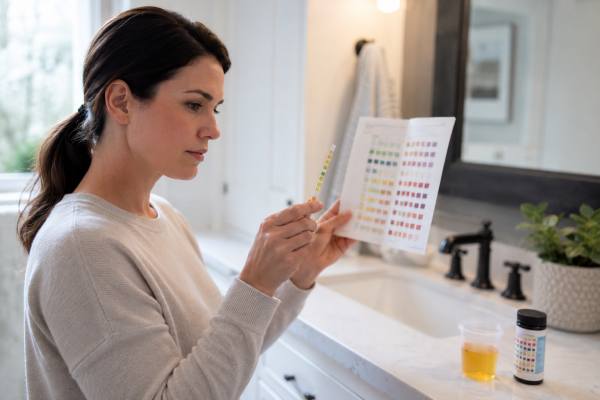
At-home UTI test strips are useful when you have burning, urgency, or frequent urination and want a quick clue before deciding what to do next. They are not a diagnosis. They do not identify the bacteria, choose an antibiotic, or rule out every infection. What they do well is give fast information about two common signs found in urine during many bladder infections: nitrites and white blood cells.
The hardest part is knowing how much weight to give the result. A positive strip does not always mean you need antibiotics, and a negative strip does not always mean your symptoms are harmless. The result matters most when it is matched with your symptoms, your risk level, and whether you have signs of a kidney infection or another condition that can mimic a UTI.
Table of Contents
- What Home UTI Test Strips Check
- How Accurate They Are
- How to Use a Strip Correctly
- How to Read Common Results
- When a Home Test Is Not Enough
- What to Do After Testing
- Common Mistakes That Skew Results
What Home UTI Test Strips Check
Most at-home UTI strips check two markers: nitrites and leukocyte esterase. Some multi-parameter urine strips also show blood, protein, pH, specific gravity, glucose, or ketones, but the UTI part of the test usually comes down to nitrites and leukocytes.
Nitrites are a clue that certain bacteria are present. Many common UTI bacteria, including many strains of E. coli, can change nitrates from food into nitrites in urine. A nitrite-positive result is therefore more specific than leukocytes alone. It strongly points toward bacteria in the urine when symptoms fit.
Leukocyte esterase is an enzyme linked to white blood cells. White blood cells appear in urine when the urinary tract is inflamed or infected. This marker is sensitive to irritation, not just infection. It can turn positive with a bladder infection, but also with contamination from vaginal fluid, sexually transmitted infections, kidney stones, inflammation, or a sample collected during menstruation.
A home strip does not test for the bacteria itself. It does not grow bacteria the way a urine culture does. It does not tell whether the infection is resistant to common antibiotics. It also does not tell whether symptoms are coming from the bladder, kidney, urethra, vagina, prostate, pelvic floor, or an STI.
That is why the strip is best viewed as a screening tool. It gives a quick signal, not a final answer. If you want a deeper breakdown of the same markers used in clinic testing, see urinalysis markers.
Why symptoms matter more than the strip alone
A UTI is usually diagnosed by the pattern of symptoms plus urine findings. Classic lower UTI symptoms include burning when you pee, a strong urge to go, needing to urinate often, bladder pressure, and passing only small amounts despite feeling urgent.
The strip becomes more useful when those symptoms are present. For example, burning plus frequency plus a nitrite-positive result is much more convincing than a nitrite-positive result in someone who feels completely fine.
Testing without symptoms creates confusion. Some people have bacteria in the urine without infection symptoms. This is called asymptomatic bacteriuria. In most nonpregnant adults, it is not treated because antibiotics do not improve outcomes and can cause harm. Older adults and people with catheters are especially likely to have bacteria or white blood cells in urine without a true bladder infection.
How Accurate They Are
At-home UTI strips are fairly good at detecting clues, but they are not accurate enough to act like a yes-or-no diagnosis. Their performance changes depending on age, pregnancy, hydration, how long urine sat in the bladder, bacteria type, symptoms, and how carefully the sample was collected.
The two test pads behave differently:
| Marker | What it suggests | Strength | Main weakness |
|---|---|---|---|
| Nitrites | Certain bacteria are likely present | More specific when positive | Can be negative even with a UTI |
| Leukocytes | White blood cells or inflammation are present | Often picks up urinary tract irritation | Less specific; contamination is common |
| Both positive | UTI becomes more likely if symptoms fit | Stronger than either result alone | Still does not identify bacteria or resistance |
| Both negative | UTI is less likely | Useful reassurance in low-risk cases | Does not fully rule out infection |
Nitrite testing misses some infections because not all UTI bacteria produce nitrites. The urine also needs time in the bladder for nitrites to build up. If you are urinating every 20 minutes because of urgency, the test may stay negative even when bacteria are present.
Leukocyte testing catches inflammation but does not explain the cause. A positive leukocyte result with no nitrites is common and frustrating because it sits in the gray zone. It could be an early UTI, a nitrite-negative organism, a diluted sample, vaginal contamination, urethral irritation, STI-related inflammation, or a noninfectious bladder flare.
The best way to understand accuracy is practical: home strips are most helpful for adults with typical mild bladder symptoms who need guidance on whether to contact a clinician, use a telehealth service, or watch symptoms briefly. They are least helpful in older adults with vague symptoms, catheter users, pregnant people, men with urinary symptoms, children, and anyone with fever or flank pain.
False negatives: when the strip says no but symptoms still matter
A false negative means the strip looks normal even though an infection is present. This happens when bacteria do not make nitrites, urine is very diluted, the bladder did not hold urine long enough, vitamin C interferes with certain pads, or the test is expired or read too early.
A negative strip should not overrule strong symptoms. Burning, urgency, and frequency that feel like your usual UTI deserve attention even with a negative test. Symptoms that worsen over 24 hours, return soon after antibiotics, or come with blood in urine need medical guidance. A negative home result is especially unreliable if you are pregnant, immunosuppressed, or have kidney disease, diabetes, urinary tract abnormalities, or a history of complicated infections.
False positives: when the strip looks positive but infection is not the cause
A false positive means the strip suggests infection when the symptoms or culture do not support it. Leukocytes are the usual reason. Vaginal discharge, menstrual blood, heavy mucus, recent sex, irritation from soaps, or an STI can trigger inflammation or contaminate the urine sample.
Nitrites can also mislead if the strip sits too long before being read, if the urine sample is old, or if the testing area is contaminated. This is one reason timing matters. Read the strip only at the exact time listed on the package, usually around one to two minutes depending on the pad.
How to Use a Strip Correctly
The most reliable home result comes from a fresh, clean-catch, midstream urine sample. The goal is to test urine from the bladder while avoiding skin bacteria, vaginal secretions, toilet water, soap, and old urine sitting in a cup.
Use the instructions from your specific test kit first because timing and color charts vary. Then use the steps below as a practical guide.
- Check the expiration date. Do not use expired strips. The chemical pads degrade over time, especially after heat or moisture exposure.
- Wash and dry your hands. This reduces contamination and keeps moisture away from unused strips.
- Use a clean, dry cup. A disposable sterile cup is best. A washed household cup can leave soap or residue that affects the strip.
- Collect a midstream sample. Start urinating into the toilet, then collect urine in the cup without touching the inside of the cup to your body.
- Dip the strip briefly. Wet the test pads fully, then remove the strip. Do not soak it longer than the instructions say.
- Tap off extra urine. Hold the strip sideways or blot the edge on clean paper so urine does not run between pads.
- Start a timer. Compare each pad to the color chart at the correct time. Do not guess based on memory.
- Write down the result. Record nitrite positive or negative, leukocyte negative/trace/positive, symptoms, temperature, and the time tested.
First-morning urine can be useful because it has stayed in the bladder longer, giving nitrites more time to appear. But if symptoms are strong and you need to decide what to do, do not wait until the next morning just to test. Fresh urine collected correctly matters more than perfect timing.
Do not test after drinking a large amount of water just to “flush out” symptoms. Overhydration dilutes urine and makes the strip harder to interpret. Sip fluids normally. Drinking enough is sensible; forcing excessive water is not a treatment and can make urgency worse.
Clean-catch tips for people with a vagina
Separate the labia before urinating, wipe front to back if your kit includes wipes, start peeing into the toilet, then collect midstream urine. Avoid testing during heavy menstrual bleeding when possible. If you have vaginal discharge, odor, itching, pelvic pain, or pain after sex, a home UTI strip is more likely to mislead because several non-UTI conditions cause similar burning.
For help separating bladder symptoms from vaginal causes, compare the symptom pattern with UTI vs yeast infection signs and BV vs UTI differences.
Clean-catch tips for people with a penis
Wash your hands, retract the foreskin if present, clean the tip if instructed, start urinating into the toilet, then collect midstream urine. Men with UTI symptoms generally need medical evaluation rather than relying on home strips, because symptoms can involve the prostate, urethra, bladder, kidney, or an STI. Fever, pelvic pain, testicular pain, painful ejaculation, weak stream, or trouble starting urine raises the need for prompt care.
How to Read Common Results
The color chart on the package tells you whether each pad is negative, trace, or positive. The harder part is deciding what the pattern means. Use the strip as one piece of information alongside symptoms.
| Result pattern | What it usually means | Practical next step |
|---|---|---|
| Nitrite positive, leukocytes positive | UTI is likely if you have burning, urgency, or frequency | Contact a clinician or approved UTI care service for treatment advice |
| Nitrite positive, leukocytes negative | Bacteria may be present, but the pattern is less typical | Retest with a fresh clean-catch sample or seek advice if symptoms are present |
| Nitrite negative, leukocytes positive | Inflammation is present; UTI is possible but not certain | Consider other causes, especially vaginal symptoms, STI risk, stones, or irritation |
| Both negative | UTI is less likely, especially if symptoms are mild | Monitor briefly, but seek care if symptoms persist, worsen, or feel typical for you |
A “trace” leukocyte result is not the same as a strong positive. Trace results often happen with minor contamination or mild irritation. If symptoms are mild and the nitrite pad is negative, a repeat clean-catch test can clarify the pattern. If symptoms are strong, do not keep repeating strips for days while discomfort worsens.
Nitrite positive
Nitrite-positive urine deserves attention because it often means bacteria are present. If you also have classic symptoms, treat the result as a strong reason to contact a clinician. The next step is not to buy random antibiotics or use leftovers. The right antibiotic depends on your situation, allergies, pregnancy status, local resistance patterns, kidney function, and prior culture results.
If nitrites are positive but you have no symptoms, do not assume you need treatment. This is especially true in older adults, catheter users, and people who test often. Urine testing without symptoms frequently finds bacteria that should not be treated.
Leukocytes positive but nitrites negative
This is the most common gray-zone result. It means white blood cells or inflammation are present, but the test did not detect nitrites. It can still be a UTI. Some bacteria do not produce nitrites, and frequent urination can prevent nitrites from accumulating.
It can also be something else. Burning with vaginal itching or thick discharge points away from a simple bladder infection. Burning after sex can come from friction, irritation, STI exposure, or a UTI starting after intercourse. Pelvic pain that flares with certain foods, stress, or bladder filling can fit bladder pain syndrome rather than infection. If this pattern keeps happening with negative cultures, review UTI symptoms with a negative test.
Both negative
A fully negative strip lowers the chance of a UTI, but it is not a guarantee. Mild irritation, dehydration, caffeine, acidic foods, new hygiene products, or recent sex can cause temporary burning or urgency. So can pelvic floor tension and bladder irritation.
If symptoms are mild, you can often watch them for a short period while avoiding bladder irritants and staying normally hydrated. If symptoms are moderate, worsening, or familiar from prior UTIs, contact a clinician. If symptoms include fever, chills, back pain near the ribs, vomiting, pregnancy, or visible blood, do not rely on the negative strip.
When a Home Test Is Not Enough
Some situations need medical care regardless of the strip result. A home test is not designed to sort out kidney infections, complicated UTIs, pregnancy risks, prostate infections, recurrent infections, or symptoms in children.
Seek same-day medical advice or urgent care if you have:
- Fever, chills, shaking, or flu-like illness
- Back or side pain below the ribs, especially on one side
- Nausea or vomiting with urinary symptoms
- Pregnancy or possible pregnancy
- Blood in urine that is visible, heavy, or not clearly linked to menstruation
- Symptoms in a child, older adult with new illness, or person with a catheter
- Diabetes, kidney disease, immune suppression, kidney transplant, or known urinary tract abnormality
- UTI symptoms in a man
- Symptoms that return soon after antibiotics
- Three or more UTIs in a year, or two in six months
A kidney infection is different from a simple bladder infection. It often causes fever, flank pain, chills, nausea, and a much sicker feeling. A strip may be positive, negative, or partly positive, but the decision should be based on symptoms and exam, not a home result. If you are unsure whether symptoms are still in the bladder or have moved higher, compare them with bladder infection vs kidney infection symptoms.
Pregnancy is another special case. Urinary infections and asymptomatic bacteriuria are handled more carefully during pregnancy because untreated infection can lead to kidney infection and pregnancy complications. Home strips are not enough for screening or treatment decisions. Pregnant people need clinician-directed urine testing, often including culture.
Older adults are also a high-risk group for overtesting and overtreatment. Cloudy urine, odor, a positive dipstick, or bacteria in the urine does not automatically mean UTI. New burning, urgency, suprapubic pain, fever, or flank pain is more meaningful than a strip alone. Confusion or a fall without urinary symptoms needs a broader medical assessment, not automatic antibiotics for a positive urine test.
What to Do After Testing
Your next step depends on symptoms, risk level, and result pattern. The strip should help you decide how urgently to seek care, not replace care.
If you have classic UTI symptoms and the strip is positive for nitrites or both nitrites and leukocytes, contact a clinician, clinic, pharmacist-led service where available, or telehealth provider. Explain your symptoms, how long they have been present, your test result, pregnancy status, allergies, recent antibiotics, and any history of resistant infections.
If the strip is negative but symptoms are mild and new, avoid irritants for a day, drink normally, and monitor closely. Caffeine, alcohol, citrus, carbonated drinks, spicy foods, and very acidic beverages can worsen urgency and burning in some people. A brief change in triggers can help you tell whether symptoms are irritation or infection. For symptom relief options that do not replace antibiotics when they are needed, see home remedies for UTI symptoms.
If the result is mixed, especially leukocytes positive and nitrites negative, think through the symptom pattern. Burning only at the vaginal opening, itching, unusual discharge, genital sores, or STI exposure needs different testing. Bladder pressure plus frequency after sex can still be a UTI. Pelvic pain with repeated negative cultures needs a broader evaluation.
When you need a urine culture
A urine culture grows bacteria from the sample and helps identify which antibiotics are likely to work. It is not required for every simple bladder infection, but it becomes important when the situation is complicated.
A culture is usually worth asking about when symptoms keep coming back, symptoms do not improve after antibiotics, you recently used antibiotics, you are pregnant, you have kidney disease or immune suppression, you have a history of resistant bacteria, or your symptoms are not typical. Cultures are also important for many men, children, and people with catheter-associated symptoms.
A culture takes longer than a strip, often one to three days. That delay is frustrating, but the result can prevent the wrong antibiotic and help explain why symptoms persist. If you want to understand what culture reports show, including colony counts and susceptibility results, read urine culture results.
What not to do after a positive strip
Do not use leftover antibiotics. Old prescriptions may be the wrong drug, the wrong dose, expired, or too short to clear the infection. Partial antibiotic courses raise the risk of persistent symptoms and resistant bacteria.
Do not keep testing several times a day. Repeated strips often create more anxiety without adding useful information. One properly collected test, matched with symptoms, is more useful than five rushed tests with different shades of beige, pink, and purple.
Do not use a home strip to prove you are cured right after treatment. Leukocytes can linger for a short time after symptoms improve. If you feel better, routine retesting is usually not useful unless your clinician specifically asked for it. If symptoms remain or return, that is different and should be evaluated.
Common Mistakes That Skew Results
Most bad home test results come from collection errors, timing errors, or testing in a situation where strips are known to be weak. A careful test does not make the strip perfect, but it removes avoidable confusion.
- Reading the strip too late. Colors can keep changing after the valid read window. A pad that turns darker after five or ten minutes should not be treated as the result.
- Using an old or damp strip. Test pads react to moisture and air. Keep strips sealed until use, and do not store them in a steamy bathroom.
- Testing very diluted urine. Heavy fluid intake before testing can lower marker concentration and make the test look falsely reassuring.
- Collecting the first drops. First-stream urine carries more skin and genital contamination. Midstream collection gives a cleaner bladder sample.
- Testing during vaginal bleeding or heavy discharge. Blood, mucus, and secretions can affect leukocyte and blood pads.
- Ignoring symptoms because the strip is negative. A negative result lowers the odds but does not cancel fever, flank pain, pregnancy, or worsening burning.
- Treating the strip instead of the person. A positive result without urinary symptoms often leads to unnecessary antibiotics.
Storage is easy to overlook. Many people keep strips under the sink or in a warm bathroom cabinet. Heat and humidity damage the reagent pads. Store them as directed on the package, usually sealed, dry, and at room temperature. If the pads look discolored before use, discard the strip.
Color matching is another weak point. Lighting changes how the pads look. Read the chart in bright, natural-looking light, not under colored bathroom bulbs. If you have trouble distinguishing shades, ask someone else to compare the strip or choose a test with a clear digital reader if available.
Medication and supplement issues
Vitamin C can interfere with some urine dipstick reactions and make certain results appear falsely negative. Phenazopyridine, the orange urinary pain reliever found in some over-the-counter UTI pain products, can stain urine and make color pads difficult to read. Antibiotics taken before testing can also reduce bacteria and change results.
If you already took phenazopyridine, do not trust subtle color changes on a strip. If you already started antibiotics, tell your clinician before any urine culture because the culture may come back negative even if an infection was present.
Symptoms that point away from a simple UTI
A home strip is less useful when the symptom pattern does not match a typical bladder infection. Vaginal odor, itching, thick discharge, genital sores, pelvic pain with sex, testicular pain, or urethral discharge should prompt different testing. So should repeated burning with negative cultures.
Bladder symptoms can overlap with STI-related urethritis, yeast infection, bacterial vaginosis, genitourinary syndrome of menopause, pelvic floor dysfunction, bladder pain syndrome, stones, and medication-related urinary retention. If the main symptom is burning, the broader guide on burning when you pee can help sort the most likely causes.
References
- Accuracy of leukocyte esterase and nitrite tests for diagnosing bacteriuria in older adults: a systematic review and meta-analysis 2026 (Systematic Review and Meta-analysis)
- Diagnostic Accuracy of Urine Dipsticks for Urinary Tract Infection Diagnosis during Pregnancy: A Retrospective Cohort Study 2024 (Cohort Study)
- Diagnosis of urinary tract infections: quick reference tools for primary care 2025 (Guideline)
- Nitrites in Urine 2024 (Medical Test Guide)
- Leukocyte esterase urine test 2025 (Medical Encyclopedia)
- IDSA 2019 Clinical Practice Guideline Update for the Management of Asymptomatic Bacteriuria 2019 (Guideline)
Disclaimer
This article is for education and does not diagnose or treat a urinary tract infection. At-home UTI strips are screening tools, and personal decisions about antibiotics, urine culture, pregnancy, recurrent infections, kidney symptoms, or symptoms in men, children, older adults, or medically complex people should be made with a qualified healthcare professional. Seek urgent care for fever, chills, flank pain, vomiting, pregnancy with urinary symptoms, or worsening illness.