Back acne in men is common, stubborn, and often more than a cosmetic annoyance. The upper back and shoulders have many oil glands, and that area also gets trapped under shirts, gym gear, backpacks, work uniforms, and sweat. That combination makes the back a perfect place for clogged pores, inflamed bumps, and deep painful spots.
The good news is that most cases improve with the right routine. The bad news is that back acne takes longer to treat than a few pimples on the face because the skin is thicker, the area is harder to reach, and friction keeps re-triggering it. A random body wash or occasional spot treatment rarely fixes it.
This guide explains why men get acne on the back, how workouts and gear make it worse, how to tell it apart from similar rashes, and which treatments are worth using at home or discussing with a doctor.
Table of Contents
- What Back Acne Looks Like
- Why Men Get Back Acne
- Workout Triggers That Make Back Acne Worse
- Back Acne or Something Else?
- A Daily Routine That Helps Clear Back Acne
- Treatment Options That Actually Help
- Habits That Prevent New Breakouts
- When to See a Doctor or Dermatologist
What Back Acne Looks Like
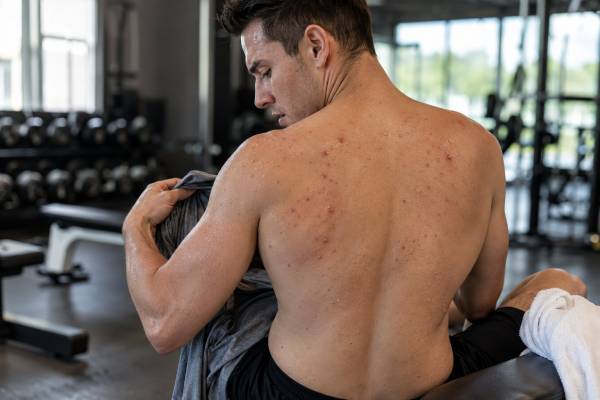
Back acne usually shows up on the upper back, shoulders, and sometimes the chest. These areas have larger oil glands than many other parts of the body, so they are more likely to develop clogged pores and inflamed bumps.
Typical signs include:
- small flesh-colored bumps that feel rough under the fingers
- blackheads or whiteheads on the shoulders or upper back
- red bumps that feel sore when pressed
- pus-filled pimples
- deeper painful lumps under the skin
- dark marks or red marks after spots heal
- pitted or raised scars after repeated inflammation
Men often notice it in the mirror after showering, when taking off a shirt after training, or when a partner points it out. It also becomes more obvious in summer, during beach trips, or when wearing tank tops.
Back acne is not always evenly spread. Some men get a strip across the shoulders where a backpack or barbell pad rubs. Others get clusters under compression shirts, sports pads, motorcycle gear, or work uniforms. If breakouts line up with friction points, sweat and pressure are probably part of the problem.
Depth matters. Small whiteheads and blackheads are usually easier to manage with over-the-counter products. Deep, tender lumps are more likely to scar and often need prescription treatment. The back also hides early scarring because men do not inspect it daily, so acne there sometimes progresses longer before treatment starts.
Back acne also behaves differently from facial acne. The skin is thicker, the pores sit deeper, and the surface area is larger. A tiny amount of cream that works on the face will not cover the back properly. Washes, sprays, lotions, and applicators are often more practical than tiny spot treatments.
Why Men Get Back Acne
Back acne starts when pores become blocked with oil and dead skin cells. Bacteria inside the follicle and the body’s immune response then drive redness, swelling, and pus. In men, several factors make this process more likely.
Oil production and male hormones
Androgens, including testosterone, increase oil gland activity. That does not mean every man with back acne has a hormone disorder. It means male skin often produces enough oil to make clogged pores easier to trigger, especially on the upper trunk.
This is one reason back acne often overlaps with adult acne in men. Some men continue breaking out into their 20s, 30s, and 40s, especially if they have oily skin, a family history of acne, or frequent sweat and friction exposure.
Sudden severe acne deserves more attention. New outbreaks after starting testosterone therapy, anabolic steroids, certain bodybuilding drugs, lithium, corticosteroids, or some hormone-related treatments should be discussed with a clinician. Acne that appears quickly and aggressively after steroid use is a known pattern, and it often affects the chest, shoulders, and back.
Thick skin and hard-to-reach areas
The back is harder to wash and treat well. Many men scrub the upper shoulders but miss the middle back. Products also rinse away quickly unless they are left on long enough to work.
Thicker skin also makes back acne slower to respond. A face routine that improves mild acne in a few weeks might need longer on the trunk. Most acne treatments should be judged after consistent use for about 8 to 12 weeks, not after a few days.
Friction, heat, and trapped sweat
Sweat does not directly “cause” acne by itself. The problem is what happens when sweat sits under tight fabric, mixes with oil and dead skin, and gets combined with rubbing. This creates an occlusive environment, meaning the skin stays covered, warm, and irritated.
Common friction sources include:
- tight synthetic gym shirts
- compression base layers
- football, hockey, cycling, or martial arts gear
- backpack straps
- weightlifting belts
- work harnesses
- tactical vests or body armor
- motorcycle jackets
- long hours in a sweaty uniform
The pattern often tells the story. Breakouts under shoulder straps, along the spine where a shirt sticks, or around the upper back after heavy training suggest mechanical irritation is worsening the acne.
Hair, skin, and laundry products
Heavy conditioners, oily hair products, massage oils, greasy sunscreens, and thick body lotions can clog pores on the upper back. The residue often runs down the back in the shower or transfers from hair to skin during sleep.
Laundry matters too. A sweaty shirt left in a gym bag grows odor and residue. Wearing it again exposes the skin to old sweat, oil, detergent residue, and bacteria. Fabric softeners and heavily fragranced detergents irritate some men’s skin, especially when combined with heat and exercise.
Diet, supplements, and bodybuilding habits
Diet is not the main cause for most men, but some patterns are worth watching. High-glycemic eating, frequent sugary drinks, and heavy intake of skim milk or whey protein appear to worsen acne in some people. The evidence is not strong enough to prescribe one universal “acne diet,” but personal tracking is useful.
If back acne started after changing shakes, mass gainers, or pre-workout habits, look at the full routine. Whey-heavy protein powders, high-sugar bulking diets, and supplement stacking often arrive together, so it is hard to blame one item. A practical test is to simplify the routine for 6 to 8 weeks and see whether the skin calms down. Men using multiple performance products should also review the label concerns covered in protein powder safety.
Anabolic steroids are a separate issue. They strongly affect hormones and can trigger severe acne, along with broader fertility, heart, liver, and mood risks. Men using or considering them should understand the wider side effects of anabolic steroids, not just the skin changes.
Workout Triggers That Make Back Acne Worse
Training is good for health, but the gym creates a perfect setup for back breakouts: heat, sweat, pressure, repeated rubbing, and shared surfaces. The goal is not to stop exercising. It is to remove the triggers that sit on the skin for hours after the workout ends.
The biggest mistake is staying in sweaty clothes. A shirt that felt fine during the session becomes a wet wrap against the upper back after training. Sitting in it during the drive home or while running errands keeps sweat and friction on the skin longer than necessary.
A better workout routine looks simple:
- Train in a clean, breathable shirt.
- Avoid re-wearing unwashed gym clothes.
- Remove sweaty gear as soon as possible after training.
- Shower soon after exercise.
- Use an acne-friendly body wash on breakout-prone areas.
- Put on a clean, loose shirt after showering.
Back acne also worsens when equipment repeatedly rubs the same spots. A barbell pad, bench surface, backpack, or tight compression shirt can irritate inflamed follicles. If breakouts match the contact area, clean the equipment surface, change the fabric layer, or reduce pressure when possible.
Compression gear is useful for some sports, but it is not always skin-friendly. Tight synthetic fabric traps heat and presses sweat into the skin. For acne-prone backs, wear compression only when needed, remove it quickly after training, and wash it after every use.
Pre-workout supplements deserve a separate mention. High caffeine intake can increase sweating, raise anxiety in some men, and disrupt sleep when taken late. Poor sleep and stress do not create acne overnight, but they make skin recovery worse. If workouts come with heavy stimulant use, night sweats, or sleep disruption, the skin is not the only reason to reconsider the routine. Men with unusually heavy sweating can also review possible causes of excessive sweating.
Saunas and hot tubs are another common trap. Heat and sweat can aggravate inflamed skin, and hot tubs also raise the possibility of folliculitis, which looks like acne but is usually a different problem. Showering after shared water facilities and changing into clean clothes helps reduce irritation.
Backpacks and work gear create similar issues outside the gym. If acne flares during commuting, hiking, military training, warehouse work, or cycling, look at the pressure pattern. Wider straps, cleaner undershirts, looser layers, and washing gear pads reduce repeated irritation.
Back Acne or Something Else?
Not every bump on the back is acne. Treating every rash with acne products can irritate the skin and delay the right treatment. The easiest way to sort it out is to look at the pattern, itch level, bump type, and trigger.
| Condition | What it looks like | Clues that help tell it apart |
|---|---|---|
| Acne vulgaris | Mixed blackheads, whiteheads, red bumps, pustules, and sometimes deep lumps | Often affects upper back and shoulders; usually not very itchy; worsens with oil, friction, and occlusion |
| Folliculitis | Small inflamed bumps centered around hair follicles | Often more uniform than acne; can be itchy or tender; may follow sweating, shaving, hot tubs, or tight gear |
| Malassezia folliculitis | Many small, similar-looking itchy bumps on the chest, shoulders, or back | Often itchy, lacks blackheads, may worsen with heat and antibiotics, and often needs antifungal treatment |
| Keratosis pilaris | Rough, tiny bumps that feel like sandpaper | Common on upper arms and shoulders; usually not pus-filled or painful |
| Heat rash | Small red or clear bumps in sweaty areas | Flares with heat and sweating; often prickly or itchy; improves when skin cools and dries |
Itch is a major clue. Acne can feel sore, but strong itch suggests folliculitis, heat rash, eczema, contact irritation, or a fungal pattern. If every bump looks the same and there are no blackheads or whiteheads, think beyond acne.
Location also helps. Acne often sits on the upper back, shoulders, chest, and sometimes the neck. A rash in the groin, inner thighs, or skin folds points in a different direction, such as fungal irritation or jock itch.
Painful deep lumps, draining spots, fever, rapidly spreading redness, or a hot swollen patch are not routine back acne. Those signs need medical care because infection or a more severe inflammatory condition is possible.
The most common self-treatment mistake is over-scrubbing. Men often assume bumps mean dirty skin, so they use rough loofahs, harsh soaps, alcohol wipes, or abrasive scrubs. That damages the skin barrier and increases inflammation. Acne-prone skin needs consistent treatment, not punishment.
A Daily Routine That Helps Clear Back Acne
A good back acne routine should be simple enough to repeat. Complicated routines fail because the back is hard to reach and body treatments are easy to skip.
Start with one medicated wash and one leave-on treatment if needed. Add more only when the skin tolerates the basics.
Morning or post-workout shower
Use a benzoyl peroxide wash on the acne-prone area. Benzoyl peroxide helps reduce acne-related bacteria and inflammation, and it also lowers the risk of antibiotic resistance when antibiotics are part of treatment.
For the back, a wash is often easier than a cream. Apply it to the upper back and shoulders, let it sit for 1 to 2 minutes, then rinse well. Start with a lower strength if your skin dries out easily. Higher strengths are not automatically better and can cause more irritation.
Important details:
- Benzoyl peroxide can bleach towels, shirts, and bedsheets.
- Rinse thoroughly before drying off.
- Use white towels if bleaching is a concern.
- Start every other day if your skin gets dry or irritated.
Salicylic acid body wash is another option, especially for clogged pores and rough texture. It helps loosen dead skin cells inside pores. Some men tolerate salicylic acid better than benzoyl peroxide, while others need benzoyl peroxide for inflamed bumps.
Do not use several harsh washes at once. A medicated wash plus aggressive scrubbing usually leads to dryness, peeling, and more redness.
Evening treatment
A topical retinoid such as adapalene helps prevent clogged pores. It works best as a thin layer over the acne-prone area, not just as a spot treatment on visible pimples. The goal is to stop new bumps from forming.
The challenge is reach. Use a lotion applicator, back applicator, spray format, or ask a partner for help if needed. Apply to clean, dry skin. Start 2 to 3 nights per week, then increase as tolerated.
Retinoids often cause dryness early on. That does not mean the treatment is failing. Use a light, non-comedogenic moisturizer if the skin feels tight or irritated. Avoid oily body butters on acne-prone areas.
Give the routine enough time
Back acne treatment needs consistency. Check progress after 8 to 12 weeks. Look for fewer new bumps, less soreness, and faster healing. Old marks fade more slowly than active acne, so do not judge success only by discoloration.
Take photos every 2 to 4 weeks in the same lighting. This is more reliable than memory, especially for the back.
Treatment Options That Actually Help
Back acne treatment depends on severity. Mild clogged pores need a different approach than painful nodules or scarring acne.
For mild breakouts, over-the-counter treatment is a reasonable first step. Use benzoyl peroxide wash or salicylic acid wash consistently, then add adapalene if clogged pores and recurring bumps continue.
For moderate acne, combination treatment usually works better. This often means a benzoyl peroxide wash plus a topical retinoid. Some men need prescription combinations that include topical antibiotics, but antibiotics should not be used alone for acne. Pairing them with benzoyl peroxide helps reduce resistance.
For widespread inflamed acne, oral antibiotics such as doxycycline are sometimes used for a limited course. They are not meant to be a permanent fix. A topical routine usually continues during and after the antibiotic course to maintain results.
For severe nodular acne, scarring acne, or acne that has failed standard treatment, isotretinoin is often the most effective option. It is a prescription medicine that reduces oil production and targets several acne pathways. It also requires medical supervision and lab monitoring in many cases. Men considering isotretinoin should discuss side effects, dryness, mood history, medication interactions, and follow-up requirements with a dermatologist.
Hormone-related acne needs the trigger addressed. If acne starts after testosterone replacement therapy, dosage changes, injection peaks, or other hormone treatment, do not simply add more skin products and ignore the cause. Review the situation with the prescribing clinician. Acne is one of several possible TRT side effects that may need monitoring.
Here is a practical way to match treatment intensity to the breakout:
| Severity | Typical pattern | Practical next step |
|---|---|---|
| Mild | Small bumps, blackheads, a few pimples, little pain | Benzoyl peroxide or salicylic acid wash, clean workout habits, consider adapalene |
| Moderate | Frequent red bumps, pustules, wider upper back involvement | Consistent benzoyl peroxide plus topical retinoid; consider prescription treatment if not improving after 12 weeks |
| Severe | Deep painful lumps, cyst-like lesions, scarring, large areas involved | Dermatology evaluation; oral medication or isotretinoin may be needed |
| Unclear diagnosis | Very itchy, uniform bumps, rash-like spread, no blackheads | Medical review to check for folliculitis, fungal causes, dermatitis, or infection |
Avoid quick fixes that cause long-term problems. Popping deep back pimples increases inflammation and scarring. Tanning may temporarily camouflage redness but increases skin damage and cancer risk. Toothpaste, alcohol, hydrogen peroxide, and harsh scrubs irritate skin without treating the acne process.
Scars need a separate plan. The first step is controlling active acne so new scars stop forming. After the acne is stable, a dermatologist can discuss options such as chemical peels, laser treatment, microneedling, subcision, or other scar procedures depending on scar type and skin tone.
Habits That Prevent New Breakouts
Prevention works best when it targets the triggers that keep repeating. For men with back acne, that usually means sweat control, friction reduction, product changes, and consistent laundry habits.
Change shirts after heavy sweating. This is the simplest high-impact habit. Keep a clean shirt in your gym bag, car, or work locker. If you train at lunch or commute by bike, staying in a sweat-soaked shirt all afternoon undermines any acne treatment.
Wash workout clothes after every use. Synthetic fabrics hold oil and odor even when they look clean. Turn shirts inside out before washing, avoid overloading the machine, and skip heavy fabric softeners if your skin reacts easily.
Choose looser breathable layers when possible. Cotton is not always ideal for performance, but tight synthetic compression worn for hours is rough on acne-prone skin. For training, moisture-wicking fabric is fine if it is clean and removed soon after exercise.
Clean gear that touches your back. Backpack straps, pads, belts, guards, and benches collect sweat and oil. Wipe down shared gym surfaces before use, and clean personal gear regularly.
Rinse conditioner away from the back. When washing hair, rinse conditioner forward or wash the back after rinsing hair products. Heavy conditioner residue is a common hidden trigger along the upper back and shoulders.
Use non-comedogenic sunscreen and body lotion. Thick oils and greasy balms are not ideal on acne-prone areas. Look for lightweight lotions or gels labeled non-comedogenic or oil-free.
Change sheets regularly. Back acne often worsens when sweat, body oil, and hair product residue build up on bedding. This matters even more for men who sleep shirtless.
Do not scrub hard. Use hands or a soft cloth instead of rough brushes. If you need help reaching the back, use a gentle long-handled applicator rather than an abrasive back scrubber.
Track supplement and medication changes. If acne flares after starting a new medication, hormone treatment, muscle-building product, or high-dose supplement, write down the timeline. That information helps a clinician identify the trigger faster.
The best prevention plan is boring but effective: clean fabric, less friction, quick post-workout showers, non-greasy products, and steady treatment. Back acne rarely improves from one dramatic change. It improves when repeated triggers stop hitting the skin every day.
When to See a Doctor or Dermatologist
See a doctor if back acne is painful, deep, spreading, scarring, or not improving after 8 to 12 weeks of consistent treatment. Waiting too long increases the chance of permanent marks and scars.
Get medical help sooner if you notice:
- deep tender lumps or cyst-like spots
- scars, pits, or thick raised marks
- sudden severe acne on the back, chest, and shoulders
- acne after starting testosterone, anabolic steroids, or a new medication
- fever, joint pain, or feeling unwell with severe inflamed acne
- a hot, swollen, painful patch of skin
- drainage, crusting, or rapidly spreading redness
- very itchy bumps that all look the same
- major embarrassment, avoidance, anxiety, or low mood because of the acne
Men often delay skin care because back acne feels less urgent than pain or sexual health symptoms. That delay is costly when scarring starts. A dermatologist can confirm whether it is acne, folliculitis, a fungal condition, dermatitis, or another skin problem. The right diagnosis saves months of trial and error.
A visit is also worth it when acne affects confidence or daily life. Avoiding swimming, intimacy, sports, or fitted shirts because of back acne is a valid reason to seek treatment. Acne is treatable, and severe cases do not require endless body washes when prescription options are more appropriate.
Before the appointment, bring a clear timeline. Note when the breakout started, what products you use, how often you train, what gear touches the area, and any medication or supplement changes. Photos from the past few weeks help too.
Treatment should match the real pattern. Mild acne needs consistency. Workout-triggered acne needs friction and sweat changes. Itchy uniform bumps need a different diagnosis. Severe nodular acne needs medical treatment early. The faster the plan matches the cause, the better the chance of clearing the back without lasting scars.
References
- Acne clinical guideline 2024 (Guideline)
- Acne vulgaris: management 2026 (Guideline)
- Management of Acne Vulgaris: A Review 2021 (Review)
- Truncal Acne: An Overview 2022 (Review)
- Truncal Acne and Scarring: A Comprehensive Review of Current Medical and Cosmetic Approaches to Treatment and Patient Management 2023 (Review)
- SUPPLEMENT INDIVIDUAL ARTICLES: Update on Truncal Acne: A Review of Treatments for a Neglected Disease and the Re-Emergence of Tazarotene 2022 (Review)
Disclaimer
This article is for educational purposes and does not replace diagnosis or treatment from a qualified healthcare professional. Back acne that is painful, scarring, sudden, widespread, linked to medications or hormone use, or not improving with consistent care should be assessed by a doctor or dermatologist. Prescription acne treatments, antibiotics, antifungals, and isotretinoin require individualized medical guidance.