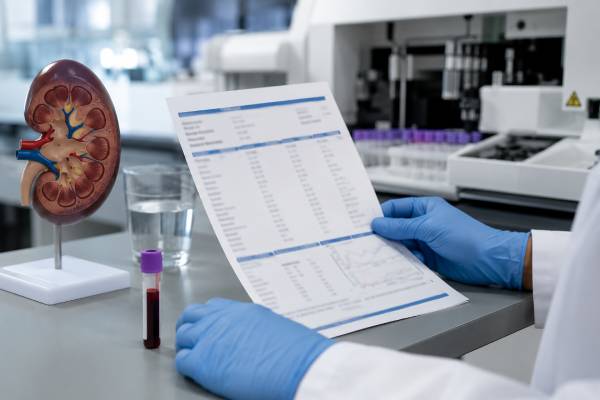
Blood urea nitrogen, often shortened to BUN, is a blood test that helps show how much urea nitrogen is circulating in your bloodstream. Urea nitrogen forms when the body breaks down protein, the liver turns nitrogen waste into urea, and the kidneys filter that waste into urine. Because of that pathway, BUN can reflect kidney filtration, hydration, protein intake, liver function, bleeding in the digestive tract, and several medicines or illnesses.
A normal BUN result is reassuring, but it does not prove that kidney function is perfect. A high or low result also does not point to one diagnosis by itself. BUN is most useful when it is interpreted with creatinine, estimated glomerular filtration rate, electrolytes, urine testing, symptoms, medications, and recent changes in fluid or food intake.
- A typical adult BUN reference range is about 6–24 mg/dL, though many labs use about 7–20 mg/dL.
- High BUN often reflects dehydration, reduced kidney filtration, high protein intake, gastrointestinal bleeding, heart failure, shock, burns, or certain medicines.
- Low BUN is less common and may occur with low protein intake, malnutrition, severe liver disease, overhydration, pregnancy, or small body size.
- BUN alone does not diagnose kidney failure. Creatinine, eGFR, urine albumin, and the overall pattern matter more.
- Fasting is usually not required for BUN alone, but it may be needed if the same blood draw includes glucose, lipids, or other tests.
Table of Contents
- What the BUN Test Measures
- BUN Normal Range and Reference Values
- What High BUN Results Can Mean
- What Low BUN Results Can Mean
- BUN, Creatinine, eGFR, and the BUN/Creatinine Ratio
- BUN Test Preparation, Procedure, and Timing
- How to Interpret BUN Results in Real Life
- Follow-Up Steps and Common Mistakes
What the BUN Test Measures
A BUN test measures the nitrogen part of urea in the blood. Urea is a waste product made after the body uses protein. When you eat protein, your digestive system breaks it into amino acids. Your body uses those amino acids for muscles, enzymes, hormones, immune function, and tissue repair. During that process, nitrogen waste is produced.
The liver changes nitrogen waste into urea, which is safer for the body to transport. Urea then travels through the bloodstream to the kidneys. Healthy kidneys filter much of it out of the blood and remove it in urine.
That is why BUN is often grouped with kidney blood tests. It gives a rough view of how much urea nitrogen is staying in the bloodstream instead of being cleared. But BUN is not only a kidney marker. It also changes when the body makes more urea, when blood flow to the kidneys drops, when a person is dehydrated, when protein intake changes, or when liver urea production is reduced.
BUN is often included in a basic metabolic panel or a comprehensive metabolic panel. These panels usually include creatinine and electrolytes, which help put BUN in context.
A simple way to think about BUN is this: it reflects both urea production and urea clearance. Production depends mainly on protein breakdown and liver function. Clearance depends mainly on kidney filtration, urine flow, and blood flow reaching the kidneys.
BUN versus urea
In the United States, many labs report blood urea nitrogen, or BUN, in mg/dL. In many other countries, labs may report urea in mmol/L or sometimes urea in mg/dL. These are related, but they are not identical.
BUN reports only the nitrogen portion of the urea molecule. Urea reports the whole urea molecule. This difference matters when comparing results from different countries or lab systems.
Common conversions are:
- Urea mg/dL = BUN mg/dL × 2.14
- BUN mg/dL = urea mg/dL × 0.467
- Urea mmol/L = BUN mg/dL × 0.357
- BUN mg/dL = urea mmol/L × 2.8
For example, a BUN of 14 mg/dL is roughly equal to a urea level of 5.0 mmol/L. If your report says “urea” instead of “BUN,” use the reference range printed on that report rather than assuming the numbers mean the same thing.
BUN Normal Range and Reference Values
A common adult BUN reference range is about 7–20 mg/dL, while some labs use a broader adult range such as 6–24 mg/dL. A result slightly outside one range may still fall inside another lab’s range because laboratories use different instruments, methods, and population data.
Many published patient references give ranges close to these values:
| Group | Typical BUN reference range | Notes |
|---|---|---|
| Adults | About 6–24 mg/dL or 7–20 mg/dL | Exact range varies by lab, age, and sex. |
| Adult females | Often about 6–21 mg/dL | Some labs list sex-specific ranges. |
| Adult males | Often about 8–24 mg/dL | Ranges may be slightly higher than female ranges. |
| Children | Often about 7–20 mg/dL | Infants may have lower values; pediatric ranges vary by age. |
The best reference range is the one printed next to your result. A BUN of 21 mg/dL may be flagged high by one lab and normal by another. That does not mean one lab is wrong. It means reference intervals are not universal.
BUN also tends to rise with age. Older adults may have higher BUN because of lower total body water, more frequent dehydration, lower kidney reserve, medicines, or chronic health conditions. Children, especially infants, often have lower levels.
There is no widely accepted “optimal” BUN target for everyone. For a healthy adult, a mid-range result is usually unremarkable. In a person with kidney disease, heart failure, liver disease, gastrointestinal bleeding, or dialysis treatment, the useful target depends on the clinical situation.
When a normal BUN can still miss a problem
A normal BUN does not rule out kidney disease. Early chronic kidney disease can be present while BUN remains normal. Some people may have abnormal urine albumin or a reduced eGFR before BUN changes. This is one reason kidney screening often uses creatinine-based eGFR and urine albumin-to-creatinine ratio rather than BUN alone.
A normal BUN can also occur if two effects balance each other. For example, a person with reduced kidney clearance but low protein intake might have a BUN that looks less abnormal than expected. Someone with liver disease may produce less urea, which can keep BUN lower even when another issue is present.
When a mild abnormal result may not be dangerous
A mild BUN elevation after a day of low fluid intake, heavy sweating, high protein intake, or strenuous exercise may improve when hydration and intake return to usual. A mild low BUN in someone who recently reduced protein intake may not mean liver disease.
This does not mean abnormal results should be ignored. It means one BUN value should be interpreted as part of a pattern. A repeat test, medication review, urine test, or comparison with creatinine may clarify whether the result reflects a temporary change or an ongoing condition.
What High BUN Results Can Mean
A high BUN means there is more urea nitrogen in the blood than expected. This can happen because the kidneys are clearing less urea, the body is making more urea, or both.
The most common non-kidney reason is dehydration or reduced blood flow to the kidneys. When the body is low on fluid, the kidneys conserve water. Urine becomes more concentrated, and more urea may be reabsorbed back into the blood. This can raise BUN even if the kidney tissue itself is not damaged.
High BUN can also occur when kidney filtration is reduced. This may happen in acute kidney injury, chronic kidney disease, urinary blockage, severe infection, shock, or reduced circulation from heart failure. In these situations, BUN often rises along with creatinine, though the timing and degree can vary.
For a deeper look at this specific result pattern, see high blood urea nitrogen causes.
| Cause | Why BUN can rise | Common clues |
|---|---|---|
| Dehydration | Less fluid reaches the kidneys, and urea becomes more concentrated. | Thirst, dark urine, vomiting, diarrhea, sweating, diuretic use. |
| Reduced kidney filtration | The kidneys clear less urea from the blood. | High creatinine, low eGFR, abnormal urine findings, swelling, high blood pressure. |
| High protein intake | More protein breakdown produces more urea. | High-meat diet, protein powders, recent large protein meal. |
| Upper gastrointestinal bleeding | Digested blood acts like a protein load and increases urea production. | Black stools, anemia, dizziness, abdominal symptoms. |
| Heart failure or shock | Reduced blood flow to the kidneys limits clearance. | Shortness of breath, low blood pressure, swelling, rapid illness. |
| Burns, fever, severe illness, corticosteroids | Higher protein breakdown increases urea production. | Recent severe stress, infection, injury, or steroid use. |
A high BUN is more concerning when it is accompanied by high creatinine, low eGFR, abnormal potassium, acidosis, low urine output, swelling, confusion, shortness of breath, or rapidly worsening symptoms. It is also more concerning when the result rises quickly from a previous baseline.
High BUN with normal creatinine
High BUN with normal creatinine often points toward dehydration, increased urea production, or a high BUN/creatinine ratio pattern rather than primary loss of kidney filtration. Common examples include dehydration from vomiting or diarrhea, recent heavy protein intake, corticosteroid use, or gastrointestinal bleeding.
That said, normal creatinine does not always prove the kidneys are fine. Creatinine depends on muscle mass. A small, older, or frail person may have a “normal” creatinine despite reduced kidney function. That is why eGFR, urine testing, trend over time, and clinical context matter.
High BUN with high creatinine
When BUN and creatinine are both high, kidney filtration is more likely to be impaired. Possible causes include chronic kidney disease, acute kidney injury, urinary obstruction, severe dehydration, shock, sepsis, kidney inflammation, medication toxicity, or reduced blood flow from heart failure.
The pattern can be temporary or serious depending on how high the numbers are, how quickly they changed, and whether urine output or electrolytes are abnormal. A rapid rise over hours to days needs more urgent attention than a stable mild abnormality that has been monitored for years.
What Low BUN Results Can Mean
Low BUN is less common than high BUN. It usually means the body is making less urea, the blood is diluted by extra fluid, or protein intake is low.
One common explanation is low protein intake. If someone eats very little protein, the liver has less nitrogen waste to convert into urea. This may happen with restrictive dieting, poor appetite, malnutrition, certain eating patterns, or illness that reduces food intake.
Severe liver disease can also lower BUN because the liver makes urea. If the liver cannot process nitrogen waste normally, BUN may be low even when the person is ill. In that setting, other liver markers, albumin, bilirubin, INR, symptoms, and medical history are important.
Low BUN may also occur with overhydration, pregnancy, small body size, or conditions that dilute blood solutes. A single low result in a well person with normal liver tests and no symptoms is often less concerning than a low result with weight loss, swelling, jaundice, confusion, or signs of poor nutrition.
For a focused explanation of this pattern, see low blood urea nitrogen causes.
| Cause | Why BUN can fall | What may help clarify it |
|---|---|---|
| Low protein intake | Less nitrogen waste is produced. | Diet history, weight change, albumin, total protein. |
| Malnutrition | Low intake and low protein stores reduce urea production. | Weight loss, low albumin, low muscle mass, vitamin or mineral deficiencies. |
| Severe liver disease | The liver may not convert nitrogen waste into urea well. | ALT, AST, bilirubin, INR, albumin, symptoms, imaging. |
| Overhydration | Extra fluid dilutes blood urea nitrogen. | Low sodium, fluid intake, IV fluids, swelling, urine studies. |
| Pregnancy | Higher kidney filtration and fluid-volume changes can lower BUN. | Pregnancy status and trimester-specific interpretation. |
Low BUN should not be treated by simply increasing protein without understanding the cause. People with advanced kidney disease, liver disease, heart failure, or specific metabolic conditions may need individualized nutrition guidance.
BUN, Creatinine, eGFR, and the BUN/Creatinine Ratio
BUN becomes much more useful when viewed with creatinine and eGFR. Creatinine is a waste product from muscle metabolism. The kidneys filter creatinine, and laboratories use creatinine with age and sex to estimate glomerular filtration rate, or eGFR. eGFR is usually a stronger routine marker of kidney filtration than BUN.
BUN is affected by hydration, protein intake, liver urea production, gastrointestinal bleeding, and catabolic stress. Creatinine is affected by muscle mass, diet, pregnancy, and some medicines. eGFR helps translate creatinine into an estimate of kidney filtering capacity, but it also has limits, especially when creatinine is changing quickly.
A good kidney interpretation often starts with these questions:
- Is creatinine high, low, or stable?
- Is eGFR reduced, and has it stayed reduced for at least 3 months?
- Is urine albumin or protein present?
- Are electrolytes such as potassium, bicarbonate, sodium, and chloride abnormal?
- Is BUN out of proportion to creatinine?
- Are there symptoms or recent events that could explain the pattern?
For broader kidney-marker interpretation, BUN and creatinine together are often more informative than either value alone. If the report includes a ratio, the BUN/creatinine ratio normal range can help separate dehydration-like patterns from other kidney patterns, though it should not be used as a diagnosis by itself.
BUN/creatinine ratio patterns
The BUN/creatinine ratio compares two waste markers. A commonly used reference range is roughly 10:1 to 20:1, though labs vary. Ratios above this range often occur when BUN rises more than creatinine. Ratios below this range can occur when BUN is low, creatinine is high relative to BUN, or urea production is reduced.
A high ratio can suggest dehydration, reduced blood flow to the kidneys, heart failure, gastrointestinal bleeding, high protein intake, or increased protein breakdown. A lower ratio can be seen with low protein intake, severe liver disease, or some intrinsic kidney problems.
The ratio is most useful when the individual numbers are also reviewed. For example, a ratio may look high because BUN is mildly elevated while creatinine is low from low muscle mass. That is different from a high ratio caused by a large BUN rise during dehydration or gastrointestinal bleeding.
Why eGFR and urine testing matter
Chronic kidney disease is usually assessed with eGFR and markers of kidney damage, especially urine albumin. A person may have a normal BUN but still have increased urine albumin. Another person may have a high BUN from dehydration but a normal eGFR after fluids are restored.
Creatinine-based eGFR is not perfect, but it gives a more direct estimate of filtration than BUN. In some situations, cystatin C may be used to confirm eGFR, especially when creatinine may be misleading because of low muscle mass, high muscle mass, amputation, or unusual diet. For background on creatinine interpretation, see creatinine blood test normal range and eGFR test meaning.
BUN Test Preparation, Procedure, and Timing
A BUN test is a routine blood test. A healthcare professional draws a small amount of blood, usually from a vein in the arm. The blood sample is sent to a laboratory, and results may be available the same day or within a few days, depending on the lab and setting.
For BUN alone, special preparation is usually not needed. You can often eat and drink normally. However, BUN is commonly ordered as part of a panel that may include tests affected by fasting, such as glucose or lipids. Follow the instructions on the lab order or from your healthcare provider.
Hydration can influence BUN. Being dehydrated from vomiting, diarrhea, heavy sweating, poor intake, or diuretic medicines can raise the value. Drinking extreme amounts of fluid before testing may lower it or dilute other markers. The most useful approach is usually to follow normal habits unless your clinician gives specific instructions.
Tell your clinician about medicines and supplements before testing, especially if you take diuretics, corticosteroids, antibiotics, chemotherapy medicines, blood pressure medicines, nonsteroidal anti-inflammatory drugs, lithium, or other drugs that may affect kidney function or fluid balance.
Does protein intake before the test matter?
A high-protein meal or heavy protein supplementation can raise urea production. For most routine testing, you do not need to avoid protein unless instructed. But if your BUN is unexpectedly high, it helps to mention recent diet changes, protein powders, bodybuilding supplements, ketogenic dieting, or a recent unusually large meat-heavy meal.
People with kidney disease should not change protein intake based only on BUN without medical guidance. Protein needs vary by kidney stage, dialysis status, nutrition status, age, muscle mass, and other conditions. Too much restriction can worsen malnutrition, while too much protein may be inappropriate for some kidney conditions.
What the blood draw feels like
The blood draw usually takes only a few minutes. You may feel a brief pinch when the needle enters the skin. Mild bruising or soreness can happen afterward and usually goes away quickly. Serious complications from a routine blood draw are rare.
If you have fainted during blood draws, have difficult veins, use blood thinners, or have a bleeding disorder, tell the person drawing your blood before the test begins.
How to Interpret BUN Results in Real Life
BUN interpretation starts with the number, but it does not end there. A result of 26 mg/dL in someone who had diarrhea and poor fluid intake for two days may mean something different from the same result in someone with rising creatinine, swelling, low urine output, and high potassium.
A helpful first step is to compare the result with your previous values. A stable BUN that has been near the same level for years is often less concerning than a sudden jump. The direction of change can matter as much as the number.
Next, compare BUN with creatinine and eGFR. If BUN is high but creatinine and eGFR are normal, dehydration, diet, medications, gastrointestinal bleeding, or increased protein breakdown may be considered. If BUN, creatinine, and potassium are all high, the pattern needs faster medical review.
Then look at the rest of the panel. Sodium can reflect hydration and fluid balance. Potassium can become dangerous when kidney function is impaired. Bicarbonate or CO2 can show acid-base problems. Calcium and phosphorus may matter in chronic kidney disease. A kidney function blood test panel is designed to show these relationships more clearly than a single marker.
Examples of common BUN patterns
Mild high BUN after stomach illness: A person has vomiting, diarrhea, dark urine, and a BUN of 28 mg/dL with normal creatinine. This often suggests dehydration, but the clinician still considers blood pressure, heart rate, electrolytes, and whether the person can keep fluids down.
High BUN and high creatinine after starting a medicine: A person starts a new medicine and later has rising BUN and creatinine. The clinician may review drugs that affect kidney blood flow, fluid balance, or kidney tissue, then decide whether to repeat testing, adjust doses, or check urine.
High BUN with black stools: A person has fatigue, dizziness, black tarry stools, and BUN higher than expected compared with creatinine. Digestive tract bleeding becomes an important concern because digested blood increases the protein load delivered to the gut and liver.
Low BUN with poor intake: A person has a low BUN after weeks of poor appetite and weight loss. The result may reflect low protein intake or malnutrition, especially if albumin or total protein is also low.
Normal BUN with abnormal urine albumin: A person has normal BUN and creatinine but increased urine albumin. This can still suggest kidney damage risk, especially in diabetes or high blood pressure.
Symptoms that make abnormal BUN more urgent
Seek prompt medical advice if an abnormal BUN occurs with low urine output, severe weakness, confusion, chest pain, shortness of breath, fainting, swelling, persistent vomiting or diarrhea, blood in vomit, black stools, severe dehydration, or a very abnormal potassium result.
These symptoms do not all mean kidney failure, but they can point to problems that need quick evaluation, such as acute kidney injury, bleeding, severe infection, heart failure, or electrolyte imbalance.
Follow-Up Steps and Common Mistakes
Follow-up depends on how abnormal the BUN is, whether it is rising or falling, and what the rest of the evaluation shows. A mild isolated abnormality may only need a repeat test under usual hydration and diet. A more abnormal result, or one paired with high creatinine, low eGFR, abnormal potassium, or symptoms, may need faster assessment.
Common follow-up tests include creatinine, eGFR, electrolytes, urinalysis, urine albumin-to-creatinine ratio, complete blood count, liver panel, and sometimes kidney ultrasound. If gastrointestinal bleeding is possible, a clinician may check blood counts, stool testing, iron markers, or refer for urgent evaluation depending on symptoms.
If dehydration is likely, a clinician may recommend fluid replacement and repeat testing. If medication effects are possible, they may review prescriptions and over-the-counter drugs. Do not stop prescribed medicines on your own unless a clinician tells you to, especially blood pressure, heart, diabetes, seizure, transplant, or psychiatric medicines.
Questions to ask about your result
Useful questions include:
- What reference range did this lab use?
- How does my BUN compare with my prior results?
- Are my creatinine, eGFR, potassium, bicarbonate, and urine results normal?
- Could dehydration, diet, supplements, or medicines explain the result?
- Should I repeat the test, and when?
- Do I need urine albumin testing or kidney imaging?
- Is this result urgent, or can it be followed routinely?
Common mistakes when reading BUN
One mistake is treating BUN as a stand-alone kidney function score. It is not. BUN can rise from dehydration or protein breakdown even when kidney filtration is not the main problem.
Another mistake is assuming a normal BUN rules out kidney disease. Early kidney disease may show up first through eGFR decline or urine albumin, not BUN.
A third mistake is comparing BUN with urea without converting units. A urea result reported in mmol/L will look very different from a BUN result in mg/dL.
A fourth mistake is trying to “fix” high BUN by drinking large amounts of water or cutting protein drastically without knowing the cause. Overhydration can be dangerous for some people, especially those with heart failure, advanced kidney disease, low sodium, or dialysis needs. Excess protein restriction can also worsen frailty or malnutrition.
A final mistake is ignoring the trend. A single number is less informative than a pattern over time. A BUN that rises from 12 to 30 mg/dL in a week deserves more attention than a stable result that sits near the upper end of the lab range.
References
- BUN (Blood Urea Nitrogen): MedlinePlus Medical Test 2024 (Official Medical Test Page)
- Blood urea nitrogen (BUN) test 2023 (Medical Test Overview)
- Blood Urea Nitrogen (BUN) Test 2026 (Medical Test Overview)
- Blood urea nitrogen (BUN) test for kidney disease 2025 (Patient Education)
- Renal Function Tests 2024 (Review)
- KDIGO 2024 Clinical Practice Guideline for the Evaluation and Management of Chronic Kidney Disease 2024 (Guideline)
Disclaimer
BUN results should be interpreted with your full medical history, current medicines, hydration status, diet, creatinine, eGFR, electrolytes, and urine results. This article is for general education and cannot diagnose kidney disease, liver disease, dehydration, bleeding, or any other condition. Contact a healthcare professional promptly if your result is markedly abnormal, rising quickly, or paired with concerning symptoms.