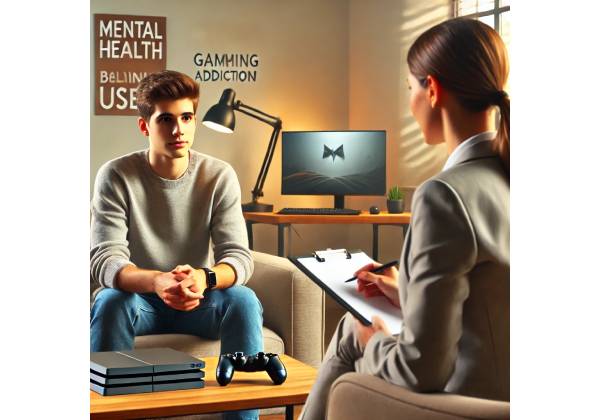
Online gaming is a normal part of modern life for millions of people. It can be social, creative, competitive, and deeply enjoyable. For most players, even long sessions do not amount to an addiction. The problem begins when gaming stops being one part of life and starts taking priority over sleep, school, work, health, and relationships. Online gaming addiction is not defined by enthusiasm alone or by a single busy weekend. It is a persistent pattern of impaired control, growing preoccupation, repeated failed attempts to cut back, and continued play despite clear harm. The online side matters because multiplayer systems, ranked ladders, time-limited events, guild obligations, and constant updates can make stopping feel unusually hard. Understanding the condition clearly helps families, players, and clinicians tell the difference between a serious hobby and a pattern that is starting to narrow a person’s life.
Table of Contents
- What online gaming addiction means
- Why online games are hard to leave
- Signs and symptoms in daily life
- Cravings, tolerance, and loss of control
- Withdrawal when play is interrupted
- Effects on sleep, mood, and function
- When it becomes gaming disorder
What online gaming addiction means
Online gaming addiction is a broad, everyday term for a pattern of compulsive gaming that becomes difficult to control and starts causing meaningful harm. In clinical settings, the more precise term is usually gaming disorder. The two phrases are often used interchangeably in public discussion, but the key idea is the same: the problem is not simply frequent gaming. The problem is gaming that takes priority over other parts of life and continues despite worsening consequences.
That distinction matters. Many people play online games for hours at a time, especially during weekends, holidays, or major new releases, without having an addiction. A professional esports player may train for long periods. A teenager may spend a month heavily engaged in a new game while still sleeping, attending school, and keeping up with friends. Heavy use alone does not prove a disorder. Online gaming addiction is defined more by the pattern than the raw number of hours.
Three features are especially important. First, there is impaired control. The person means to stop after one match or one hour but keeps going. Second, gaming gradually moves to the center of life. Meals, homework, work tasks, exercise, conversations, and sleep start getting pushed aside. Third, the behavior continues despite harm. Grades fall, arguments increase, money is lost on in-game purchases, sleep collapses, or mood worsens, yet the person keeps returning to the game.
The online environment can make this pattern stronger than offline gaming for some people. Multiplayer games do not really end. There is always another round, another raid, another season pass, another event, another teammate waiting, another ranking to defend. The player is not just interacting with software. They are often attached to a social world, a routine, a status system, and an identity. Leaving can feel like dropping out of a group, missing a reward window, or losing progress that required weeks or months to build.
It is also important not to label every family conflict about gaming as addiction. Some problems reflect poor boundaries, stress, or a temporary phase rather than a true disorder. At the same time, families sometimes minimize a serious issue because the person is “just gaming at home.” When gaming begins to crowd out basic needs, future goals, and emotional balance, it deserves the same careful attention given to other behavioral addictions.
Why online games are hard to leave
Online games are designed to keep attention. That does not mean every game is harmful, but it does mean many modern gaming systems are built around loops that reward repetition, delay stopping, and encourage return play. When these systems meet a vulnerable person at the right moment, gaming can shift from entertainment to compulsion.
One reason online gaming is so sticky is variable reward. A player does not always know when the next win, rare item, loot drop, rank increase, or social reward will arrive. That uncertainty matters. Rewards that come unpredictably can be more habit-forming than rewards that come on a fixed schedule. The brain learns that the next queue, next chest, or next match might be the one that delivers the payoff. This is one reason discussions of reward loops and motivation are so relevant to problem gaming.
The online format adds several layers that make disengagement harder:
- ranked ladders create pressure to defend progress
- daily quests and streak systems punish absence
- guilds, clans, and squads create social obligation
- live events and limited-time rewards create urgency
- endless matchmaking removes natural stopping points
- cosmetic purchases and progression systems deepen investment
For some players, the main pull is competition. For others, it is belonging. A player who feels awkward, lonely, stressed, or unsuccessful offline may feel skilled, respected, and connected online. That emotional contrast can be powerful. The game becomes more than fun. It becomes a place where the person feels competent, safe, admired, or in control.
Risk is also shaped by life circumstances. Adolescents and young adults may be especially vulnerable because identity, self-control, and peer influence are still developing. People with depression, anxiety, ADHD traits, trauma histories, or low day-to-day structure may also find online games unusually regulating. Again, that does not mean the game “caused” everything. More often, the game becomes an effective short-term solution for boredom, stress, social discomfort, or low mood, and the brain starts preferring that solution over slower, less stimulating forms of coping.
The strongest addiction patterns often develop when gaming meets multiple needs at once. A game may offer excitement, friendship, status, distraction, progress, and escape in a single package. When that happens, stopping is not just stopping a pastime. It can feel like losing a source of relief, achievement, and social life all at once.
Signs and symptoms in daily life
Online gaming addiction usually shows itself through a cluster of behavioral, emotional, and functional signs rather than one dramatic symptom. Early on, the changes may look ordinary: longer sessions, more irritation when interrupted, or more talk about a favorite game. As the pattern deepens, it becomes clearer that gaming is no longer staying in its place.
Common behavioral signs include:
- playing much longer than intended
- staying up late to finish matches, events, or raids
- lying about gaming time or minimizing it
- rushing through homework, chores, or work to get back online
- eating at the screen or skipping meals altogether
- repeatedly failing to follow self-set limits
- neglecting offline hobbies that used to matter
- becoming defensive or angry when others raise concerns
The emotional symptoms can be just as revealing. Many people with online gaming addiction become preoccupied even when they are not playing. They think about strategies, rewards, rankings, or teammates during class, work, meals, or conversations. They may feel restless in quiet moments, bored by ordinary activities, or unusually flat when away from the game. Some describe a growing inability to tolerate low-stimulation tasks. Starting homework, focusing on chores, or sitting through a meeting can begin to feel painfully slow, almost like a form of attention fragmentation after constant high-intensity digital input.
Functional decline is the clearest sign that the pattern is becoming serious. In students, grades may drop, assignments may be rushed or missed, and mornings may become chaotic because of late-night play. In adults, the signs may include missed deadlines, reduced work quality, unexplained fatigue, or gaming during hours meant for childcare, sleep, or responsibilities. Family members often notice that the player is physically present but mentally elsewhere.
The social pattern can be confusing because online gaming often looks social from the outside. A person may spend hours speaking to teammates and still become more isolated in real life. Face-to-face friendships shrink. Family conversations shorten. Invitations get turned down. The player may start choosing the game over birthdays, meals, exercise, school events, or time with a partner.
A useful question is whether gaming is fitting around life or life is being reorganized around gaming. Once the second pattern becomes visible, the issue is no longer just preference. It is becoming a dependency pattern with real costs.
Cravings, tolerance, and loss of control
Craving in online gaming addiction is the urge to return to play even when the person knows they should do something else. It can feel like excitement, tension, impatience, mental replaying of recent matches, or a strong sense that something important is happening in the game right now. Some players crave the action itself. Others crave the relief that gaming brings when they feel lonely, stressed, ashamed, angry, or empty.
Triggers are often highly specific. A notification from friends, a Twitch clip, a new patch note, a familiar login sound, the end of school, or simply sitting at the desk can create a fast pull back toward the game. Internal states matter too. Boredom, frustration, awkwardness, and low mood often become cues. Over time, the brain starts offering gaming as the default answer to discomfort.
Tolerance in behavioral addictions is not always about spending more hours, though that can happen. Sometimes it means needing more intensity to get the same effect. A player who once felt satisfied after two matches now needs ten. A casual mode stops feeling engaging, so ranked play takes over. Short sessions feel pointless. The person may move toward faster, more stimulating, or more competitive experiences because ordinary play no longer feels strong enough.
Loss of control is the most important piece. The person sets limits and then breaks them repeatedly:
- I will stop after this match.
- I will not play on school nights.
- I will only log in to claim rewards.
- I will finish my work first.
When those promises keep failing, the player often feels both shame and defiance. One part of them knows the pattern is becoming harmful. Another part keeps arguing that one more session will be different. That internal split is common in addiction. The person is not simply “choosing fun over discipline.” They are often caught in a cycle where cue, urge, play, temporary relief, and regret repeat so often that self-control weakens.
A distinctive feature of online gaming is that the craving is rarely only about the game mechanics. It can also involve teammates, social identity, rank protection, and fear of falling behind. That makes the urge feel more legitimate. The person tells themselves they are not craving in the way someone craves a drug. They are “just checking in,” “helping the team,” or “keeping progress going.” But when the behavior continues to override priorities and promises, the label matters less than the pattern. The loss of control is already there.
Withdrawal when play is interrupted
Withdrawal in online gaming addiction is usually psychological and behavioral rather than medically dangerous, but it can still be intense. When a person cuts back or is forced offline, they may not simply feel bored. They may become irritable, anxious, restless, low in mood, or unable to settle into anything else. For some, the first few hours offline feel physically uncomfortable, with pacing, agitation, and constant thoughts about logging back in.
Common withdrawal-like symptoms include:
- irritability or anger when interrupted
- anxiety, tension, or a sense of inner agitation
- low mood or emotional flatness
- boredom that feels unusually hard to tolerate
- repeated mental replaying of the game
- trouble concentrating on school, work, or conversation
- strong fear of missing rewards, updates, or team activity
- feeling that ordinary life suddenly seems dull
The online structure of games can amplify these reactions. A player may worry about losing rank, missing an event, letting down teammates, or falling behind in progression. In multiplayer environments, absence can feel costly. That is why gaming withdrawal often includes an element of social threat as well as craving. The player is not just leaving a stimulating activity. They may feel they are losing status, continuity, and belonging. This overlap with fear of missing out can make short breaks feel much bigger than they look from the outside.
Withdrawal symptoms also reveal what gaming has been doing psychologically. If the person becomes sharply more anxious, empty, or emotionally overwhelmed when they stop, it suggests the game has been acting as a major coping tool. That does not make the player weak. It shows how much emotional work the game has been carrying.
Parents and partners sometimes misread withdrawal as simple oppositional behavior. In some cases it is more than that. A teenager who explodes when a device is removed may not just be angry about rules. They may be experiencing a genuine dependence pattern, especially if the reaction repeats and is paired with secrecy, preoccupation, and loss of function.
Not every bad mood after logging off is withdrawal. Most engaged players feel disappointed when a fun activity ends. The concern grows when distress is intense, repeated, and strong enough to disrupt school, relationships, sleep, or the ability to tolerate ordinary offline life. At that point, being offline is no longer neutral. It has become a state the person is struggling to endure.
Effects on sleep, mood, and function
The risks of online gaming addiction are not limited to “lost time.” Once gaming becomes compulsive, it can reshape sleep, mood, attention, school or job performance, physical health, and relationships. The damage usually develops gradually, which is why people often underestimate it until multiple areas of life are already being affected.
Sleep is one of the first and most important casualties. Online games often create “just one more” decisions late into the night. A player may stay on for one more match, one more queue, one more event window, then find that bedtime has been pushed back by hours. Even after logging off, the brain may stay activated. Heart rate, stress, and mental replay can make it harder to fall asleep. Over time, the effects start to resemble the broader problems described in sleep deprivation: slower thinking, worse impulse control, more irritability, poorer memory, and lower stress tolerance.
Mood can shift in several directions. Some players become more anxious because of constant competitive pressure, social conflict, and fear of missing out. Others become depressed as offline life shrinks and the game starts crowding out exercise, sunlight, ordinary pleasure, and face-to-face connection. The emotional pattern can be confusing because gaming may still provide short bursts of pleasure while overall mood gets worse. That mismatch is common in addiction. Immediate reward rises while deeper well-being falls.
Attention and performance often suffer next. The person may struggle with reading, writing, planning, or tolerating tasks that lack rapid feedback. Schoolwork becomes rushed. Work feels dull and fragmented. Mistakes increase. The player may not connect these problems to gaming at first because the game itself feels mentally demanding. But sustained gaming skill is not the same as broad concentration, planning, or self-regulation in daily life.
Relationships can become strained in a very specific way. The issue is not only time. It is emotional availability. Partners, parents, siblings, and friends often feel ignored, lied to, or placed below the game. Repeated cancellations, distracted conversations, broken promises, and defensiveness erode trust.
There are also physical and financial risks. Extended sessions can contribute to headaches, eye strain, neck and back pain, inactivity, irregular eating, and weight changes. Some players spend heavily on skins, loot boxes, battle passes, or in-game boosts. Others gamble-like within gaming ecosystems or drift toward related problems such as online gambling features when reward-seeking escalates.
The deeper risk is narrowing. Life becomes organized around one source of stimulation and identity. As that narrowing grows, resilience falls. The person has fewer ways to rest, connect, cope, and feel competent outside the game.
When it becomes gaming disorder
Online gaming addiction becomes a clinical concern when it reaches the threshold of gaming disorder or a clearly harmful pattern of problematic gaming. Clinicians do not diagnose it by counting hours alone. They look at impaired control, increasing priority given to gaming over other activities, continuation despite harm, and the level of functional impairment over time.
A careful assessment usually asks:
- Has the person repeatedly failed to cut back?
- Is gaming displacing sleep, school, work, health, or relationships?
- Does the person become highly distressed or preoccupied when not gaming?
- Has the pattern continued despite clear consequences?
- Is gaming serving mainly as fun, as escape, or as both?
- Are anxiety, depression, ADHD traits, trauma symptoms, or social problems part of the picture?
This broader view matters because gaming addiction rarely exists in isolation. Sometimes gaming is the main disorder. Sometimes it is the person’s way of coping with loneliness, low mood, academic stress, family conflict, or another mental health problem. Often both are true at once. Good clinical recognition depends on seeing the full pattern rather than reducing the issue to “screen time.”
Gaming disorder in ICD-11 is meant for more severe cases. The pattern must cause significant impairment in personal, family, social, educational, occupational, or other important areas of life and is usually evident for at least 12 months. That standard helps prevent overdiagnosis. It also reminds people that not every conflict about gaming reflects a disorder. At the same time, families should not wait for a full year if the situation is already severe. Rapid school collapse, violent conflict over access, extreme sleep loss, self-neglect, major financial harm, or suicidal thinking deserve prompt professional attention.
Urgent red flags include:
- not sleeping for long stretches because of gaming
- failing school or losing a job because of repeated play
- aggressive outbursts when access is limited
- severe isolation or refusal of basic responsibilities
- gaming-linked spending that creates real financial harm
- self-harm thoughts, hopelessness, or collapse in daily functioning
Detailed treatment belongs in a separate discussion, but it is worth noting that help is most effective when it addresses both the gaming behavior and the needs the behavior has been meeting. For readers looking for that next step, a separate guide on online gaming therapies covers treatment in more detail. The core message here is simpler: when online gaming repeatedly overrides judgment, relationships, health, and future goals, it has moved beyond a hobby and into the territory of a real addictive disorder.
References
- Addictive behaviours: Gaming disorder 2020 (WHO)
- Problematic Gaming and Sleep: A Systematic Review and Meta-Analysis 2021 (Systematic Review and Meta-Analysis)
- Biopsychosocial factors of gaming disorder: a systematic review employing screening tools with well-defined psychometric properties 2023 (Systematic Review)
- Meta-Analysis of Internet Gaming Disorder Prevalence: Assessing the Impacts of DSM-5 and ICD-11 Diagnostic Criteria 2024 (Meta-Analysis)
- Burden of gaming disorder among adolescents: A systemic review and meta-analysis 2024 (Systematic Review and Meta-Analysis)
Disclaimer
This article is for educational purposes only and is not a diagnosis or a substitute for medical or mental health care. Online gaming addiction can overlap with depression, anxiety, ADHD, sleep disorders, social stress, and other behavioral addictions. A qualified clinician can help determine whether a person’s gaming reflects a temporary pattern of overuse, a broader mental health issue, or gaming disorder. Seek urgent help right away if gaming is linked with self-harm, suicidal thoughts, severe aggression, dangerous sleep loss, or a marked inability to manage basic daily responsibilities.
If you found this article useful, please share it on Facebook, X, or another platform you trust so accurate information can reach more people.